Stassart Ruth M, Möbius Wiebke, Nave Klaus-Armin, Edgar Julia M
Department of Neurogenetics, Max-Planck-Institute of Experimental Medicine, Göttingen, Germany.
Department of Neuropathology, University Medical Center Leipzig, Leipzig, Germany.
Front Neurosci. 2018 Jul 11;12:467. doi: 10.3389/fnins.2018.00467. eCollection 2018.
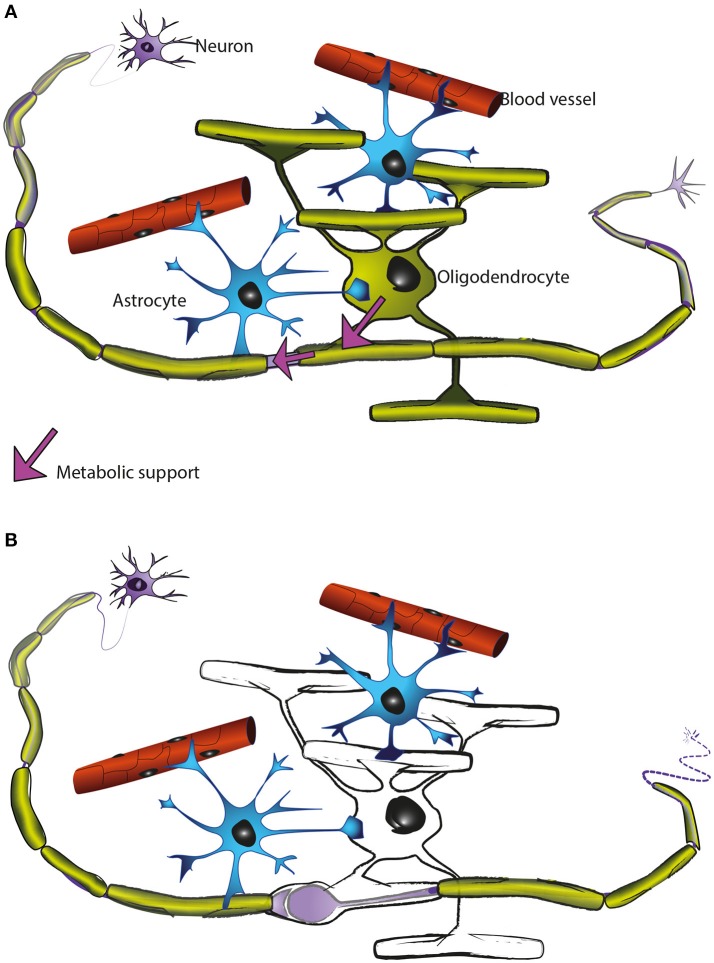
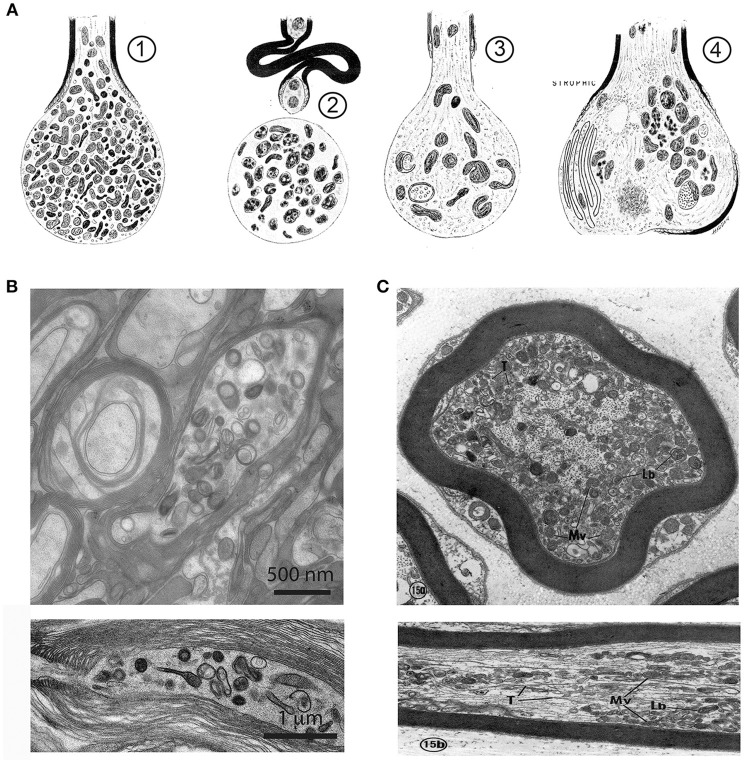
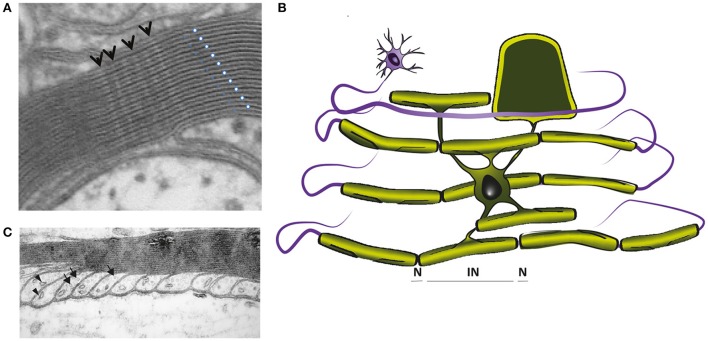
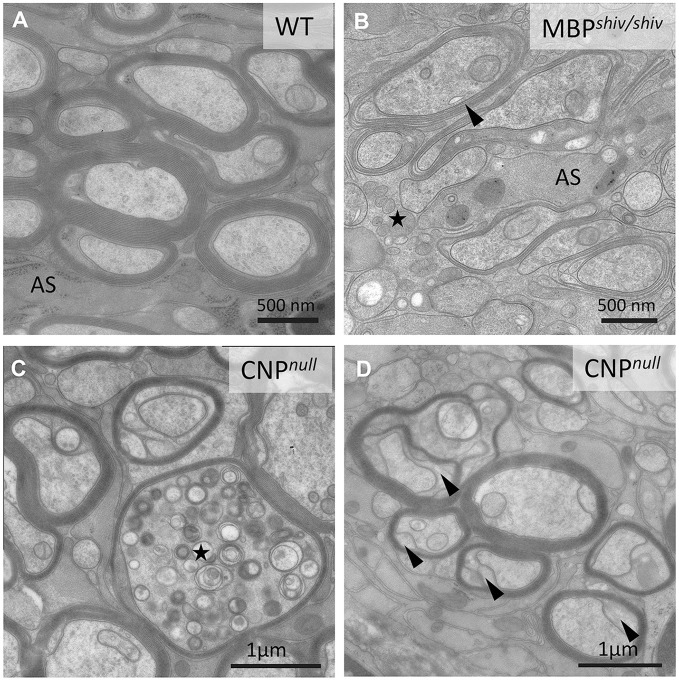
Axons are electrically excitable, cable-like neuronal processes that relay information between neurons within the nervous system and between neurons and peripheral target tissues. In the central and peripheral nervous systems, most axons over a critical diameter are enwrapped by myelin, which reduces internodal membrane capacitance and facilitates rapid conduction of electrical impulses. The spirally wrapped myelin sheath, which is an evolutionary specialisation of vertebrates, is produced by oligodendrocytes and Schwann cells; in most mammals myelination occurs during postnatal development and after axons have established connection with their targets. Myelin covers the vast majority of the axonal surface, influencing the axon's physical shape, the localisation of molecules on its membrane and the composition of the extracellular fluid (in the periaxonal space) that immerses it. Moreover, myelinating cells play a fundamental role in axonal support, at least in part by providing metabolic substrates to the underlying axon to fuel its energy requirements. The unique architecture of the myelinated axon, which is crucial to its function as a conduit over long distances, renders it particularly susceptible to injury and confers specific survival and maintenance requirements. In this review we will describe the normal morphology, ultrastructure and function of myelinated axons, and discuss how these change following disease, injury or experimental perturbation, with a particular focus on the role the myelinating cell plays in shaping and supporting the axon.
轴突是可电兴奋的、类似电缆的神经元突起,在神经系统内的神经元之间以及神经元与外周靶组织之间传递信息。在中枢神经系统和外周神经系统中,大多数超过临界直径的轴突被髓鞘包裹,这降低了节间膜电容并促进电冲动的快速传导。螺旋缠绕的髓鞘是脊椎动物的一种进化特化,由少突胶质细胞和施万细胞产生;在大多数哺乳动物中,髓鞘形成发生在出生后发育期间以及轴突与其靶标建立连接之后。髓鞘覆盖了绝大多数轴突表面,影响轴突的物理形状、其膜上分子的定位以及浸泡它的细胞外液(轴周间隙)的组成。此外,髓鞘形成细胞在轴突支持中发挥着基本作用,至少部分是通过为下层轴突提供代谢底物以满足其能量需求。有髓轴突的独特结构对其作为长距离传导管道的功能至关重要,使其特别容易受到损伤,并赋予其特定的存活和维持需求。在这篇综述中,我们将描述有髓轴突的正常形态、超微结构和功能,并讨论在疾病、损伤或实验性扰动后这些如何变化,特别关注髓鞘形成细胞在塑造和支持轴突中所起的作用。