Hashemi Nashmil, Johnson Jonas, Brodin Lars-Åke, Gomes-Bernardes Andreia, Sartipy Ulrik, Svenarud Peter, Dalén Magnus, Bäck Magnus, Alam Mahbubul, Winter Reidar
Karolinska Institutet, Department of Clinical Sciences, Unit of Cardiology, Danderyd University Hospital, Stockholm, Sweden.
Department of Clinical Physiology, Capio S:t Görans Hospital, Stockholm, Sweden.
Open Heart. 2018 Jul 23;5(2):e000842. doi: 10.1136/openhrt-2018-000842. eCollection 2018.
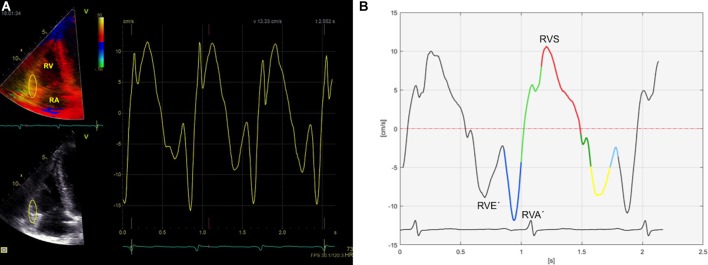
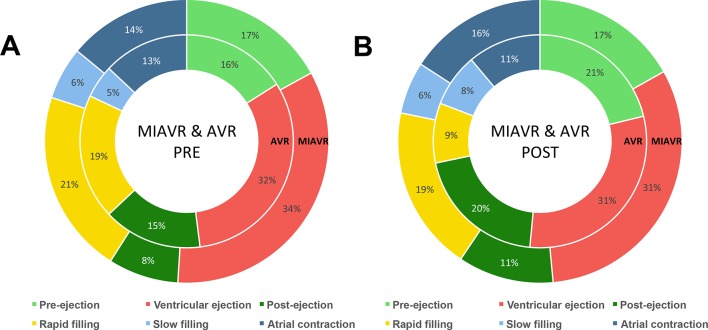
Minimally invasive aortic valve replacementsurgery (MIAVR) is an alternative surgical technique to conventional aortic valve replacement surgery (AVR) in selected patients. The randomised study Cardiac Function after Minimally Invasive Aortic Valve Implantation (CMILE) showed that right ventricular (RV) longitudinal function was reduced after both MIAVR and AVR, but the reduction was more pronounced following AVR. However, postoperative global RV function was equally impaired in both groups. The purpose of this study was to explore alterations in RV mechanics and contractility following MIAVR as compared with AVR.
A predefined post hoc analysis of CMILE consisting of 40 patients with severe aortic valve stenosis who were eligible for isolated surgical aortic valve replacement were randomised to MIAVR or AVR. RV function was assessed by echocardiography prior to surgery and 40 days post-surgery.
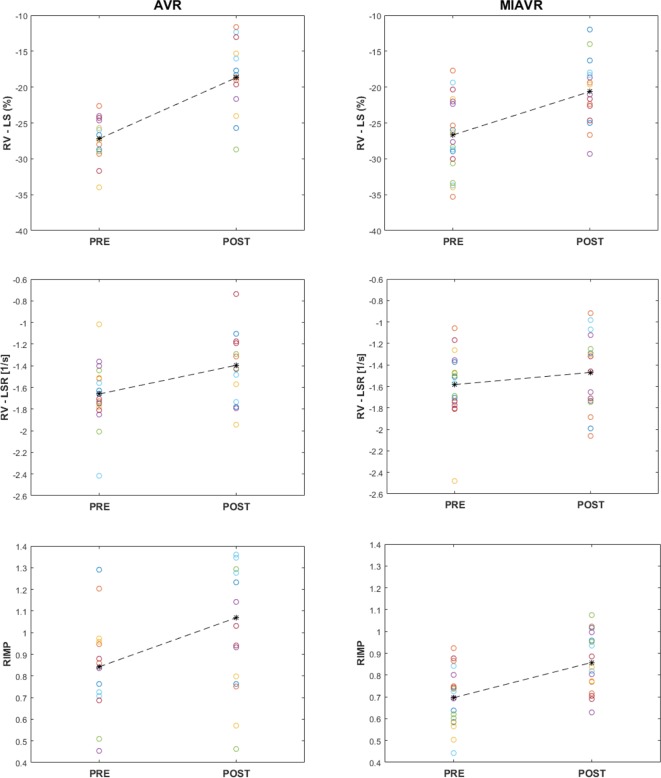
Comparing preoperative to postoperative values, RV longitudinal strain rate was preserved following MIAVR (-1.5±0.5 vs -1.5±0.4 1/s, p=0.84) but declined following AVR (-1.7±0.3 vs -1.4±0.3 1/s, p<0.01). RV longitudinal strain reduced following AVR (-27.4±2.9% vs -18.8%±4.7%, p<0.001) and MIAVR (-26.5±5.3% vs -20.7%±4.5%, p<0.01). Peak systolic velocity of the lateral tricuspid annulus reduced by 36.6% in the AVR group (9.3±2.1 vs 5.9±1.5 cm/s, p<0.01) and 18.8% in the MIAVR group (10.1±2.9 vs 8.2±1.4 cm/s, p<0.01) when comparing preoperative values with postoperative values.
RV contractility was preserved following MIAVR but was deteriorated following AVR. RV longitudinal function reduced substantially following AVR. A decline in RV longitudinal function was also observed following MIAVR, however, to a much lesser extent.
对于部分患者而言,微创主动脉瓣置换手术(MIAVR)是传统主动脉瓣置换手术(AVR)的一种替代手术技术。微创主动脉瓣植入术后的心功能(CMILE)随机研究表明,MIAVR和AVR术后右心室(RV)纵向功能均降低,但AVR术后降低更为明显。然而,两组术后整体RV功能受损程度相当。本研究旨在探讨与AVR相比,MIAVR术后RV力学和收缩性的变化。
对CMILE进行预先设定的事后分析,该研究纳入了40例符合单纯外科主动脉瓣置换术条件的重度主动脉瓣狭窄患者,随机分为MIAVR组或AVR组。术前及术后40天通过超声心动图评估RV功能。
与术前值相比,MIAVR术后RV纵向应变率得以保留(-1.5±0.5 vs -1.5±0.4 1/s,p = 0.84),而AVR术后降低(-1.7±0.3 vs -1.4±0.3 1/s,p<)。AVR术后RV纵向应变降低(-27.4±2.9% vs -18.8%±4.7%,p<),MIAVR术后也降低(-26.5±5.3% vs -20.7%±4.5%,p<)。将术前值与术后值进行比较时,AVR组三尖瓣环外侧的峰值收缩速度降低了36.6%(9.3±2.1 vs 5.9±1.5 cm/s,p<),MIAVR组降低了18.8%(10.1±2.9 vs 8.2±1.4 cm/s,p<)。
MIAVR术后RV收缩性得以保留,但AVR术后恶化。AVR术后RV纵向功能大幅降低。MIAVR术后RV纵向功能也有下降,不过程度要小得多。