Department of Veterinary Sciences, University of Parma, 43126, Parma, Italy.
Department of Veterinary Sciences and Public Health, University of Milan, 20133, Milan, Italy.
Parasit Vectors. 2018 Jul 31;11(1):437. doi: 10.1186/s13071-018-3020-4.
Over-expression of ATP-binding cassette (ABC) transporter proteins has been implicated in resistance of ticks to acaricides. Tick cell lines are useful for investigating resistance mechanisms, as development of an in vitro model for the study of acaricide resistance would contribute to improving knowledge of the molecular basis behind drug processing and exclusion in ticks. In the present study, cultures of the Ixodes ricinus-derived cell line IRE/CTVM19 were treated with the acaricides amitraz, permethrin or fipronil to determine modulation of ABC transporter gene expression. Cells were treated with different drug concentrations (25, 50, 100, 150 μM) and incubated for ten days. Cell morphology, viability, metabolic activity and relative expression of ABC (B1, B6, B8 and B10) genes were determined at day 10 post-treatment.
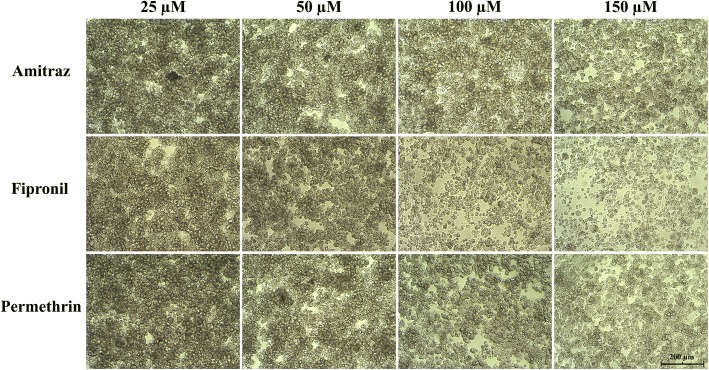
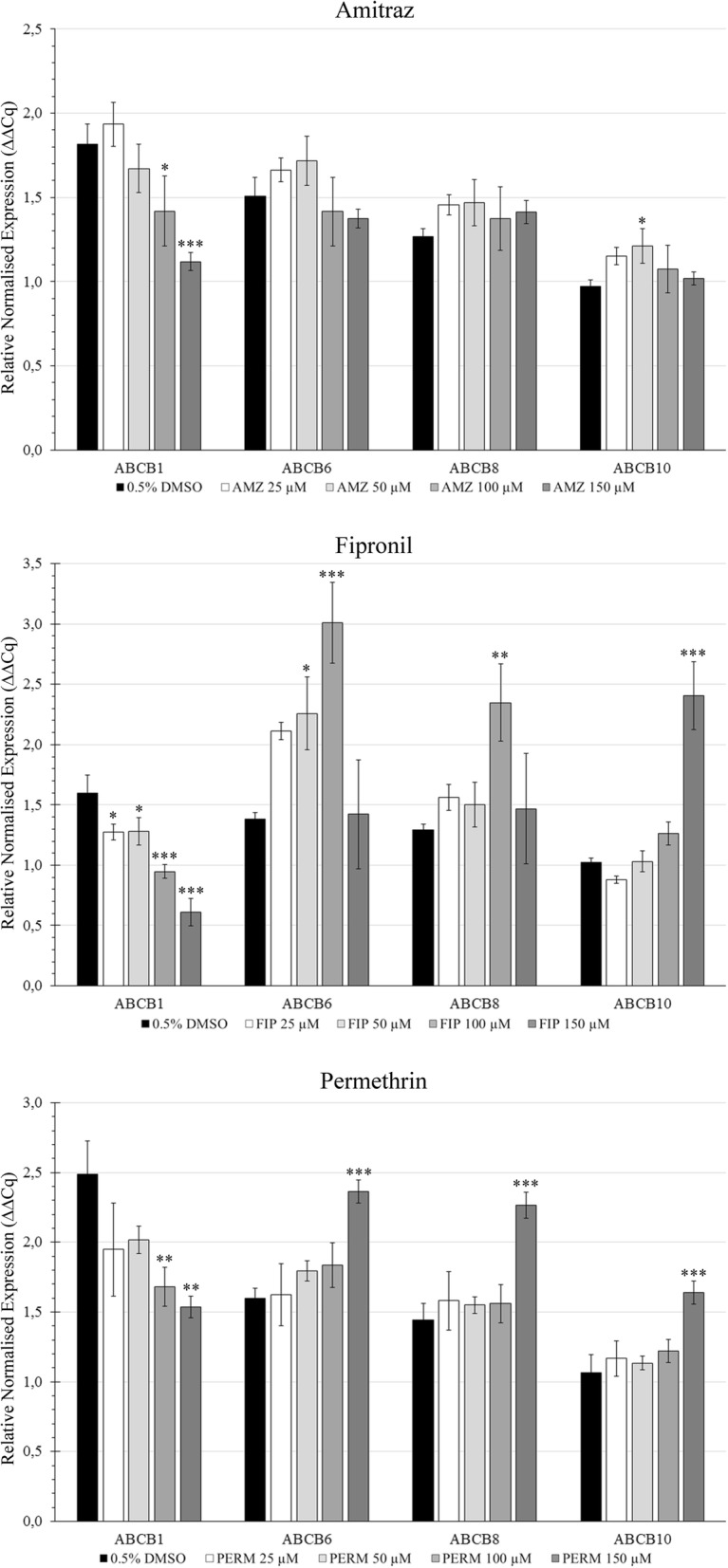
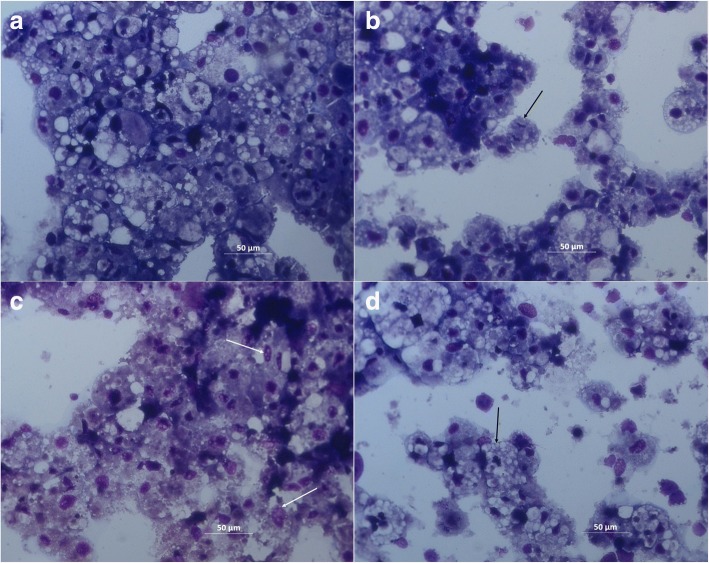
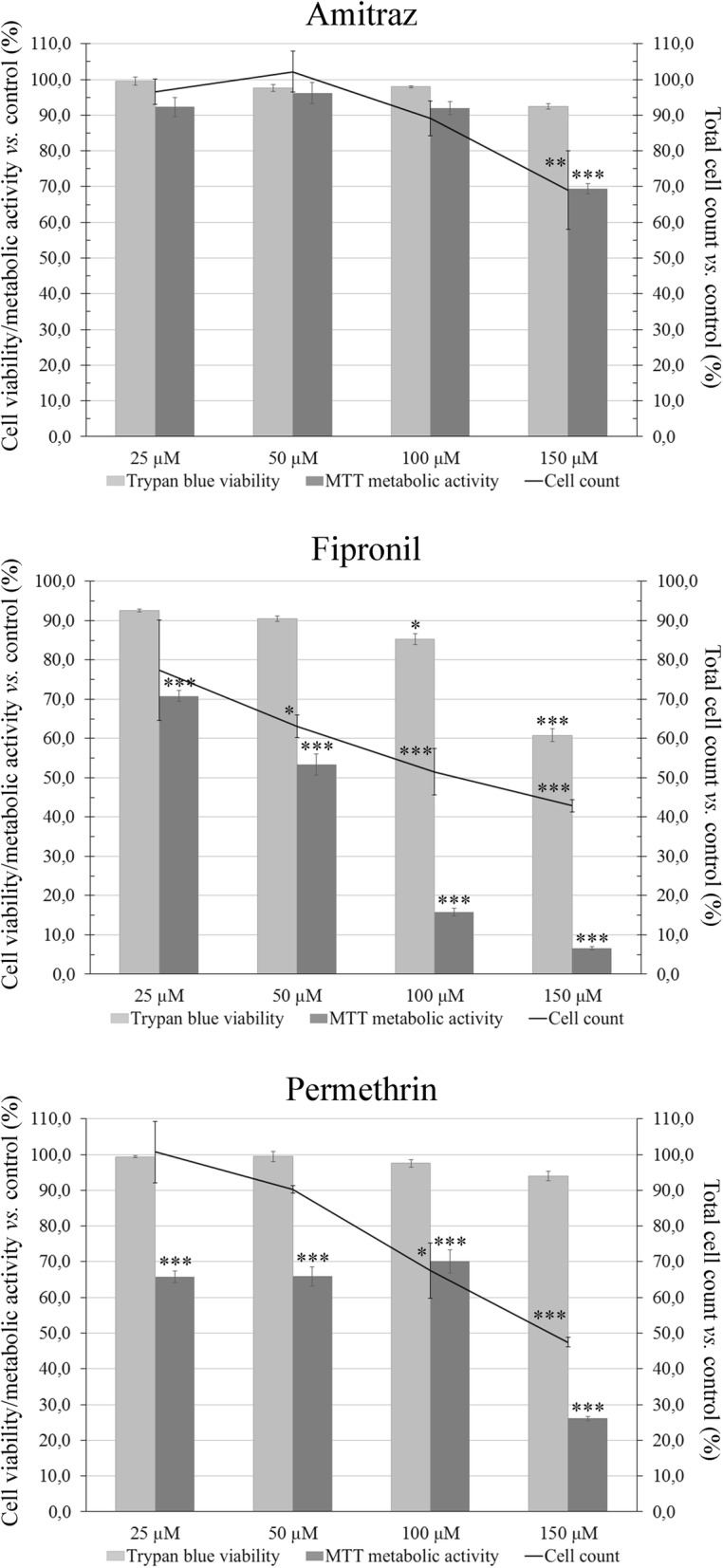
Cell morphology determined by light microscopy was altered following treatment with all drugs, but only at high concentrations, while total cell numbers decreased with increasing drug dose. Cell viability determined by trypan blue exclusion was not significantly different from untreated controls (P > 0.1) following treatment with amitraz and permethrin, but high concentrations of fipronil caused decrease (up to 37%, P < 0.01) in viability. At all drug concentrations, fipronil and permethrin induced dose-dependent reduction in cell metabolic activity measured by MTT assay (P < 0.01). Quantitative RT-PCR showed that the drugs significantly affected expression of ABC genes. In particular, fipronil treatment downregulated ABCB1 (P < 0.001) and upregulated ABCB6, ABCB8 and ABCB10 (P < 0.01); amitraz treatment down regulated ABCB1 (significant difference between 25 and 150 μM, P < 0.001) and upregulated ABCB8 and ABCB10 at lower concentrations (25 and 50 μM, P < 0.05); and permethrin upregulated ABCB6, ABCB8 and ABCB10 only at 150 μM (P < 0.01).
The adverse effects on cell viability and metabolic activity, and changes in expression of different ABC transporter genes, detected in IRE/CTVM19 cells following treatment with amitraz, permethrin and fipronil, support the proposed application of tick cell lines as in vitro models for the study of resistance to these acaricides in ticks.
ATP 结合盒(ABC)转运蛋白的过度表达与蜱对杀螨剂的抗性有关。蜱细胞系可用于研究抗性机制,因为建立体外模型来研究杀螨剂抗性将有助于提高对药物处理和蜱类药物排斥的分子基础的认识。在本研究中,用杀螨剂甲咪胺、氯菊酯或氟虫腈处理伊氏革蜱衍生的细胞系 IRE/CTVM19 进行培养,以确定 ABC 转运蛋白基因表达的调节。用不同的药物浓度(25、50、100、150 μM)处理细胞并孵育 10 天。在处理后第 10 天测定细胞形态、活力、代谢活性和 ABC(B1、B6、B8 和 B10)基因的相对表达。
用所有药物处理后,通过光镜观察到细胞形态发生改变,但仅在高浓度下,而随着药物剂量的增加,总细胞数减少。用台盼蓝排除法测定细胞活力,在用甲咪胺和氯菊酯处理后与未处理对照组无显著差异(P>0.1),但高浓度的氟虫腈导致活力下降(高达 37%,P<0.01)。在所有药物浓度下,氟虫腈和氯菊酯诱导的 MTT 测定的细胞代谢活性呈剂量依赖性降低(P<0.01)。定量 RT-PCR 显示,这些药物显著影响 ABC 基因的表达。特别是,氟虫腈处理下调 ABCB1(P<0.001)并上调 ABCB6、ABCB8 和 ABCB10(P<0.01);甲咪胺处理下调 ABCB1(25 和 150 μM 之间有显著差异,P<0.001)并在较低浓度(25 和 50 μM)上调 ABCB8 和 ABCB10(P<0.05);而氯菊酯仅在 150 μM 时上调 ABCB6、ABCB8 和 ABCB10(P<0.01)。
在用甲咪胺、氯菊酯和氟虫腈处理 IRE/CTVM19 细胞后,检测到细胞活力和代谢活性的不良影响,以及不同 ABC 转运蛋白基因表达的变化,支持将蜱细胞系作为研究这些杀螨剂在蜱类中的抗性的体外模型的应用。