Department of Microbiology and Molecular Genetics, University of California, Davis, One Shields Avenue, Davis, CA, 95616, USA.
BMC Genomics. 2018 Aug 1;19(1):573. doi: 10.1186/s12864-018-4957-6.
Human neutrophils are central players in innate immunity, a major component of inflammatory responses, and a leading model for cell motility and chemotaxis. However, primary neutrophils are short-lived, limiting their experimental usefulness in the laboratory. Thus, human myeloid cell lines have been characterized for their ability to undergo neutrophil-like differentiation in vitro. The HL-60 cell line and its PLB-985 sub-line are commonly used to model human neutrophil behavior, but how closely gene expression in differentiated cells resembles that of primary neutrophils has remained unclear.
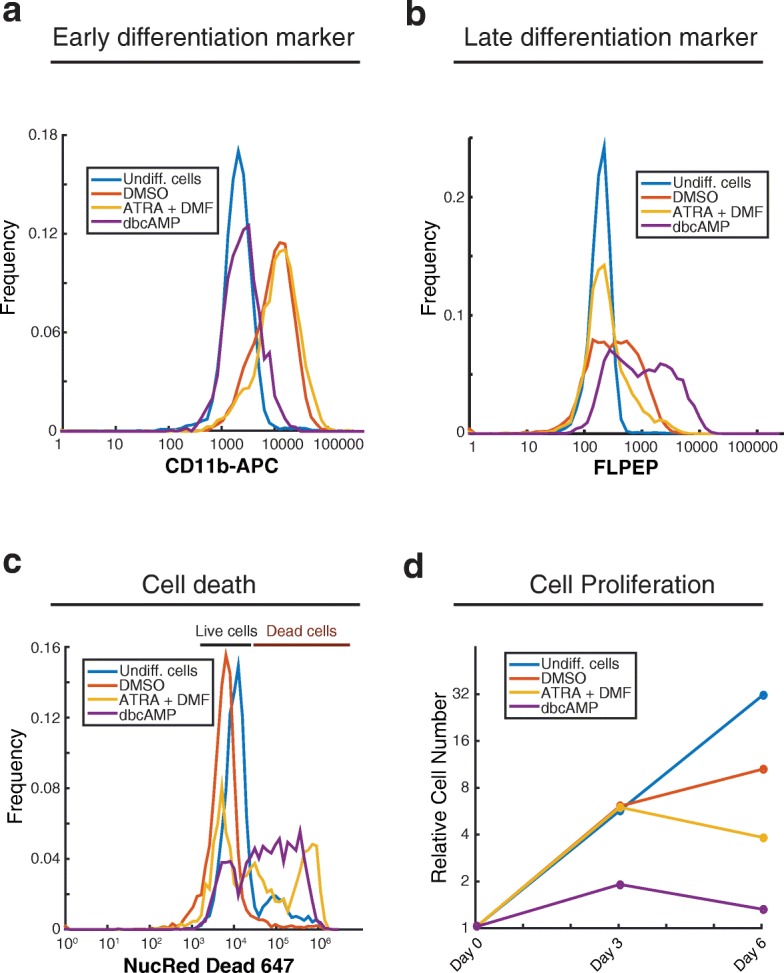
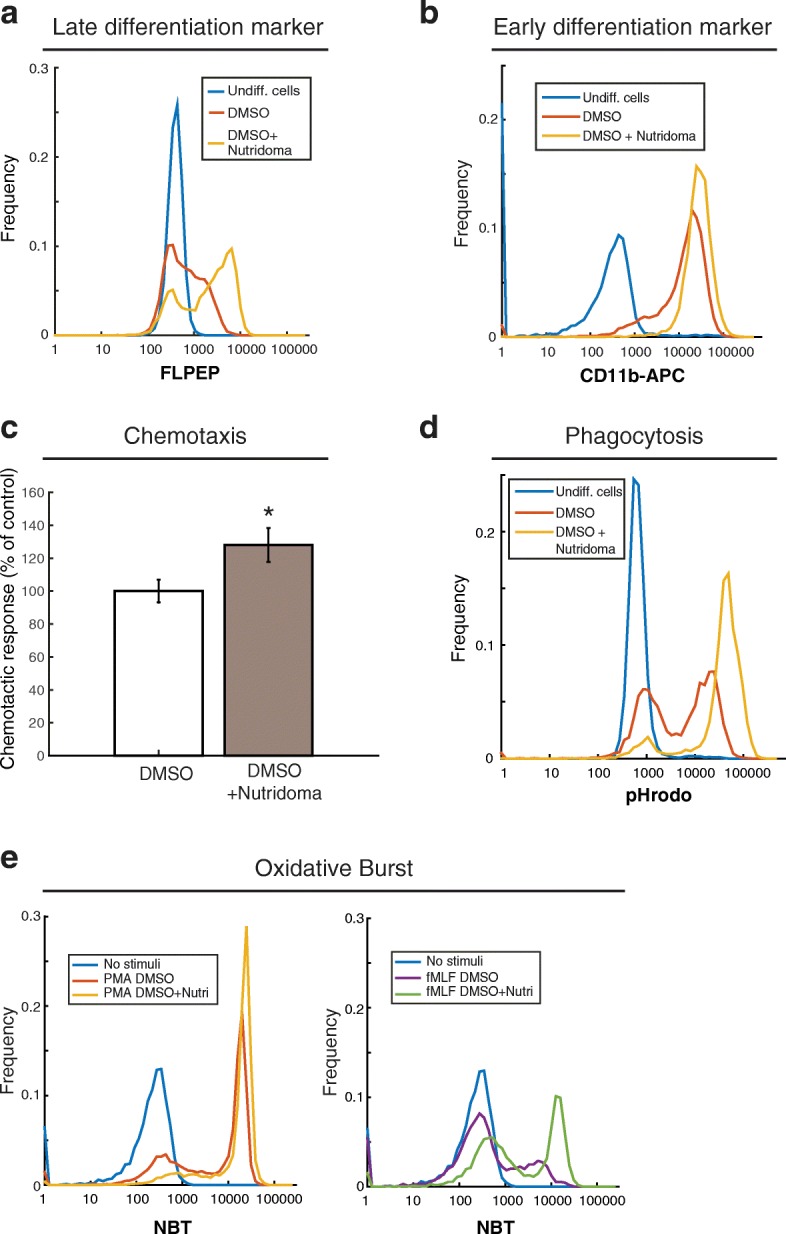
In this study, we compared the effectiveness of differentiation protocols and used RNA sequencing (RNA-seq) to compare the transcriptomes of HL-60 and PLB-985 cells with published data for human and mouse primary neutrophils. Among commonly used differentiation protocols for neutrophil-like cell lines, addition of dimethyl sulfoxide (DMSO) gave the best combination of cell viability and expression of markers for differentiation. However, combining DMSO with the serum-free-supplement Nutridoma resulted in increased chemotactic response, phagocytic activity, oxidative burst and cell surface expression of the neutrophil markers FPR1 and CD11b without a cost in viability. RNA-seq analysis of HL-60 and PLB-985 cells before and after differentiation showed that differentiation broadly increases the similarity in gene expression between the cell lines and primary neutrophils. Furthermore, the gene expression pattern of the differentiated cell lines correlated slightly better with that of human neutrophils than the mouse neutrophil pattern did. Finally, we created a publicly available gene expression database that is searchable by gene name and protein domain content, where users can compare gene expression in HL-60, PLB-985 and primary human and mouse neutrophils.
Our study verifies that a DMSO-based differentiation protocol for HL-60 and PLB-985 cell lines gives superior differentiation and cell viability relative to other common protocols, and indicates that addition of Nutridoma may be preferable for studies of chemotaxis, phagocytosis, or oxidative burst. Our neutrophil gene expression database will be a valuable tool to identify similarities and differences in gene expression between the cell lines and primary neutrophils, to compare expression levels for genes of interest, and to improve the design of tools for genetic perturbations.
人类中性粒细胞是先天免疫的核心参与者,是炎症反应的主要组成部分,也是细胞运动和趋化性的主要模型。然而,原代中性粒细胞寿命短,限制了它们在实验室中的实验用途。因此,人们已经对髓系细胞系进行了特征描述,以了解它们在体外向中性粒细胞样分化的能力。HL-60 细胞系及其 PLB-985 亚系常被用于模拟人类中性粒细胞的行为,但分化细胞的基因表达与原代中性粒细胞的基因表达有多相似仍不清楚。
在这项研究中,我们比较了分化方案的有效性,并使用 RNA 测序(RNA-seq)将 HL-60 和 PLB-985 细胞的转录组与已发表的人类和小鼠原代中性粒细胞数据进行比较。在常用于中性粒细胞样细胞系的分化方案中,添加二甲基亚砜(DMSO)可获得最佳的细胞活力和分化标志物表达组合。然而,将 DMSO 与无血清补充 Nutridoma 结合使用会增加趋化反应、吞噬活性、氧化爆发和中性粒细胞标志物 FPR1 和 CD11b 的细胞表面表达,而不会降低细胞活力。HL-60 和 PLB-985 细胞分化前后的 RNA-seq 分析表明,分化广泛增加了细胞系与原代中性粒细胞之间基因表达的相似性。此外,分化细胞系的基因表达模式与人类中性粒细胞的相关性略高于与小鼠中性粒细胞的相关性。最后,我们创建了一个公共基因表达数据库,可按基因名称和蛋白质结构域内容进行搜索,用户可以在其中比较 HL-60、PLB-985 和原代人类和小鼠中性粒细胞中的基因表达。
我们的研究证实,与其他常用方案相比,基于 DMSO 的 HL-60 和 PLB-985 细胞系分化方案可获得更好的分化和细胞活力,并且添加 Nutridoma 可能更适合趋化性、吞噬作用或氧化爆发的研究。我们的中性粒细胞基因表达数据库将是一个有价值的工具,可用于识别细胞系与原代中性粒细胞之间基因表达的相似性和差异,比较感兴趣基因的表达水平,并改进遗传扰动工具的设计。