Instituto de Investigação e Inovação em Saúde (i3S), Porto, Portugal.
Institute of Molecular Pathology and Immunology of the University of Porto (IPATIMUP), Porto, Portugal.
Mol Cancer. 2018 Aug 1;17(1):112. doi: 10.1186/s12943-018-0859-0.
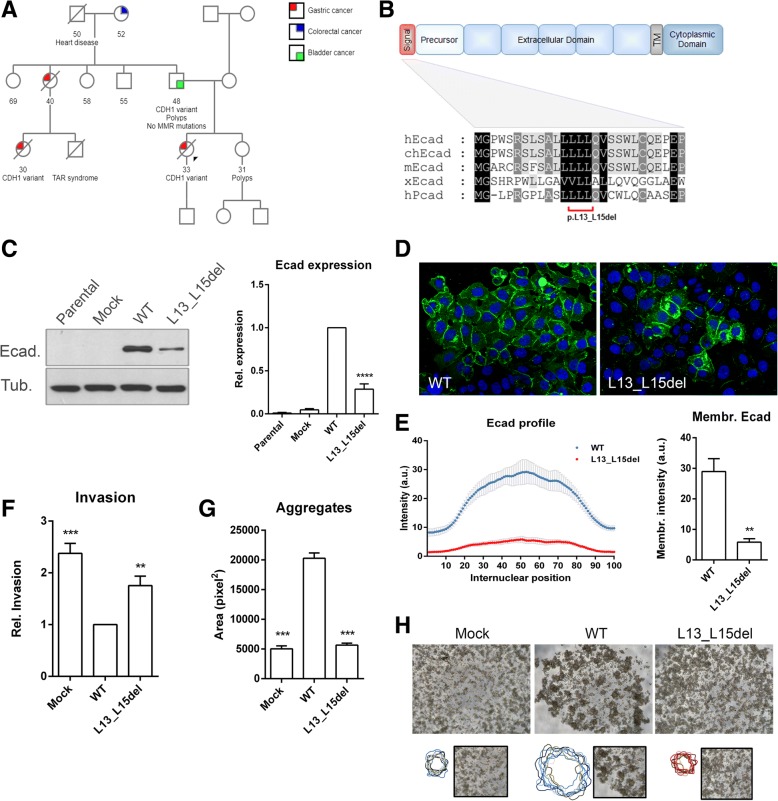
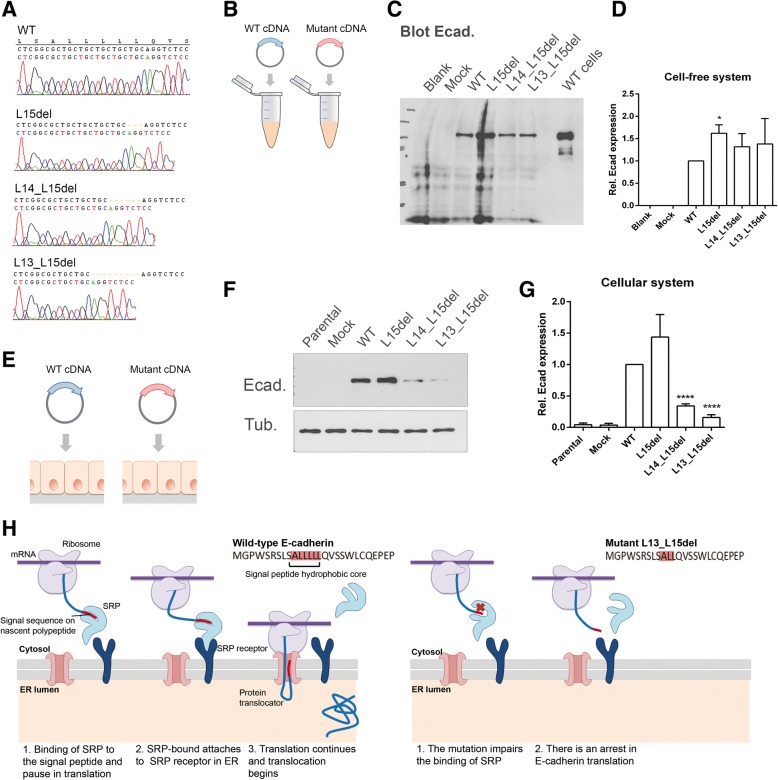
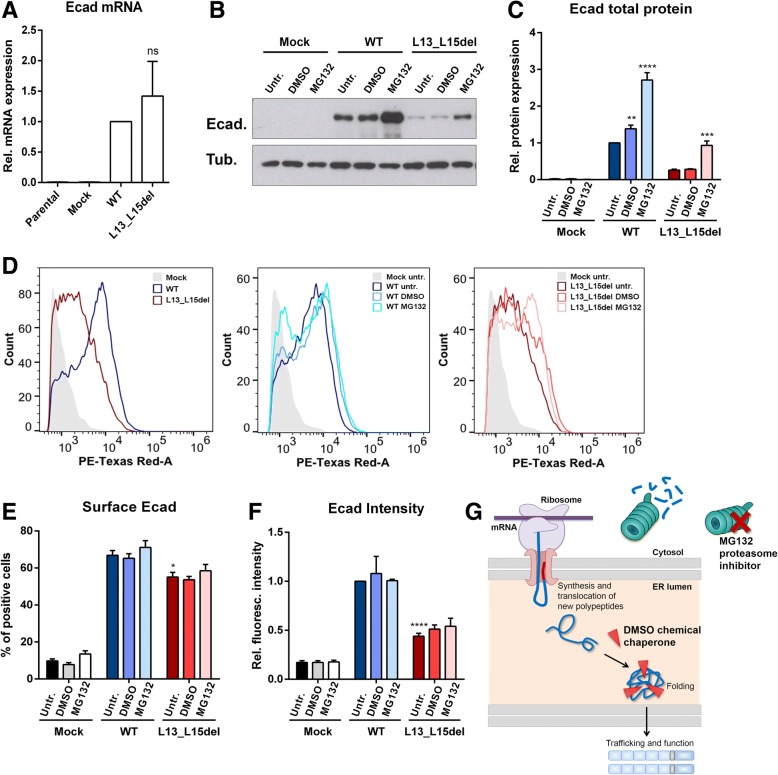
The aim of this study was to uncover the pathogenic relevance and the underlying molecular mechanism of a novel CDH1 variant found in a Hereditary Diffuse Gastric Cancer family (p.L13_L15del), which affects the signal peptide of E-cadherin without changing the remaining predicted sequence. We verified that p.L13_L15del cells yield low levels of E-cadherin, decreased cell adhesion and enhanced cell invasion. Further, we demonstrated that the disruption of the highly conserved hydrophobic core of the signal peptide hampers the binding of cellular components crucial for E-cadherin translation and translocation into the endoplasmic reticulum, constituting a new molecular basis for the loss of a tumour suppressor gene causative of hereditary cancer.
本研究旨在揭示一种新型 CDH1 变异体的致病相关性及其潜在的分子机制,该变异体存在于遗传性弥漫性胃癌家族中(p.L13_L15del),影响 E-钙黏蛋白的信号肽而不改变其余预测序列。我们验证了 p.L13_L15del 细胞产生低水平的 E-钙黏蛋白,降低细胞黏附和增强细胞侵袭。此外,我们证明了信号肽高度保守的疏水区的破坏会阻碍细胞成分与 E-钙黏蛋白翻译和易位到内质网所必需的结合,这为遗传性癌症中肿瘤抑制基因丧失的新分子基础提供了依据。