Omori Masao, Shibuya Satoshi, Nakajima Tsuyoshi, Endoh Takashi, Suzuki Shinya, Irie Shun, Ariyasu Ryohei, Unenaka Satoshi, Sano Hideto, Igarashi Kazutaka, Ichimura Shoichi, Ohki Yukari
Department of Orthopaedic Surgery, Kyorin University School of Medicine, 6-20-2 Shinkawa, Mitaka, Tokyo 181-8611, Japan.
Department of Integrative Physiology, Kyorin University School of Medicine, 6-20-2 Shinkawa, Mitaka, Tokyo 181-8611, Japan.
Behav Neurol. 2018 Jul 4;2018:5138234. doi: 10.1155/2018/5138234. eCollection 2018.
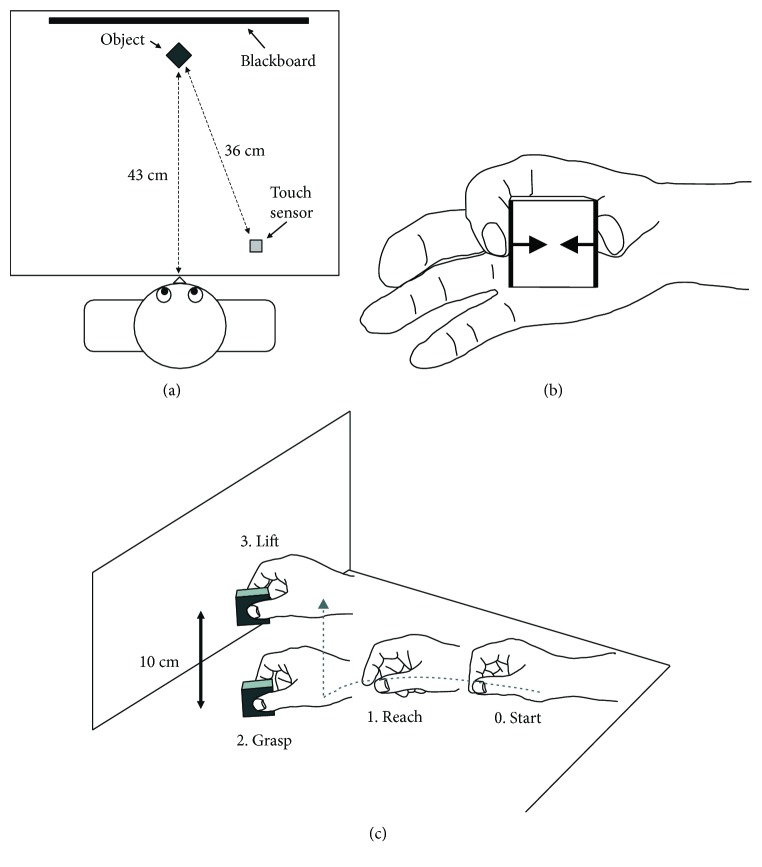
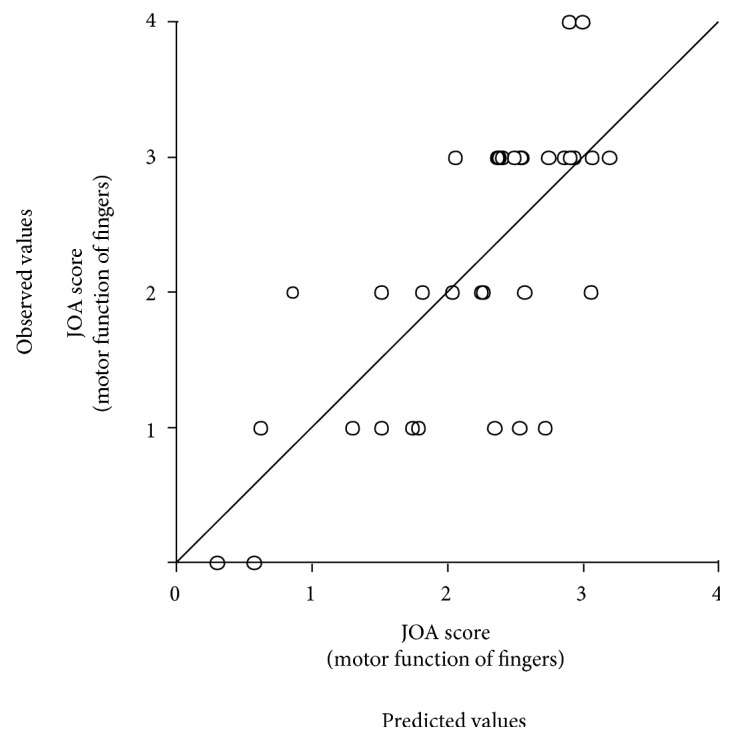
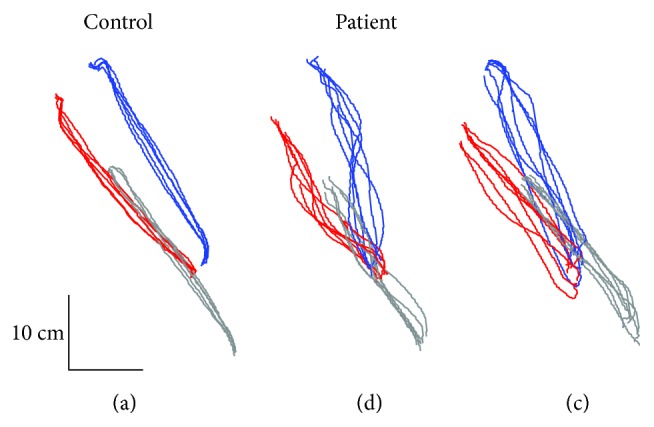
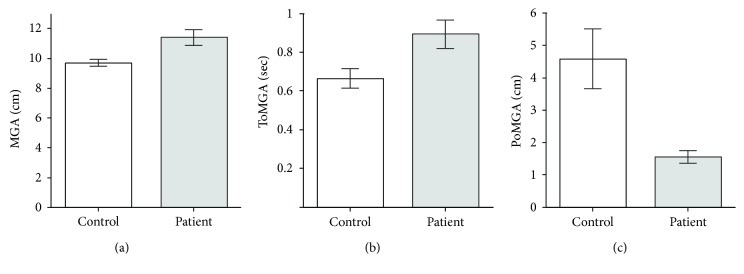
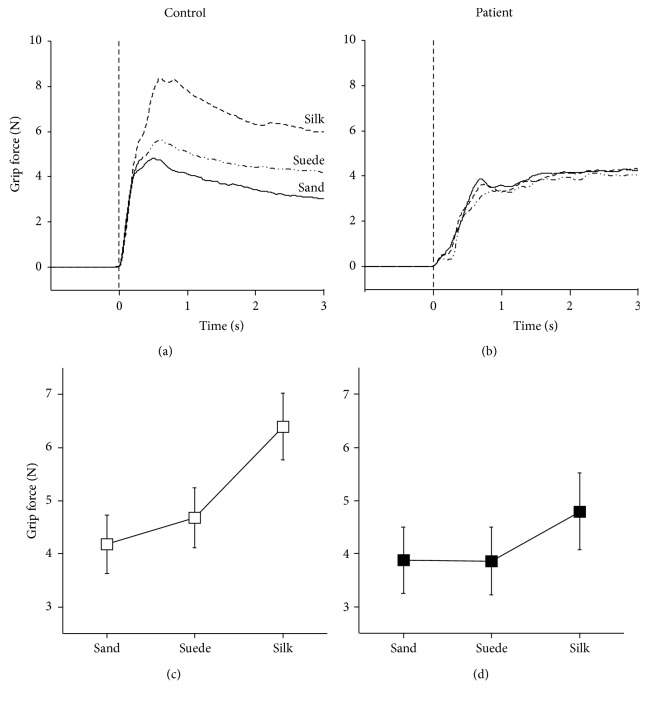
Cervical myelopathy (CM) caused by spinal cord compression can lead to reduced hand dexterity. However, except for the 10 sec grip-and-release test, there is no objective assessment system for hand dexterity in patients with CM. Therefore, we evaluated the hand dexterity impairment of patients with CM objectively by asking them to perform a natural prehension movement. Twenty-three patients with CM and 30 age-matched controls were asked to reach for and grasp a small object with their right thumb and index finger and to subsequently lift and hold it. To examine the effects of tactile afferents from the fingers, objects with surface materials of differing textures (silk, suede, and sandpaper) were used. All patients also underwent the Japanese Orthopedic Association (JOA) test. Preoperative patients showed significantly greater grip aperture during reach-to-grasp movements and weaker grip force than controls only while attempting to lift the most slippery object (silk). Patients, immediately after surgery, ( = 15) tended to show improvements in the JOA score and in reaction time and movement time with respect to reaching movements. Multiple regression analysis demonstrated that some parameters of the prehension task could successfully predict subjective evaluations of dexterous hand movements based on JOA scores. These results suggest that quantitative assessments using prehension movements could be useful to objectively evaluate hand dexterity impairment in patients with CM.
脊髓受压引起的脊髓型颈椎病(CM)可导致手部灵活性下降。然而,除了10秒抓握和松开测试外,尚无针对CM患者手部灵活性的客观评估系统。因此,我们通过要求CM患者进行自然抓握动作,客观评估了他们的手部灵活性损害情况。23例CM患者和30例年龄匹配的对照组被要求用右手拇指和食指去够并抓住一个小物体,随后将其拿起并握住。为了研究来自手指的触觉传入的影响,使用了表面材质纹理不同(丝绸、绒面革和砂纸)的物体。所有患者还接受了日本矫形外科学会(JOA)测试。术前患者在伸手抓握动作中抓握孔径显著更大,且仅在试图拿起最滑的物体(丝绸)时握力比对照组弱。术后即刻的患者(n = 15)在JOA评分以及伸手动作的反应时间和运动时间方面倾向于有所改善。多元回归分析表明,抓握任务的一些参数能够基于JOA评分成功预测对手部灵巧动作的主观评价。这些结果表明,使用抓握动作进行定量评估可能有助于客观评估CM患者的手部灵活性损害。