Department of Biotechnology and Life Sciences, University of Insubria, Varese, Italy.
Department of Medicine and Surgery, University of Insubria, Varese, Italy.
PLoS One. 2018 Aug 3;13(8):e0201760. doi: 10.1371/journal.pone.0201760. eCollection 2018.
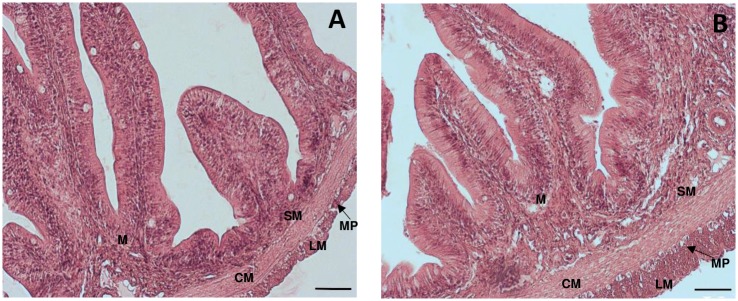
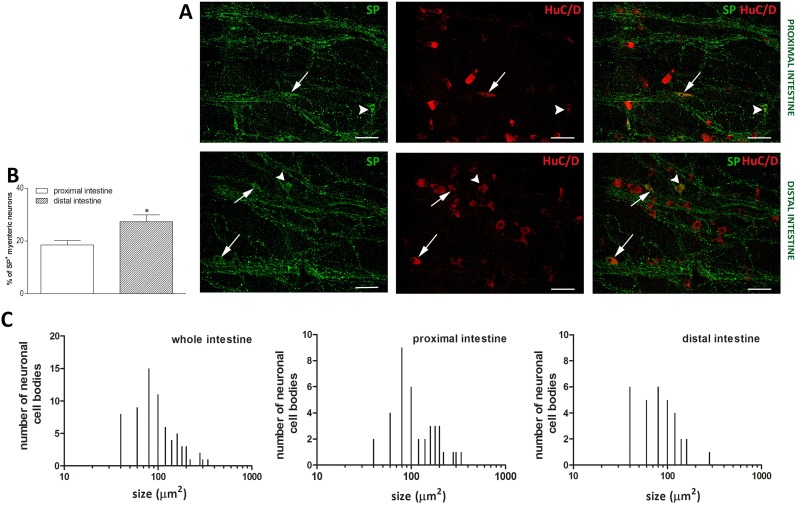
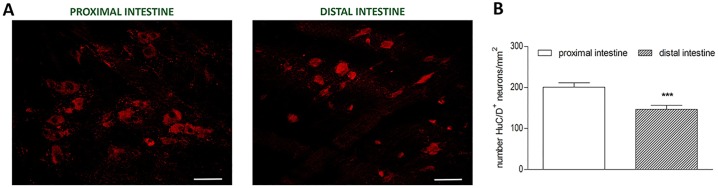
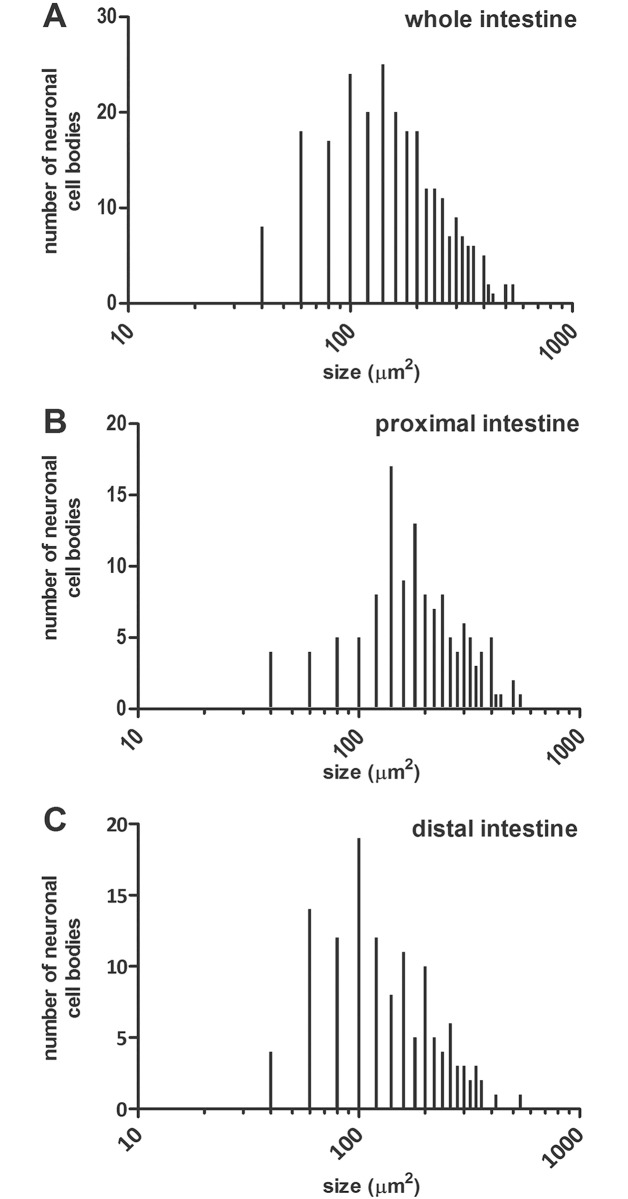
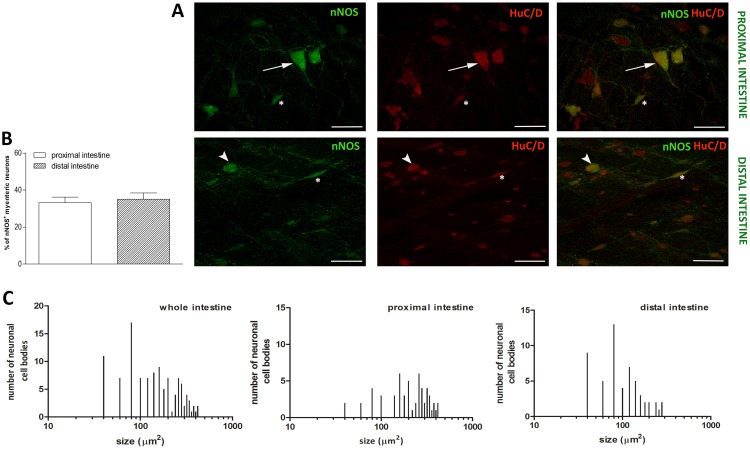
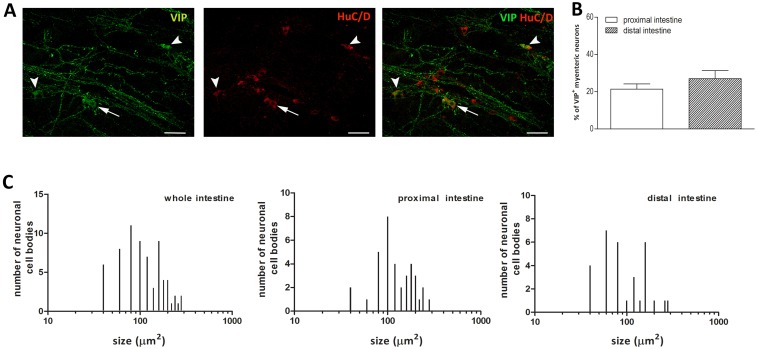
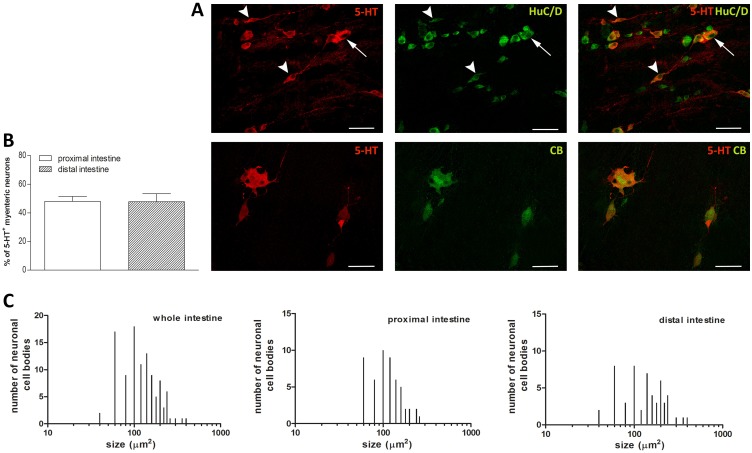
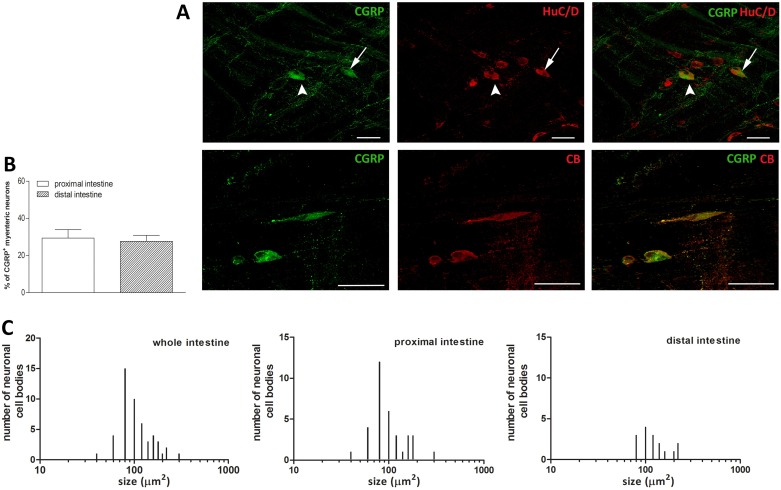
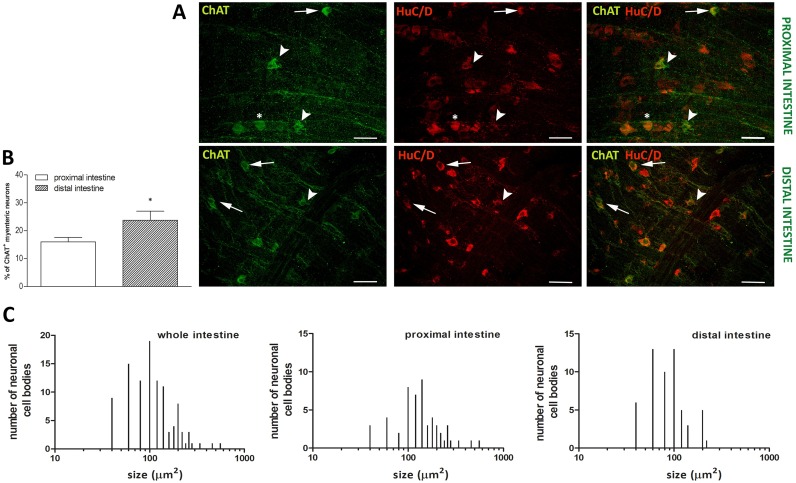
We evaluated the chemical coding of the myenteric plexus in the proximal and distal intestine of gilthead sea bream (Sparus aurata), which represents one of the most farmed fish in the Mediterranean area. The presence of nitric oxide (NO), acetylcholine (ACh), serotonin (5-HT), calcitonin-gene-related peptide (CGRP), substance P (SP) and vasoactive intestinal peptide (VIP) containing neurons, was investigated in intestinal whole mount preparations of the longitudinal muscle with attached the myenteric plexus (LMMP) by means of immunohistochemical fluorescence staining. The main excitatory and inhibitory neurochemicals identified in intestinal smooth muscle were ACh, SP, 5HT, and NO, VIP, CGRP. Some neurons displayed morphological features of ascending and descending interneurons and of putative sensory neurons. The expression of these pathways in the two intestinal regions is largely superimposable, although some differences emerged, which may be relevant to the morphological properties of each region. The most important variances are the higher neuronal density and soma size in the proximal intestine, which may depend on the volume of the target tissue. Since in the fish gut the submucosal plexus is less developed, myenteric neurons substantially innervate also the submucosal and epithelial layers, which display a major thickness and surface in the proximal intestine. In addition, myenteric neurons containing ACh and SP, which mainly represent excitatory motor neurons and interneurons innervating the smooth muscle were more numerous in the distal intestine, possibly to sustain motility in the thicker smooth muscle coat. Overall, this study expands our knowledge of the intrinsic innervation that regulates intestinal secretion, absorption and motility in gilthead sea bream and provides useful background information for rational design of functional feeds aimed at improving fish gut health.
我们评估了金头鲷(Sparus aurata)近端和远端肠道的肌间神经丛的化学编码,金头鲷是地中海地区养殖最多的鱼类之一。通过对附着肌间神经丛的纵向肌全层肠道制剂进行免疫荧光染色,研究了肠道中存在的含一氧化氮(NO)、乙酰胆碱(ACh)、血清素(5-HT)、降钙素基因相关肽(CGRP)、P 物质(SP)和血管活性肠肽(VIP)的神经元。在肠道平滑肌中鉴定的主要兴奋性和抑制性神经化学物质是 ACh、SP、5-HT 和 NO、VIP、CGRP。一些神经元显示出上升和下降中间神经元以及感觉神经元的形态特征。这些途径在两个肠道区域的表达基本重叠,尽管出现了一些差异,这可能与每个区域的形态特征有关。最重要的差异是近端肠道的神经元密度和体大小较高,这可能取决于靶组织的体积。由于鱼类肠道的黏膜下神经丛发育较少,肌间神经元实质上也支配黏膜和上皮层,在近端肠道中,它们具有较大的厚度和表面。此外,含有 ACh 和 SP 的肌间神经元主要代表兴奋型运动神经元和支配平滑肌的中间神经元,在远端肠道中更为丰富,可能是为了维持较厚的平滑肌层的运动。总的来说,这项研究扩展了我们对内在神经支配的认识,这种支配调节着金头鲷的肠道分泌、吸收和运动,并为合理设计旨在改善鱼类肠道健康的功能性饲料提供了有用的背景信息。