College of Bioscience and Biotechnology, Hunan Agricultural University, Changsha, 410128, China.
Hunan Academy of Agricultural Sciences, Institute of Plant Protection, Changsha, 410125, China.
BMC Plant Biol. 2018 Aug 3;18(1):154. doi: 10.1186/s12870-018-1376-4.
Plant anther development is a systematic and complex process precisely controlled by genes. Regulation genes and their regulatory mechanisms for this process remain elusive. In contrast to numerous researches on anther development with respect to mRNAs or miRNAs in many crops, the association analysis combining both omics has not been reported on cotton anther.
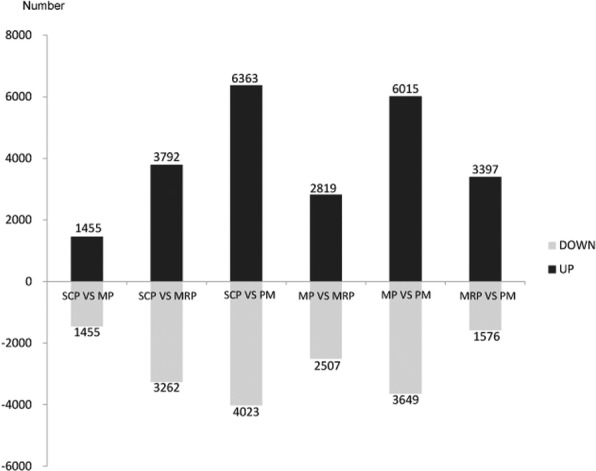
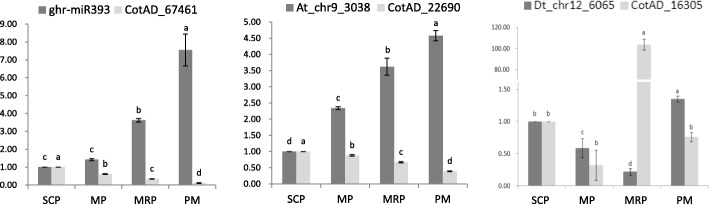
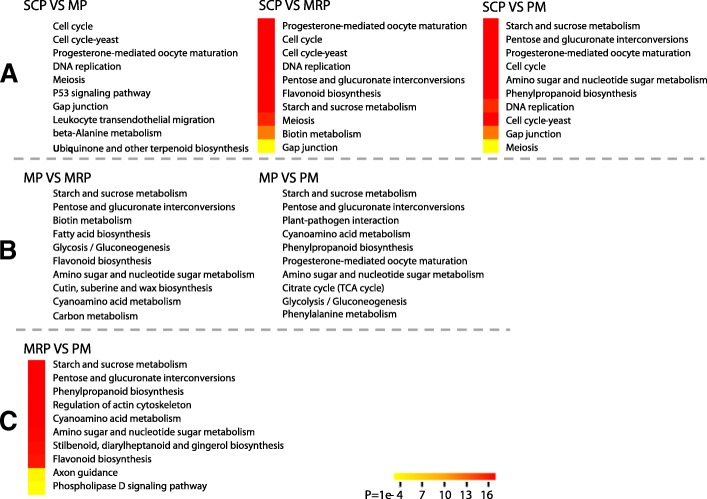
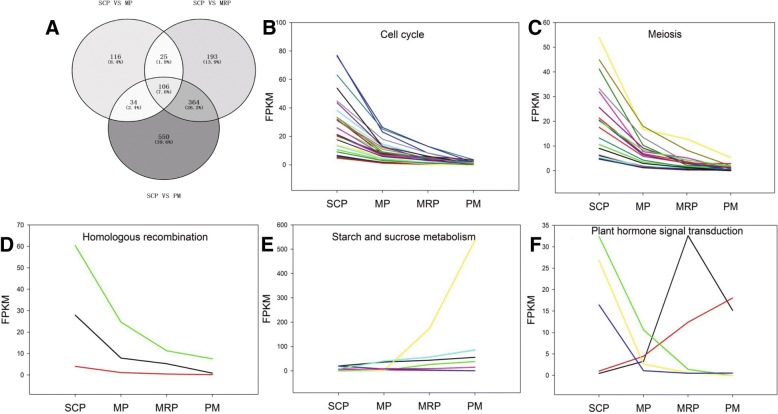
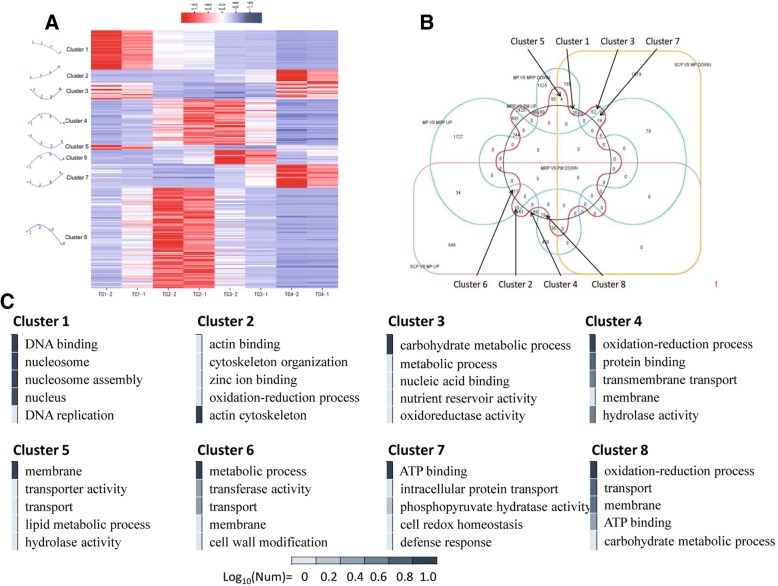
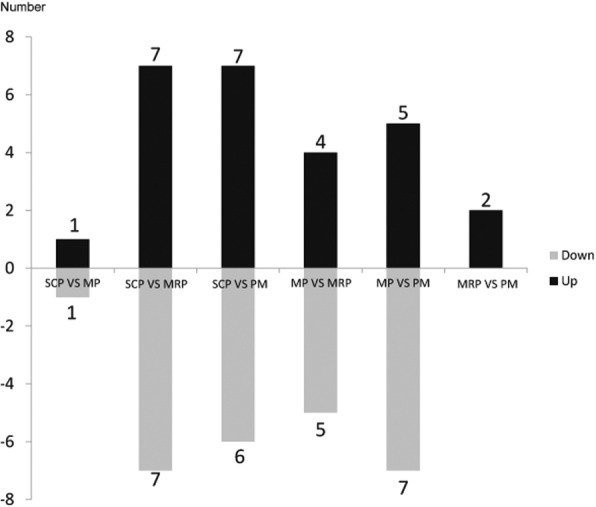
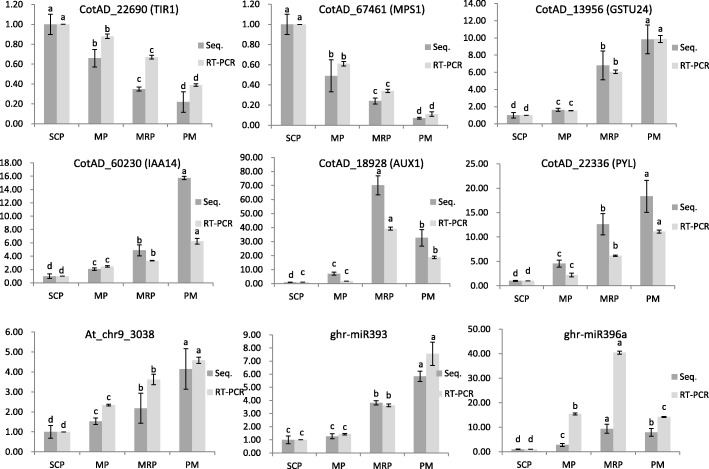
In this study, the molecular mechanism of cotton anther development was investigated with the employment of association analysis of transcriptome and small RNA sequencing during the predefined four stages of cotton anther development, sporogenuous cell proliferation (SCP), meiotic phase (MP), microspore release period (MRP) and pollen maturity (PM). Analysis revealed that the differentially expressed genes are increasingly recruited along with the developmental progress. Expression of functional genes differed significantly among developmental stages. The genes related with cell cycle, progesterone-mediated oocyte maturation, and meiosis are predominantly expressed at the early stage of anther development (SCP and MP), and the expression of genes involved in energy metabolism, flavonoid biosynthesis, axon guidance and phospholipase D signaling pathways is mainly enriched at the late stage of anther development (MRP and PM). Analysis of expression patterns revealed that there was the largest number of differentially expressed genes in the MP and the expression profiles of differentially expressed genes were significantly increased, which implied the importance of MP in the entire anther development cycle. In addition, prediction and analysis of miRNA targeted genes suggested that miRNAs play important roles in anther development. The miRNAs ghr-miR393, Dt_chr12_6065 and At_chr9_3080 participated in cell cycle, carbohydrate metabolism and auxin anabolism through the target genes, respectively, to achieve the regulation of anther development.
Through the association analysis of mRNA and miRNA, our work gives a better understanding of the preferentially expressed genes and regulation in different developmental stages of cotton anther and the importance of meiotic phase, and also the involvement of miRNAs in precise regulation for this process, which would be valuable for clarifying the mechanism of plant anther development in response to internal and external environments.
植物花药发育是一个由基因精确调控的系统而复杂的过程。该过程的调控基因及其调控机制仍不清楚。与许多作物中关于花药发育的大量关于 mRNA 或 miRNA 的研究相比,尚未有关于棉花花药的组学联合关联分析的报道。
在这项研究中,通过在棉花花药发育的四个预定阶段(花粉母细胞增殖期(SCP)、减数分裂期(MP)、小孢子释放期(MRP)和花粉成熟期(PM))进行转录组和小 RNA 测序的关联分析,研究了棉花花药发育的分子机制。分析表明,差异表达基因随着发育进程的推进而逐渐被募集。不同发育阶段功能基因的表达差异显著。与细胞周期、孕酮介导的卵母细胞成熟和减数分裂相关的基因主要在花药发育的早期(SCP 和 MP)表达,而与能量代谢、类黄酮生物合成、轴突导向和磷脂酶 D 信号通路相关的基因的表达主要在花药发育的晚期(MRP 和 PM)富集。表达模式分析表明,MP 中差异表达基因数量最多,差异表达基因的表达谱显著增加,这表明 MP 在整个花药发育周期中非常重要。此外,对 miRNA 靶基因的预测和分析表明,miRNA 在花药发育中发挥重要作用。miRNA ghr-miR393、Dt_chr12_6065 和 At_chr9_3080 通过靶基因分别参与细胞周期、碳水化合物代谢和生长素生物合成,实现对花药发育的调控。
通过 mRNA 和 miRNA 的关联分析,我们的工作更好地理解了棉花花药不同发育阶段的优势表达基因和调控机制,以及减数分裂期的重要性,以及 miRNA 参与这一过程的精确调控,这对于阐明植物花药发育对内外环境的响应机制具有重要意义。