College of Agriculture, Northwest A&F University, Yangling 712100 Shaanxi, PR China.
BMC Genomics. 2013 Feb 12;14:97. doi: 10.1186/1471-2164-14-97.
Cotton (Gossypium hirsutum) anther development involves a diverse range of gene interactions between sporophytic and gametophytic tissues. However, only a small number of genes are known to be specifically involved in this developmental process and the molecular mechanism of the genetic male sterility (GMS) is still poorly understand. To fully explore the global gene expression during cotton anther development and identify genes related to male sterility, a digital gene expression (DGE) analysis was adopted.
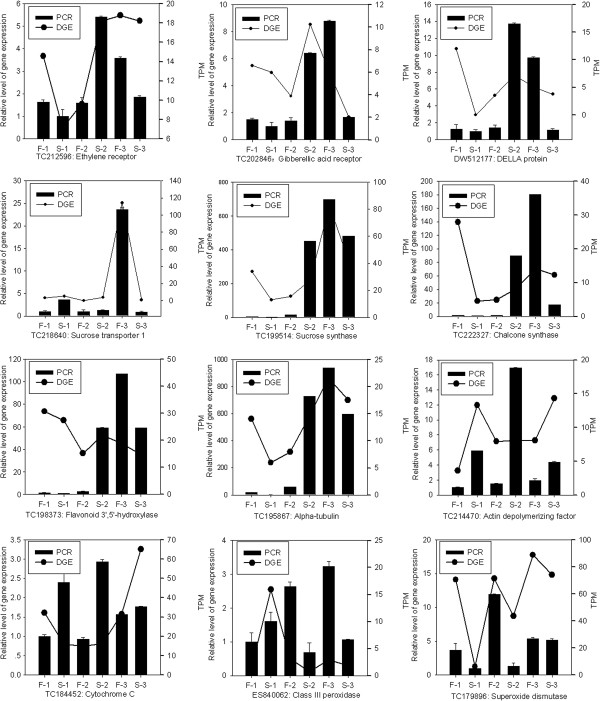
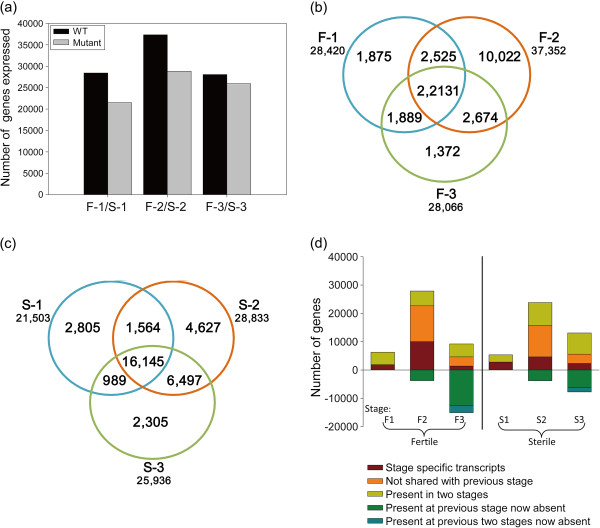
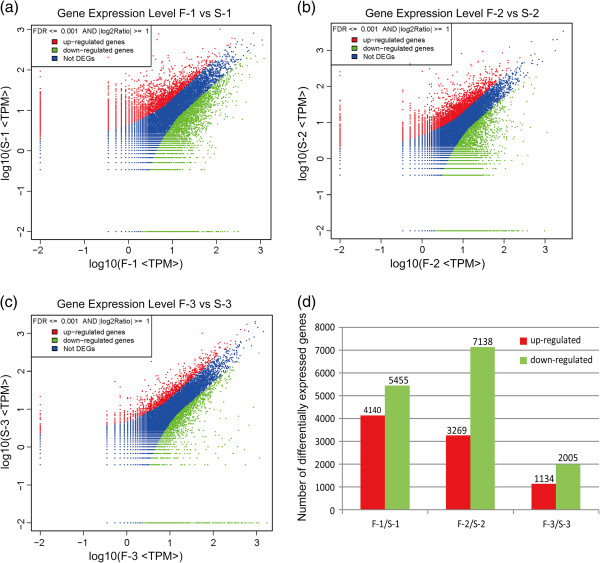
Six DGE libraries were constructed from the cotton anthers of the wild type (WT) and GMS mutant (in the WT background) in three stages of anther development, resulting in 21,503 to 37,352 genes detected in WT and GMS mutant anthers. Compared with the fertile isogenic WT, 9,595 (30% of the expressed genes), 10,407 (25%), and 3,139 (10%) genes were differentially expressed at the meiosis, tetrad, and uninucleate microspore stages of GMS mutant anthers, respectively. Using both DGE experiments and real-time quantitative RT-PCR, the expression of many key genes required for anther development were suppressed in the meiosis stage and the uninucleate microspore stage in anthers of the mutant, but these genes were activated in the tetrad stage of anthers in the mutant. These genes were associated predominantly with hormone synthesis, sucrose and starch metabolism, the pentose phosphate pathway, glycolysis, flavonoid metabolism, and histone protein synthesis. In addition, several genes that participate in DNA methylation, cell wall loosening, programmed cell death, and reactive oxygen species generation/scavenging were activated during the three anther developmental stages in the mutant.
Compared to the same anther developmental stage of the WT, many key genes involved in various aspects of anther development show a reverse gene expression pattern in the GMS mutant, which indicates that diverse gene regulation pathways are involved in the GMS mutant anther development. These findings provide the first insights into the mechanism that leads to genetic male sterility in cotton and contributes to a better understanding of the regulatory network involved in anther development in cotton.
棉花(Gossypium hirsutum)花药发育涉及孢子体和配子体组织之间的多种基因相互作用。然而,目前仅知少数基因特异性参与这一发育过程,并且遗传雄性不育(GMS)的分子机制仍知之甚少。为了全面探索棉花花药发育过程中的全局基因表达并鉴定与雄性不育相关的基因,采用了数字基因表达(DGE)分析。
从野生型(WT)和 GMS 突变体(WT 背景下)棉花花药的三个发育阶段构建了六个 DGE 文库,在 WT 和 GMS 突变体花药中分别检测到 21503 到 37352 个基因。与可育同型 WT 相比,在 GMS 突变体花药的减数分裂、四分体和单核小孢子阶段,分别有 9595 个(表达基因的 30%)、10407 个(25%)和 3139 个(10%)基因差异表达。通过 DGE 实验和实时定量 RT-PCR,在突变体花药的减数分裂和单核小孢子阶段,许多花药发育所需的关键基因的表达受到抑制,但在突变体花药的四分体阶段,这些基因被激活。这些基因主要与激素合成、蔗糖和淀粉代谢、戊糖磷酸途径、糖酵解、类黄酮代谢和组蛋白蛋白合成有关。此外,在突变体的三个花药发育阶段,有几个参与 DNA 甲基化、细胞壁松弛、程序性细胞死亡和活性氧生成/清除的基因被激活。
与 WT 相同的花药发育阶段相比,在 GMS 突变体中,许多参与花药发育各个方面的关键基因表现出相反的基因表达模式,这表明在 GMS 突变体花药发育过程中涉及多种基因调控途径。这些发现为棉花遗传雄性不育导致的机制提供了首次见解,并有助于更好地理解棉花花药发育过程中涉及的调控网络。