Zhou Robert J, Hondori Hossein M, Khademi Maryam, Cassidy Jessica M, Wu Katherine M, Yang Derek Z, Kathuria Nikhita, Erani Fareshte R, Dodakian Lucy, McKenzie Alison, Lopes Cristina V, Scacchi Walt, Srinivasan Ramesh, Cramer Steven C
Department of Neurology, University of California, Irvine, Irvine, CA, United States.
Department of Informatics, University of California, Irvine, Irvine, CA, United States.
Front Neurol. 2018 Jul 24;9:597. doi: 10.3389/fneur.2018.00597. eCollection 2018.
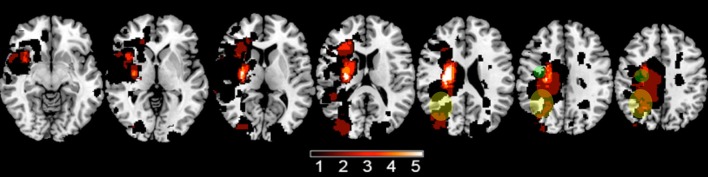
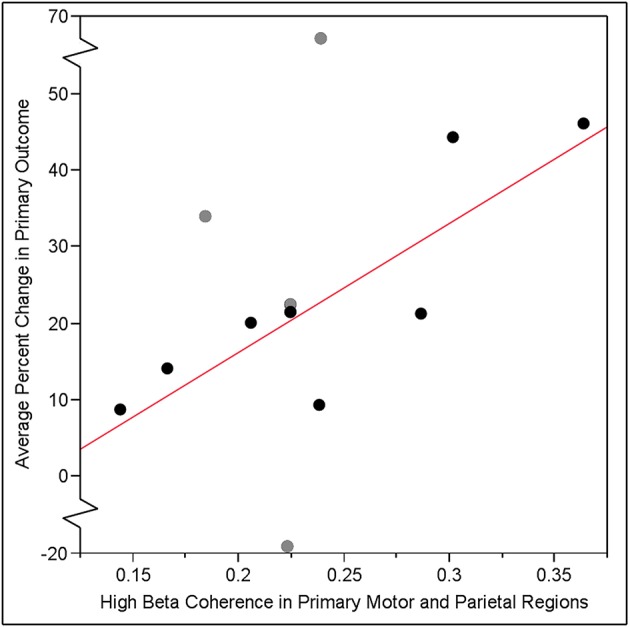
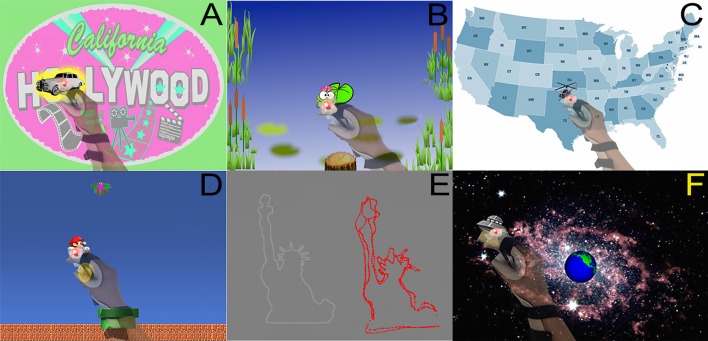
The heterogeneity of stroke prompts the need for predictors of individual treatment response to rehabilitation therapies. We previously studied healthy subjects with EEG and identified a frontoparietal circuit in which activity predicted training-related gains in visuomotor tracking. Here we asked whether activity in this same frontoparietal circuit also predicts training-related gains in visuomotor tracking in patients with chronic hemiparetic stroke. Subjects ( = 12) underwent dense-array EEG recording at rest, then received 8 sessions of visuomotor tracking training delivered via home-based telehealth methods. Subjects showed significant training-related gains in the primary behavioral endpoint, Success Rate score on a standardized test of visuomotor tracking, increasing an average of 24.2 ± 21.9% ( = 0.003). Activity in the circuit of interest, measured as coherence (20-30 Hz) between leads overlying ipsilesional frontal (motor cortex) and parietal lobe, significantly predicted training-related gains in visuomotor tracking change, measured as change in Success Rate score ( = 0.61, = 0.037), supporting the main study hypothesis. Results were specific to the hypothesized ipsilesional motor-parietal circuit, as coherence within other circuits did not predict training-related gains. Analyses were repeated after removing the four subjects with injury to motor or parietal areas; this increased the strength of the association between activity in the circuit of interest and training-related gains. The current study found that (1) Eight sessions of training can significantly improve performance on a visuomotor task in patients with chronic stroke, (2) this improvement can be realized using home-based telehealth methods, (3) an EEG-based measure of frontoparietal circuit function predicts training-related behavioral gains arising from that circuit, as hypothesized and with specificity, and (4) incorporating measures of both neural function and neural injury improves prediction of stroke rehabilitation therapy effects.
中风的异质性促使人们需要了解个体对康复治疗反应的预测指标。我们之前对健康受试者进行了脑电图研究,并确定了一个额顶叶回路,其中的活动可预测视觉运动跟踪训练相关的进步。在此,我们探讨了这个相同的额顶叶回路中的活动是否也能预测慢性偏瘫性中风患者视觉运动跟踪训练相关的进步。12名受试者在静息状态下接受了密集阵列脑电图记录,然后通过家庭远程医疗方法接受了8次视觉运动跟踪训练。受试者在主要行为终点(视觉运动跟踪标准化测试中的成功率得分)上显示出与训练相关的显著进步,平均提高了24.2±21.9%(P = 0.003)。以患侧额叶(运动皮层)和顶叶上方导联之间的相干性(20 - 30Hz)来衡量的感兴趣回路中的活动,显著预测了以成功率得分变化衡量的视觉运动跟踪变化中与训练相关的进步(R = 0.61,P = 0.037),支持了主要研究假设。结果特定于假设的患侧运动 - 顶叶回路,因为其他回路中的相干性并不能预测与训练相关的进步。在排除4名运动或顶叶区域受损患者后重复进行分析;这增强了感兴趣回路中的活动与训练相关进步之间的关联强度。当前研究发现:(1)8次训练可显著改善慢性中风患者的视觉运动任务表现;(2)使用家庭远程医疗方法可实现这种改善;(3)基于脑电图的额顶叶回路功能测量可预测该回路产生的与训练相关的行为进步,如假设的那样且具有特异性;(4)纳入神经功能和神经损伤的测量可改善中风康复治疗效果的预测。