Alzheimer's Therapeutic Research Institute, University of Southern California, San Diego, California, USA.
Department of Statistics, University of Ghana, Accra, Ghana.
Neurodegener Dis. 2018;18(4):173-190. doi: 10.1159/000488780. Epub 2018 Aug 8.
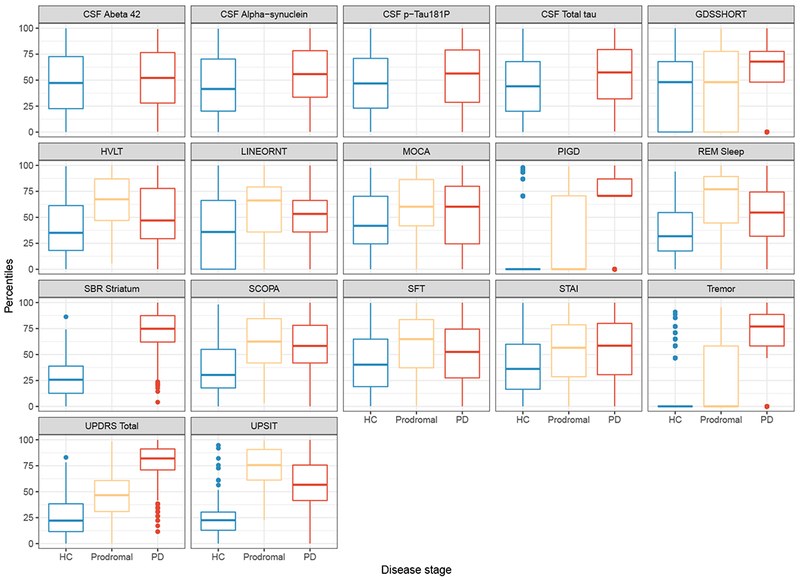
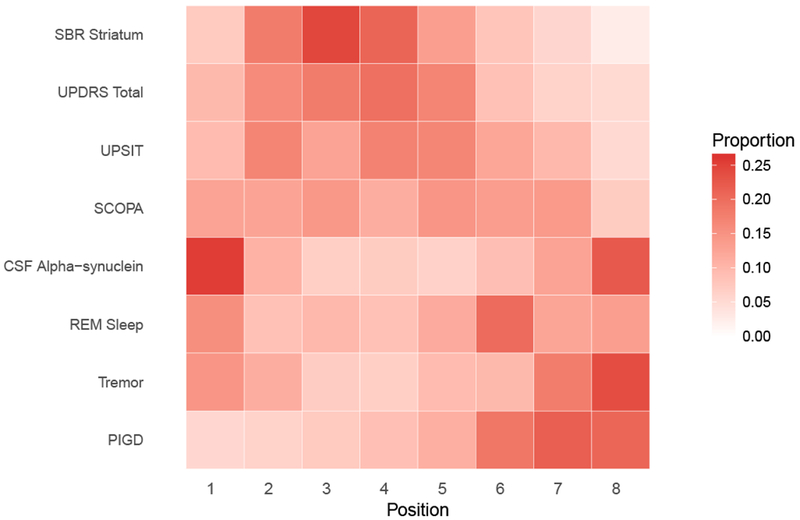
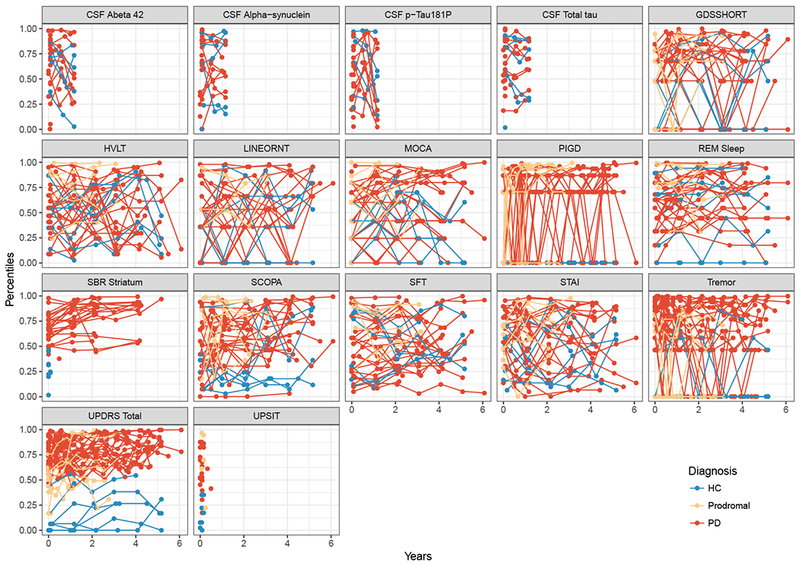
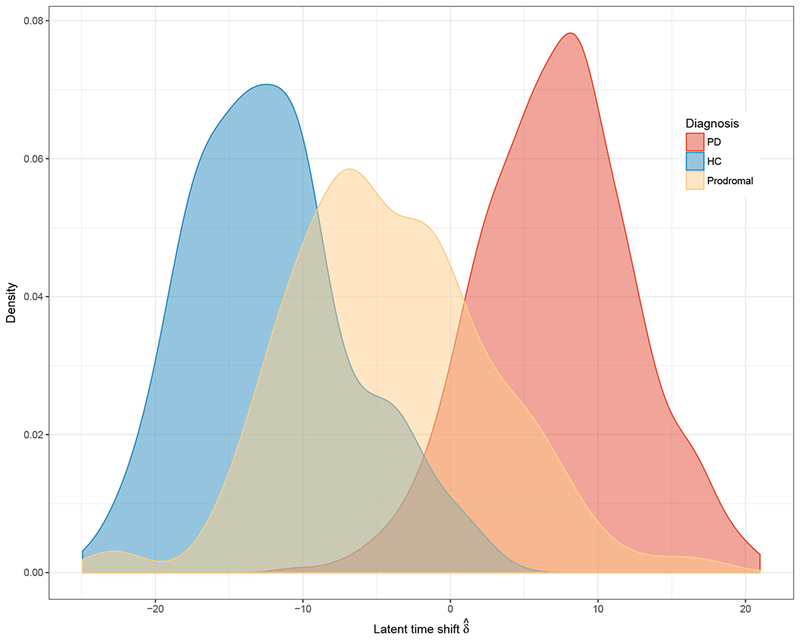
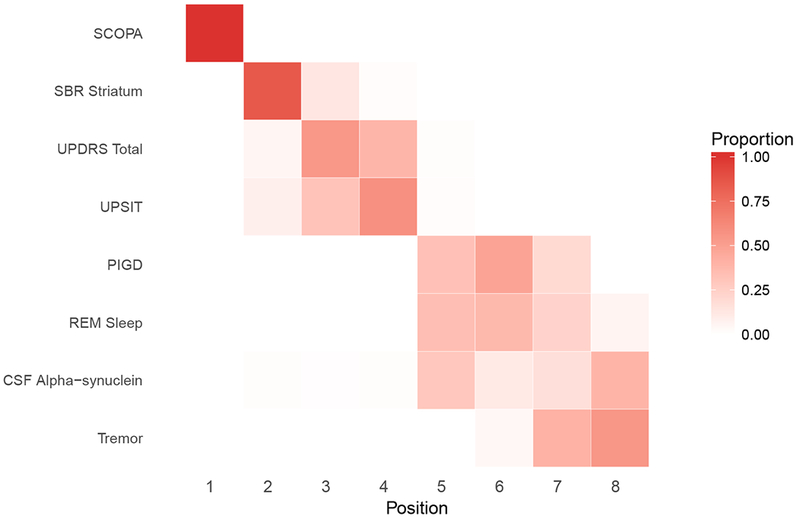
Parkinson's disease is the second most common neurological disease and affects about 1% of persons over the age of 60 years. Due to the lack of approved surrogate markers, confirmation of the disease still requires postmortem examination. Identifying and validating biomarkers are essential steps toward improving clinical diagnosis and accelerating the search for therapeutic drugs to ameliorate disease symptoms. Until recently, statistical analysis of multicohort longitudinal studies of neurodegenerative diseases has usually been restricted to a single analysis per outcome with simple comparisons between diagnostic groups. However, an important methodological consideration is to allow the modeling framework to handle multiple outcomes simultaneously and consider the transitions between diagnostic groups. This enables researchers to monitor multiple trajectories, correctly account for the correlation among biomarkers, and assess how these associations may jointly change over the long-term course of disease. In this study, we apply a latent time joint mixed-effects model to study biomarker progression and disease dynamics in the Parkinson's Progression Markers Initiative (PPMI) and examine which markers might be most informative in the earliest phases of disease. The results reveal that, even though diagnostic category was not included in the model, it seems to accurately reflect the temporal ordering of the disease state consistent with diagnosis categorization at baseline. In addition, results indicated that the specific binding ratio on striatum and the total Unified Parkinson's Disease Rating Scale (UPDRS) show high discriminability between disease stages. An extended latent time joint mixed-effects model with heterogeneous latent time variance also showed improvement in model fit in a simulation study and when applied to real data.
帕金森病是第二常见的神经退行性疾病,影响约 60 岁以上人群的 1%。由于缺乏经过批准的替代标志物,疾病的确认仍然需要进行尸检。识别和验证生物标志物是改善临床诊断和加速寻找改善疾病症状的治疗药物的重要步骤。直到最近,对神经退行性疾病的多队列纵向研究的统计分析通常仅限于对每个结果进行一次分析,并对诊断组进行简单比较。然而,一个重要的方法学考虑因素是允许建模框架同时处理多个结果,并考虑诊断组之间的转变。这使研究人员能够监测多个轨迹,正确考虑生物标志物之间的相关性,并评估这些相关性如何随着疾病的长期过程而共同变化。在这项研究中,我们应用潜在时间联合混合效应模型来研究帕金森病进展标志物倡议(PPMI)中的生物标志物进展和疾病动态,并检查哪些标志物在疾病的早期阶段可能最具信息量。研究结果表明,即使模型中未包含诊断类别,但它似乎能够准确反映疾病状态的时间顺序,与基线时的诊断分类一致。此外,结果表明纹状体的特定结合比和总统一帕金森病评定量表(UPDRS)在疾病阶段之间具有很高的区分能力。在模拟研究和应用于真实数据时,具有异质潜在时间方差的扩展潜在时间联合混合效应模型也显示出了对模型拟合的改善。