Department of Biology, Molecular Biology Institute and Heart Institute, San Diego State University, San Diego, United States.
Department of Biology and Center for Biotechnology and Interdisciplinary Studies, Rensselaer Polytechnic Institute, New York, United States.
Elife. 2018 Aug 13;7:e38064. doi: 10.7554/eLife.38064.
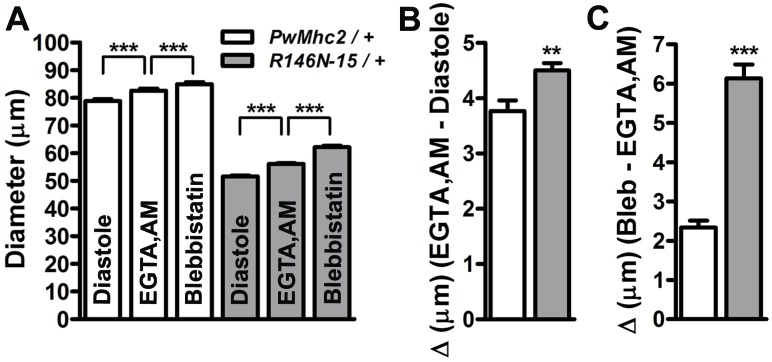
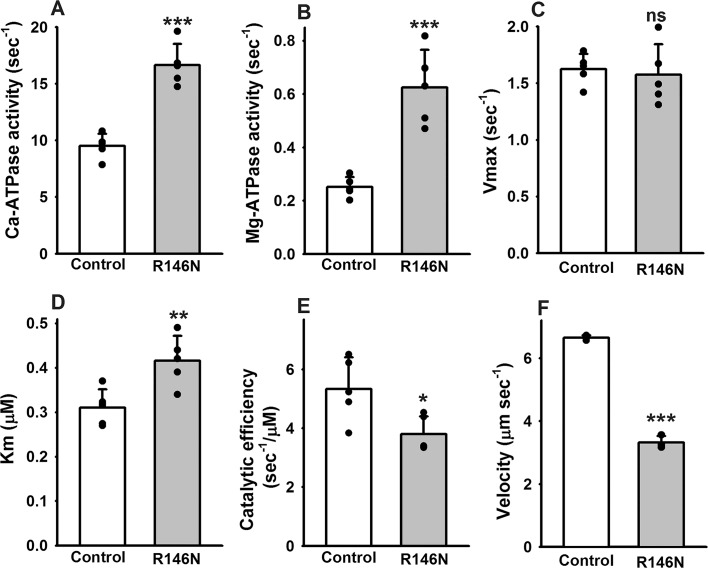
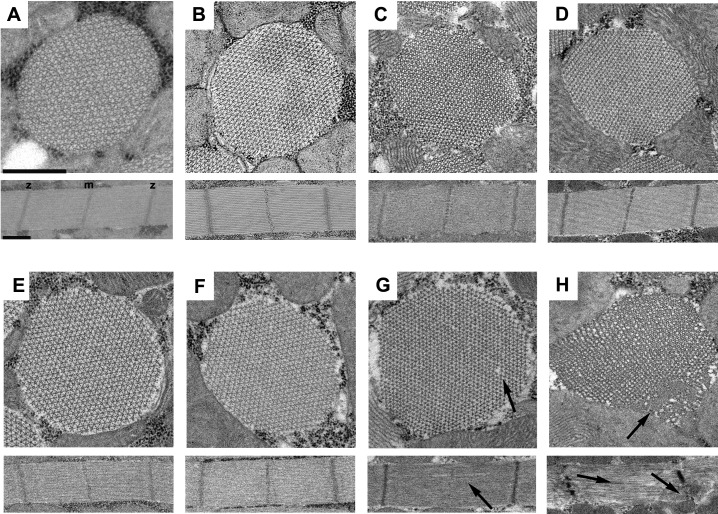
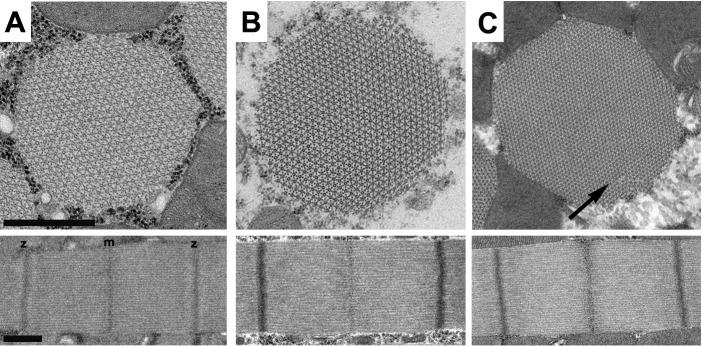
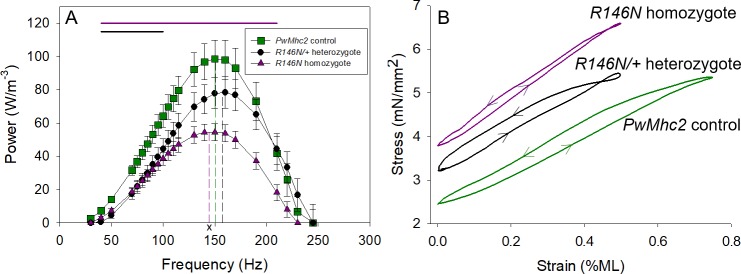
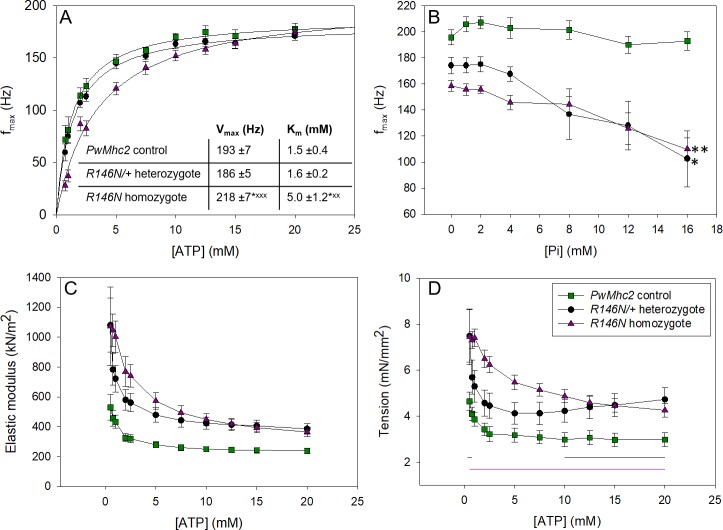
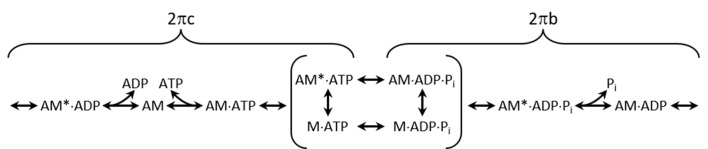
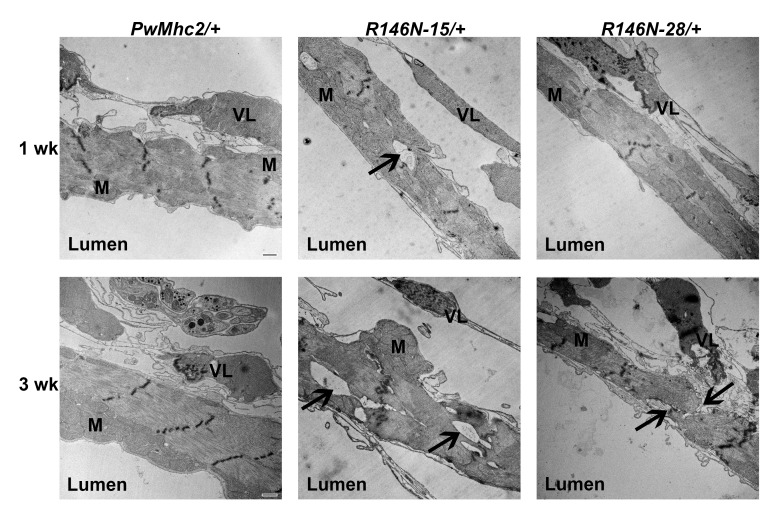
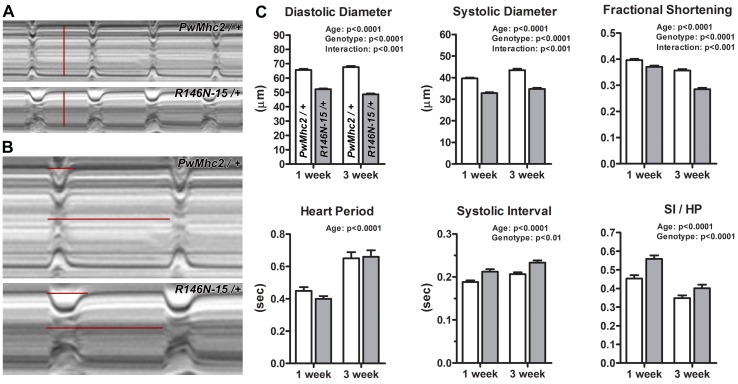
K146N is a dominant mutation in human β-cardiac myosin heavy chain, which causes hypertrophic cardiomyopathy. We examined how muscle responds to this mutation and integratively analyzed the biochemical, physiological and mechanical foundations of the disease. ATPase assays, actin motility, and indirect flight muscle mechanics suggest at least two rate constants of the cross-bridge cycle are altered by the mutation: increased myosin attachment to actin and decreased detachment, yielding prolonged binding. This increases isometric force generation, but also resistive force and work absorption during cyclical contractions, resulting in decreased work, power output, flight ability and degeneration of flight muscle sarcomere morphology. Consistent with prolonged cross-bridge binding serving as the mechanistic basis of the disease and with human phenotypes, /+ hearts are hypercontractile with increased tension generation periods, decreased diastolic/systolic diameters and myofibrillar disarray. This suggests that screening mutated hearts could rapidly identify hypertrophic cardiomyopathy alleles and treatments.
K146N 是人类β-心脏肌球蛋白重链中的一种显性突变,可导致肥厚型心肌病。我们研究了肌肉对这种突变的反应,并综合分析了疾病的生化、生理和力学基础。ATP 酶测定、肌动蛋白运动和间接飞行肌力学表明,该突变至少改变了两个横桥循环的速率常数:肌球蛋白与肌动蛋白的附着增加,而分离减少,导致结合延长。这增加了等长力的产生,但也增加了周期性收缩过程中的阻力和功吸收,导致功、功率输出、飞行能力和飞行肌肌节形态的退化减少。与延长的横桥结合作为疾病的力学基础一致,并且与人类表型一致,/+ 心脏具有较高的收缩性,增加了张力生成周期,减少了舒张/收缩直径和肌原纤维的紊乱。这表明筛选突变的心脏可以快速识别肥厚型心肌病等位基因和治疗方法。