• 文献检索
  • 文档翻译
  • 深度研究
  • 学术资讯
  • Suppr Zotero 插件Zotero 插件
  • 邀请有礼
  • 套餐&价格
  • 历史记录
应用&插件
Suppr Zotero 插件Zotero 插件浏览器插件Mac 客户端Windows 客户端微信小程序
定价
高级版会员购买积分包购买API积分包
服务
文献检索文档翻译深度研究API 文档MCP 服务
关于我们
关于 Suppr公司介绍联系我们用户协议隐私条款
关注我们

Suppr 超能文献

核心技术专利:CN118964589B侵权必究
粤ICP备2023148730 号-1Suppr @ 2026

文献检索

告别复杂PubMed语法,用中文像聊天一样搜索,搜遍4000万医学文献。AI智能推荐,让科研检索更轻松。

立即免费搜索

文件翻译

保留排版,准确专业,支持PDF/Word/PPT等文件格式,支持 12+语言互译。

免费翻译文档

深度研究

AI帮你快速写综述,25分钟生成高质量综述,智能提取关键信息,辅助科研写作。

立即免费体验

基于机器学习的毒性预测:从化学结构描述到转录组分析。

Machine Learning Based Toxicity Prediction: From Chemical Structural Description to Transcriptome Analysis.

机构信息

Department of Biology, Guangdong Provincial Key Laboratory of Cell Microenviroment and Disease Research, Southern University of Science and Technology, Shenzhen 518055, China.

出版信息

Int J Mol Sci. 2018 Aug 10;19(8):2358. doi: 10.3390/ijms19082358.

DOI:10.3390/ijms19082358
PMID:30103448
原文链接:https://pmc.ncbi.nlm.nih.gov/articles/PMC6121588/
Abstract

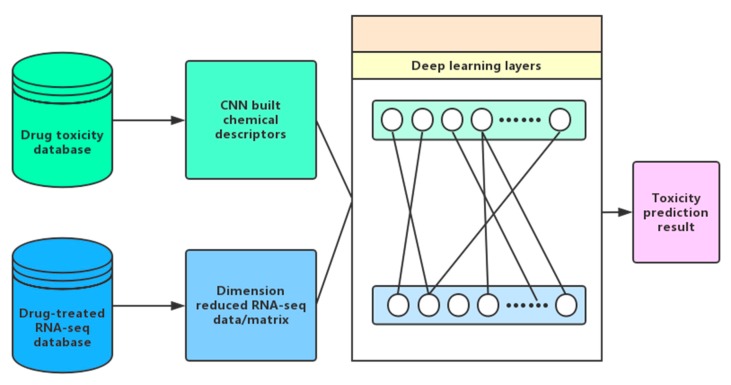
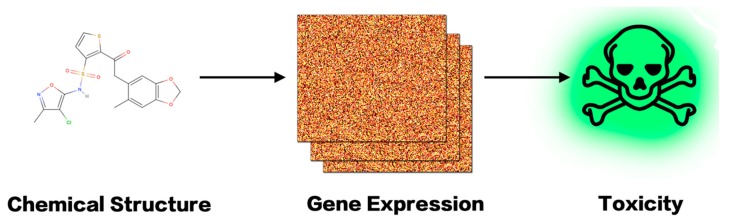
Toxicity prediction is very important to public health. Among its many applications, toxicity prediction is essential to reduce the cost and labor of a drug's preclinical and clinical trials, because a lot of drug evaluations (cellular, animal, and clinical) can be spared due to the predicted toxicity. In the era of Big Data and artificial intelligence, toxicity prediction can benefit from machine learning, which has been widely used in many fields such as natural language processing, speech recognition, image recognition, computational chemistry, and bioinformatics, with excellent performance. In this article, we review machine learning methods that have been applied to toxicity prediction, including deep learning, random forests, k-nearest neighbors, and support vector machines. We also discuss the input parameter to the machine learning algorithm, especially its shift from chemical structural description only to that combined with human transcriptome data analysis, which can greatly enhance prediction accuracy.

摘要

毒性预测对公共卫生非常重要。在其众多应用中,毒性预测对于降低药物临床前和临床试验的成本和劳动力至关重要,因为由于预测的毒性,可以避免大量的药物评估(细胞、动物和临床)。在大数据和人工智能时代,毒性预测可以受益于机器学习,它已经在自然语言处理、语音识别、图像识别、计算化学和生物信息学等许多领域得到了广泛应用,并且具有出色的性能。在本文中,我们回顾了已经应用于毒性预测的机器学习方法,包括深度学习、随机森林、k-最近邻和支持向量机。我们还讨论了机器学习算法的输入参数,特别是它从仅化学结构描述到与人类转录组数据分析相结合的转变,这可以极大地提高预测准确性。
https://cdn.ncbi.nlm.nih.gov/pmc/blobs/205f/6121588/0e3e2a95095f/ijms-19-02358-g005.jpg
https://cdn.ncbi.nlm.nih.gov/pmc/blobs/205f/6121588/e7dd5b193a5e/ijms-19-02358-g001.jpg
https://cdn.ncbi.nlm.nih.gov/pmc/blobs/205f/6121588/3d14fa359a43/ijms-19-02358-g002.jpg
https://cdn.ncbi.nlm.nih.gov/pmc/blobs/205f/6121588/6c68bc813d92/ijms-19-02358-g003.jpg
https://cdn.ncbi.nlm.nih.gov/pmc/blobs/205f/6121588/4be266b53728/ijms-19-02358-g004.jpg
https://cdn.ncbi.nlm.nih.gov/pmc/blobs/205f/6121588/0e3e2a95095f/ijms-19-02358-g005.jpg
https://cdn.ncbi.nlm.nih.gov/pmc/blobs/205f/6121588/e7dd5b193a5e/ijms-19-02358-g001.jpg
https://cdn.ncbi.nlm.nih.gov/pmc/blobs/205f/6121588/3d14fa359a43/ijms-19-02358-g002.jpg
https://cdn.ncbi.nlm.nih.gov/pmc/blobs/205f/6121588/6c68bc813d92/ijms-19-02358-g003.jpg
https://cdn.ncbi.nlm.nih.gov/pmc/blobs/205f/6121588/4be266b53728/ijms-19-02358-g004.jpg
https://cdn.ncbi.nlm.nih.gov/pmc/blobs/205f/6121588/0e3e2a95095f/ijms-19-02358-g005.jpg

相似文献

1
Machine Learning Based Toxicity Prediction: From Chemical Structural Description to Transcriptome Analysis.基于机器学习的毒性预测:从化学结构描述到转录组分析。
Int J Mol Sci. 2018 Aug 10;19(8):2358. doi: 10.3390/ijms19082358.
2
Review of machine learning and deep learning models for toxicity prediction.机器学习和深度学习模型在毒性预测中的应用综述。
Exp Biol Med (Maywood). 2023 Nov;248(21):1952-1973. doi: 10.1177/15353702231209421. Epub 2023 Dec 6.
3
Identification of human circadian genes based on time course gene expression profiles by using a deep learning method.基于深度学习方法的时间序列基因表达谱识别人类生物钟基因。
Biochim Biophys Acta Mol Basis Dis. 2018 Jun;1864(6 Pt B):2274-2283. doi: 10.1016/j.bbadis.2017.12.004. Epub 2017 Dec 12.
4
Natural language processing and machine learning approaches for food categorization and nutrition quality prediction compared with traditional methods.与传统方法相比,用于食品分类和营养质量预测的自然语言处理和机器学习方法。
Am J Clin Nutr. 2023 Mar;117(3):553-563. doi: 10.1016/j.ajcnut.2022.11.022. Epub 2022 Dec 23.
5
Evaluations on supervised learning methods in the calibration of seven-hole pressure probes.七种空压探头标定中超监督学习方法的评估。
PLoS One. 2023 Jan 23;18(1):e0277672. doi: 10.1371/journal.pone.0277672. eCollection 2023.
6
Applications of Machine Learning Methods in Drug Toxicity Prediction.机器学习方法在药物毒性预测中的应用。
Curr Top Med Chem. 2018;18(12):987-997. doi: 10.2174/1568026618666180727152557.
7
EMLI-ICC: an ensemble machine learning-based integration algorithm for metastasis prediction and risk stratification in intrahepatic cholangiocarcinoma.EMLI-ICC:一种基于集成机器学习的整合算法,用于预测肝内胆管癌的转移和风险分层。
Brief Bioinform. 2022 Nov 19;23(6). doi: 10.1093/bib/bbac450.
8
Artificial Intelligence-Based Toxicity Prediction of Environmental Chemicals: Future Directions for Chemical Management Applications.基于人工智能的环境化学品毒性预测:化学管理应用的未来方向
Environ Sci Technol. 2022 Jun 21;56(12):7532-7543. doi: 10.1021/acs.est.1c07413. Epub 2022 Jun 6.
9
sRNARFTarget: a fast machine-learning-based approach for transcriptome-wide sRNA target prediction.sRNA 靶标预测的快速机器学习方法:基于转录组范围的 sRNA 靶标预测。
RNA Biol. 2022;19(1):44-54. doi: 10.1080/15476286.2021.2012058. Epub 2021 Dec 31.
10
Deep Omics.深度组学。
Proteomics. 2018 Jan;18(2). doi: 10.1002/pmic.201700319. Epub 2017 Dec 29.

引用本文的文献

1
A deep-learning approach to predict reproductive toxicity of chemicals using communicative message passing neural network.一种使用通信消息传递神经网络预测化学物质生殖毒性的深度学习方法。
Front Toxicol. 2025 Jul 22;7:1640612. doi: 10.3389/ftox.2025.1640612. eCollection 2025.
2
Leveraging machine learning models in evaluating ADMET properties for drug discovery and development.利用机器学习模型评估药物发现与开发中的ADMET性质。
ADMET DMPK. 2025 Jun 7;13(3):2772. doi: 10.5599/admet.2772. eCollection 2025.
3
A robust and statistical analyzed predictive model for drug toxicity using machine learning.

本文引用的文献

1
Gene2vec: distributed representation of genes based on co-expression.Gene2vec:基于共表达的基因分布式表示。
BMC Genomics. 2019 Feb 4;20(Suppl 1):82. doi: 10.1186/s12864-018-5370-x.
2
prediction of chemical genotoxicity using machine learning methods and structural alerts.使用机器学习方法和结构警示预测化学物质的遗传毒性
Toxicol Res (Camb). 2017 Dec 15;7(2):211-220. doi: 10.1039/c7tx00259a. eCollection 2018 Mar 1.
3
Assessing Deep and Shallow Learning Methods for Quantitative Prediction of Acute Chemical Toxicity.评估深度和浅层学习方法在定量预测急性化学毒性方面的应用。
一种使用机器学习的强大且经过统计分析的药物毒性预测模型。
Sci Rep. 2025 May 23;15(1):17993. doi: 10.1038/s41598-025-02333-z.
4
Hepatotoxicity Evaluation of Levornidazole and Its Three Main Impurities: Based on Structure-Toxicity Classification Prediction Combined with Zebrafish Toxicity Assessment.左奥硝唑及其三种主要杂质的肝毒性评价:基于结构-毒性分类预测结合斑马鱼毒性评估
Molecules. 2025 Feb 21;30(5):995. doi: 10.3390/molecules30050995.
5
An Imbalance Regression Approach to Toxicity Prediction of Chemicals for Potential Use in Environmentally Acceptable Lubricants.一种用于预测潜在用于环境可接受润滑剂的化学品毒性的不平衡回归方法。
ACS Appl Mater Interfaces. 2025 Mar 19;17(11):16725-16737. doi: 10.1021/acsami.4c10622. Epub 2025 Mar 10.
6
Bridging organ transcriptomics for advancing multiple organ toxicity assessment with a generative AI approach.利用生成式人工智能方法构建器官转录组学以推进多器官毒性评估
NPJ Digit Med. 2024 Nov 5;7(1):310. doi: 10.1038/s41746-024-01317-z.
7
Thyroid Hormone Biomonitoring: A Review on Their Metabolism and Machine-Learning Based Analysis on Effects of Endocrine Disrupting Chemicals.甲状腺激素生物监测:关于其代谢及基于机器学习分析内分泌干扰化学物质影响的综述
Environ Health (Wash). 2024 Mar 4;2(6):350-372. doi: 10.1021/envhealth.3c00184. eCollection 2024 Jun 21.
8
A Systematic Review of Genetics- and Molecular-Pathway-Based Machine Learning Models for Neurological Disorder Diagnosis.基于遗传学和分子途径的机器学习模型在神经障碍诊断中的系统评价
Int J Mol Sci. 2024 Jun 11;25(12):6422. doi: 10.3390/ijms25126422.
9
Gap-Δenergy, a New Metric of the Bond Energy State, Assisting to Predict Molecular Toxicity.间隙-Δ能量,一种键能状态的新指标,有助于预测分子毒性。
ACS Omega. 2024 Apr 12;9(16):17839-17847. doi: 10.1021/acsomega.3c07682. eCollection 2024 Apr 23.
10
Cell Painting-based bioactivity prediction boosts high-throughput screening hit-rates and compound diversity.基于细胞绘画的生物活性预测提高了高通量筛选的命中率和化合物多样性。
Nat Commun. 2024 Apr 24;15(1):3470. doi: 10.1038/s41467-024-47171-1.
Toxicol Sci. 2018 Aug 1;164(2):512-526. doi: 10.1093/toxsci/kfy111.
4
Corrigendum: Prediction of Chemical Toxicity for Drug Design Using Machine Learning Methods and Structural Alerts.勘误:使用机器学习方法和结构警报预测药物设计中的化学毒性。
Front Chem. 2018 Apr 13;6:129. doi: 10.3389/fchem.2018.00129. eCollection 2018.
5
Recurrent Neural Networks for Multivariate Time Series with Missing Values.具有缺失值的多元时间序列的递归神经网络。
Sci Rep. 2018 Apr 17;8(1):6085. doi: 10.1038/s41598-018-24271-9.
6
The US Federal Tox21 Program: A strategic and operational plan for continued leadership.美国联邦毒物学计划 21:持续领导的战略和行动计划。
ALTEX. 2018;35(2):163-168. doi: 10.14573/altex.1803011. Epub 2018 Mar 8.
7
3D Molecular Representations Based on the Wave Transform for Convolutional Neural Networks.基于小波变换的卷积神经网络的 3D 分子表示。
Mol Pharm. 2018 Oct 1;15(10):4378-4385. doi: 10.1021/acs.molpharmaceut.7b01134. Epub 2018 Mar 5.
8
Deep learning for biology.用于生物学的深度学习
Nature. 2018 Feb 22;554(7693):555-557. doi: 10.1038/d41586-018-02174-z.
9
Web-4D-QSAR: A web-based application to generate 4D-QSAR descriptors.Web-4D-QSAR:一个基于网络的应用程序,用于生成 4D-QSAR 描述符。
J Comput Chem. 2018 Jun 5;39(15):917-924. doi: 10.1002/jcc.25166. Epub 2018 Feb 5.
10
Quantitative Toxicity Prediction Using Topology Based Multitask Deep Neural Networks.基于拓扑的多任务深度神经网络的定量毒性预测。
J Chem Inf Model. 2018 Feb 26;58(2):520-531. doi: 10.1021/acs.jcim.7b00558. Epub 2018 Jan 31.