Bamodu Oluwaseun Adebayo, Yang Ching-Kuo, Cheng Wei-Hong, Tzeng David T W, Kuo Kuang-Tai, Huang Chun-Chih, Deng Li, Hsiao Michael, Lee Wei-Hwa, Yeh Chi-Tai
Department of Hematology and Oncology, Cancer Center, Taipei Medical University-Shuang Ho Hospital, New Taipei City 23561, Taiwan.
Department of Medical Research & Education, Taipei Medical University-Shuang Ho Hospital, New Taipei City 23561, Taiwan.
Cancers (Basel). 2018 Aug 10;10(8):269. doi: 10.3390/cancers10080269.
Colorectal cancer (CRC) remains a leading cause of cancer-related morbidity and mortality in both sexes globally. This is not unconnected with the heterogeneity and plasticity of CRC stem cells (CRC-SCs) which stealthily exploit the niche-related and (epi)genetic factors to facilitate metastasis, chemoresistance, tumor recurrence, and disease progression. Despite the accumulating evidence of the role of dysregulated microRNAs in malignancies, the therapeutic efficacy of pharmacological-targeting of CRC-SC-associated microRNAs is relatively under-explored.
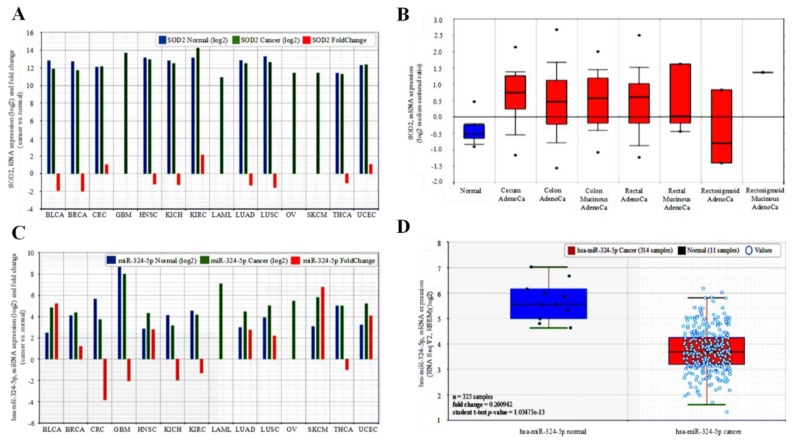
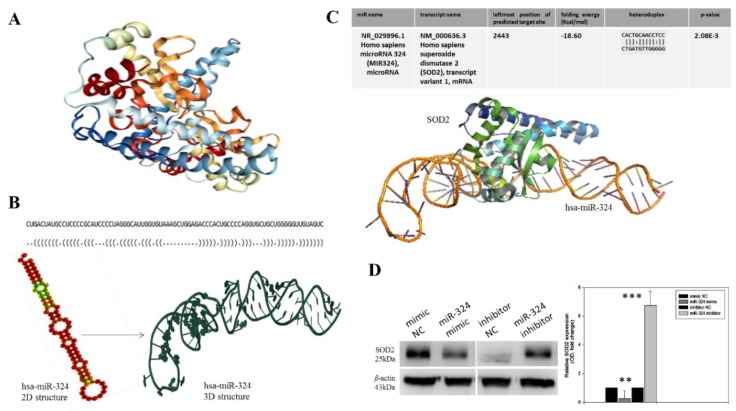
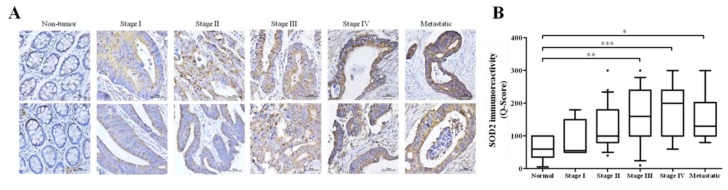
In this present study, we employed relatively new bioinformatics approaches, analyses of microarray data, Western blot, real-time polymerase chain reaction (RT-PCR), and functional assays to show that hsa-miR-324-5p expression is significantly suppressed in CRC cells, and inversely correlates with the aberrant expression of SOD2.
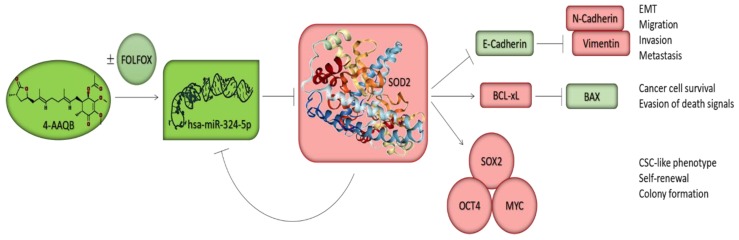
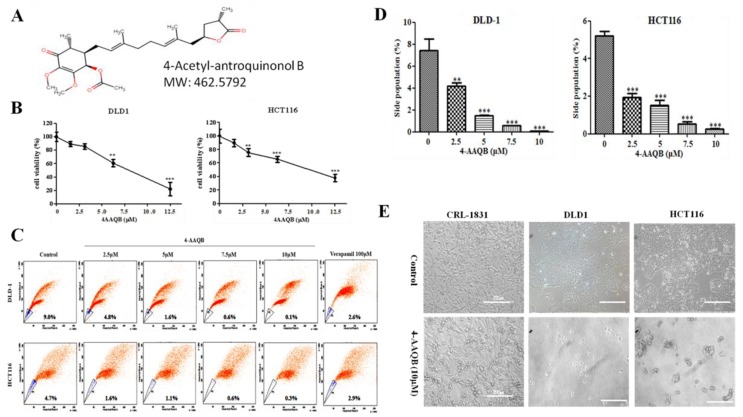
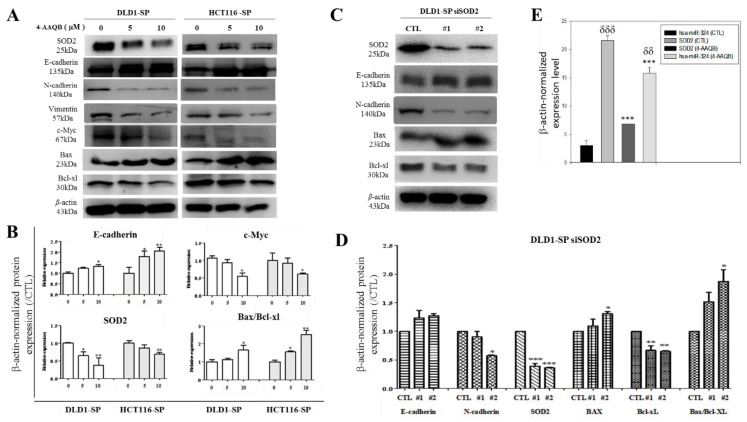
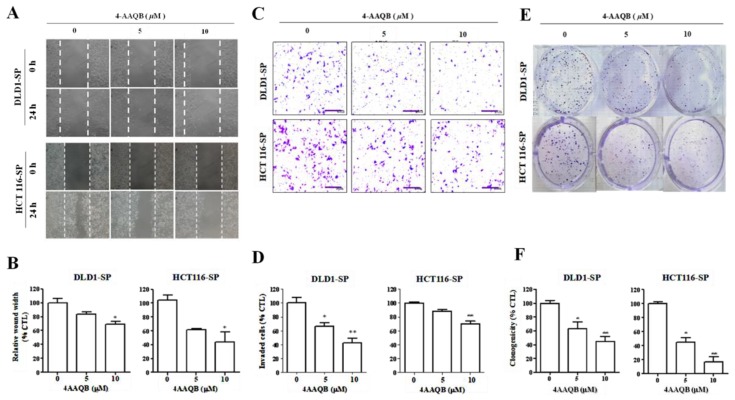
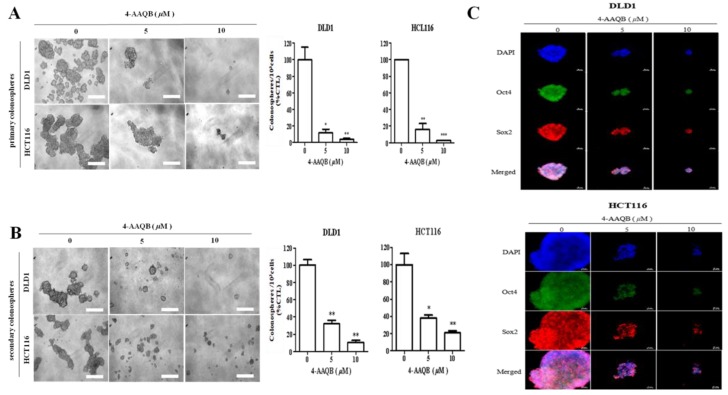
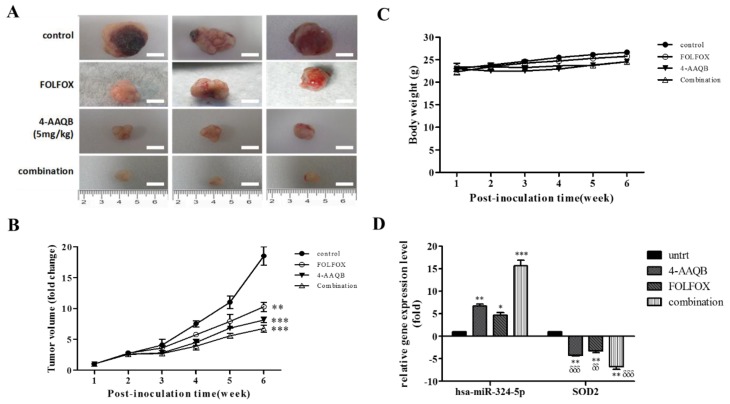
This converse hsa-miR-324-5p/SOD2 relationship is associated with enhanced oncogenicity, which is effectively inhibited by 4-acetylantroquinonol B (4-AAQB), as evidenced by inhibited cell viability and proliferation, as well as attenuated migration, invasion, and clonogenicity in 4-AAQB-treated DLD1 and HCT116 cells. Interestingly, 4-AAQB did not affect the viability and proliferation of normal colon cells. We also showed that 4-AAQB-induced re-expression of hsa-miR-324-5p, akin to short-interfering RNA, reduced SOD2 expression, correlates with the concurrent down-regulation of SOD2, N-cadherin, vimentin, c-Myc, and BcL-xL2, with concomitant up-regulation of E-cadherin and BAX2 proteins. Enhanced expression of hsa-miR-324-5p in the CRC cells suppressed their tumorigenicity in vitro and in vivo. Additionally, 4-AAQB synergistically potentiates the FOLFOX (folinate (leucovorin), fluorouracil (5FU), and oxaliplatin) anticancer effect by eliciting the re-expression of SOD2-suppressed hsa-miR-324, and inhibiting SOD2-mediated tumorigenicity.
Our findings highlight the pre-clinical anti-CSC efficacy of 4-AAQB, with or without FOLFOX in CRC, and suggest a potential novel therapeutic strategy for CRC patients.
在全球范围内,结直肠癌(CRC)仍然是导致男女癌症相关发病和死亡的主要原因。这与CRC干细胞(CRC-SCs)的异质性和可塑性密切相关,CRC-SCs巧妙地利用与微环境相关的和(表观)遗传因素来促进转移、化疗耐药、肿瘤复发和疾病进展。尽管越来越多的证据表明失调的微小RNA在恶性肿瘤中发挥作用,但针对与CRC-SC相关的微小RNA进行药物靶向治疗的疗效相对较少被探索。
在本研究中,我们采用了相对较新的生物信息学方法、微阵列数据分析、蛋白质免疫印迹法、实时聚合酶链反应(RT-PCR)和功能测定,以表明hsa-miR-324-5p在CRC细胞中的表达显著受到抑制,并且与SOD2的异常表达呈负相关。
这种相反的hsa-miR-324-5p/SOD2关系与致癌性增强有关,4-乙酰安曲霉素B(4-AAQB)可有效抑制这种致癌性,这在4-AAQB处理的DLD1和HCT116细胞中表现为细胞活力和增殖受到抑制,以及迁移、侵袭和克隆形成能力减弱。有趣的是,4-AAQB不影响正常结肠细胞的活力和增殖。我们还表明,4-AAQB诱导的hsa-miR-324-5p重新表达类似于短干扰RNA,可降低SOD2表达,这与SOD2、N-钙黏蛋白、波形蛋白、c-Myc和BcL-xL2的同时下调相关,同时E-钙黏蛋白和BAX2蛋白上调。CRC细胞中hsa-miR-324-5p表达的增强在体外和体内均抑制了它们的致瘤性。此外,4-AAQB通过引发被SOD2抑制的hsa-miR-324的重新表达,并抑制SOD2介导的致瘤性,协同增强了FOLFOX(亚叶酸(甲酰四氢叶酸)、氟尿嘧啶(5FU)和奥沙利铂)的抗癌效果。
我们的研究结果突出了4-AAQB在CRC中无论有无FOLFOX的临床前抗CSC疗效,并为CRC患者提出了一种潜在的新型治疗策略。