Intramural Research Program, National Institute of Mental Health, Bethesda, MD, USA.
Transl Psychiatry. 2018 Aug 13;8(1):151. doi: 10.1038/s41398-018-0203-x.
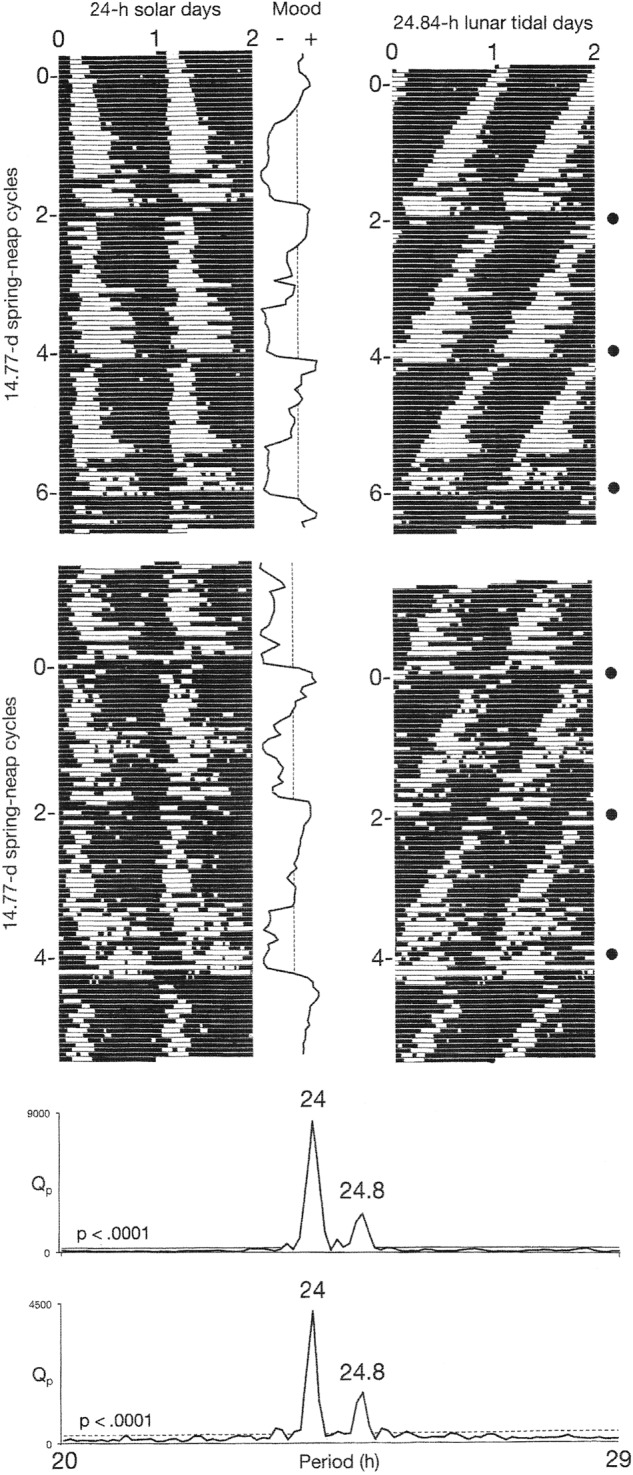
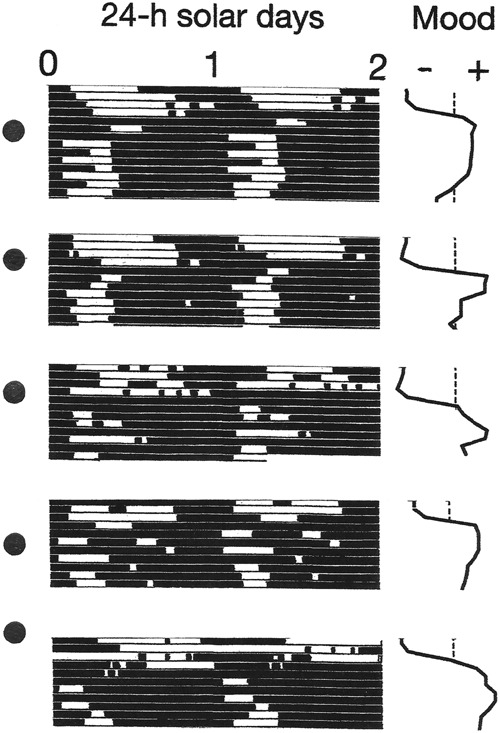
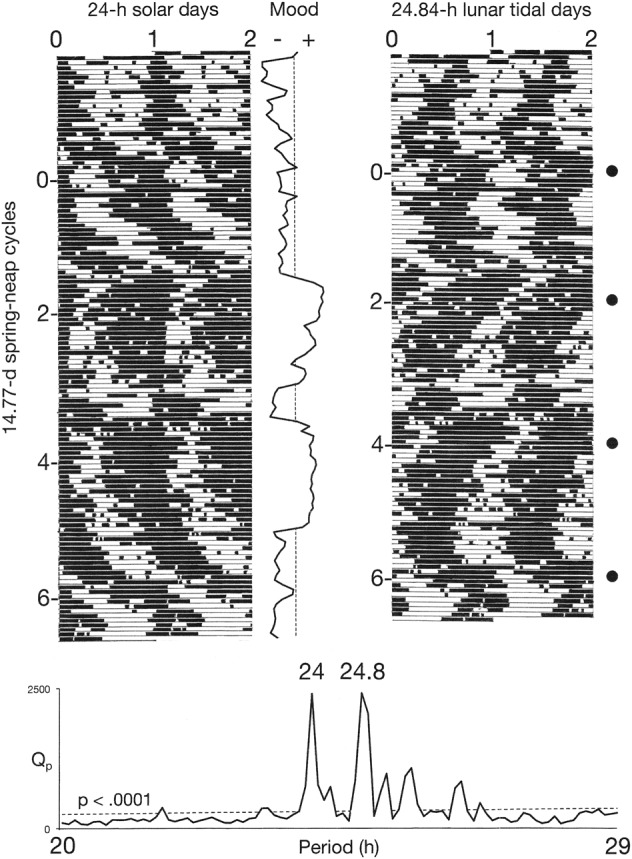
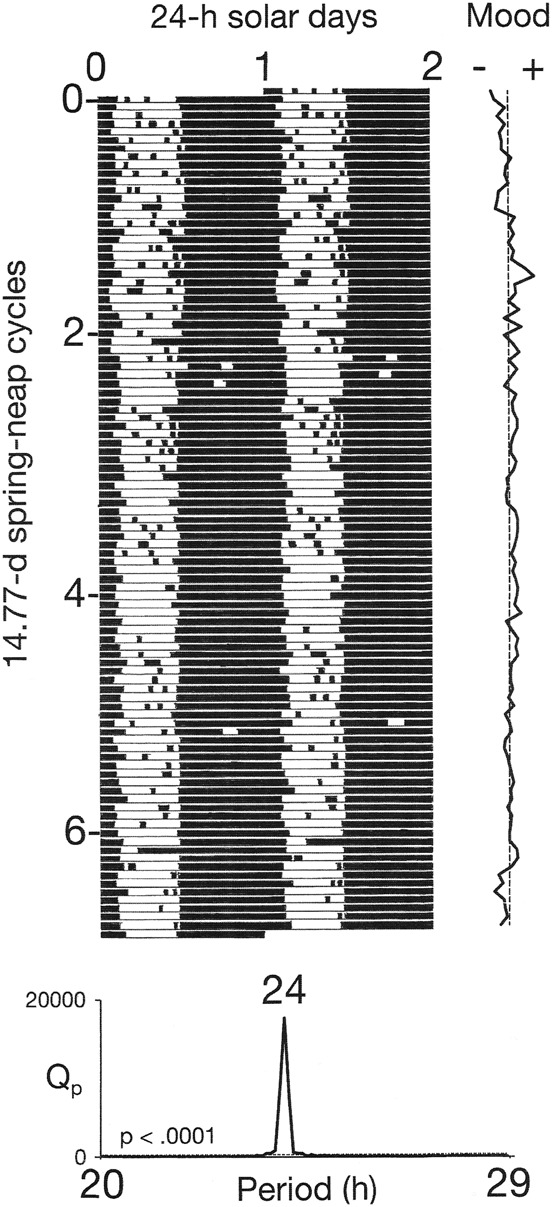
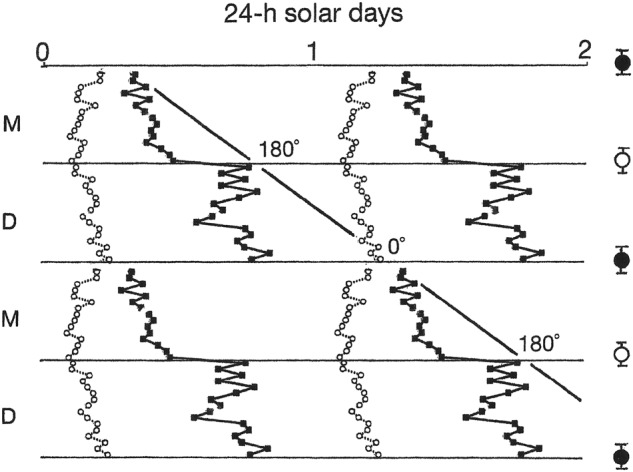
In bipolar disorder, episodes of depression and mania are associated with dramatic disturbances in sleep, which experiments show are likely to contribute to the pathogenesis of the episodes. A recent finding that 18 patients' manic-depressive cycles oscillated in synchrony with biweekly surges in amplitude of the moon's tides provided a clue to the cause of the sleep-disturbances. Analyses of one of the patients' sleep-wake cycles suggest that his mood cycles arose when a circadian rhythm that normally is entrained to dawn and controls the daily onset of wakefulness became entrained instead to 24.8-h recurrences of every second 12.4-h tidal cycle. The finding provides the basis for a comprehensive description of the pathogenesis and pathophysiology of the mood cycle.
在双相情感障碍中,抑郁和躁狂发作与睡眠的剧烈紊乱有关,实验表明,这些紊乱很可能有助于发作的发病机制。最近的一项发现表明,18 名患者的躁狂抑郁周期与月球潮汐幅度的双周性波动同步振荡,这为睡眠紊乱的原因提供了线索。对其中一位患者的睡眠-觉醒周期的分析表明,当一个正常与黎明同步并控制每天清醒开始的昼夜节律转而与每 12.4 小时潮汐周期的第二次 24.8 小时的周期同步时,他的情绪周期就出现了。这一发现为全面描述情绪周期的发病机制和病理生理学提供了依据。