Torselli Elisa, Ottonello Marcella, Franceschina Emilio, Palagi Emanuele, Bertolotti Giorgio, Fiabane Elena
Miller Institute for Behavioral and Cognitive Therapy, Genoa, Italy.
Department of Physical and Rehabilitation Medicine, ICS Maugeri Spa SB, Institute of Genoa Nervi, Genoa, Italy,
Neuropsychiatr Dis Treat. 2018 Jul 31;14:1907-1917. doi: 10.2147/NDT.S166669. eCollection 2018.
The aims of this pilot study were to examine cognitive factors (brooding and craving) together with positive/negative metacognitive beliefs about alcohol during a residential program for alcohol addiction and to explore relationships with psychological variables at discharge, with the scope of identifying predictive factors of psychological outcome and patients at greatest risk of relapse.
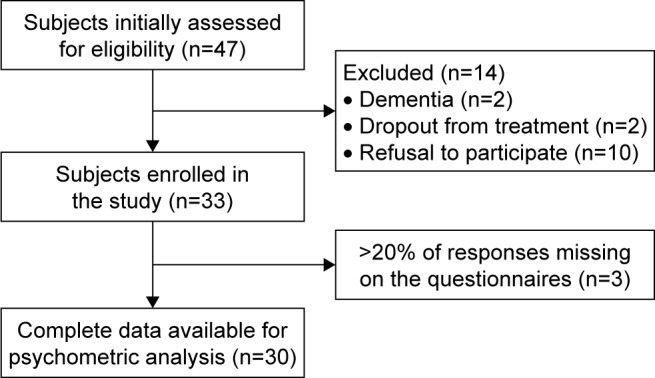
Thirty patients underwent a brief semistructured interview on admission to a 28-day rehabilitation program for alcohol addiction, and completed at admission and discharge the following five self-report questionnaires: 1) brooding (Brooding subscale of Ruminative Response Scale [B-RRS]), 2) craving (Penn Alcohol Craving Scale [PACS]), 3) positive beliefs about alcohol use (Positive Alcohol Metacognitions Scale [PAMS]), 4) negative beliefs about alcohol use (Negative Alcohol Metacognitions Scale [NAMS]), and 5) the psychophysical state of health (Cognitive Behavioral Assessment - Outcome Evaluation [CBA-OE]).
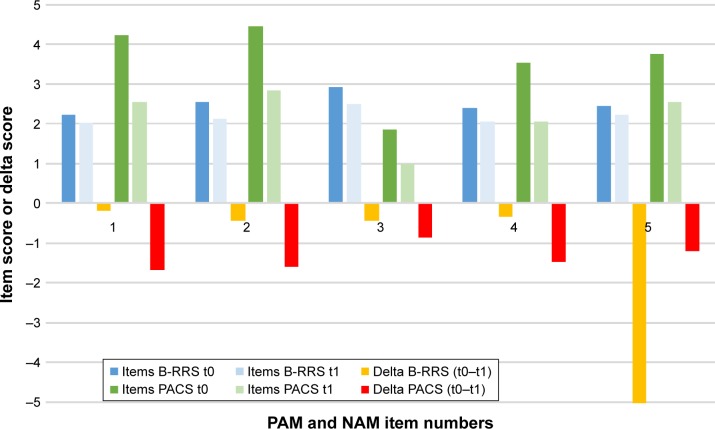
Significant changes were found between admission and discharge in CBA-OE, B-RRS, and PACS. Brooding at admission was a significant predictor of post-treatment psychological variables of "anxiety", "depression", and "psychological distress", whereas craving at admission was a good predictor of "perception of positive change" at discharge.
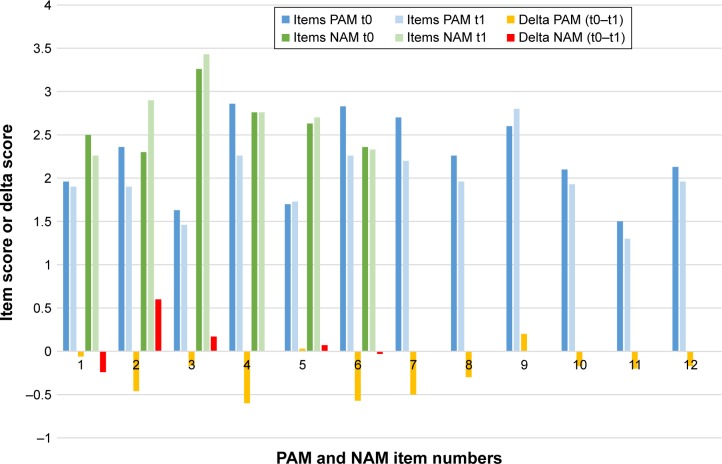
Our results confirm the importance of brooding in mood regulation and its role in the development and maintenance of problem drinking. In addition, craving was negatively associated with the perception of positive change in the post-treatment outcomes and was a predictor of this psychological variable, which includes features related to the individual's resilience and strength. The changes in metacognitive beliefs regarding alcohol use were not statistically significant, but we found a reduction in positive metacognitions and an increase in negative alcohol-related beliefs; future studies are needed to further explore this issue.
本试点研究的目的是在酒精成瘾住院治疗项目期间,研究认知因素(沉思和渴望)以及关于酒精的积极/消极元认知信念,并探讨出院时与心理变量的关系,以确定心理结果的预测因素和复发风险最高的患者。
30名患者在进入为期28天的酒精成瘾康复项目时接受了简短的半结构化访谈,并在入院和出院时完成了以下五份自我报告问卷:1)沉思(反刍反应量表的沉思子量表[B-RRS]),2)渴望(宾夕法尼亚酒精渴望量表[PACS]),3)关于饮酒的积极信念(积极酒精元认知量表[PAMS]),4)关于饮酒的消极信念(消极酒精元认知量表[NAMS]),以及5)身心健康状态(认知行为评估-结果评估[CBA-OE])。
在CBA-OE、B-RRS和PACS方面,入院和出院之间发现了显著变化。入院时的沉思是治疗后“焦虑”、“抑郁”和“心理困扰”等心理变量的显著预测因素,而入院时的渴望是出院时“积极变化感知”的良好预测因素。
我们的结果证实了沉思在情绪调节中的重要性及其在问题饮酒的发展和维持中的作用。此外,渴望与治疗后结果中的积极变化感知呈负相关,并且是这一心理变量的预测因素,该变量包括与个体恢复力和力量相关的特征。关于饮酒的元认知信念的变化没有统计学意义,但我们发现积极元认知减少,与酒精相关的消极信念增加;未来需要进一步研究来探讨这个问题。