Gomes Juliana de A S, de Araújo Fernanda F, Vitelli-Avelar Daniele M, Sathler-Avelar Renato, Lage Paula S, Wendling Ana P B, do Vale Isabela N P C, Dias João C P, Elói-Santos Silvana M, Teixeira-Carvalho Andréa, Martins-Filho Olindo A
Grupo Integrado de Pesquisas em Biomarcadores, Instituto René Rachou, Fundação Oswaldo Cruz, FIOCRUZ, Belo Horizonte, Brazil.
Laboratório de Biologia das Interações Celulares, Departamento de Morfologia, Instituto de Ciências Biológicas, Universidade Federal de Minas Gerais, Belo Horizonte, Brazil.
Front Microbiol. 2018 Jul 30;9:1608. doi: 10.3389/fmicb.2018.01608. eCollection 2018.
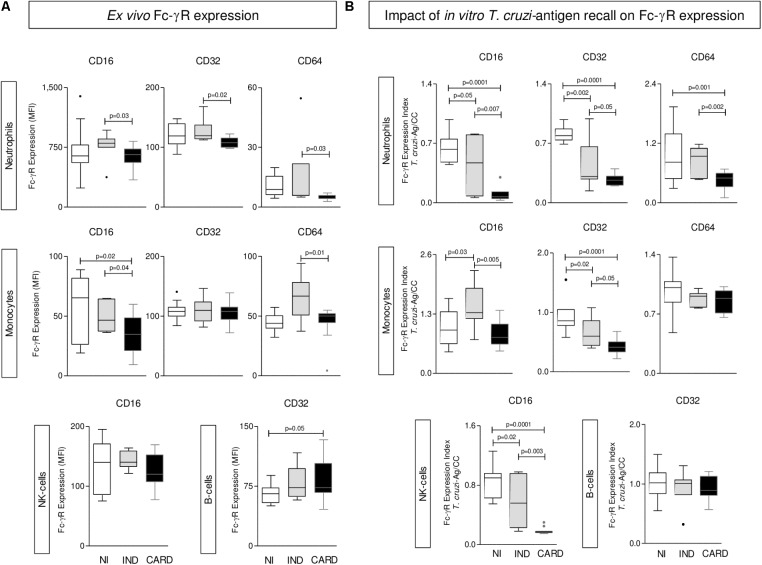
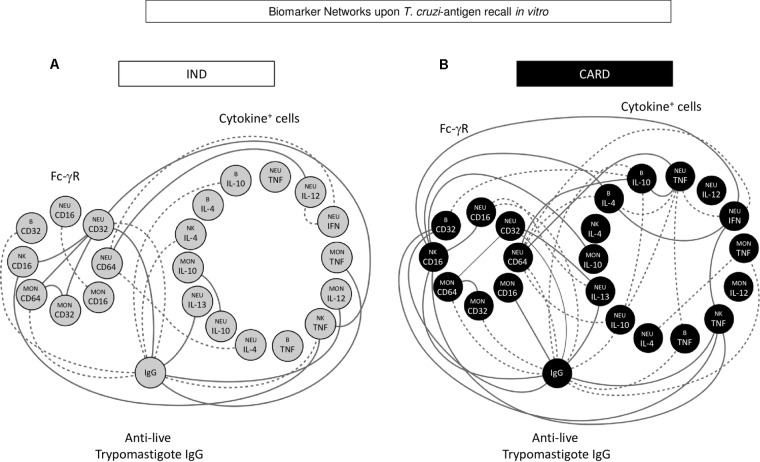
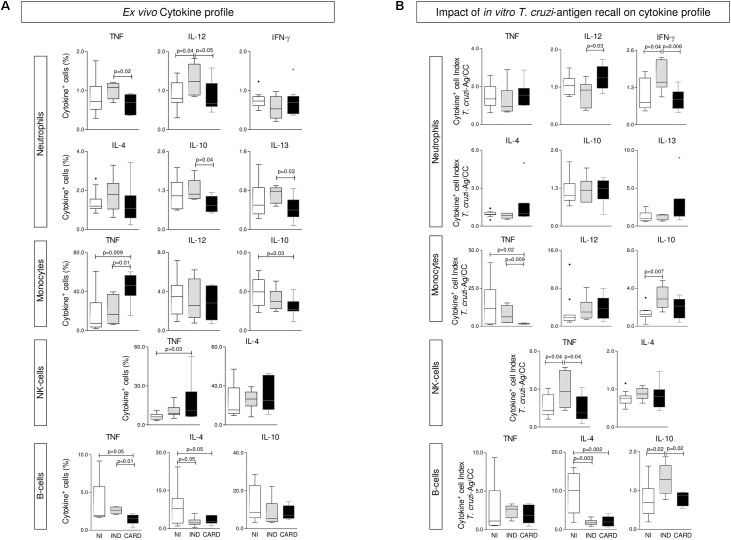
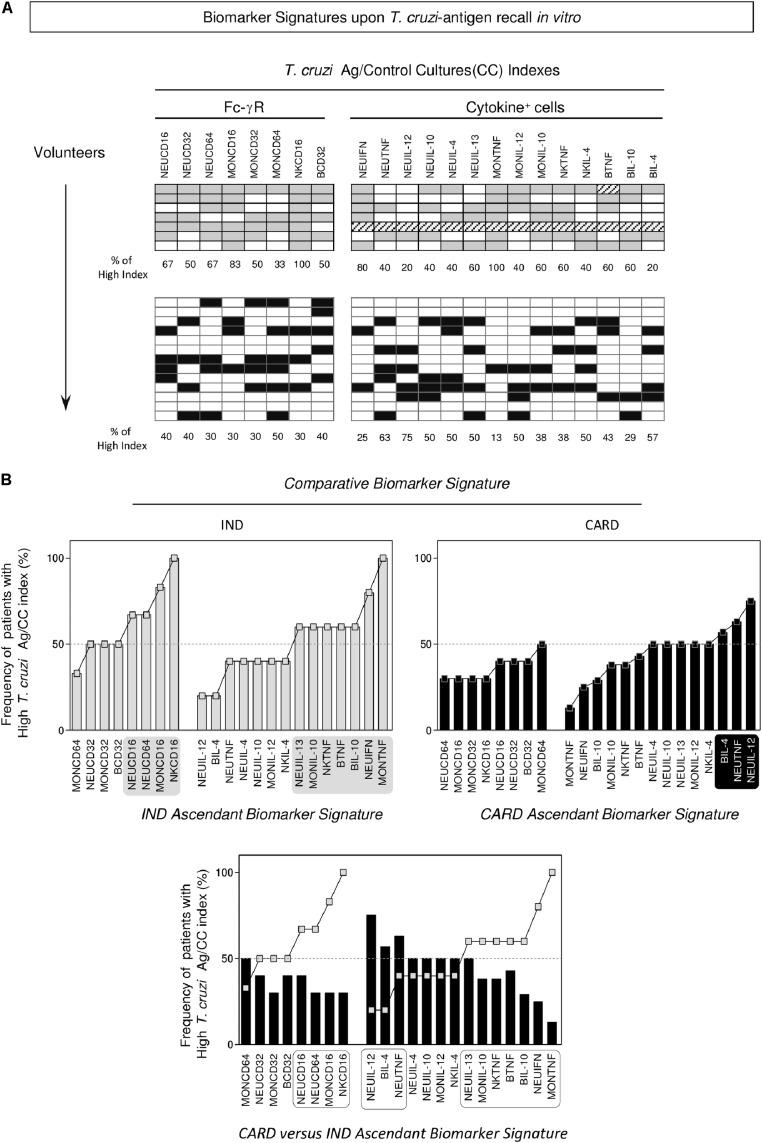
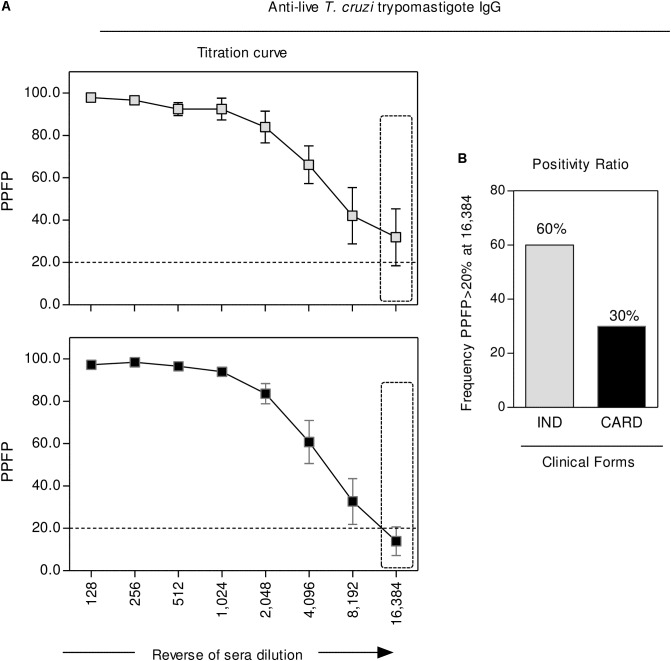
The systems biology approach has become an innovative tool when it comes to shedding light on the complex immune response underlying the development/maintenance of distinct clinical forms of Chagas disease. The goal of this study was to describe an integrative overview of Fc-γR expression, cytokine microenvironment and anti- IgG interface in indeterminate-(IND) and cardiac-(CARD) patients. Data demonstrated that IND displayed an overall higher Fcγ-R expression (CD16; CD32; CD64) on neutrophils-(NEU), along with (CD16; CD64) on monocytes-(MON) as compared to CARD. Additionally, CARD presented an increased expression of CD32 in B-cells. While preserved frequency of IL-10-producing cells was observed in IND, decreased levels of IL-10 phagocytes and enhanced TNF MON and NK-cells were observed in CARD. -antigen recall induces a general decrease of Fc-γR expression in Chagas disease patients, especially in CARD. Moreover, -antigen stimuli triggered a concomitant increase of IFN-γNEU/TNFNK-cells and IL-10MON/IL-10B-cells in IND. Biomarker signatures further emphasized the contrasting Fc-γR expression and cytokine microenvironment observed in Chagas disease patients with distinct clinical forms. Up-regulation of Fc-γR expression (CD16 on NEU;MON;NK) was observed in IND, whereas a general decrease was reported for CARD. Moreover, while a mixed cytokine microenvironment (TNF; IL-10) was observed in IND, CARD presented a contrasting profile with up-regulation of TNFNEU and IL-12NEU. Integrative network analysis revealed a distinct assemblage of biomarkers, with CARD presenting a large number of negative internode connectivity in comparison with IND. The relevant gaps in Fc-γR expression and impaired regulatory cytokine microenvironment interfaced with the anti- IgG reactivity throughout an exacerbated negative connectivity may account for the development/maintenance of the clinical status of cardiac Chagas disease.
在揭示恰加斯病不同临床形式发展/维持背后的复杂免疫反应方面,系统生物学方法已成为一种创新工具。本研究的目的是描述不确定型(IND)和心脏型(CARD)患者中Fc-γR表达、细胞因子微环境和抗IgG界面的综合概况。数据表明,与CARD相比,IND患者中性粒细胞(NEU)上的Fcγ-R表达(CD16、CD32、CD64)总体上更高,单核细胞(MON)上的(CD16、CD64)表达也更高。此外,CARD患者B细胞中CD32表达增加。虽然在IND患者中观察到产生IL-10的细胞频率保持不变,但在CARD患者中观察到IL-10吞噬细胞水平降低,TNF MON和NK细胞增强。抗原回忆在恰加斯病患者中诱导Fc-γR表达普遍下降,尤其是在CARD患者中。此外,抗原刺激在IND患者中引发了IFN-γNEU/TNFNK细胞和IL-10MON/IL-10B细胞的同时增加。生物标志物特征进一步强调了在具有不同临床形式的恰加斯病患者中观察到的Fc-γR表达和细胞因子微环境的差异。在IND患者中观察到Fc-γR表达上调(NEU、MON、NK上的CD16),而CARD患者则普遍下降。此外,虽然在IND患者中观察到混合细胞因子微环境(TNF、IL-10),但CARD患者呈现出相反的特征,TNFNEU和IL-12NEU上调。综合网络分析揭示了生物标志物的不同组合,与IND相比,CARD呈现出大量的负节点连接。Fc-γR表达的相关差距以及整个加剧的负连接中与抗IgG反应性相关的调节性细胞因子微环境受损,可能是心脏型恰加斯病临床状态发展/维持的原因。