Department of Pharmacology and Center for Cancer Research and Diagnostic Medicine, IBST, School of Medicine, Konkuk University, Seoul 05029, Republic of Korea.
Division of HBP Surgery and Liver Transplantation, Department of Surgery, Korea University College of Medicine, Seoul 02841, Republic of Korea.
Nat Commun. 2018 Aug 16;9(1):3284. doi: 10.1038/s41467-018-05782-5.
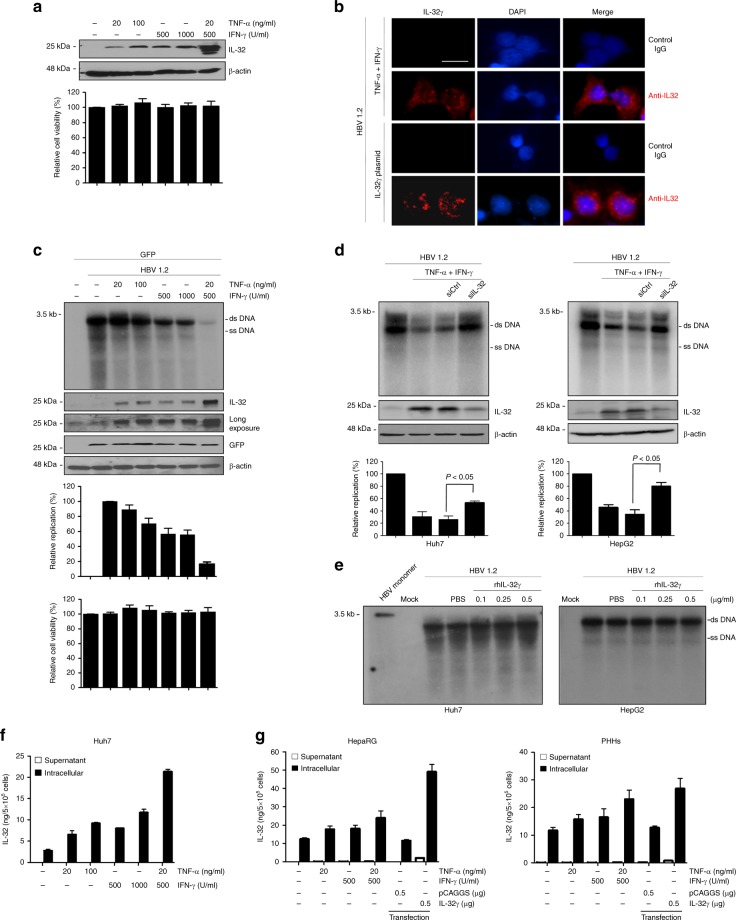
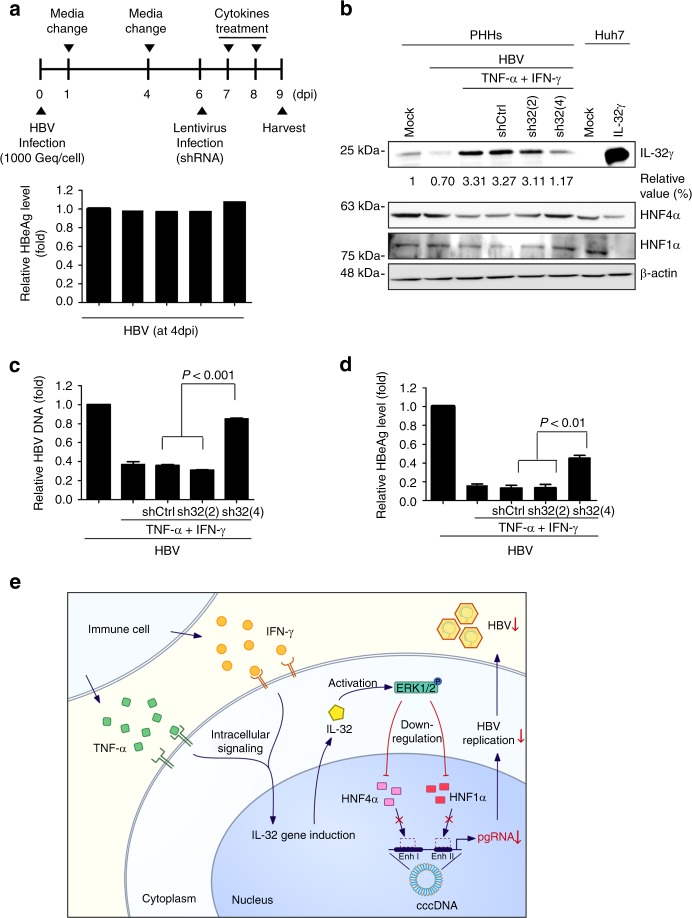
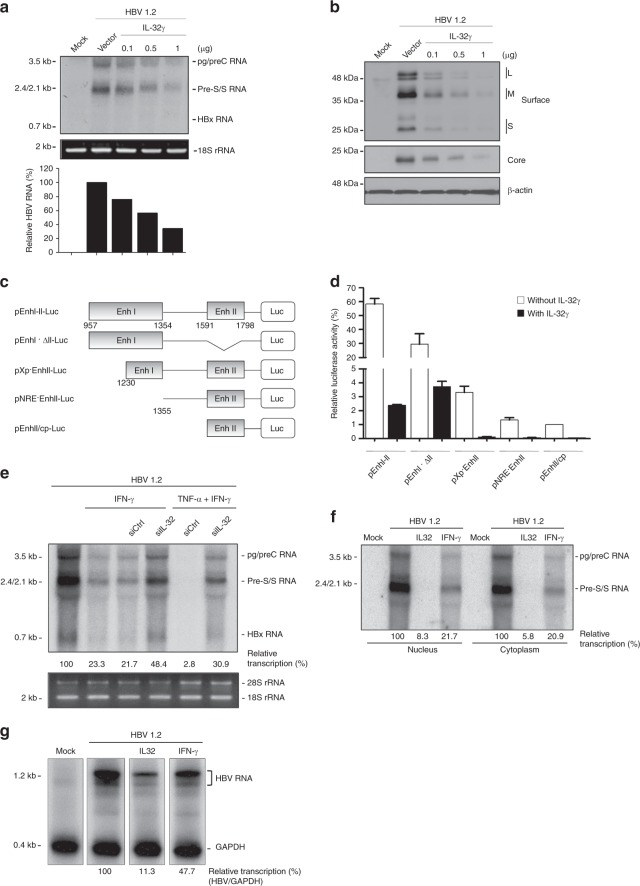
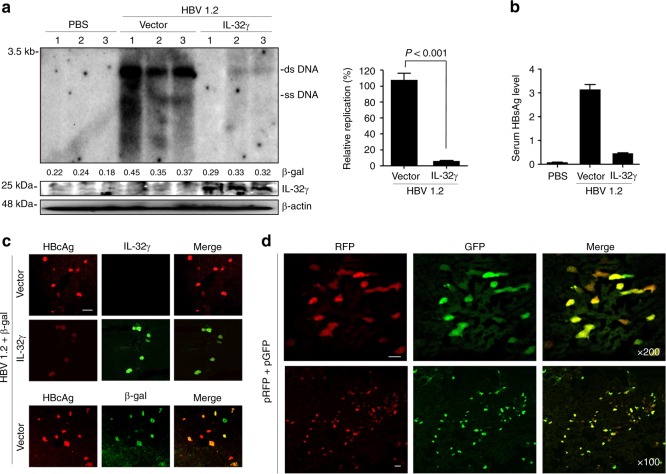
Cytokines are involved in early host defense against pathogen infections. In particular, tumor necrosis factor (TNF) and interferon-gamma (IFN-γ) have critical functions in non-cytopathic elimination of hepatitis B virus (HBV) in hepatocytes. However, the molecular mechanisms and mediator molecules are largely unknown. Here we show that interleukin-32 (IL-32) is induced by TNF and IFN-γ in hepatocytes, and inhibits the replication of HBV by acting intracellularly to suppress HBV transcription and replication. The gamma isoform of IL-32 (IL-32γ) inhibits viral enhancer activities by downregulating liver-enriched transcription factors. Our data are validated in both an in vivo HBV mouse model and primary human hepatocytes. This study thus suggests that IL-32γ functions as intracellular effector in hepatocytes for suppressing HBV replication to implicate a possible mechanism of non-cytopathic viral clearance.
细胞因子参与宿主对病原体感染的早期防御。特别是肿瘤坏死因子(TNF)和干扰素-γ(IFN-γ)在非细胞病变性清除乙型肝炎病毒(HBV)方面具有关键作用。然而,其分子机制和介质分子在很大程度上尚不清楚。在这里,我们表明白细胞介素-32(IL-32)在肝细胞中由 TNF 和 IFN-γ诱导,并通过在细胞内抑制 HBV 转录和复制来抑制 HBV 的复制。IL-32 的 γ 同工型(IL-32γ)通过下调肝丰富的转录因子来抑制病毒增强子活性。我们的数据在体内 HBV 小鼠模型和原代人肝细胞中得到了验证。因此,本研究表明,IL-32γ在肝细胞中作为细胞内效应物发挥作用,抑制 HBV 复制,暗示了非细胞病变性病毒清除的可能机制。