Pétré Benoit, Scheen André, Ziegler Olivier, Donneau Anne-Françoise, Dardenne Nadia, Husson Eddy, Albert Adelin, Guillaume Michèle
Department of Public Health, University of Liège, Liège, Belgium.
Diabetes, Nutrition and Metabolic Disorders, CHU Liège, Liège, Belgium.
Prev Med Rep. 2018 Aug 4;12:12-19. doi: 10.1016/j.pmedr.2018.08.005. eCollection 2018 Dec.
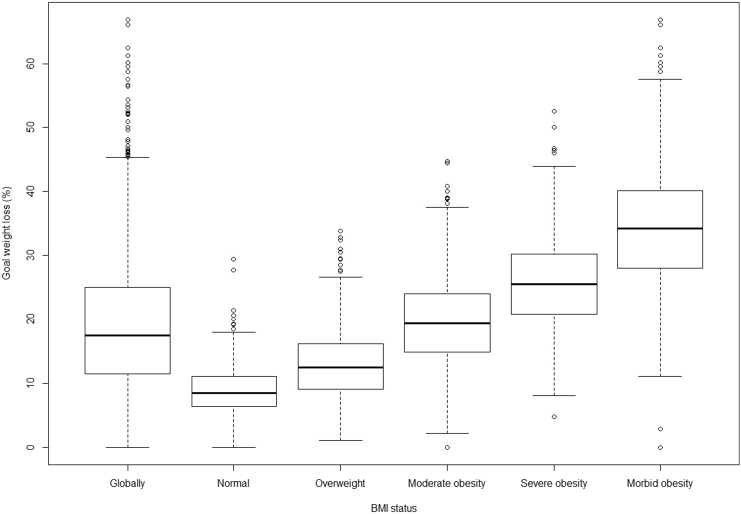
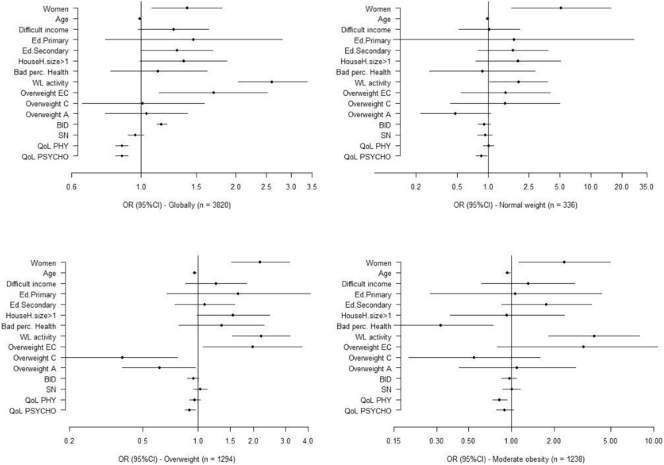
While weight-loss expectations have primarily been studied in people enrolled in weight-loss programs, the present study explores patient expectations about weight-loss and identifies related determinants in a large, non-clinical population. 3916 volunteers (age > 18 years) participated in 2012 in a community-based survey in the French-speaking region of Belgium. Participants were asked to define "dream", "goal", "happy", "acceptable", and "disappointed" weights. Other self-reported measures were used to determine each participant's body mass index (BMI), body image discrepancy (BID), subjective norm (SN), weight loss activity, weight history, quality of life (QoL), and demographic and socioeconomic characteristics. The study focused on the determinants of unrealistic weight-loss "goal" (≥10% of initial weight). Results showed median weight loss targets ranged from 5 kg ("disappointed" weight loss) to 21 kg ("dreamed" weight loss). Respondents considered the recommended weight-loss target (5-10%) disappointing. Severe and morbid obesity categories are at high risk of unrealistic weight loss goal. Unrealistic weight-loss goals was associated with female gender, weight loss activity, overweight history and lower QoL in overweight and moderate obesity respondents. These findings confirm the urgent need to help patients accept more modest weight loss outcomes and the need for personalized care that considers the patient's specific profile and both weight loss expectations and determinants.
虽然人们主要对参加减肥项目的人群的减肥期望进行了研究,但本研究在一个大型非临床人群中探讨了患者对减肥的期望,并确定了相关的决定因素。2012年,3916名志愿者(年龄>18岁)参与了比利时法语区的一项基于社区的调查。参与者被要求定义“理想”“目标”“满意”“可接受”和“失望”体重。使用其他自我报告的测量方法来确定每位参与者的体重指数(BMI)、身体形象差异(BID)、主观规范(SN)、减肥活动、体重史、生活质量(QoL)以及人口统计学和社会经济特征。该研究聚焦于不切实际的减肥“目标”(≥初始体重的10%)的决定因素。结果显示,体重减轻目标中位数从5千克(“失望”的体重减轻)到21千克(“理想”的体重减轻)不等。受访者认为推荐的减肥目标(5 - 10%)令人失望。重度和病态肥胖类别实现不切实际减肥目标的风险很高。在超重和中度肥胖的受访者中,不切实际的减肥目标与女性性别、减肥活动、超重史和较低的生活质量相关。这些发现证实了迫切需要帮助患者接受更适度的减肥结果,以及需要提供个性化护理,考虑患者的具体情况以及减肥期望和决定因素。