González Delfina P, Lamb Helen V, Partida Diana, Wilson Zachary T, Harrison Marie-Claire, Prieto Julián A, Moresco James J, Diedrich Jolene K, Yates John R, Olson Sara K
Department of Biology and Program in Molecular Biology, Pomona College, Claremont, CA 91711, USA.
Department of Molecular Medicine, The Scripps Research Institute, La Jolla, CA 92037, USA.
Dev Biol. 2018 Oct 15;442(2):288-300. doi: 10.1016/j.ydbio.2018.08.005. Epub 2018 Aug 16.
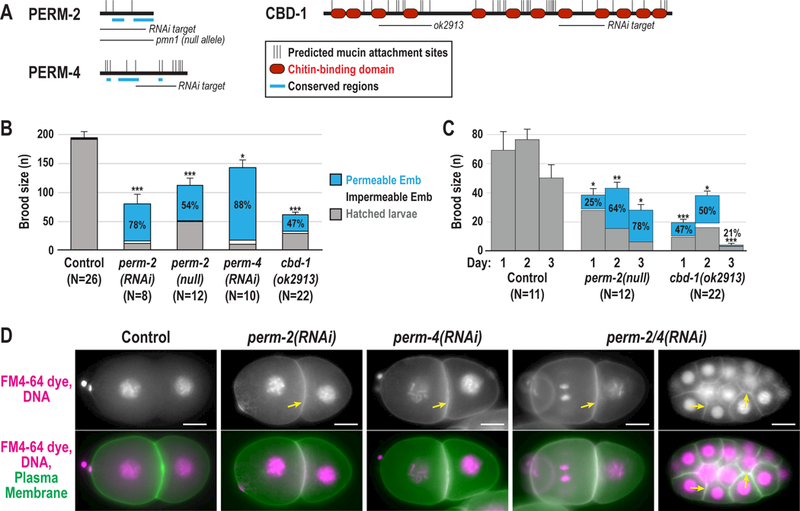
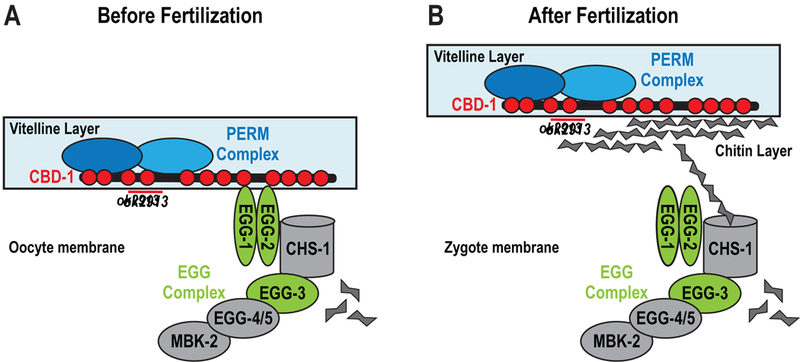
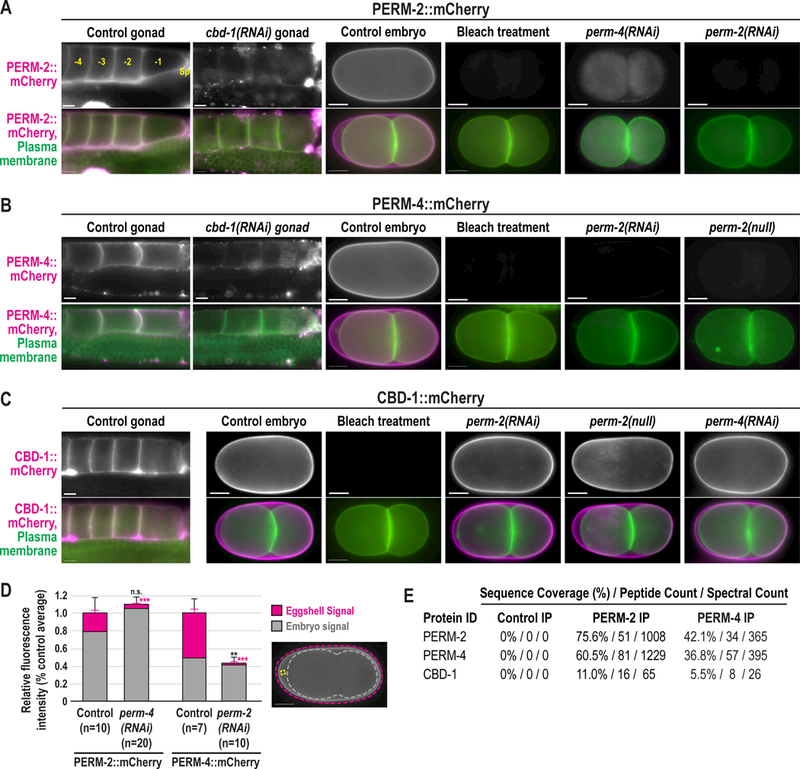
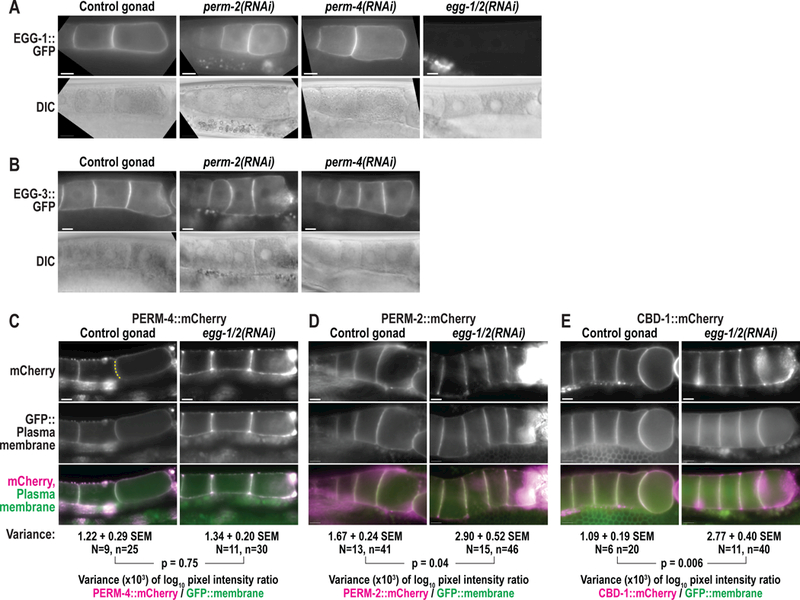
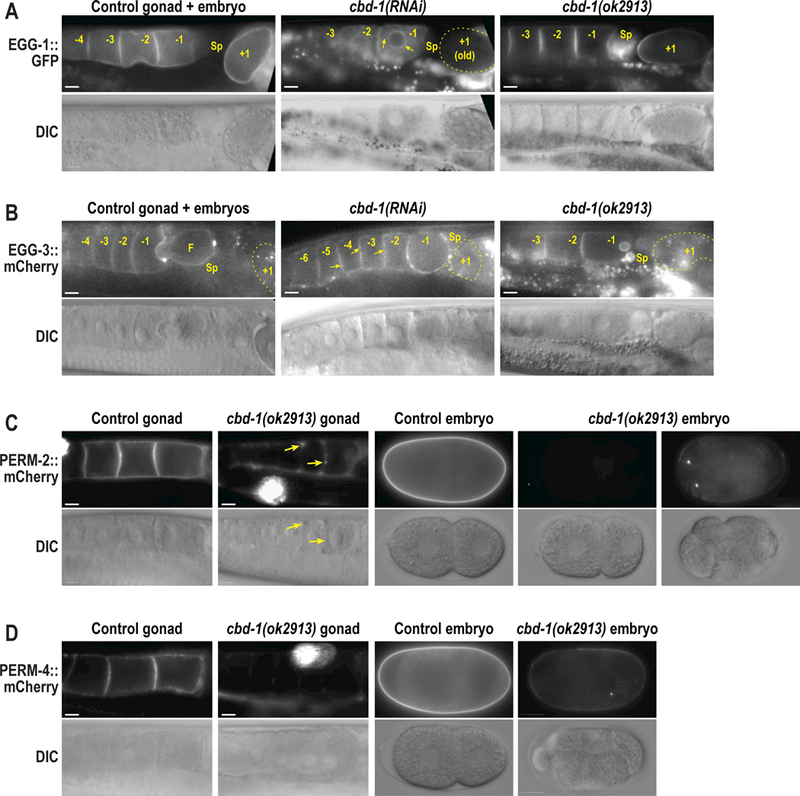
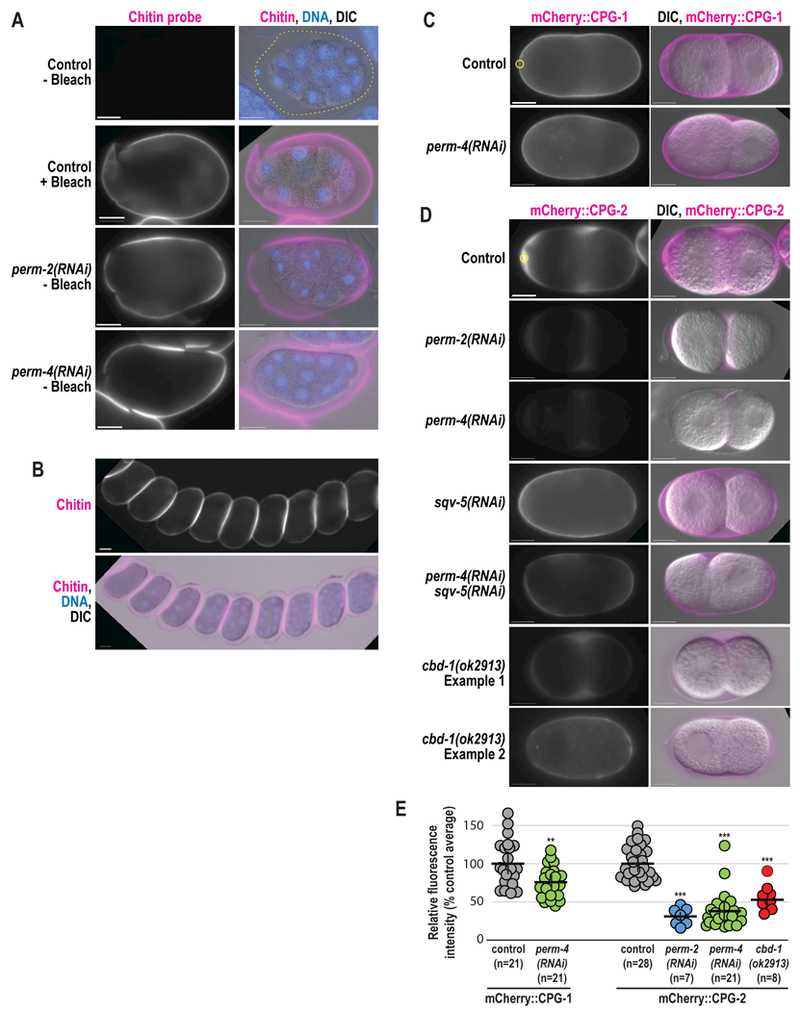
Metazoan eggs have a specialized coat of extracellular matrix that aids in sperm-egg recognition. The coat is rapidly remodeled after fertilization to prevent polyspermy and establish a more permanent barrier to protect the developing embryo. In nematodes, this coat is called the vitelline layer, which is remodeled into the outermost layer of a rigid and impermeable eggshell. We have identified three key components of the vitelline layer structural scaffold - PERM-2, PERM-4 and CBD-1, the first such proteins to be described in the nematode C. elegans. CBD-1 tethered PERM-2 and PERM-4 to the nascent vitelline layer via two N-terminal chitin-binding domains. After fertilization, all three proteins redistributed from the zygote surface to the outer eggshell. Depletion of PERM-2 and PERM-4 from the scaffold led to a porous vitelline layer that permitted soluble factors to leak through the eggshell and resulted in embryonic death. In addition to its role in vitelline layer assembly, CBD-1 is also known to anchor a protein complex required for fertilization and egg activation (EGG-1-5/CHS-1/MBK-2). We found the PERM complex and EGG complex to be functionally independent, and structurally organized through distinct domains of CBD-1. CBD-1 is thus a multifaceted regulator that promotes distinct aspects of vitelline layer assembly and egg activation. In sum, our findings characterize the first vitelline layer components in nematodes, and provide a foundation through which to explore both conserved and species-specific strategies used by animals to build protective barriers following fertilization.
后生动物的卵子具有一层特殊的细胞外基质外壳,有助于精卵识别。受精后,该外壳会迅速重塑,以防止多精入卵,并建立一个更持久的屏障来保护发育中的胚胎。在秀丽隐杆线虫中,这层外壳被称为卵黄膜,它会重塑为坚硬且不可渗透的卵壳的最外层。我们已经鉴定出卵黄膜结构支架的三个关键成分——PERM-2、PERM-4和CBD-1,它们是在秀丽隐杆线虫中首次被描述的此类蛋白质。CBD-1通过两个N端几丁质结合结构域将PERM-2和PERM-4连接到新生的卵黄膜上。受精后,这三种蛋白质都从受精卵表面重新分布到卵壳外层。从支架中去除PERM-2和PERM-4会导致卵黄膜出现孔隙,使可溶性因子能够透过卵壳泄漏,从而导致胚胎死亡。除了在卵黄膜组装中的作用外,CBD-1还已知可锚定受精和卵子激活所需的蛋白质复合物(EGG-1-5/CHS-1/MBK-2)。我们发现PERM复合物和EGG复合物在功能上是独立的,并且通过CBD-1的不同结构域进行结构组织。因此,CBD-1是一个多面调节器,可促进卵黄膜组装和卵子激活的不同方面。总之,我们的研究结果确定了线虫中首批卵黄膜成分,并为探索动物在受精后构建保护屏障所采用的保守和物种特异性策略奠定了基础。