Institute of Liver Diseases, Shuguang Hospital Affiliated to Shanghai University of Traditional Chinese Medicine, Shanghai 201203, China.
Institute of Liver Diseases, Key Laboratory of Liver and Kidney Diseases (Ministry of Education), Shuguang Hospital Affiliated to Shanghai University of Traditional Chinese Medicine, Shanghai 201203, China.
World J Gastroenterol. 2018 Aug 14;24(30):3448-3461. doi: 10.3748/wjg.v24.i30.3448.
To elucidate tongue coating microbiota and metabolic differences in chronic hepatitis B (CHB) patients with yellow or white tongue coatings.
Tongue coating samples were collected from 53 CHB patients (28 CHB yellow tongue coating patients and 25 CHB white tongue coating patients) and 22 healthy controls. Microbial DNA was extracted from the tongue samples, and the bacterial 16S ribosomal RNA gene V3 region was amplified from all samples and sequenced with the Ion Torrent PGM™ sequencing platform according to the standard protocols. The metabolites in the tongue coatings were evaluated using a liquid chromatography-mass spectrometry (LC-MS) platform. Statistical analyses were then performed.
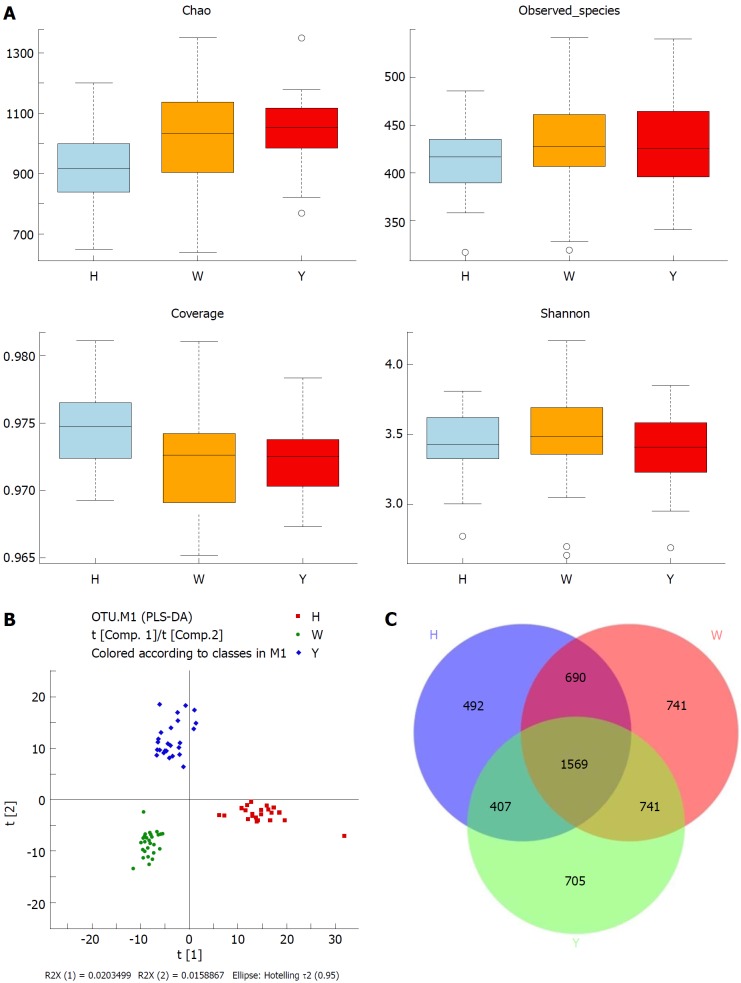
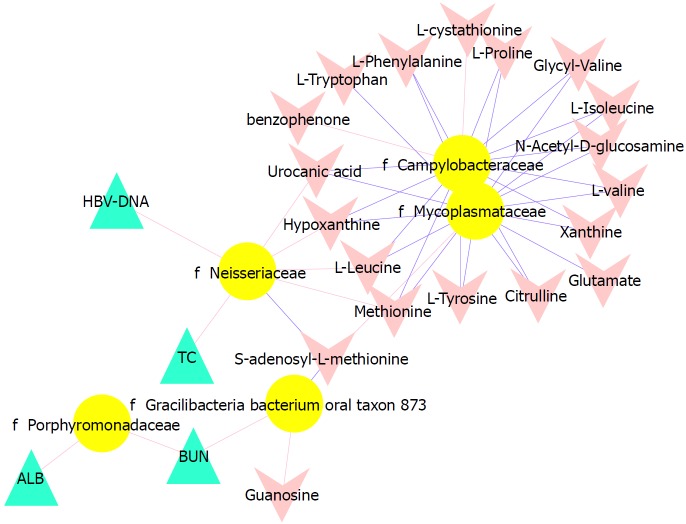
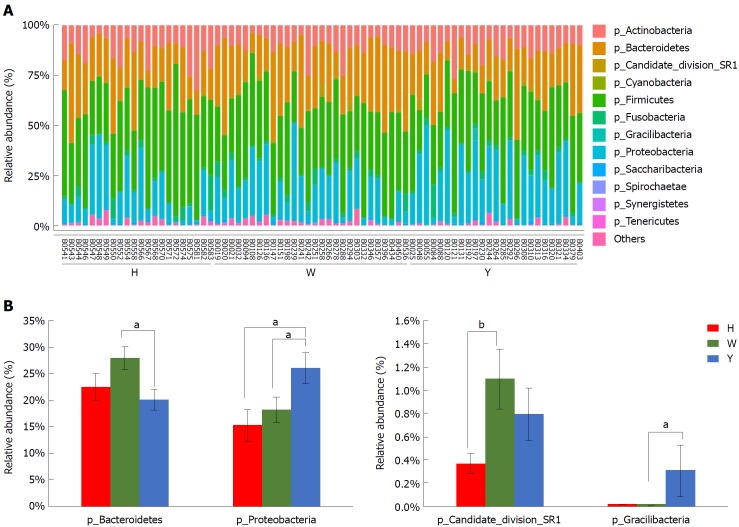
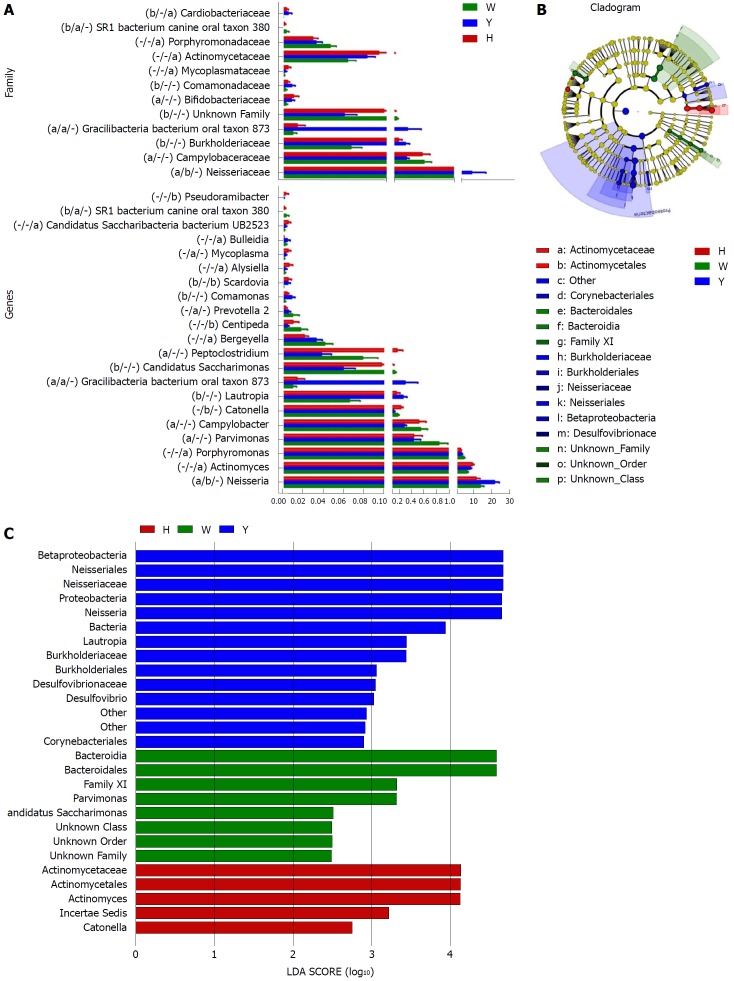
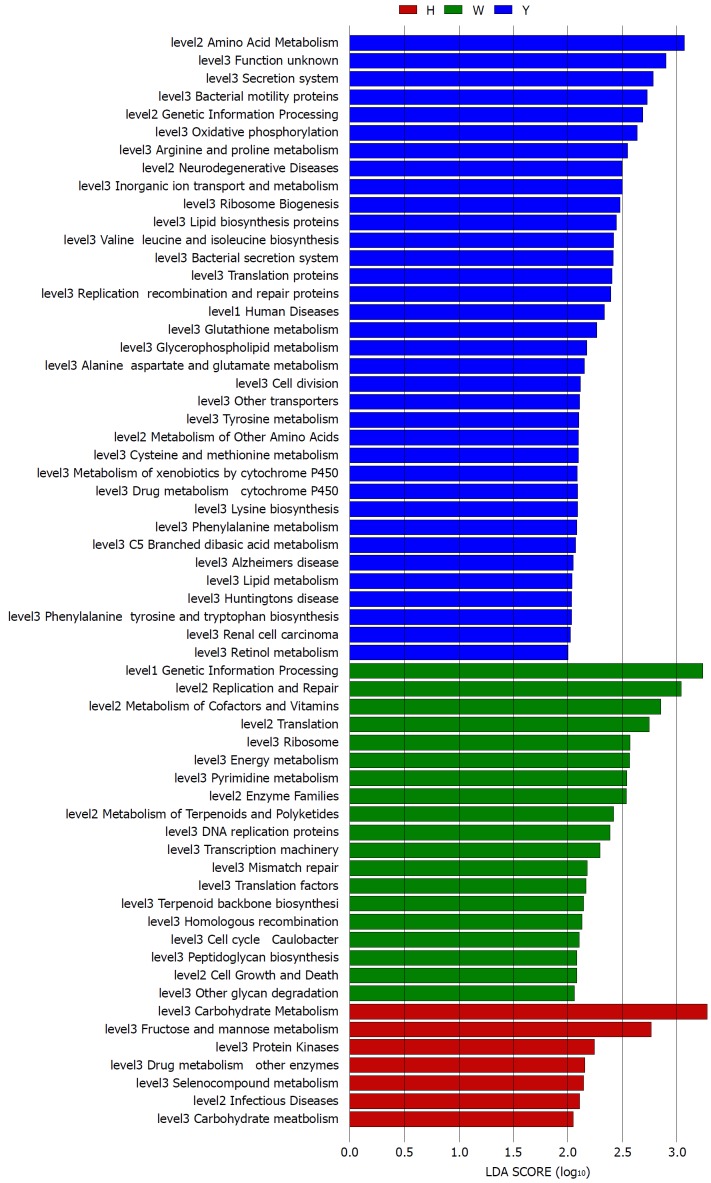
The relative compositions of the tongue coating microbiotas and metabolites in the CHB patients were significantly different from those of the healthy controls, but the tongue coating microbiota abundances and diversity levels were not significantly different. Compared with the CHB white tongue coating patients, the CHB yellow tongue coating patients had higher hepatitis B viral DNA (HBV-DNA) titers (median 21210 500, respectively, = 0.03) and a significantly lower level of Bacteroidetes (20.14% 27.93%, respectively, = 0.013) and higher level of Proteobacteria (25.99% 18.17%, respectively, = 0.045) in the microbial compositions at the phylum level. The inferred metagenomic pathways enriched in the CHB yellow tongue coating patients were mainly those involved in amino acid metabolism, which was consistent with the metabolic disorder. The abundances of bacteria from Bacteroidales at the order level were higher in the CHB white tongue coating patients (19.2% 27.22%, respectively, = 0.011), whereas Neisseriales were enriched in the yellow tongue coating patients (21.85% 13.83%, respectively, = 0.029). At the family level, the abundance of Neisseriaceae in the yellow tongue patients was positively correlated with the HBV-DNA level but negatively correlated with the S-adenosyl-L-methionine level.
This research illustrates specific clinical features and bacterial structures in CHB patients with different tongue coatings, which facilitates understanding of the traditional tongue diagnosis.
阐明慢性乙型肝炎(CHB)患者黄腻苔和白腻苔舌象的舌苔微生物群和代谢差异。
从 53 例 CHB 患者(28 例 CHB 黄腻苔患者和 25 例 CHB 白腻苔患者)和 22 例健康对照者中采集舌苔样本。从所有样本中提取微生物 DNA,并根据标准方案使用 Ion Torrent PGM™测序平台扩增细菌 16S 核糖体 RNA 基因 V3 区并进行测序。使用液相色谱-质谱(LC-MS)平台评估舌苔中的代谢物。然后进行统计分析。
CHB 患者的舌苔微生物群和代谢物组成与健康对照组有显著差异,但舌苔微生物群丰度和多样性水平无显著差异。与 CHB 白腻苔患者相比,CHB 黄腻苔患者的乙型肝炎病毒 DNA(HBV-DNA)滴度更高(中位数分别为 21210 500, = 0.03),而厚壁菌门的水平显著较低(20.14% 27.93%, = 0.013),变形菌门的水平较高(25.99% 18.17%, = 0.045)。在门水平的微生物组成中,推断出的 CHB 黄腻苔患者中富含的代谢途径主要涉及氨基酸代谢,这与代谢紊乱一致。在 CHB 白腻苔患者中,拟杆菌目(Bacteroidales)的细菌丰度较高(19.2% 27.22%, = 0.011),而奈瑟菌目(Neisseriales)在黄腻苔患者中富集(21.85% 13.83%, = 0.029)。在科水平上,黄腻苔患者的奈瑟科(Neisseriaceae)丰度与 HBV-DNA 水平呈正相关,与 S-腺苷甲硫氨酸水平呈负相关。
本研究阐明了不同舌苔 CHB 患者的特定临床特征和细菌结构,有助于理解传统的舌诊。