Department of Otolaryngology, Johns Hopkins School of Medicine, Baltimore, MD 21205.
Hearing Research, Garvan Institute of Medical Research, Sydney, NSW 2010, Australia.
eNeuro. 2018 Aug 17;5(4). doi: 10.1523/ENEURO.0250-18.2018. eCollection 2018 Jul-Aug.
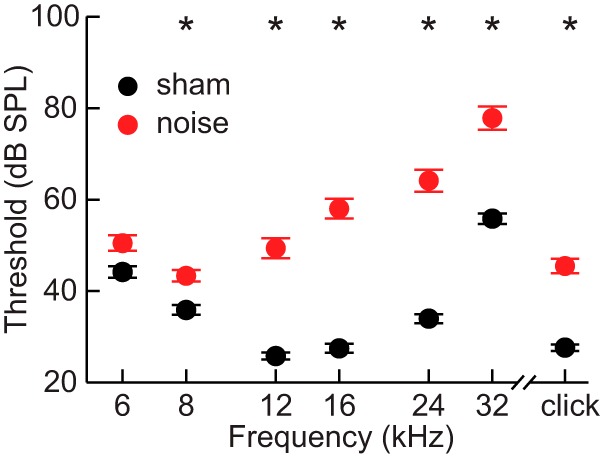
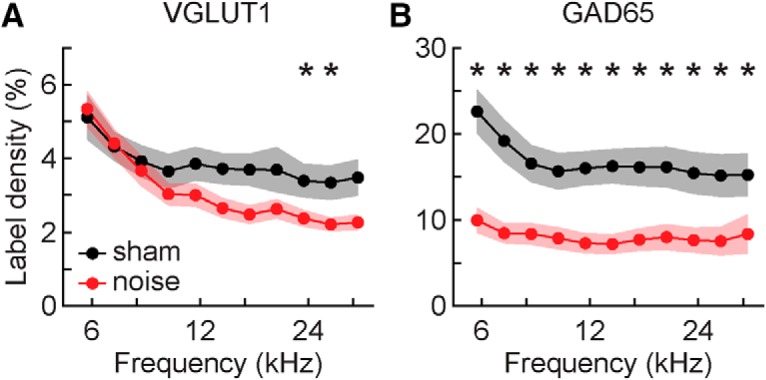
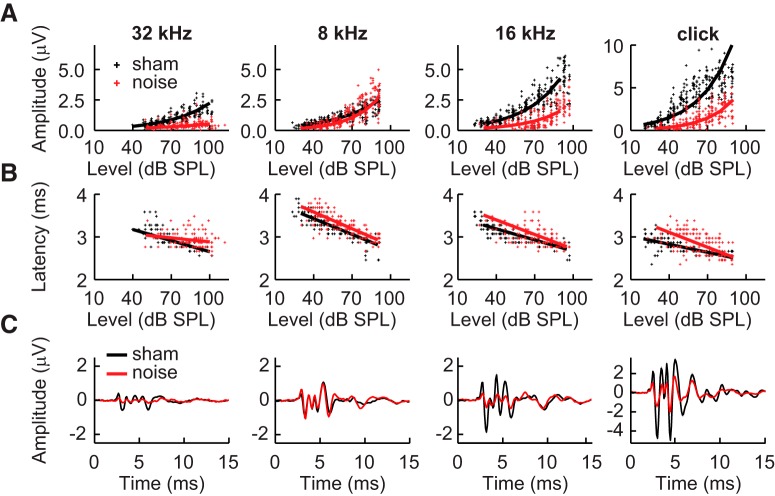
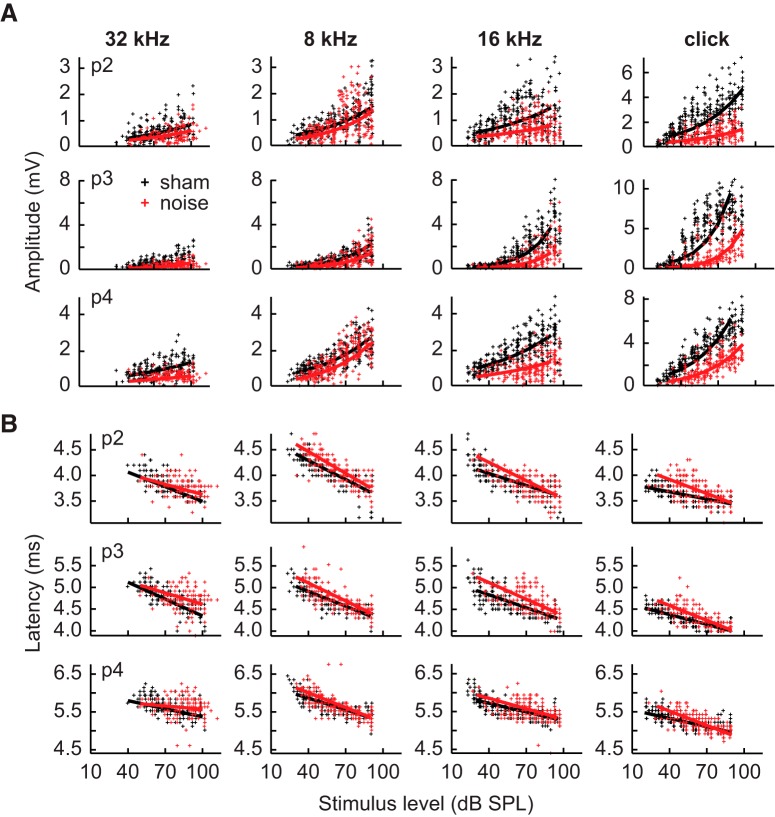
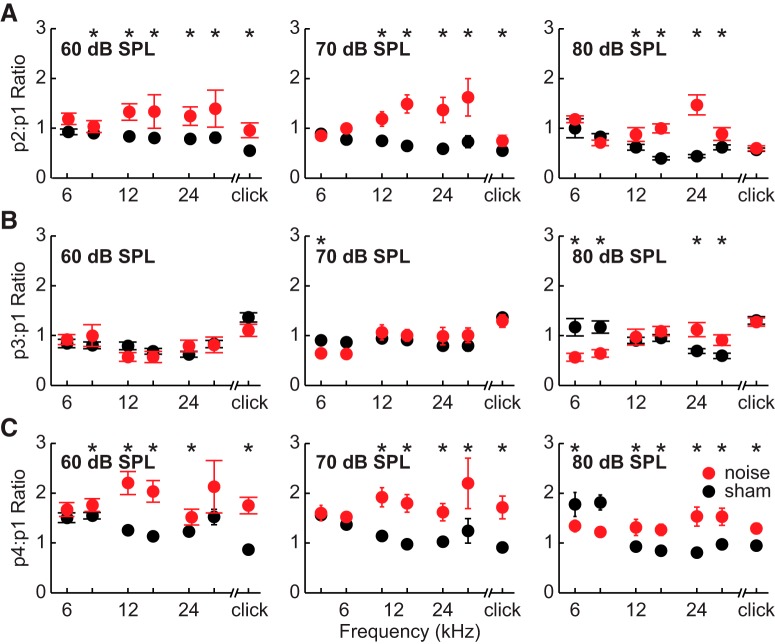
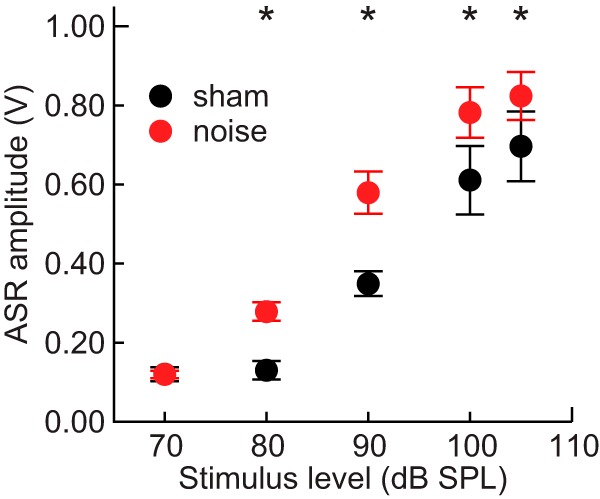
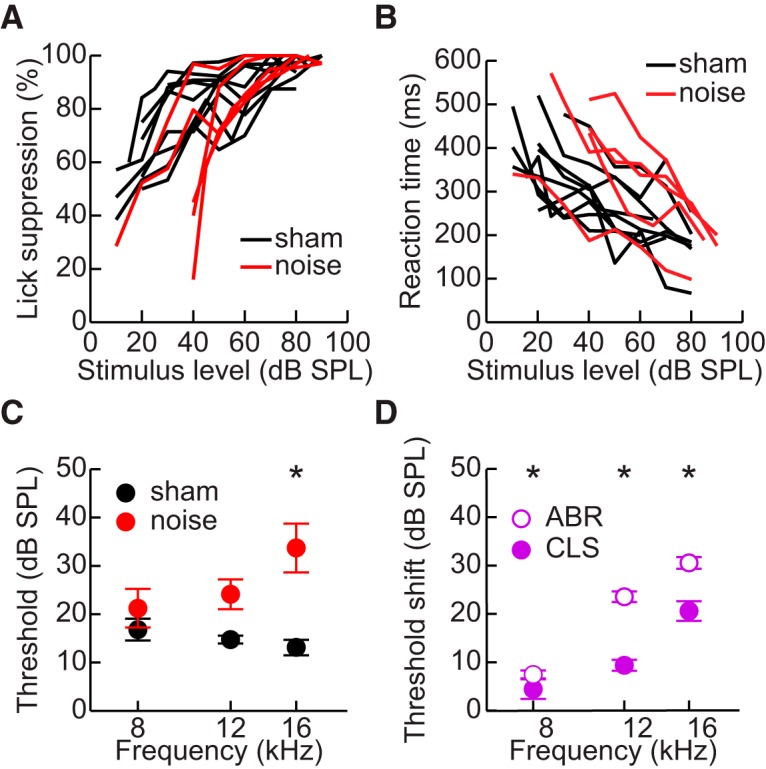
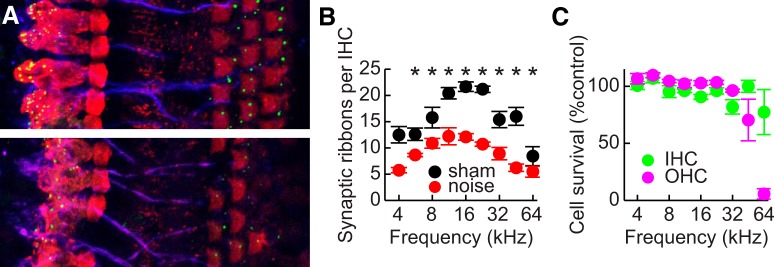
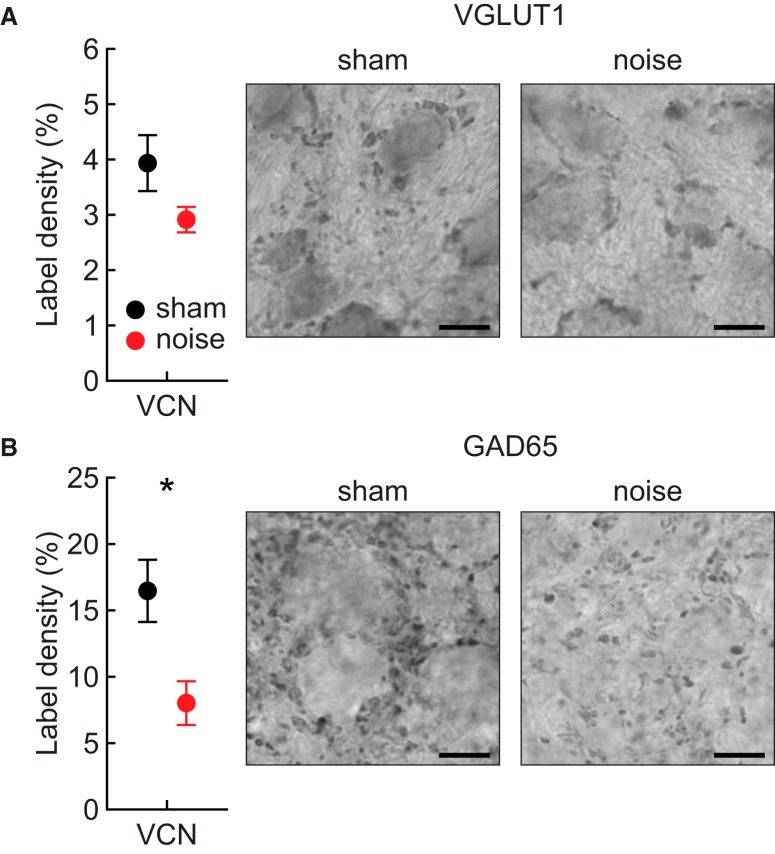
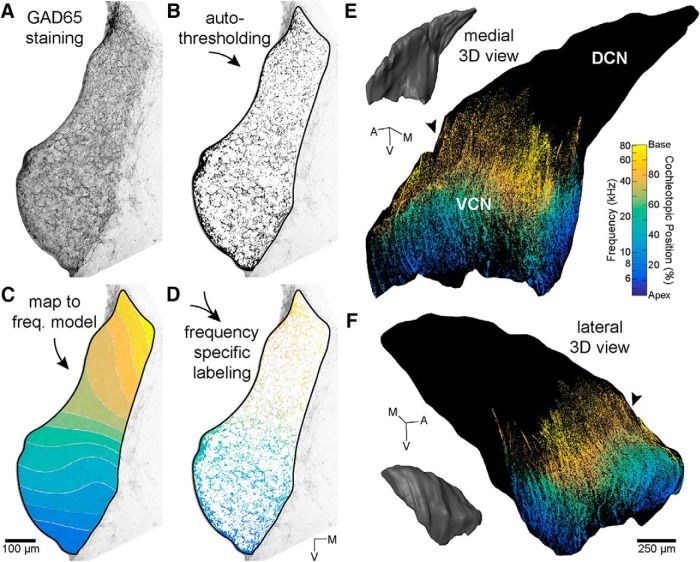
Noise exposure is one of the most common causes of hearing loss and peripheral damage to the auditory system. A growing literature suggests that the auditory system can compensate for peripheral loss through increased central neural activity. The current study sought to investigate the link between noise exposure, increases in central gain, synaptic reorganization, and auditory function. All axons of the auditory nerve project to the cochlear nucleus, making it a requisite nucleus for sound detection. As the first synapse in the central auditory system, the cochlear nucleus is well positioned to respond plastically to loss of peripheral input. To investigate noise-induced compensation in the central auditory system, we measured auditory brainstem responses (ABRs) and auditory perception and collected tissue from mice exposed to broadband noise. Noise-exposed mice showed elevated ABR thresholds, reduced ABR wave 1 amplitudes, and spiral ganglion neuron loss. Despite peripheral damage, noise-exposed mice were hyperreactive to loud sounds and showed nearly normal behavioral sound detection thresholds. Ratios of late ABR peaks (2-4) relative to the first ABR peak indicated that brainstem pathways were hyperactive in noise-exposed mice, while anatomical analysis indicated there was an imbalance between expression of excitatory and inhibitory proteins in the ventral cochlear nucleus. The results of the current study suggest that a reorganization of excitation and inhibition in the ventral cochlear nucleus may drive hyperactivity in the central auditory system. This increase in central gain can compensate for peripheral loss to restore some aspects of auditory function.
噪声暴露是听力损失和听觉系统外周损伤的最常见原因之一。越来越多的文献表明,听觉系统可以通过增加中枢神经活动来补偿外周损失。本研究旨在探讨噪声暴露、中枢增益增加、突触重组与听觉功能之间的联系。听觉神经的所有轴突都投射到耳蜗核,使其成为声音检测所必需的核团。作为中枢听觉系统的第一个突触,耳蜗核具有很好的可塑性,可以对外周输入的损失做出反应。为了研究中枢听觉系统中的噪声诱导补偿,我们测量了听觉脑干反应(ABR)和听觉感知,并从暴露于宽带噪声的小鼠中收集了组织。噪声暴露的小鼠表现出 ABR 阈值升高、ABR 波 1 幅度降低和螺旋神经节神经元损失。尽管有外周损伤,噪声暴露的小鼠对大声刺激表现出过度反应,并表现出几乎正常的行为声音检测阈值。相对于第一个 ABR 峰值的晚期 ABR 峰值(2-4)的比值表明,脑干通路在噪声暴露的小鼠中过度活跃,而解剖分析表明,在耳蜗腹核中兴奋性和抑制性蛋白的表达之间存在不平衡。本研究的结果表明,耳蜗腹核中兴奋和抑制的重组可能驱动中枢听觉系统的过度活跃。这种中枢增益的增加可以补偿外周损失,以恢复听觉功能的某些方面。