Jacomin Anne-Claire, Taillebourg Emmanuel, Fauvarque Marie-Odile
School of Life Sciences, University of Warwick, Coventry CV4 7AL, UK.
Biosciences and Biotechnology Institute of Grenoble, (CEA-DRF-BIG-BGE), Univ. Grenoble Alpes, INSERM U1038, CEA, F-38000 Grenoble, France.
Cells. 2018 Aug 19;7(8):112. doi: 10.3390/cells7080112.
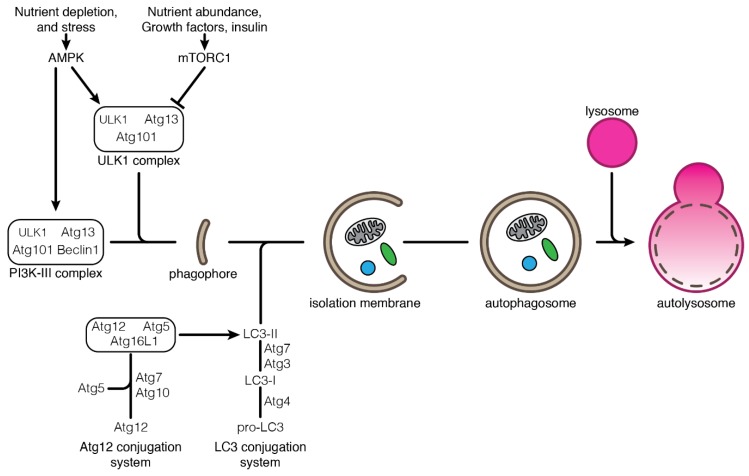
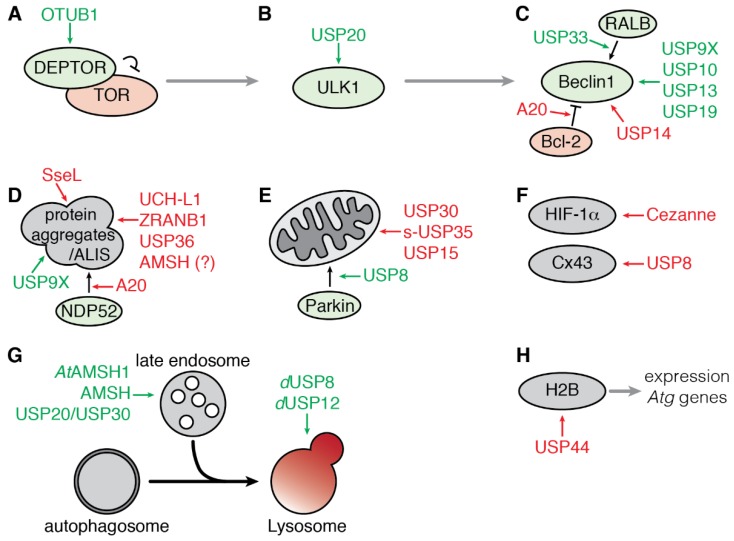
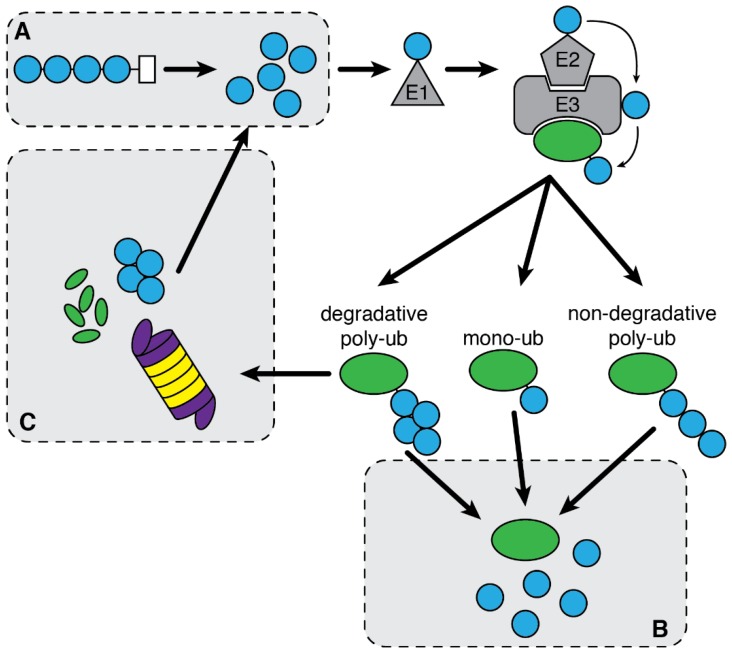
Autophagy is an evolutionary conserved catabolic process that allows for the degradation of intracellular components by lysosomes. This process can be triggered by nutrient deprivation, microbial infections or other challenges to promote cell survival under these stressed conditions. However, basal levels of autophagy are also crucial for the maintenance of proper cellular homeostasis by ensuring the selective removal of protein aggregates and dysfunctional organelles. A tight regulation of this process is essential for cellular survival and organismal health. Indeed, deregulation of autophagy is associated with a broad range of pathologies such as neuronal degeneration, inflammatory diseases, and cancer progression. Ubiquitination and deubiquitination of autophagy substrates, as well as components of the autophagic machinery, are critical regulatory mechanisms of autophagy. Here, we review the main evidence implicating deubiquitinating enzymes (DUBs) in the regulation of autophagy. We also discuss how they may constitute new therapeutic opportunities in the treatment of pathologies such as cancers, neurodegenerative diseases or infections.
自噬是一种进化上保守的分解代谢过程,它允许溶酶体降解细胞内成分。这个过程可以由营养缺乏、微生物感染或其他挑战触发,以促进细胞在这些应激条件下存活。然而,基础水平的自噬对于维持适当的细胞内稳态也至关重要,它能确保选择性清除蛋白质聚集体和功能失调的细胞器。对这一过程的严格调控对于细胞存活和机体健康至关重要。事实上,自噬失调与多种病理状况相关,如神经元变性、炎症性疾病和癌症进展。自噬底物以及自噬机制成分的泛素化和去泛素化是自噬的关键调控机制。在这里,我们综述了涉及去泛素化酶(DUBs)调控自噬的主要证据。我们还讨论了它们如何可能成为治疗癌症、神经退行性疾病或感染等病理状况的新治疗机会。