Department of Materials Science & Engineering, National Chiao Tung University, No. 1001, Ta-Hsueh Rd., Hsinchu, Taiwan 30010, R.O.C.
The Ph.D. Program for Neural Regenerative Medicine, Taipei Medical University, No. 250 Wu-Xing St., Taipei 11010, Taiwan, R.O.C.
Theranostics. 2018 Jul 30;8(15):4210-4225. doi: 10.7150/thno.25625. eCollection 2018.
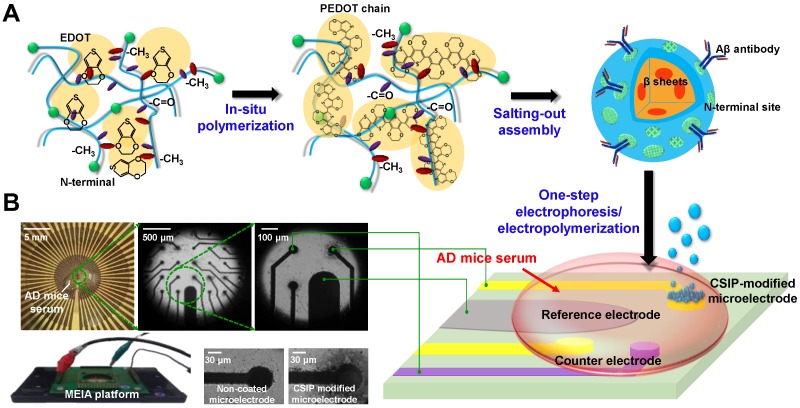
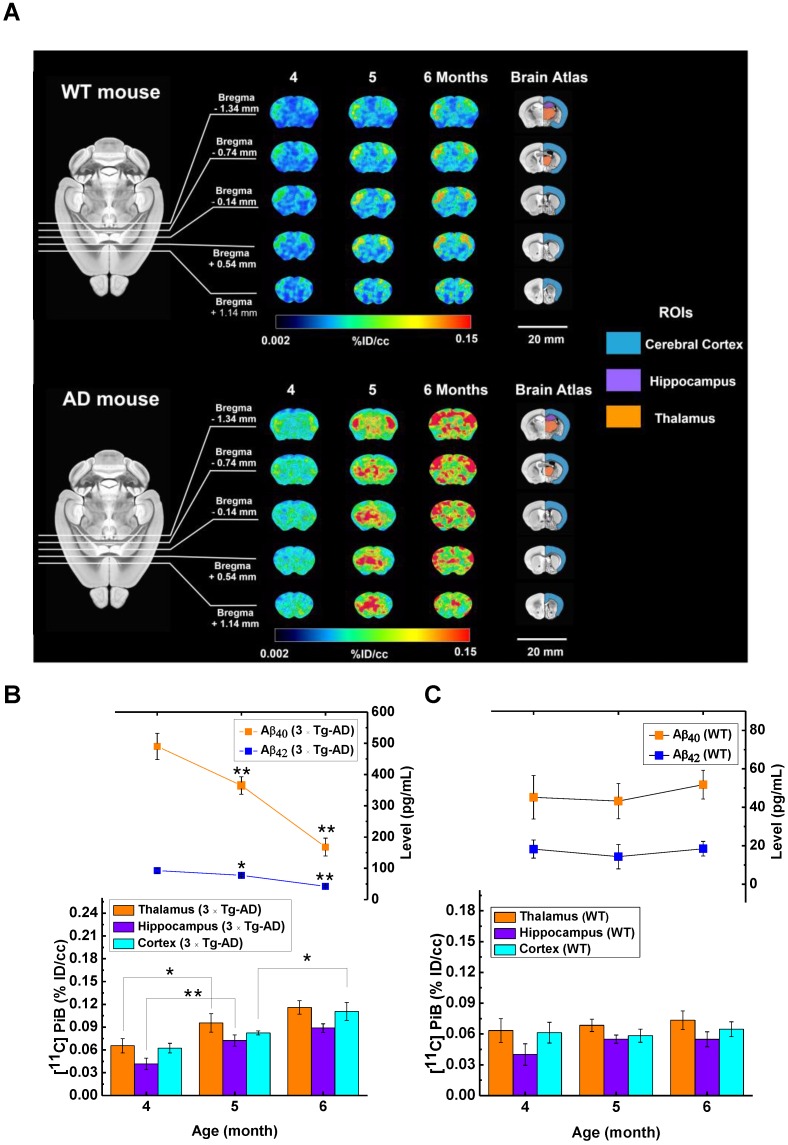
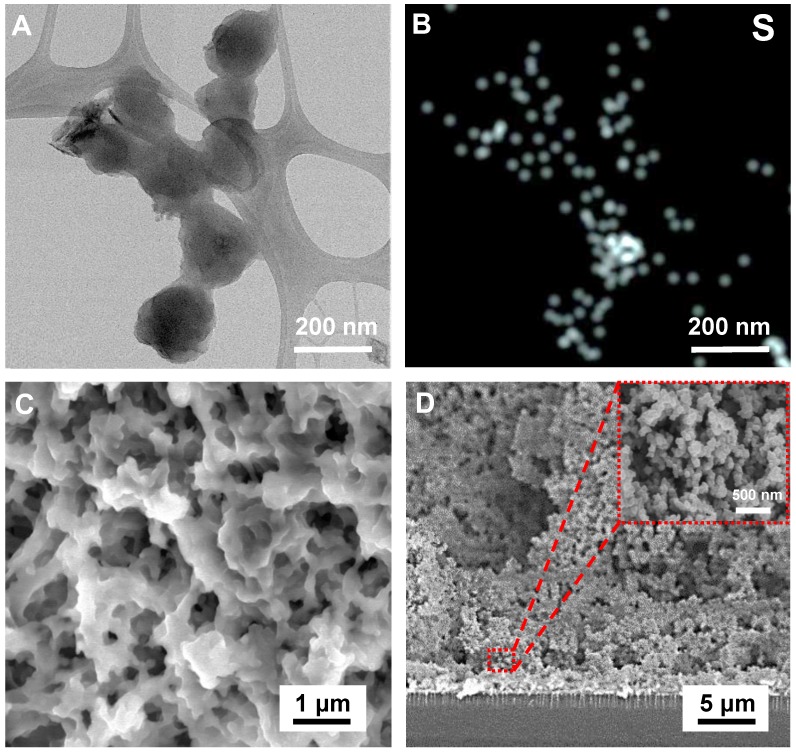
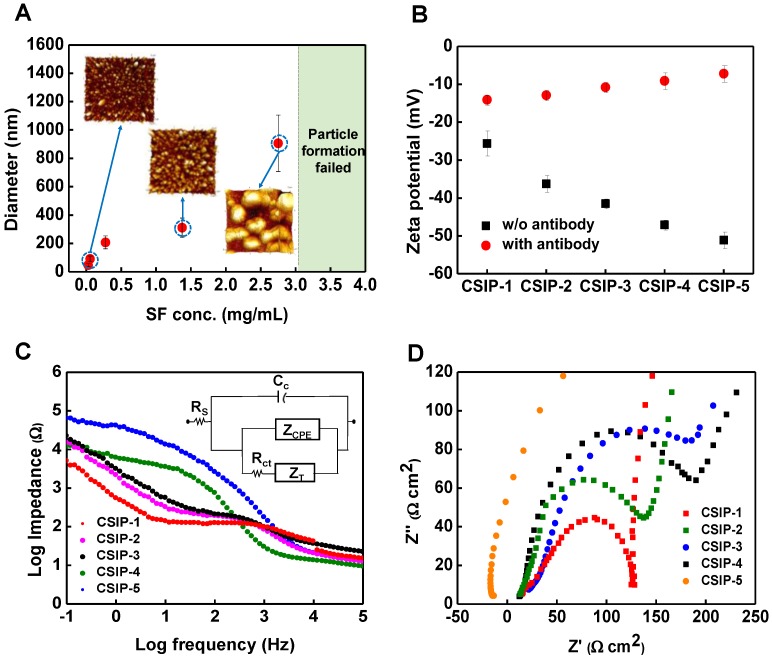
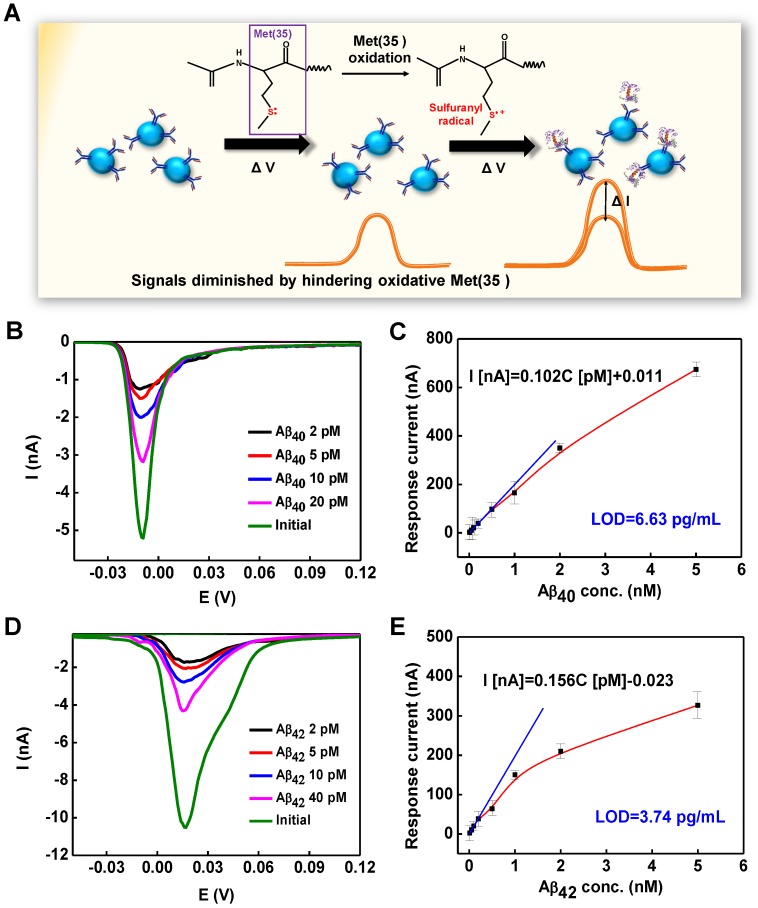
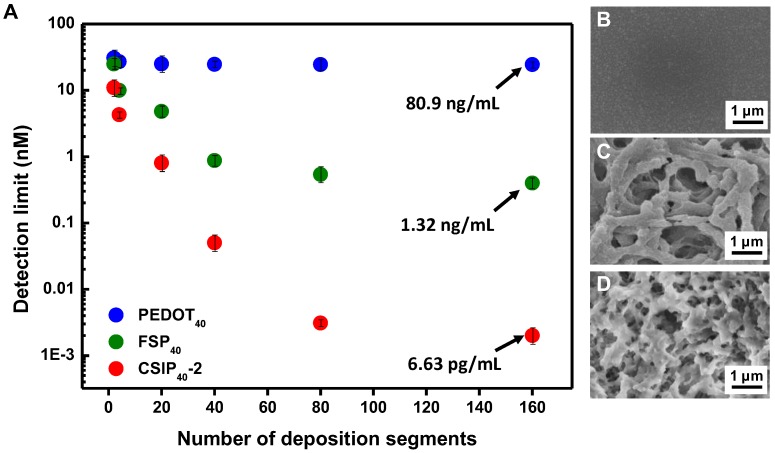
Accumulation of β-amyloid (Aβ) peptides is highly associated with Alzheimer's disease (AD) progression in prevailing studies. The successful development of an ultrasensitive detection assay for Aβ is a challenging task, especially from blood-based samples. We have developed a one-step electrophoresis/electropolymerization strategy for preparing a CSIP hierarchical immunoelectrochemical interface that is easily integrated into a PoCT device. The interface includes conductive silk fibroin-based immunoparticles (CSIPs) via electropolymerized Poly(3,4-ethylenedioxythiophene) (PEDOT) bridging to enable on-site electrochemical detection of serum amyloid-β (Aβ) and -β (Aβ) peptides from an AD blood test. In addition, micro-positron emission tomography (microPET) neuroimaging and behavioral tests were simultaneously performed. This nanostructured conductive interface favors penetration of water-soluble biomolecules and catalyzes a redox reaction, providing limits of detection (LOD) of 6.63 pg/mL for Aβ and 3.74 pg/mL for Aβ. Our proof-of-concept study confirms that the multi-sensing electrochemical immunosensor array (MEIA) platform enables simultaneous measurement of serum Aβ and Aβ peptide levels and is more informative in early stage AD animals than amyloid-labeling Aβ plaque PET imaging and behavioral tests. We believe this study greatly expands the applications of silk fibroin-based materials, is an important contribution to the advancement of biomaterials, and would also be valuable in the design of new types of multichannel electrochemical immunosensor arrays for the detection of other diseases.
在目前的研究中,β-淀粉样蛋白(Aβ)肽的积累与阿尔茨海默病(AD)的进展高度相关。成功开发用于 Aβ的超灵敏检测分析方法是一项具有挑战性的任务,特别是从基于血液的样本中。我们开发了一种一步电泳/电聚合策略,用于制备 CSIP 分级免疫电化学界面,该界面很容易集成到 POCT 设备中。该界面包括通过电聚合 Poly(3,4-乙二氧基噻吩)(PEDOT)桥接的基于导电丝素蛋白的免疫粒子(CSIP),以实现对血清淀粉样蛋白-β(Aβ)和 Aβ肽的现场电化学检测,来自 AD 血液测试。此外,还同时进行了微正电子发射断层扫描(microPET)神经成像和行为测试。这种纳米结构的导电界面有利于水溶性生物分子的渗透并催化氧化还原反应,为 Aβ 和 Aβ 提供检测限(LOD)分别为 6.63 pg/mL 和 3.74 pg/mL。我们的概念验证研究证实,多传感电化学免疫传感器阵列(MEIA)平台能够同时测量血清 Aβ 和 Aβ 肽水平,并且在早期 AD 动物中比淀粉样蛋白标记的 Aβ 斑块 PET 成像和行为测试提供更多信息。我们相信这项研究极大地扩展了丝素蛋白基材料的应用,是对生物材料进步的重要贡献,并且对于设计用于检测其他疾病的新型多通道电化学免疫传感器阵列也将具有重要价值。