Committee on Immunology, University of Chicago, Chicago, IL 60637, USA; Department of Pathology, University of Chicago, Chicago, IL 60637, USA.
Committee on Immunology, University of Chicago, Chicago, IL 60637, USA; Department of Pathology, University of Chicago, Chicago, IL 60637, USA.
Immunity. 2018 Aug 21;49(2):211-224. doi: 10.1016/j.immuni.2018.08.011.
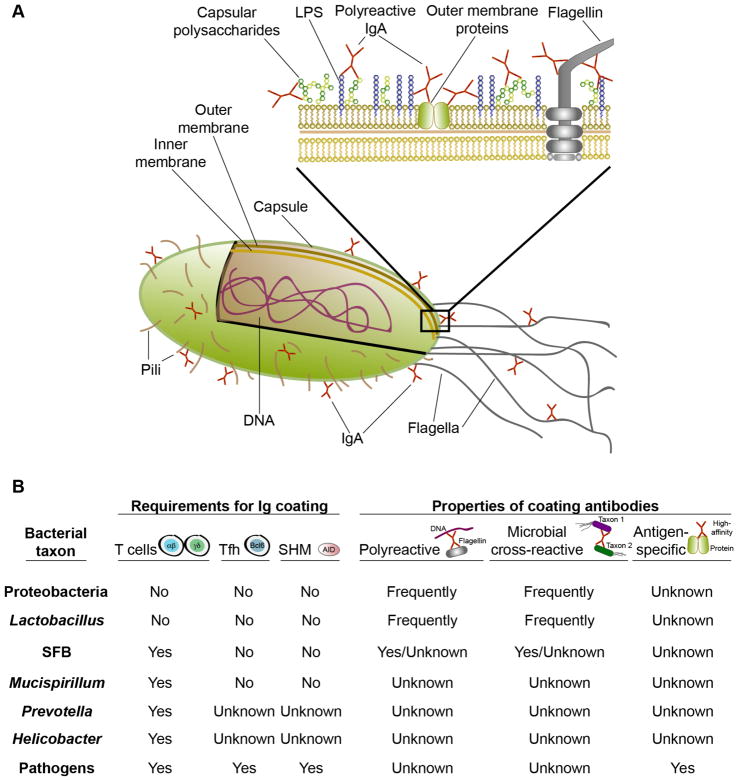
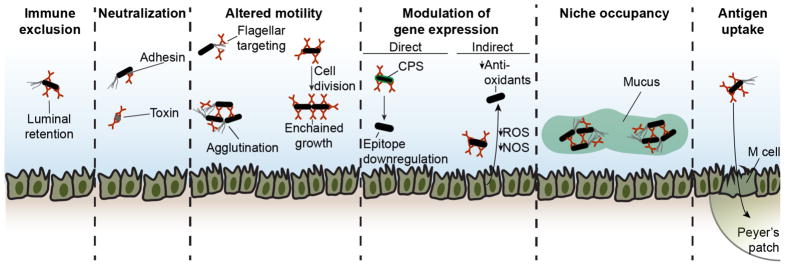
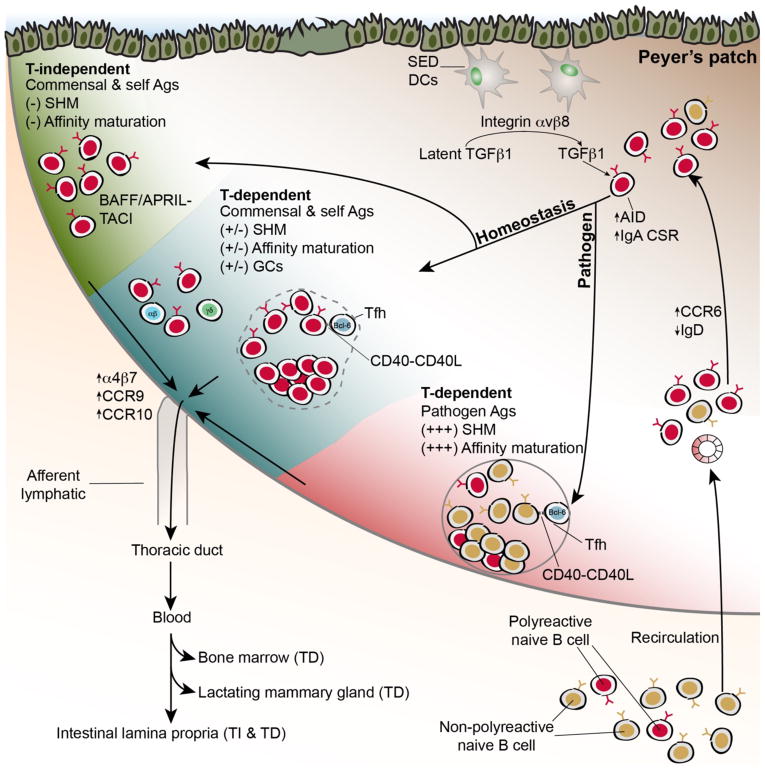
Various immune mechanisms are deployed in the mucosa to confront the immense diversity of resident bacteria. A substantial fraction of the commensal microbiota is coated with immunoglobulin A (IgA) antibodies, and recent findings have established the identities of these bacteria under homeostatic and disease conditions. Here we review the current understanding of IgA biology, and present a framework wherein two distinct types of humoral immunity coexist in the gastrointestinal mucosa. Homeostatic IgA responses employ a polyreactive repertoire to bind a broad but taxonomically distinct subset of microbiota. In contrast, mucosal pathogens and vaccines elicit high-affinity, T cell-dependent antibody responses. This model raises fundamental questions including how polyreactive IgA specificities are generated, how these antibodies exert effector functions, and how they exist together with other immune responses during homeostasis and disease.
各种免疫机制在黏膜中被部署以应对常驻细菌的巨大多样性。相当一部分共生菌群被免疫球蛋白 A(IgA)抗体所覆盖,最近的研究结果已经确定了这些细菌在稳态和疾病条件下的身份。在这里,我们回顾了 IgA 生物学的现有认识,并提出了一个框架,其中两种不同类型的体液免疫共存于胃肠道黏膜中。稳态 IgA 反应利用多反应性 repertoire 来结合广泛但在分类上不同的微生物群子集。相比之下,黏膜病原体和疫苗会引发高亲和力、T 细胞依赖性的抗体反应。该模型提出了一些基本问题,包括多反应性 IgA 特异性是如何产生的,这些抗体如何发挥效应功能,以及它们在稳态和疾病期间如何与其他免疫反应共存。