Laboratory of Developmental Erythropoiesis, Center for Autoimmune, Musculoskeletal, and Hematopoietic Diseases, The Feinstein Institute for Medical Research, 350 Community Drive, Manhasset, NY, 11030, USA.
Division of Pediatrics Hematology/Oncology and Stem Cell Transplantation, Cohen Children's Medical Center, New Hyde Park, NY, 11040, USA.
Mol Med. 2018 Mar 23;24(1):11. doi: 10.1186/s10020-018-0011-z.
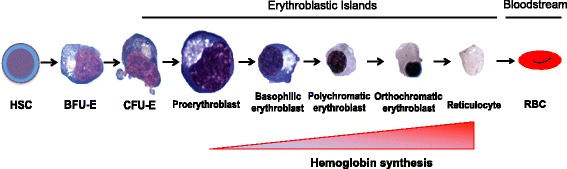
Erythropoiesis is a tightly-regulated and complex process originating in the bone marrow from a multipotent stem cell and terminating in a mature, enucleated erythrocyte.Altered red cell production can result from the direct impairment of medullary erythropoiesis, as seen in the thalassemia syndromes, inherited bone marrow failure as well as in the anemia of chronic disease. Alternatively, in disorders such as sickle cell disease (SCD) as well as enzymopathies and membrane defects, medullary erythropoiesis is not, or only minimally, directly impaired. Despite these differences in pathophysiology, therapies have traditionally been non-specific, limited to symptomatic control of anemia via packed red blood cell (pRBC) transfusion, resulting in iron overload and the eventual need for iron chelation or splenectomy to reduce defective red cell destruction. Likewise, in polycythemia vera overproduction of red cells has historically been dealt with by non-specific myelosuppression or phlebotomy. With a deeper understanding of the molecular mechanisms underlying disease pathophysiology, new therapeutic targets have been identified including induction of fetal hemoglobin, interference with aberrant signaling pathways and gene therapy for definitive cure. This review, utilizing some representative disorders of erythropoiesis, will highlight novel therapeutic modalities currently in development for treatment of red cell disorders.
红细胞生成是一个严格调控的复杂过程,起源于骨髓中的多能干细胞,并最终终止于成熟的无核红细胞。由于地中海贫血综合征、遗传性骨髓衰竭以及慢性病性贫血等疾病导致骨髓中红细胞生成直接受损,可导致红细胞生成改变。或者,在镰状细胞病(SCD)以及酶病和膜缺陷等疾病中,骨髓中的红细胞生成并未受到直接损害,或者仅受到轻微损害。尽管这些病理生理学存在差异,但治疗方法一直是非特异性的,仅限于通过输注浓缩红细胞(pRBC)来控制贫血的症状,从而导致铁过载,最终需要铁螯合或脾切除术来减少异常红细胞的破坏。同样,在真性红细胞增多症中,红细胞的过度生成历史上一直通过非特异性骨髓抑制或放血来处理。随着对疾病病理生理学潜在分子机制的深入了解,已经确定了新的治疗靶点,包括诱导胎儿血红蛋白、干扰异常信号通路和基因治疗以实现根治。本文利用一些代表性的红细胞生成障碍疾病,重点介绍了目前正在开发用于治疗红细胞疾病的新型治疗方法。