Bioengineering Department, Marmara University, Kadikoy, 34722 Istanbul, Turkey.
Chemical Engineering Department, Bogazici University, Bebek, 34342 Istanbul, Turkey.
Biomolecules. 2018 Aug 22;8(3):77. doi: 10.3390/biom8030077.
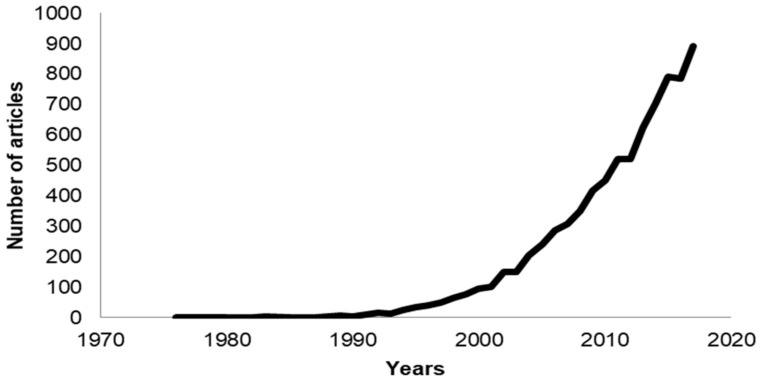
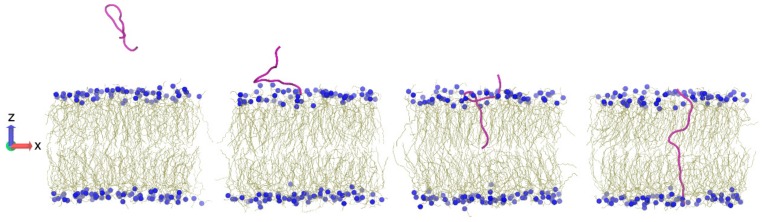
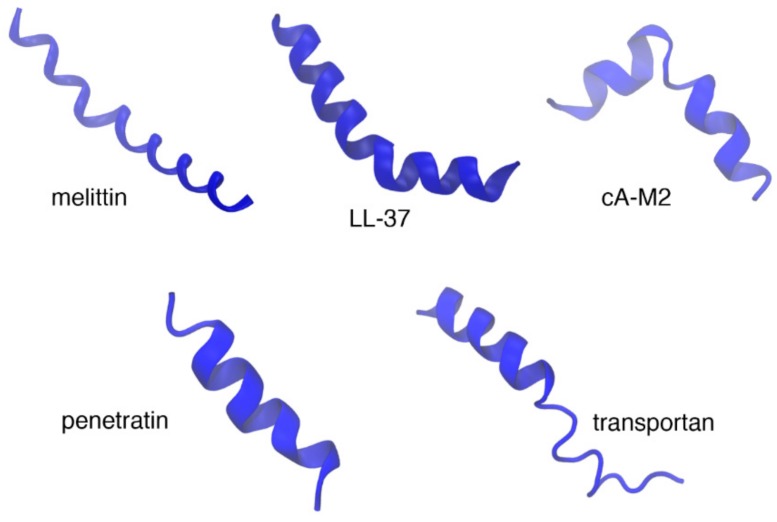
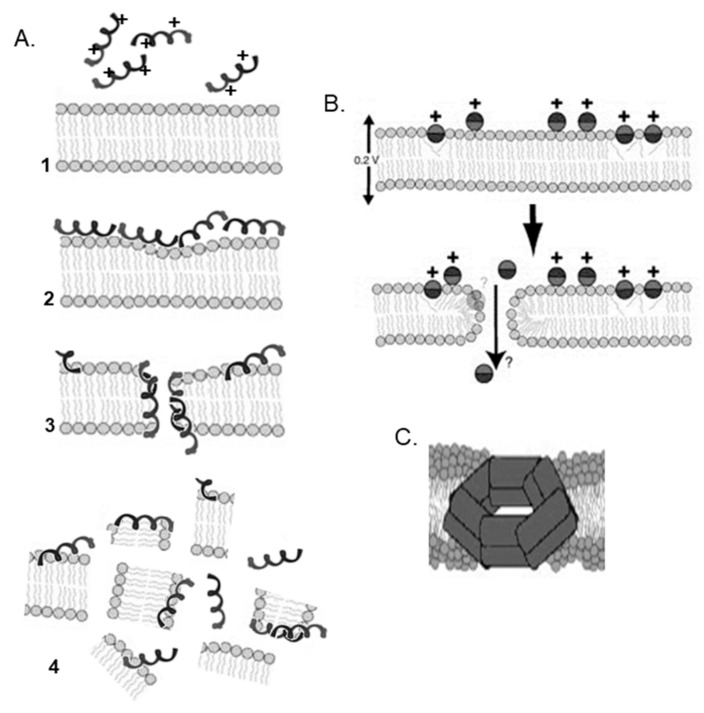
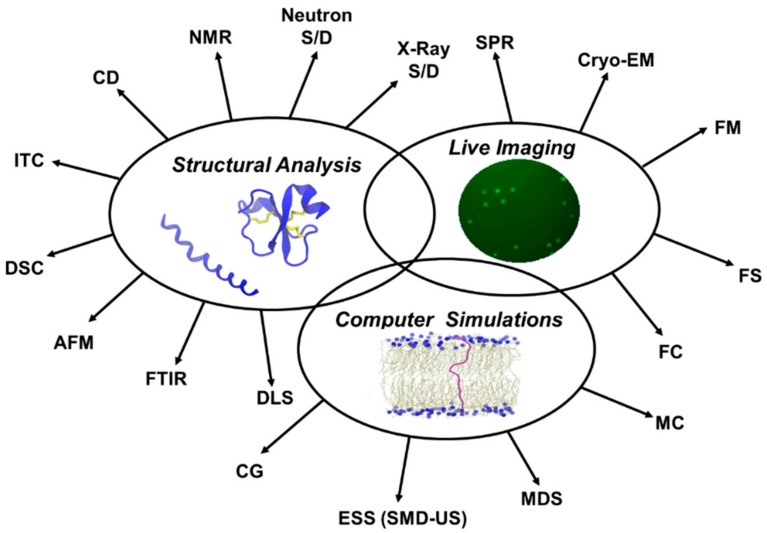
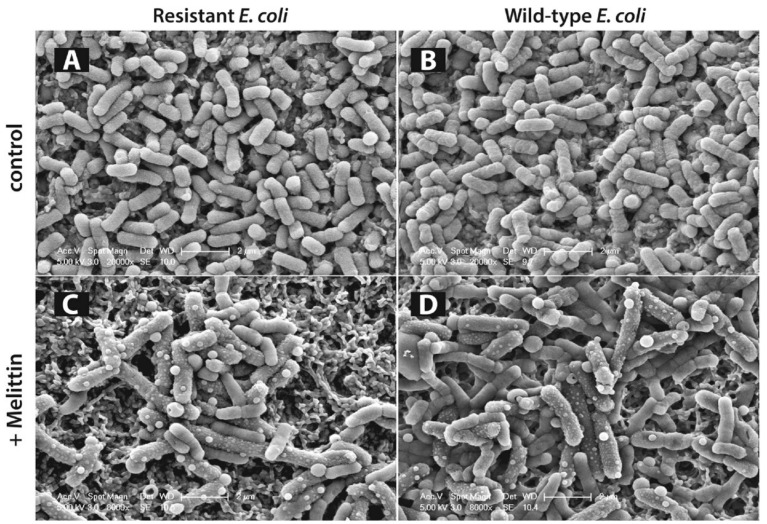
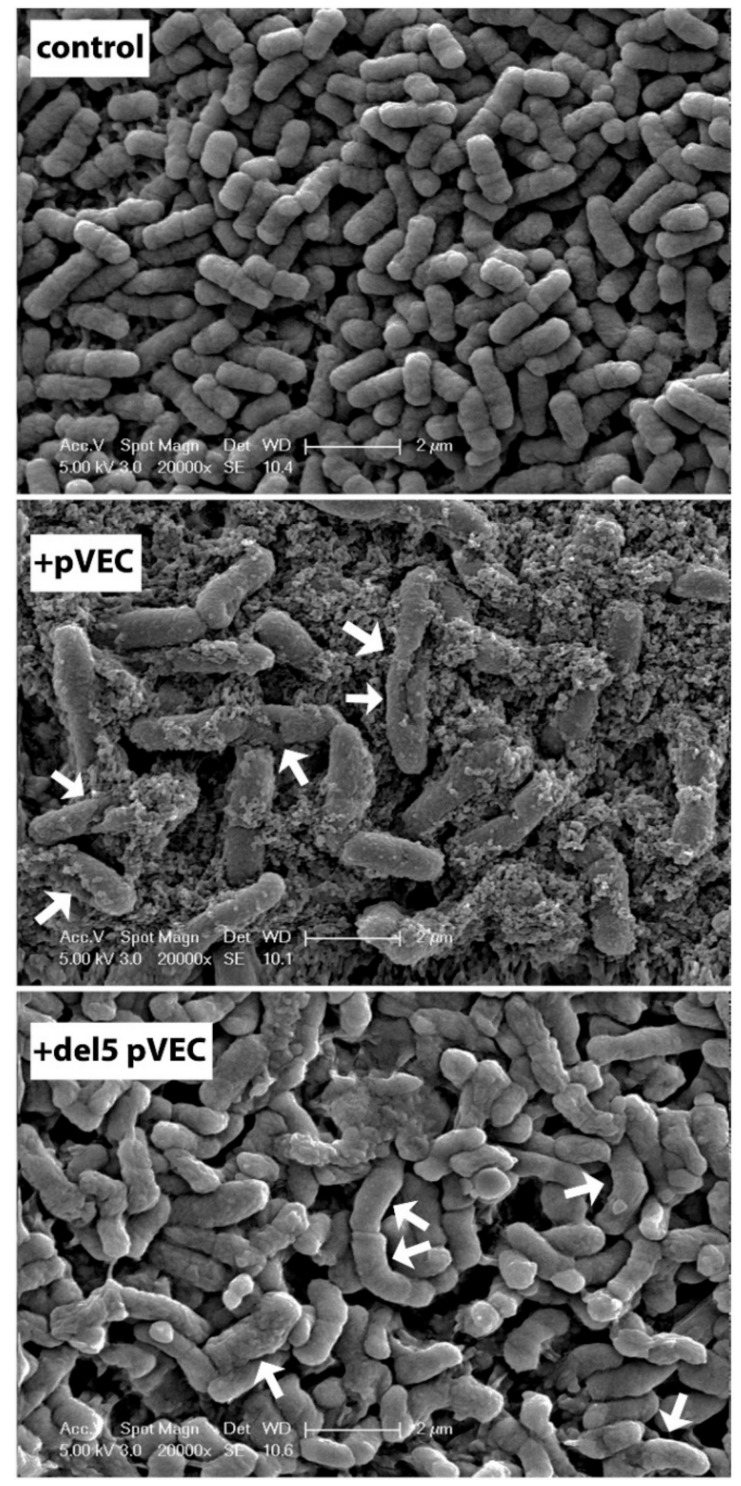
In the last 20 years, an increasing number of studies have been reported on membrane active peptides. These peptides exert their biological activity by interacting with the cell membrane, either to disrupt it and lead to cell lysis or to translocate through it to deliver cargos into the cell and reach their target. Membrane active peptides are attractive alternatives to currently used pharmaceuticals and the number of antimicrobial peptides (AMPs) and peptides designed for drug and gene delivery in the drug pipeline is increasing. Here, we focus on two most prominent classes of membrane active peptides; AMPs and cell-penetrating peptides (CPPs). Antimicrobial peptides are a group of membrane active peptides that disrupt the membrane integrity or inhibit the cellular functions of bacteria, virus, and fungi. Cell penetrating peptides are another group of membrane active peptides that mainly function as cargo-carriers even though they may also show antimicrobial activity. Biophysical techniques shed light on peptide⁻membrane interactions at higher resolution due to the advances in optics, image processing, and computational resources. Structural investigation of membrane active peptides in the presence of the membrane provides important clues on the effect of the membrane environment on peptide conformations. Live imaging techniques allow examination of peptide action at a single cell or single molecule level. In addition to these experimental biophysical techniques, molecular dynamics simulations provide clues on the peptide⁻lipid interactions and dynamics of the cell entry process at atomic detail. In this review, we summarize the recent advances in experimental and computational investigation of membrane active peptides with particular emphasis on two amphipathic membrane active peptides, the AMP melittin and the CPP pVEC.
在过去的 20 年中,越来越多的关于膜活性肽的研究报告。这些肽通过与细胞膜相互作用发挥其生物活性,要么破坏细胞膜导致细胞裂解,要么通过细胞膜转运将货物输送到细胞内并达到其靶标。膜活性肽是目前使用的药物的有吸引力的替代品,并且在药物管线上用于抗菌肽 (AMPs) 和药物和基因传递设计的肽的数量正在增加。在这里,我们重点介绍两种最突出的膜活性肽;抗菌肽和细胞穿透肽 (CPPs)。抗菌肽是一组破坏膜完整性或抑制细菌、病毒和真菌细胞功能的膜活性肽。细胞穿透肽是另一组膜活性肽,它们主要作为货物载体发挥作用,尽管它们也可能表现出抗菌活性。由于光学、图像处理和计算资源的进步,生物物理技术以更高的分辨率揭示了肽-膜相互作用。在存在膜的情况下对膜活性肽进行结构研究为膜环境对肽构象的影响提供了重要线索。活细胞成像技术允许在单细胞或单分子水平上检查肽的作用。除了这些实验生物物理技术外,分子动力学模拟还提供了关于肽-脂质相互作用和细胞进入过程动力学的原子细节的线索。在这篇综述中,我们总结了实验和计算研究膜活性肽的最新进展,特别强调了两种两亲性膜活性肽,抗菌肽蜂毒素和 CPP pVEC。