Xiong Aiping, Proctor Robert W
Department of Psychological Sciences, Purdue University, West Lafayette, IN, United States.
Front Psychol. 2018 Aug 8;9:1270. doi: 10.3389/fpsyg.2018.01270. eCollection 2018.
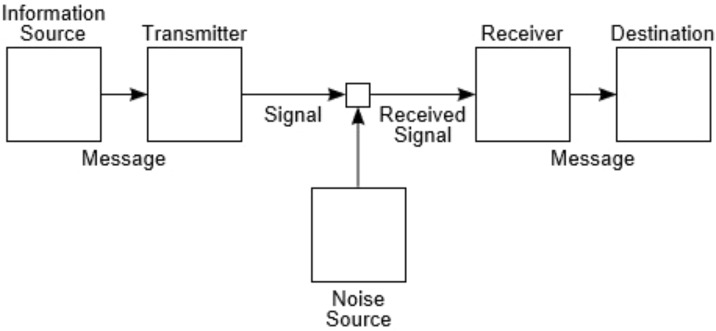
The information age can be dated to the work of Norbert Wiener and Claude Shannon in the 1940s. Their work on cybernetics and information theory, and many subsequent developments, had a profound influence on reshaping the field of psychology from what it was prior to the 1950s. Contemporaneously, advances also occurred in experimental design and inferential statistical testing stemming from the work of Ronald Fisher, Jerzy Neyman, and Egon Pearson. These interdisciplinary advances from outside of psychology provided the conceptual and methodological tools for what is often called the cognitive revolution but is more accurately described as the information-processing revolution. Cybernetics set the stage with the idea that everything ranging from neurophysiological mechanisms to societal activities can be modeled as structured control systems with feedforward and feedback loops. Information theory offered a way to quantify entropy and information, and promoted theorizing in terms of information flow. Statistical theory provided means for making scientific inferences from the results of controlled experiments and for conceptualizing human decision making. With those three pillars, a cognitive psychology adapted to the information age evolved. The growth of technology in the information age has resulted in human lives being increasingly interweaved with the cyber environment, making cognitive psychology an essential part of interdisciplinary research on such interweaving. Continued engagement in interdisciplinary research at the forefront of technology development provides a chance for psychologists not only to refine their theories but also to play a major role in the advent of a new age of science.
信息时代可以追溯到20世纪40年代诺伯特·维纳和克劳德·香农的工作。他们在控制论和信息论方面的工作,以及随后的许多发展,对重塑20世纪50年代之前的心理学领域产生了深远影响。与此同时,源于罗纳德·费希尔、耶日·内曼和埃贡·皮尔逊工作的实验设计和推断统计检验也取得了进展。这些来自心理学领域之外的跨学科进展为通常所说的认知革命提供了概念和方法工具,但更准确地说应称为信息处理革命。控制论提出,从神经生理机制到社会活动的一切都可以被建模为具有前馈和反馈回路的结构化控制系统,从而奠定了基础。信息论提供了一种量化熵和信息的方法,并促进了从信息流角度进行的理论化。统计理论为从对照实验结果进行科学推断以及将人类决策概念化提供了手段。借助这三大支柱,适应信息时代的认知心理学得以发展。信息时代技术的发展使人类生活与网络环境日益交织,使认知心理学成为关于这种交织的跨学科研究的重要组成部分。持续参与技术发展前沿的跨学科研究,为心理学家提供了一个机会,不仅可以完善他们的理论,还能在新时代科学的到来中发挥重要作用。