Cognitive Ethology Laboratory, German Primate Center (DPZ), Leibniz Institute for Primate Research, Kellnerweg 4, Göttingen, Germany.
Primate Genetics Laboratory, German Primate Center (DPZ), Leibniz Institute for Primate Research, Kellnerweg 4, Göttingen, Germany.
PLoS One. 2018 Aug 23;13(8):e0202303. doi: 10.1371/journal.pone.0202303. eCollection 2018.
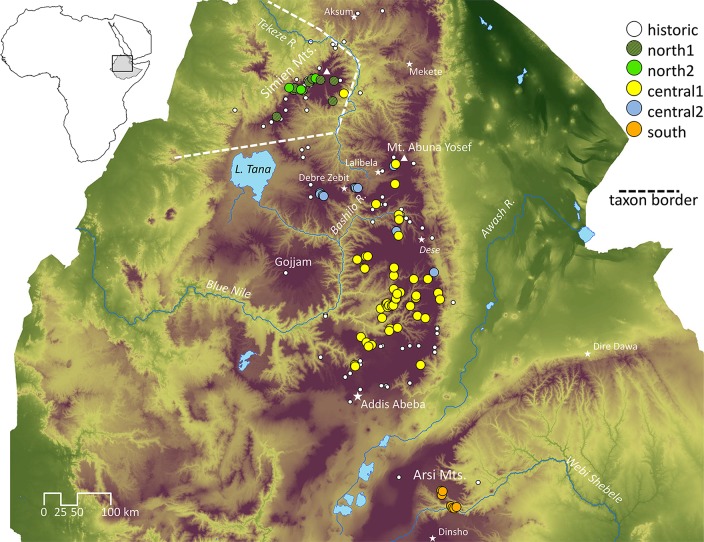
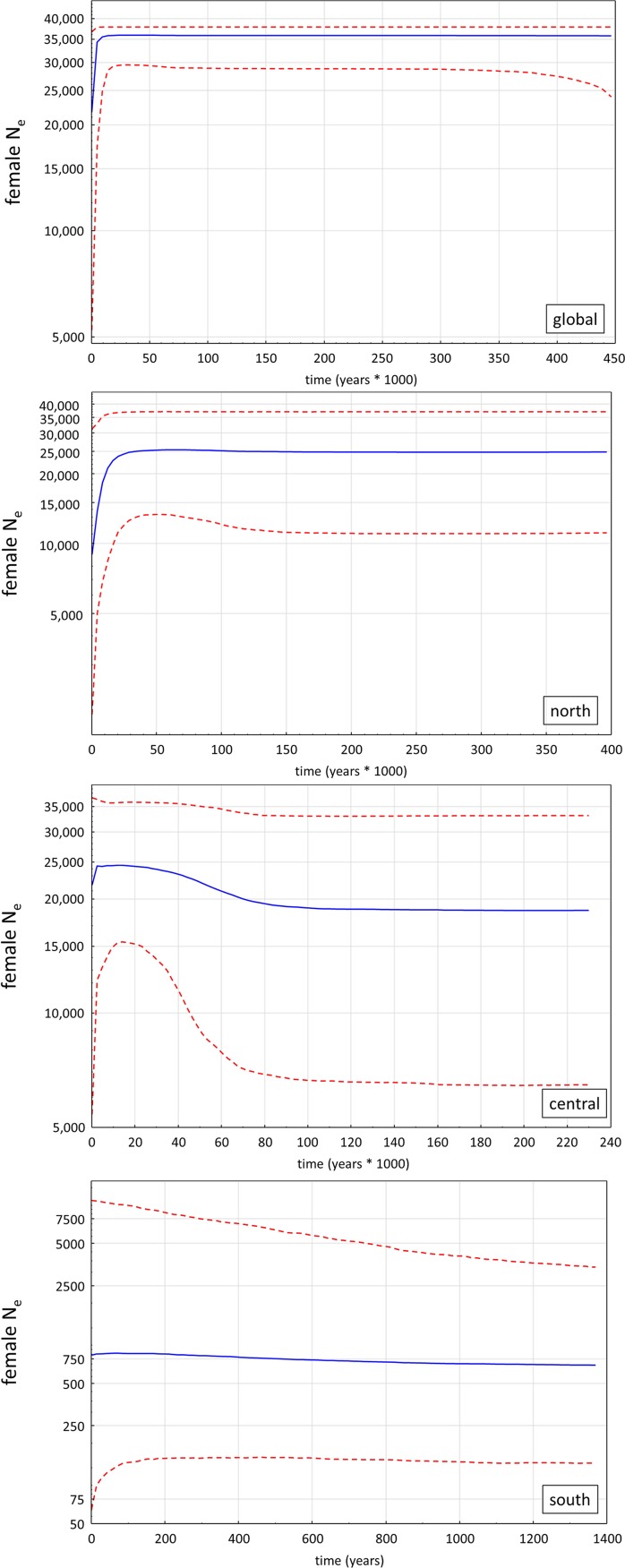
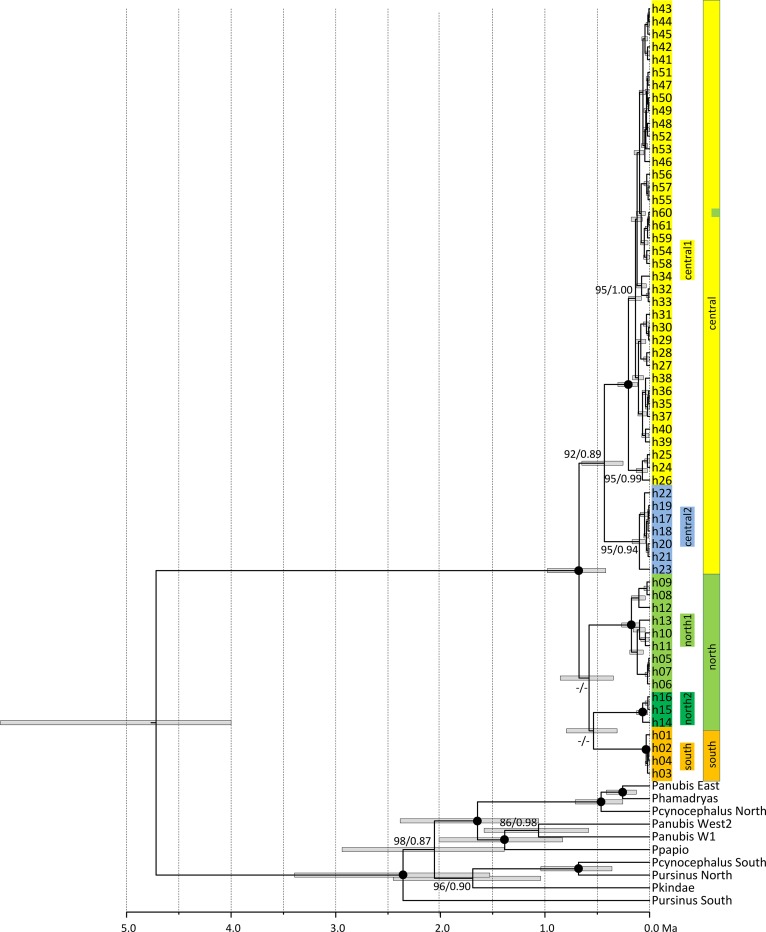
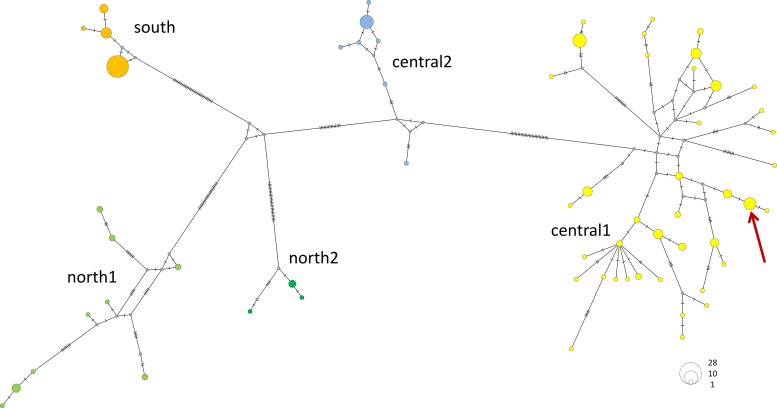
The large-bodied, terrestrial primates in the tribe Papionini are among the most intensely studied animals in the world, yet for some members of this tribe we know comparatively little about their evolutionary history and phylogeography. Geladas (Theropithecus gelada Rüppell, 1835), endemic primates of the Ethiopian highlands, are largely unstudied both in genetic diversity and intrageneric phylogeny. Currently, a northern and central subspecies and one isolated southern population are recognized, of which the central is classified as Least Concern, the northern as Vulnerable, and the southern is not yet assessed. The distribution and taxonomy of the subspecies remain poorly defined. Here, we estimate the mitochondrial DNA (mtDNA) diversity and phylogenetic relationships among gelada mtDNA lineages based on samples across the entire species range. We analysed 1.7 kb-long sequences of the mtDNA genome, spanning the cytochrome b gene and the hypervariable region I of the D-loop, derived from 162 faecal samples. We detected five major haplogroups or clades (south, central-1, central-2, north-1, north-2) which diverged between 0.67 and 0.43 million years ago, thus suggesting a rapid radiation, resulting in largely unresolved intrageneric phylogenetic relationships. Both, the northern and central demes contain two similarly valid haplogroups, each with little or no geographic segregation among respective haplogroups. Effective population sizes of the northern and central demes decreased during and after the last glacial maximum but remained stable for the southern deme, although on a very low level. The distribution of haplogroups within the geographic ranges of the putative gelada subspecies indicates that mtDNA sequence information does not allow reliable taxonomic inferences and thus is not sufficient for solving the taxonomic rank of the three demic populations, with the possible exception of the southern population. Nevertheless, due to the genetic differences all three populations deserve conservation efforts, in particular the smallest southern population.
大型陆生灵长类动物中的狒狒族是世界上研究最为深入的动物之一,但对于这个族中的一些成员,我们对其进化历史和系统地理学了解甚少。狒狒(Theropithecus gelada Rüppell, 1835)是埃塞俄比亚高地特有的灵长类动物,在遗传多样性和种内系统发育方面的研究都很少。目前,人们认可存在一个北部和中部亚种以及一个孤立的南部种群,其中中部亚种被归类为低危,北部亚种为易危,而南部亚种尚未评估。亚种的分布和分类仍然定义不明确。在这里,我们根据整个物种分布范围内的样本,估计了狒狒线粒体 DNA(mtDNA)多样性和种系关系。我们分析了来自 162 份粪便样本的全长 1.7 kb 的 mtDNA 基因组序列,跨越细胞色素 b 基因和 D 环高变区 I。我们检测到了五个主要的单倍群或分支(南部、中部-1、中部-2、北部-1、北部-2),它们在 0.67 到 0.43 百万年前分化,因此表明存在快速辐射,导致种内系统发育关系基本未得到解决。北部和中部种群都包含两个类似的有效单倍群,各自的单倍群之间几乎没有或没有地理隔离。北部和中部种群的有效种群大小在末次冰盛期期间和之后减少,但南部种群保持稳定,尽管水平非常低。单倍群在假定的狒狒亚种地理分布范围内的分布表明,mtDNA 序列信息不能进行可靠的分类推断,因此不足以解决三个种群的分类地位,南部种群除外。尽管如此,由于遗传差异,所有三个种群都值得保护,特别是最小的南部种群。