Department of Obstetrics and Gynecology, The First Affiliated Hospital of Xi'an Jiaotong University, 277 West Yanta Road, Xi'an, Shaanxi 710061, China.
Department of Obstetrics and Gynecology, Taihe Hospital, Hubei University of Medicine, Shiyan, Hubei 442000, China.
Mediators Inflamm. 2018 Jul 25;2018:9127146. doi: 10.1155/2018/9127146. eCollection 2018.
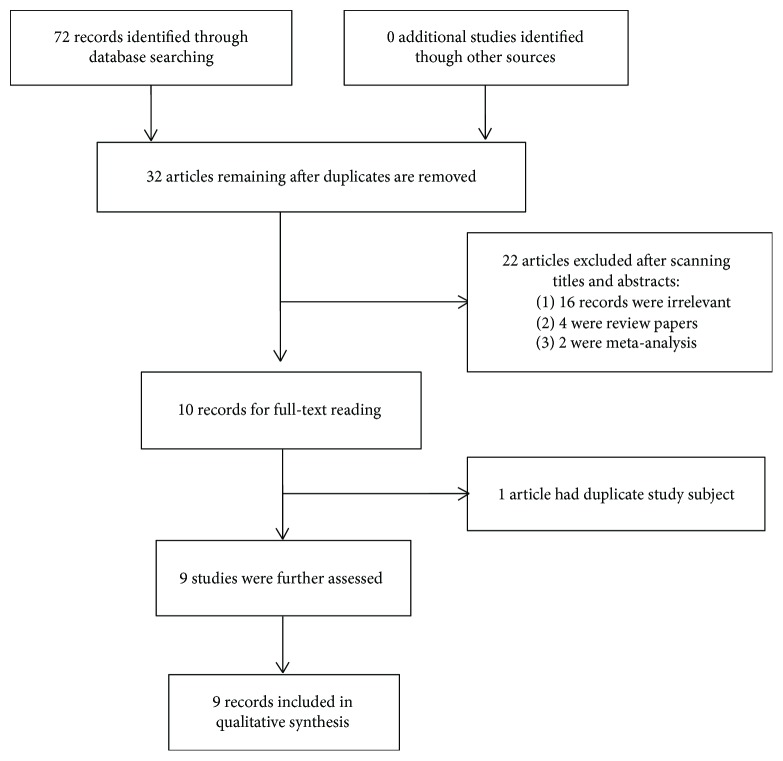
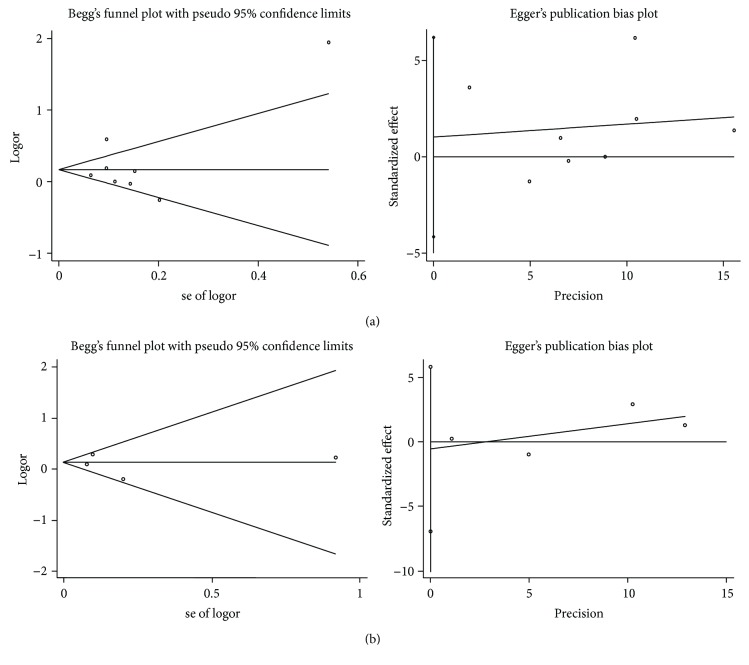
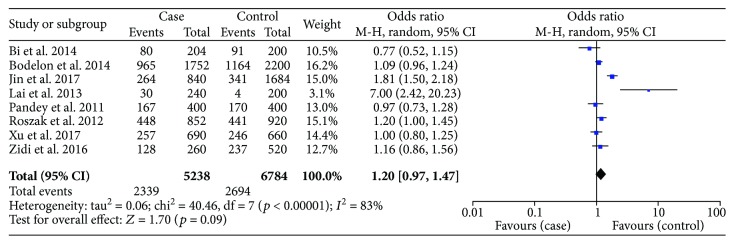
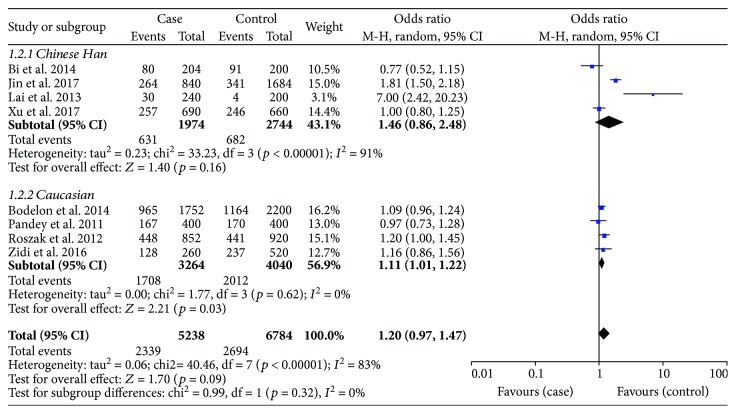
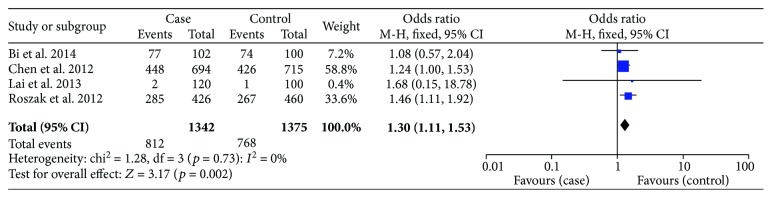
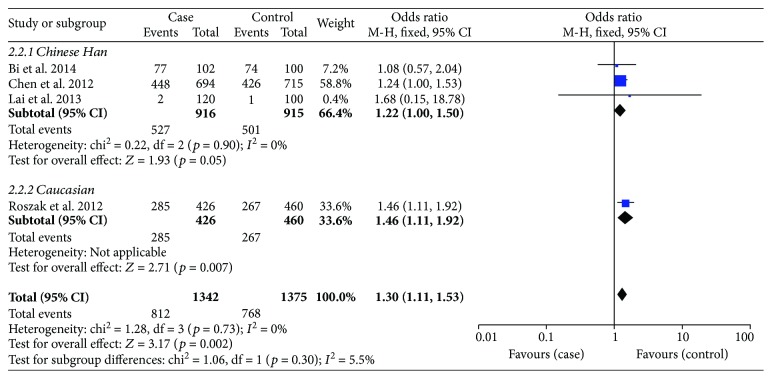
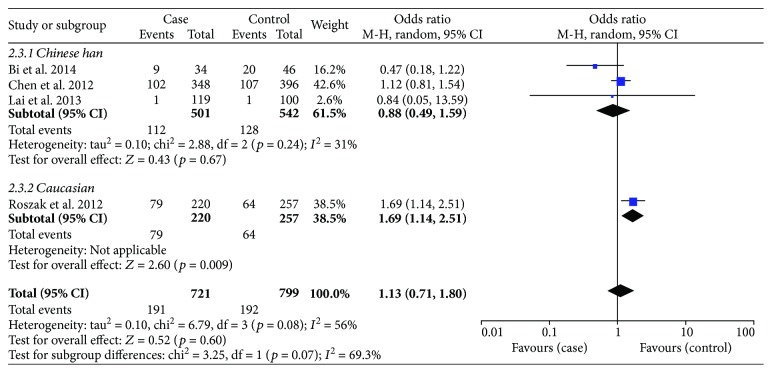
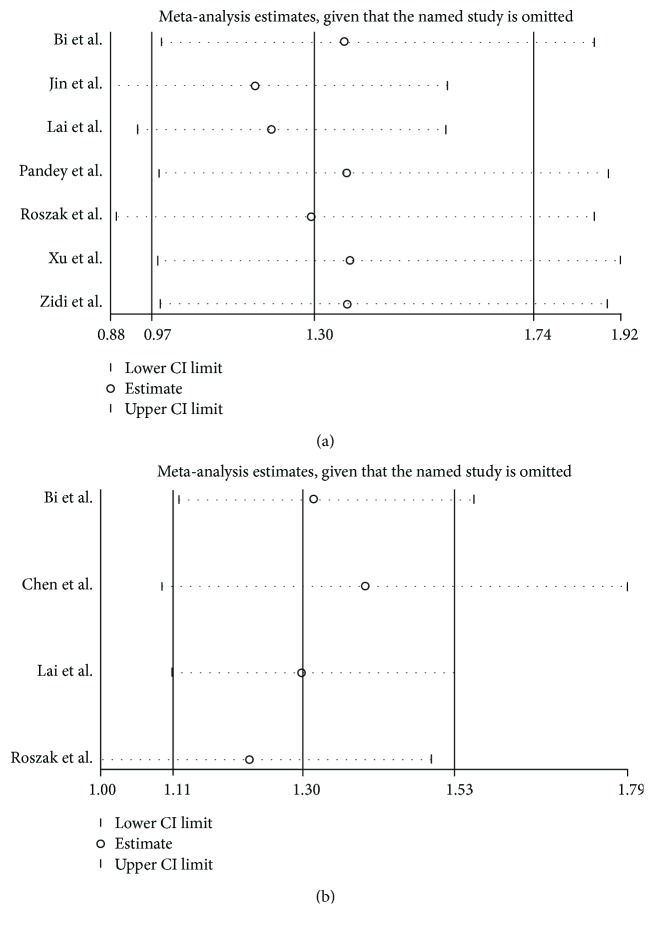
This meta-analysis systematically reviews the association between Toll-like receptor 9 polymorphisms and the risk of cervical cancer. Case-control studies focused on the association were collected from the PubMed, Web of Science, Cochrane Library, Embase, MEDLINE, CNKI, VIP, and Wanfang databases from inception to July 2017. We screened the studies and assessed the methodological quality of the included studies and extracted data. A meta-analysis was performed using RevMan 5.3 and Stata 12.0 software. Pooled odds ratios and 95% confidence intervals were employed to evaluate the strength of the associations between Toll-like receptor 9 polymorphisms and cervical cancer risk. A total of 9 studies comprising 3331 cervical cancer patients and 4109 healthy controls met the inclusion criteria. Of these, 8 studies contained information about G2848A (rs352140) and 4 studies contained information about -1486T/C (rs187084). Our results revealed that the associations between rs187084 and cervical cancer risk in the dominant model ( = 0.002) and heterozygous model ( = 0.002) were significant, with 1.30- and 1.32-fold increases in susceptibility, respectively, compared to that in the wild-type model. However, rs352140 was not related to cervical cancer regardless of whether the subgroup analysis was conducted ( > 0.05). In conclusion, there is a significant correlation between rs187084 and cervical cancer risk with the minor C allele increasing the risk of occurrence of cervical cancer. However, rs352140 is not associated with the occurrence of cervical cancer.
这篇荟萃分析系统地回顾了 Toll 样受体 9 多态性与宫颈癌风险之间的关联。从建立到 2017 年 7 月,我们从 PubMed、Web of Science、Cochrane Library、Embase、MEDLINE、CNKI、VIP 和万方数据库中收集了专注于该关联的病例对照研究。我们筛选了研究并评估了纳入研究的方法学质量并提取了数据。使用 RevMan 5.3 和 Stata 12.0 软件进行荟萃分析。使用合并优势比和 95%置信区间来评估 Toll 样受体 9 多态性与宫颈癌风险之间的关联强度。共有 9 项研究包含 3331 名宫颈癌患者和 4109 名健康对照符合纳入标准。其中,8 项研究包含 G2848A(rs352140)的信息,4 项研究包含-1486T/C(rs187084)的信息。我们的结果表明,rs187084 与宫颈癌风险在显性模型( = 0.002)和杂合模型( = 0.002)中的关联具有统计学意义,与野生型模型相比,分别增加了 1.30 倍和 1.32 倍的易感性。然而,无论进行亚组分析(>0.05),rs352140 均与宫颈癌无关。总之,rs187084 与宫颈癌风险之间存在显著相关性,次要 C 等位基因增加了宫颈癌发生的风险。然而,rs352140 与宫颈癌的发生无关。