State Key Laboratory of Agricultural Microbiology, Huazhong Agricultural University, Wuhan, China.
Hubei Cooperative Innovation Center for Sustainable Pig Production, Wuhan, China.
Front Immunol. 2018 Aug 10;9:1814. doi: 10.3389/fimmu.2018.01814. eCollection 2018.
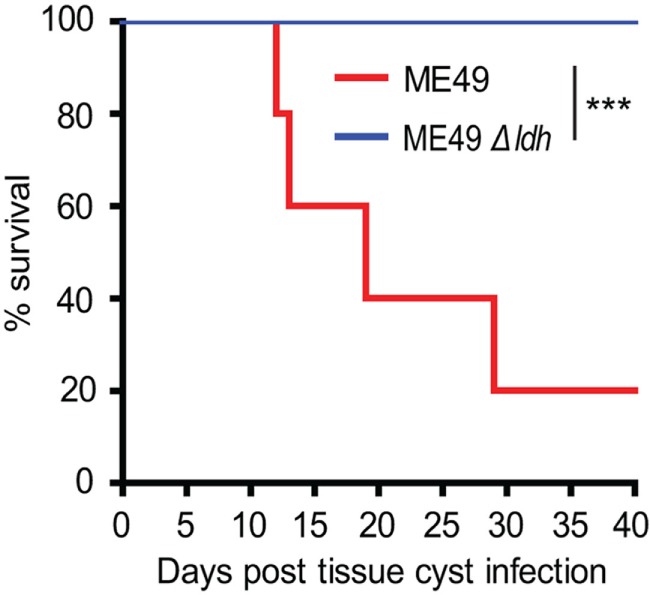
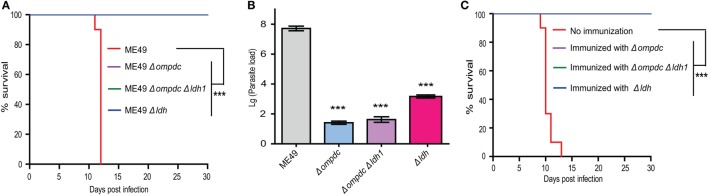
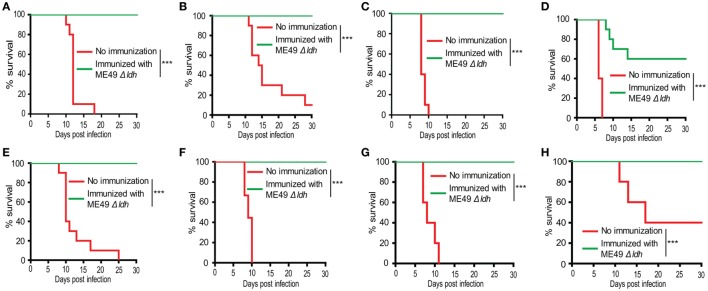
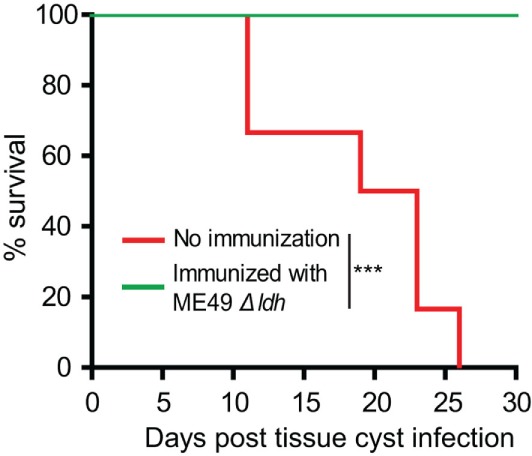
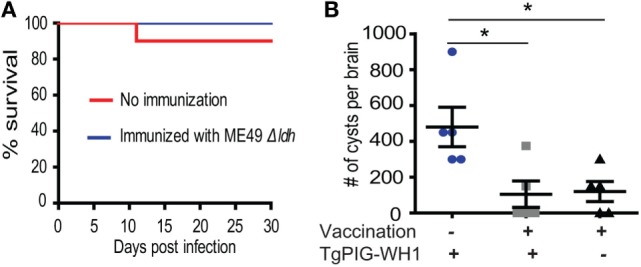
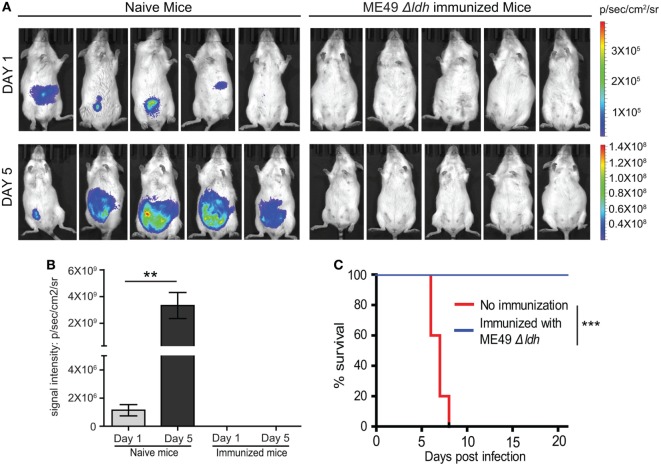
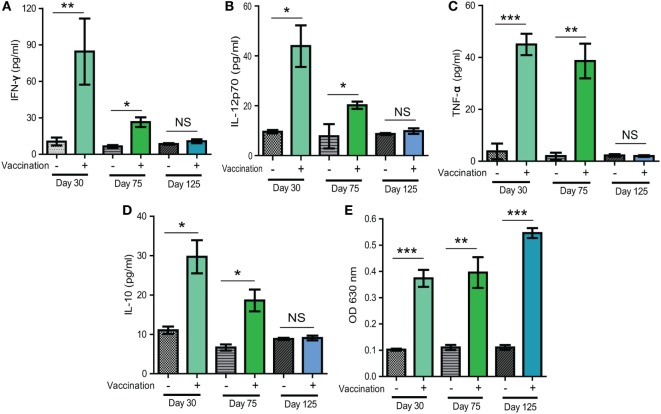
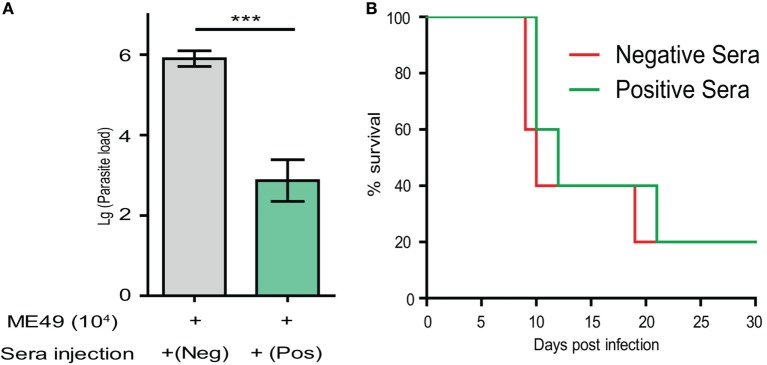
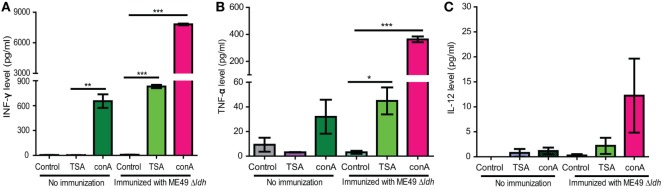
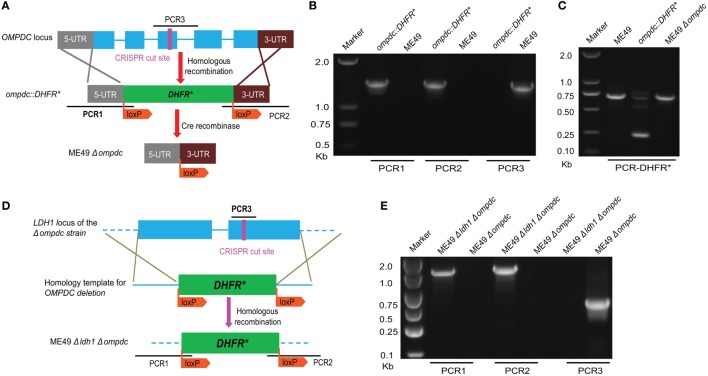
is an important zoonotic pathogen infecting one-third of the world's population and numerous animals, causing significant healthcare burden and socioeconomic problems. Vaccination is an efficient way to reduce global sero-prevalence, however, ideal vaccines are not yet available. We recently discovered that the mutant lacking both lactate dehydrogenases and () grew well but was unable to propagate in mice, making it a good live vaccine candidate. Here, we tested the protection efficacy of ME49 using a mouse model. Vaccinated mice were efficiently protected from the lethal challenge of a variety of wild-type strains, including type 1 strain RH, type 2 strain ME49, type 3 strain VEG, and a field isolate of Chinese 1. The protection efficacies of a single vaccination were nearly 100% for most cases and it worked well against the challenges of both tachyzoites and tissue cysts. Re-challenging parasites were unable to propagate in vaccinated mice, nor did they make tissue cysts. High levels of -specific IgG were produced 30 days after immunization and stayed high during the whole tests (at least 125 days). However, passive immunization of naïve mice with sera from vaccinated mice did reduce parasite propagation, but the overall protection against parasite infections was rather limited. On the other hand, immunization evoked elevated levels of Th1 cytokines like INF-γ and IL-12, at early time points. In addition, splenocytes extracted from immunized mice were able to induce quick and robust INF-γ and other pro-inflammatory cytokine production upon antigen stimulation. Together these results suggest that cellular immune responses are the main contributors to the protective immunity elicited by vaccination, and humoral immunity also contributes partially. We also generated uracil auxotrophic mutants in ME49 and compared their immune protection efficiencies to the mutants. The results showed that these two types of mutants have similar properties as live vaccine candidates. Taken together, these results suggest that mutants lacking LDH were severely attenuated in virulence but were able to induce strong anti-toxoplasma immune responses, therefore are good candidates for live vaccines.
刚地弓形虫是一种重要的人畜共患病原体,感染了全球三分之一的人口和众多动物,造成了巨大的医疗保健负担和社会经济问题。疫苗接种是降低全球血清流行率的有效方法,然而,目前还没有理想的疫苗。我们最近发现,缺乏两种乳酸脱氢酶和的突变体生长良好,但无法在小鼠中繁殖,因此是一种很好的活疫苗候选物。在这里,我们使用小鼠模型测试了 ME49 的保护效果。接种疫苗的小鼠能够有效地抵御各种野生型菌株的致死性挑战,包括 1 型 RH 株、2 型 ME49 株、3 型 VEG 株和中国 1 型的田间分离株。大多数情况下,单次接种的保护效果接近 100%,对速殖子和组织包囊的挑战均效果良好。再次挑战的寄生虫无法在接种疫苗的小鼠中繁殖,也不会形成组织包囊。免疫后 30 天产生高水平的-特异性 IgG,在整个试验期间(至少 125 天)保持高水平。然而,用接种疫苗小鼠的血清被动免疫幼稚小鼠确实可以减少寄生虫的繁殖,但对寄生虫感染的总体保护作用相当有限。另一方面,免疫诱导了高水平的 Th1 细胞因子,如 IFN-γ 和 IL-12,在早期时间点。此外,从免疫小鼠中提取的脾细胞在抗原刺激下能够迅速产生强烈的 IFN-γ 和其他促炎细胞因子的产生。这些结果表明,细胞免疫反应是弓形虫疫苗接种引起的保护性免疫的主要贡献者,而体液免疫也有一定的贡献。我们还在 ME49 中生成了尿嘧啶营养缺陷型突变体,并比较了它们与的免疫保护效率。结果表明,这两种类型的突变体具有作为活疫苗候选物的相似特性。综上所述,这些结果表明,缺乏 LDH 的突变体在毒力上严重减弱,但能够诱导强烈的抗弓形虫免疫反应,因此是良好的活疫苗候选物。