Milios Leonidas
International Institute for Industrial Environmental Economics, Lund University, P. O. Box 196, Tegnersplatsen 4, 221 00 Lund, Sweden.
Sustain Sci. 2018;13(3):861-878. doi: 10.1007/s11625-017-0502-9. Epub 2017 Nov 7.
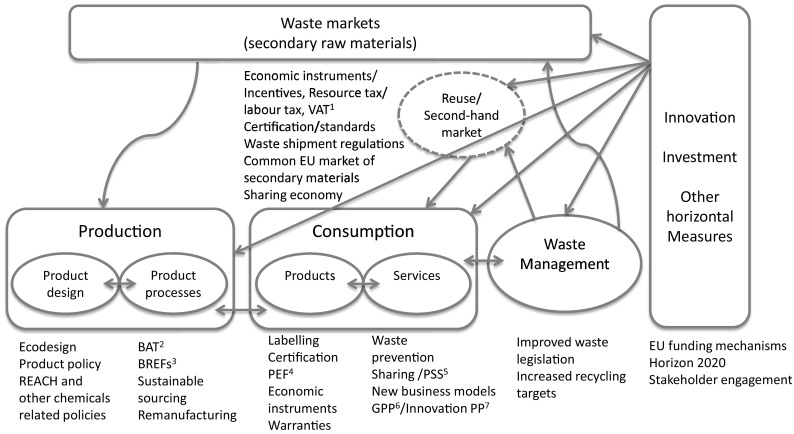
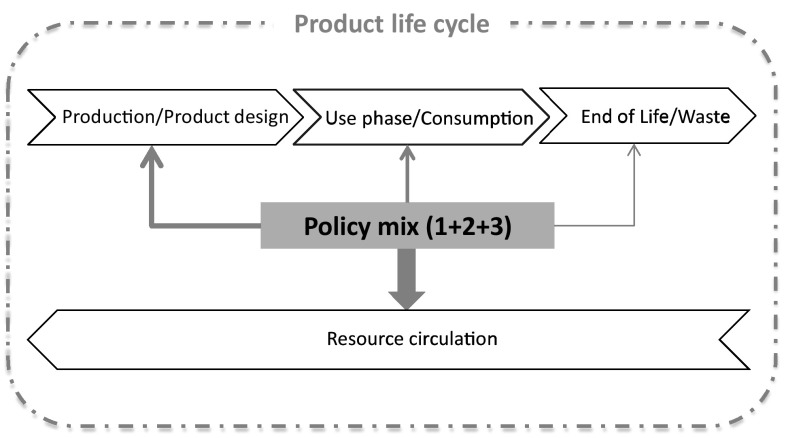
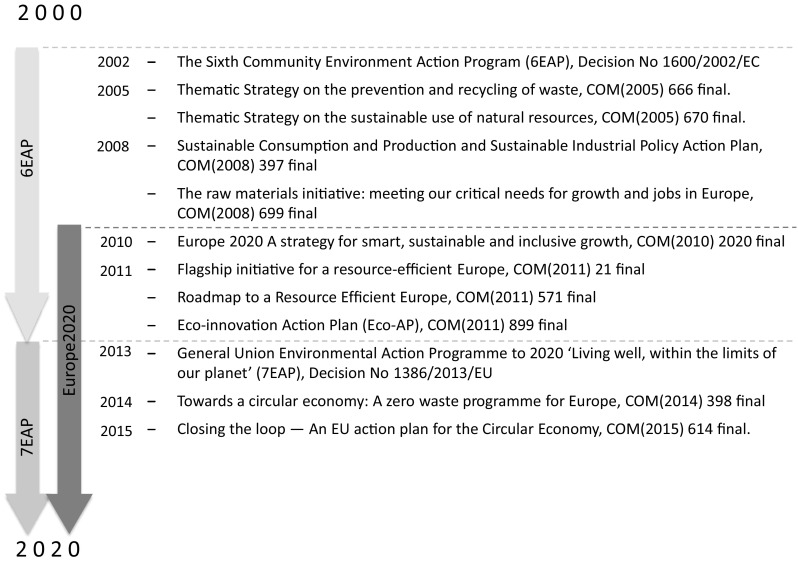
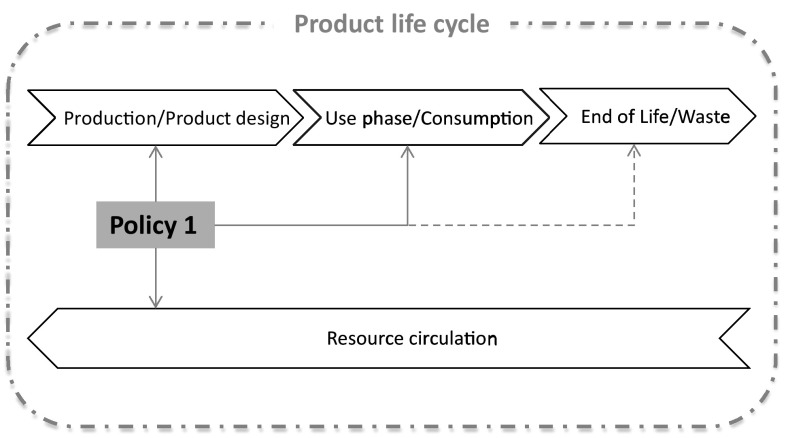
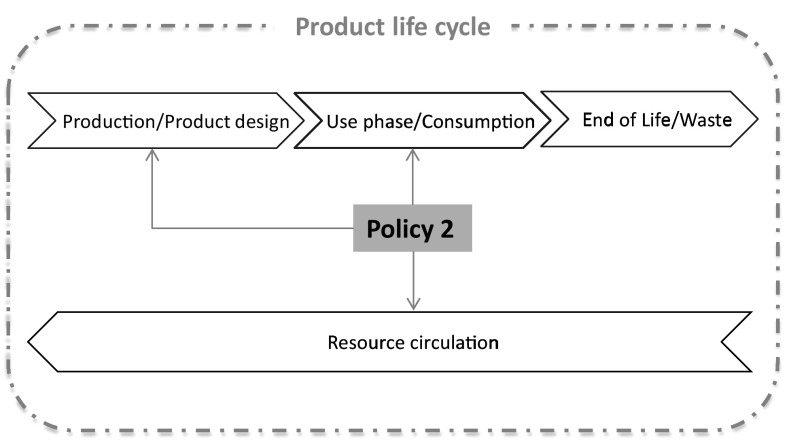
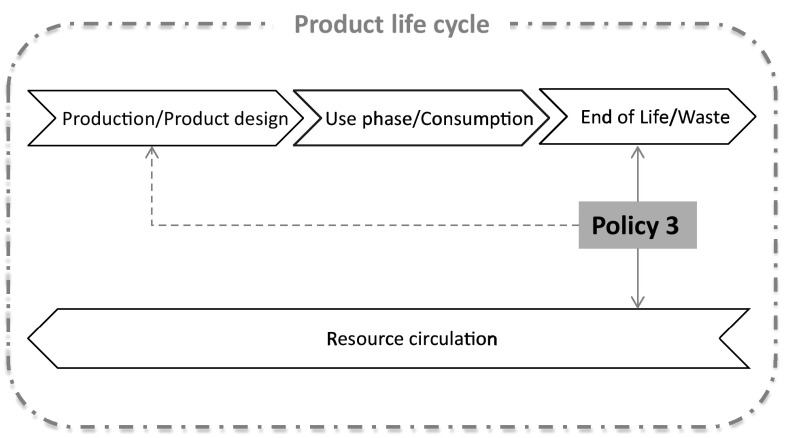
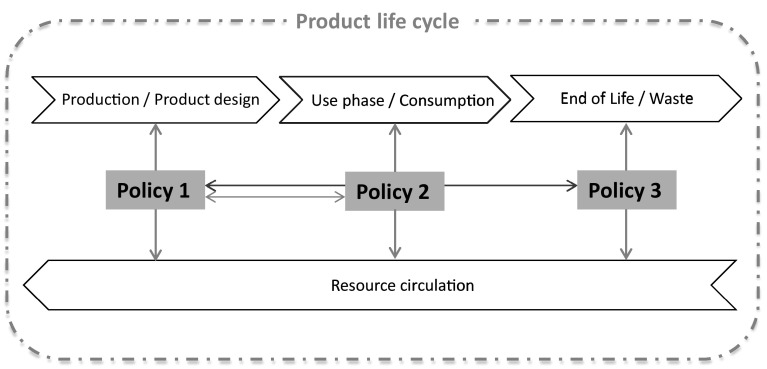
Material resources exploitation and the pressure on natural ecosystems have raised concerns over potential future resource risks and supply failures worldwide. Interest in the concept of Circular Economy has surged in recent years among policy makers and business actors. An increasing amount of literature touches upon the conceptualisation of Circular Economy, the development of 'circular solutions' and circular business models, and policies for a Circular Economy. However, relevant studies on resource efficiency policies mostly utilise a case-by-case or sector-by-sector approach and do not consider the systemic interdependencies of the underlying operational policy framework. In this contribution, a mapping of the existing resource policy framework in the European Union (EU) is undertaken, and used as a basis for identifying policy areas that have been less prominent in influencing material resource efficiency. Employing a life cycle approach, policies affecting material efficiency in the production and consumption stages of a product have been found to be poorly utilised so far in the EU. Taking this as a point of departure, three policy areas that can contribute to closing material loops and increasing resource efficiency are thoroughly discussed and their application challenges are highlighted. The three policy areas are: (1) policies for reuse, repair and remanufacturing; (2) green public procurement and innovation procurement; and (3) policies for improving secondary materials markets. Finally, a potential policy mix, including policy instruments from the three mentioned policy areas-together with policy mixing principles-is presented to outline a possible pathway for transitioning to Circular Economy policy making.
物质资源的开发以及对自然生态系统的压力引发了全球对未来潜在资源风险和供应中断的担忧。近年来,政策制定者和商业行为者对循环经济概念的兴趣激增。越来越多的文献涉及循环经济的概念化、“循环解决方案”和循环商业模式的发展以及循环经济政策。然而,有关资源效率政策的相关研究大多采用逐案或逐部门的方法,并未考虑基础运营政策框架的系统相互依存关系。在本论文中,对欧盟现有资源政策框架进行了梳理,并以此为基础确定在影响物质资源效率方面不太突出的政策领域。采用生命周期方法发现,欧盟目前对影响产品生产和消费阶段物质效率的政策利用不足。以此为出发点,深入讨论了有助于闭合物质循环和提高资源效率的三个政策领域,并突出了它们的应用挑战。这三个政策领域分别是:(1)再利用、维修和再制造政策;(2)绿色公共采购和创新采购;(3)改善二次材料市场的政策。最后,提出了一种潜在的政策组合,包括上述三个政策领域的政策工具以及政策组合原则,以勾勒出向循环经济政策制定转型的可能途径。