Department of Molecular Microbiology and Immunology, Brown University, Providence, RI 02912.
Infectious Disease and Microbiome Program, The Broad Institute of MIT and Harvard, Cambridge, MA 02142.
Proc Natl Acad Sci U S A. 2018 Sep 11;115(37):E8688-E8697. doi: 10.1073/pnas.1806002115. Epub 2018 Aug 27.
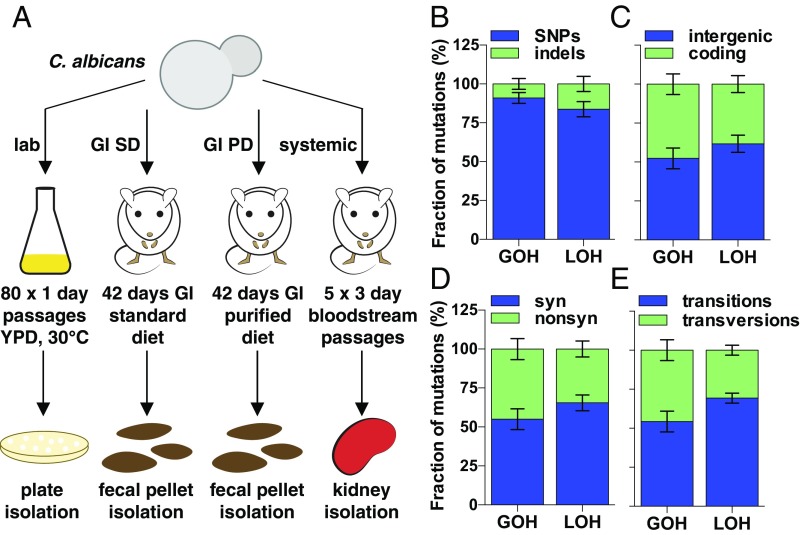
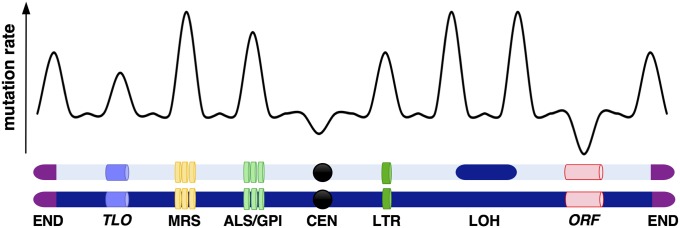
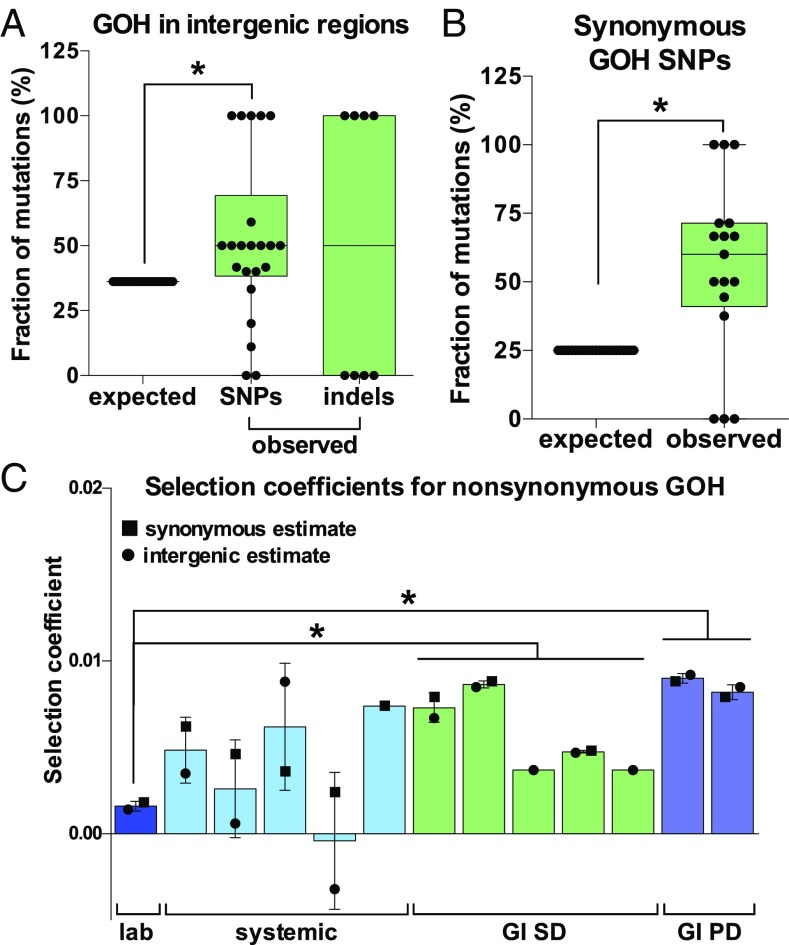
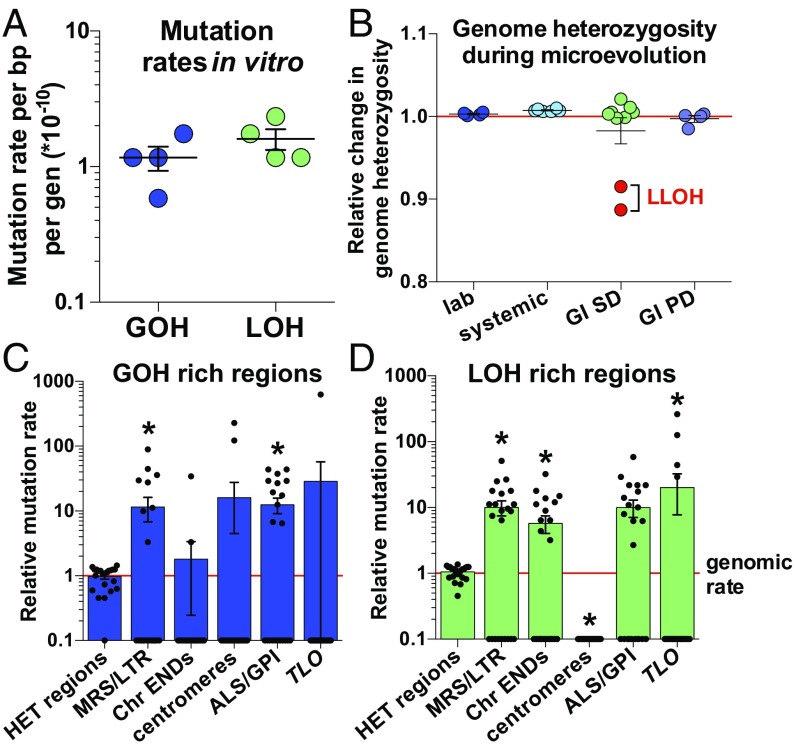
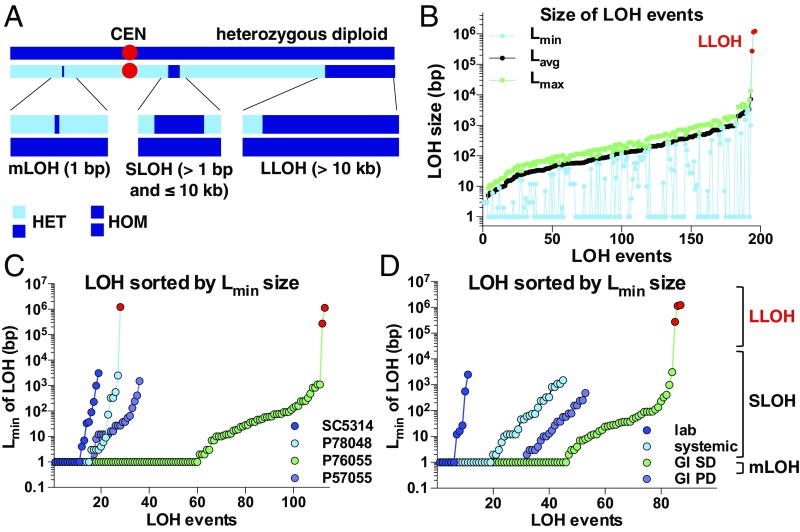
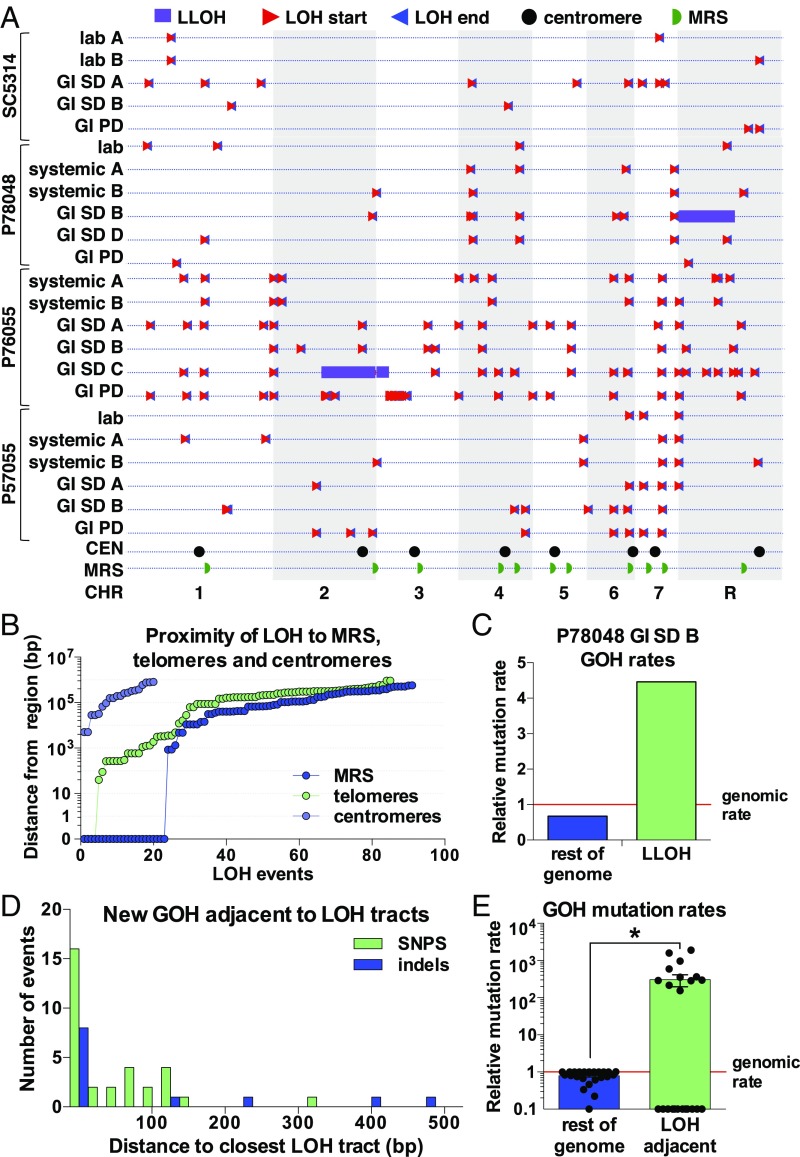
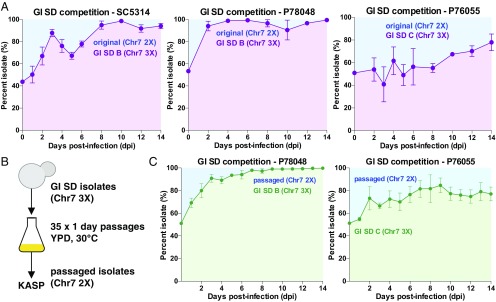
is a heterozygous diploid yeast that is a commensal of the human gastrointestinal tract and a prevalent opportunistic pathogen. Here, whole-genome sequencing was performed on multiple isolates passaged both in vitro and in vivo to characterize the complete spectrum of mutations arising in laboratory culture and in the mammalian host. We establish that, independent of culture niche, microevolution is primarily driven by de novo base substitutions and frequent short-tract loss-of-heterozygosity events. An average base-substitution rate of ∼1.2 × 10 per base pair per generation was observed in vitro, with higher rates inferred during host infection. Large-scale chromosomal changes were relatively rare, although chromosome 7 trisomies frequently emerged during passaging in a gastrointestinal model and was associated with increased fitness for this niche. Multiple chromosomal features impacted mutational patterns, with mutation rates elevated in repetitive regions, subtelomeric regions, and in gene families encoding cell surface proteins involved in host adhesion. Strikingly, de novo mutation rates were more than 800-fold higher in regions immediately adjacent to emergent loss-of-heterozygosity tracts, indicative of recombination-induced mutagenesis. Furthermore, genomes showed biased patterns of mutations suggestive of extensive purifying selection during passaging. These results reveal how both cell-intrinsic and cell-extrinsic factors influence microevolution, and provide a quantitative picture of genome dynamics in this heterozygous diploid species.
是一种杂合二倍体酵母,是人类胃肠道的共生菌,也是一种普遍的机会性病原体。在这里,对多个在体外和体内传代的 分离株进行了全基因组测序,以描述在实验室培养和哺乳动物宿主中出现的完整突变谱。我们确定,无论培养环境如何,微观进化主要由从头碱基替换和频繁的短片段杂合性丢失事件驱动。在体外观察到平均每个碱基对每代发生约 1.2×10 的碱基替换率,在宿主感染期间推断出更高的速率。大规模染色体变化相对较少,但在胃肠道模型中传代时,7 号染色体三体经常出现,并与该小生境的适应性增加有关。多个染色体特征影响突变模式,重复区域、端粒区域和编码参与宿主黏附的细胞表面蛋白的基因家族中的突变率升高。引人注目的是,在新兴的杂合性丢失片段附近的区域中,新出现的突变率比正常值高出 800 多倍,表明重组诱导的突变。此外,基因组显示出突变的偏倚模式,表明在传代过程中存在广泛的纯化选择。这些结果揭示了细胞内和细胞外因素如何影响 微观进化,并提供了这种杂合二倍体物种中基因组动态的定量描述。