Department of Software, Faculty of Computer and Information Science, University of Ljubljana, Ljubljana, Slovenia.
Department of Obstetrics and Gynecology, Faculty of Medicine, University of Ljubljana, Ljubljana, Slovenia.
PLoS One. 2018 Aug 28;13(8):e0202125. doi: 10.1371/journal.pone.0202125. eCollection 2018.
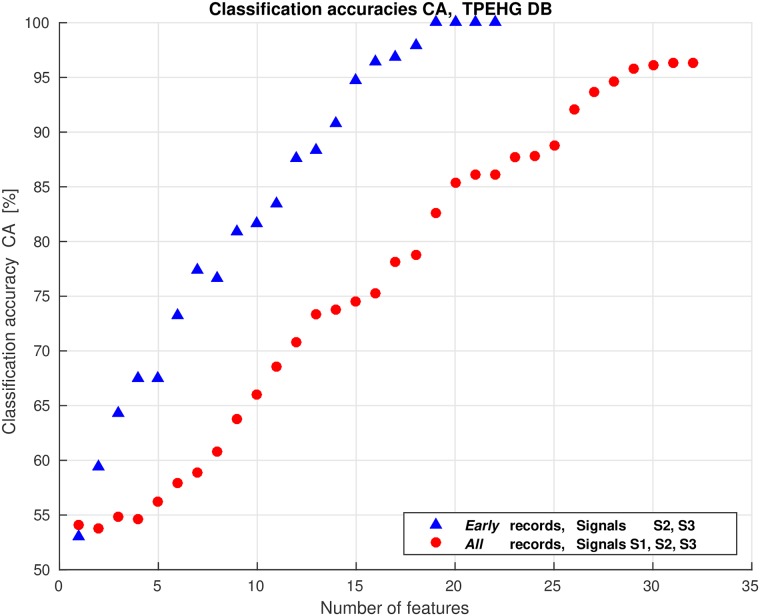
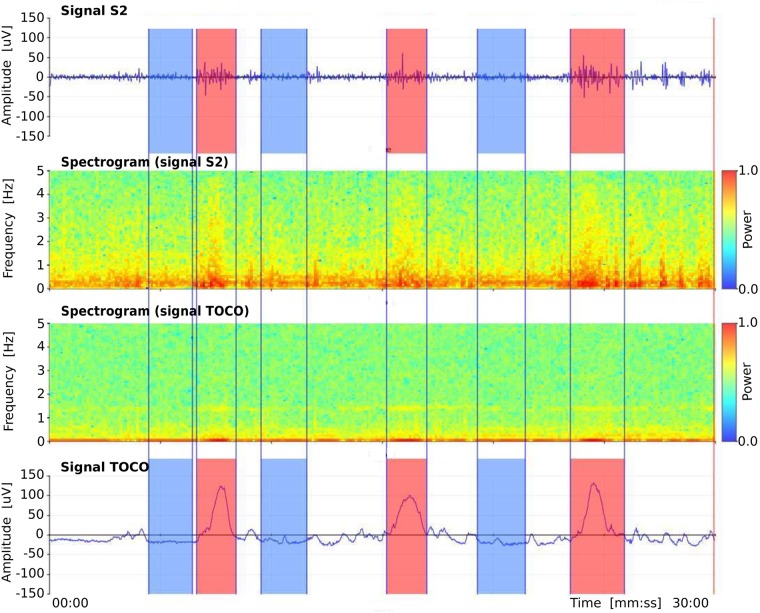
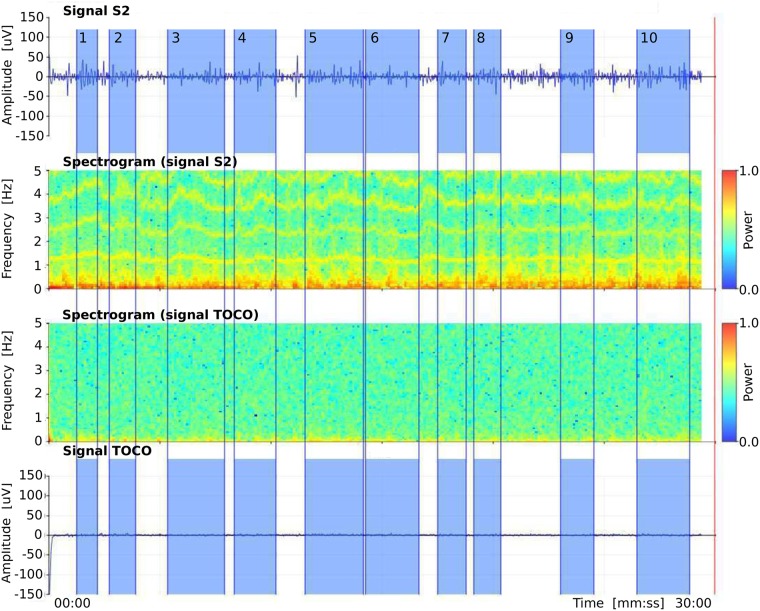
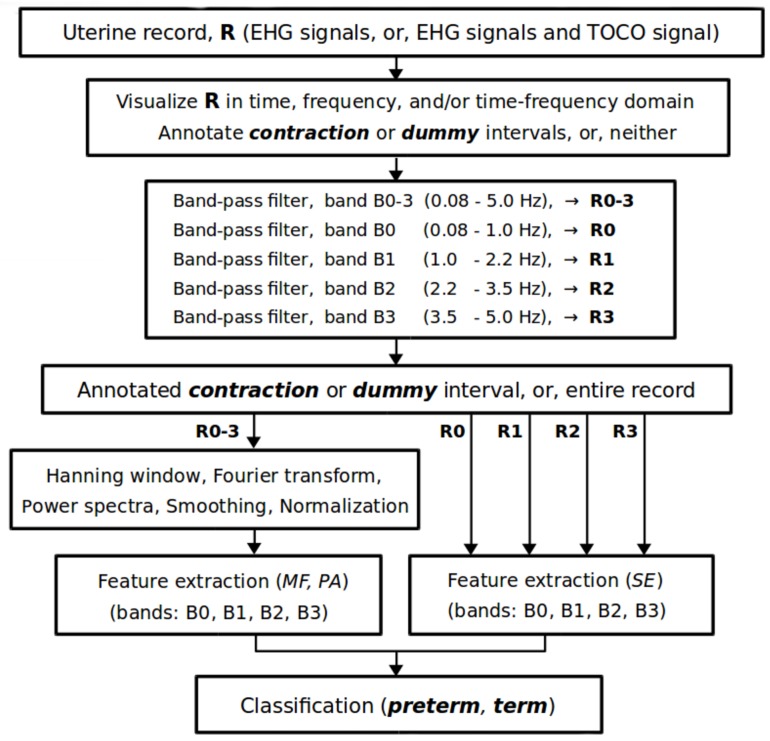
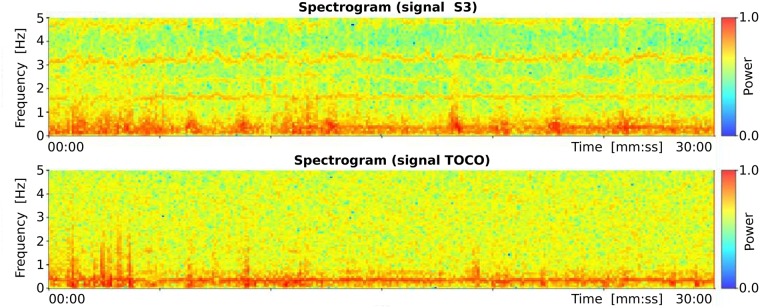
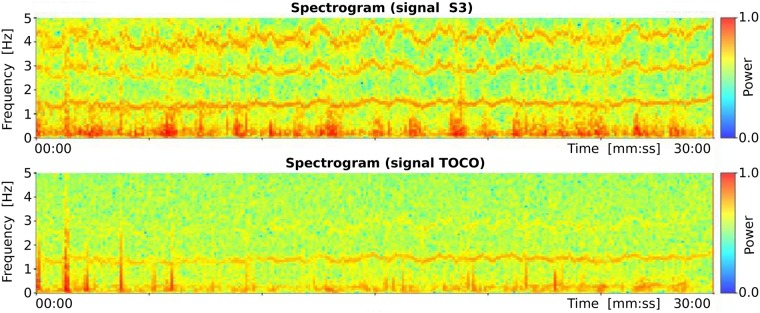
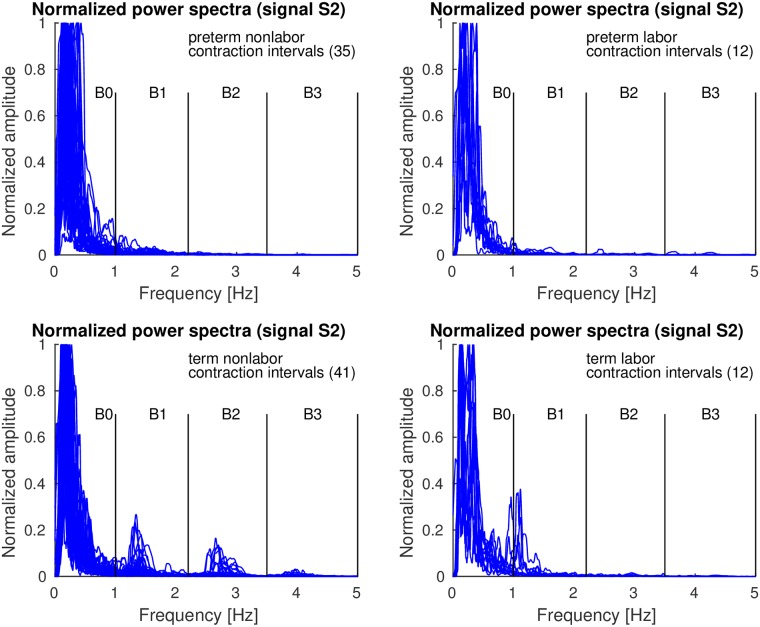
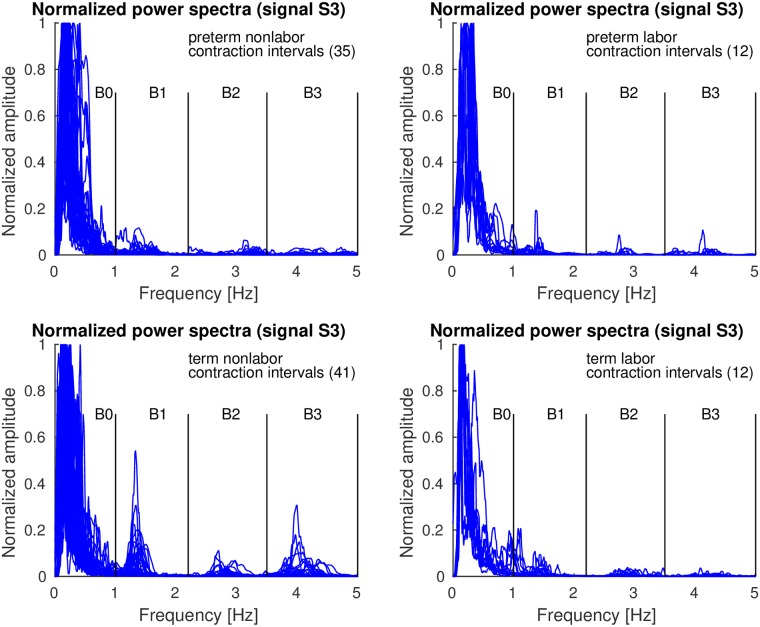
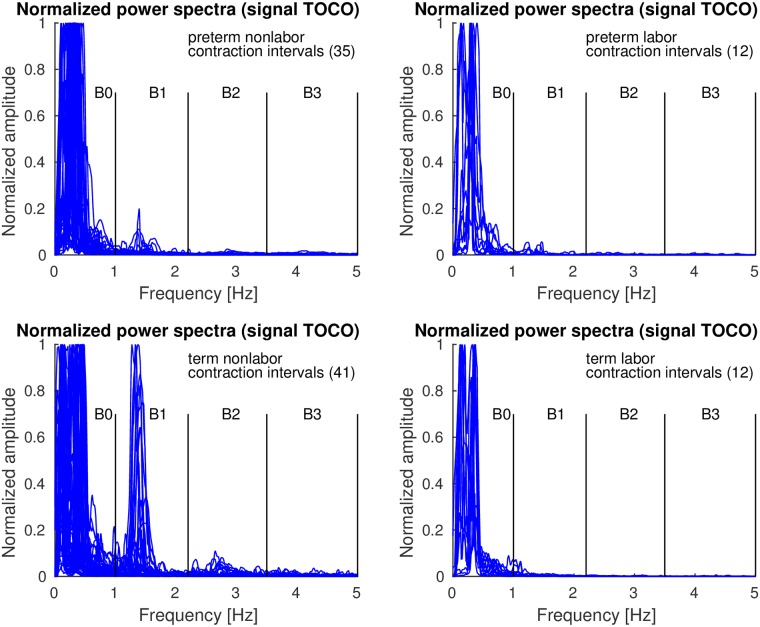
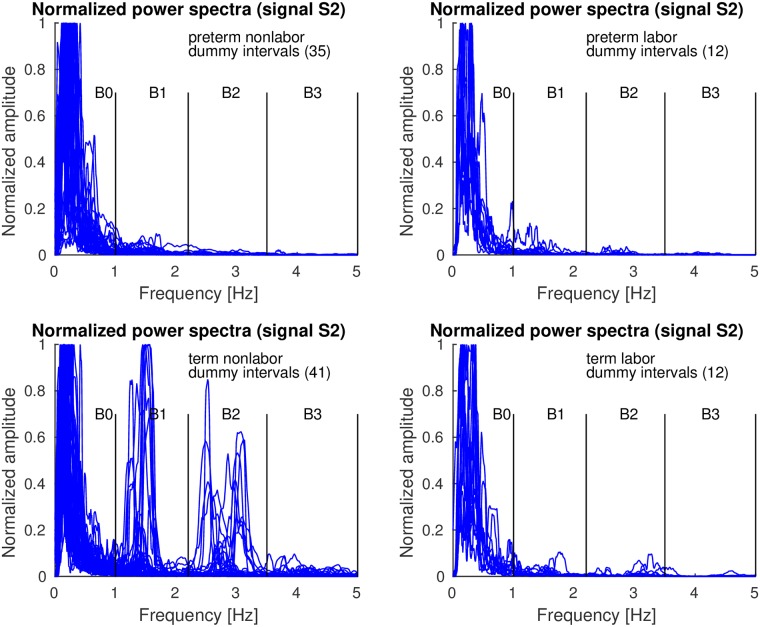
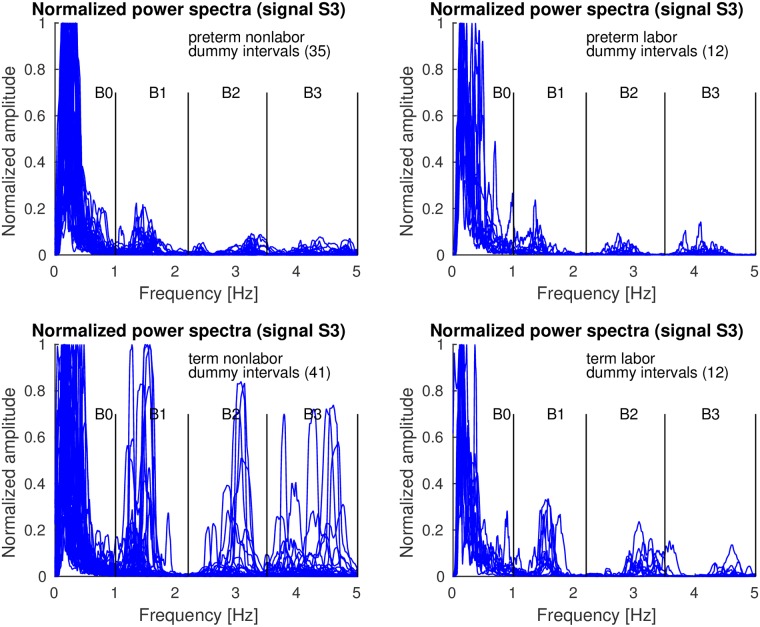
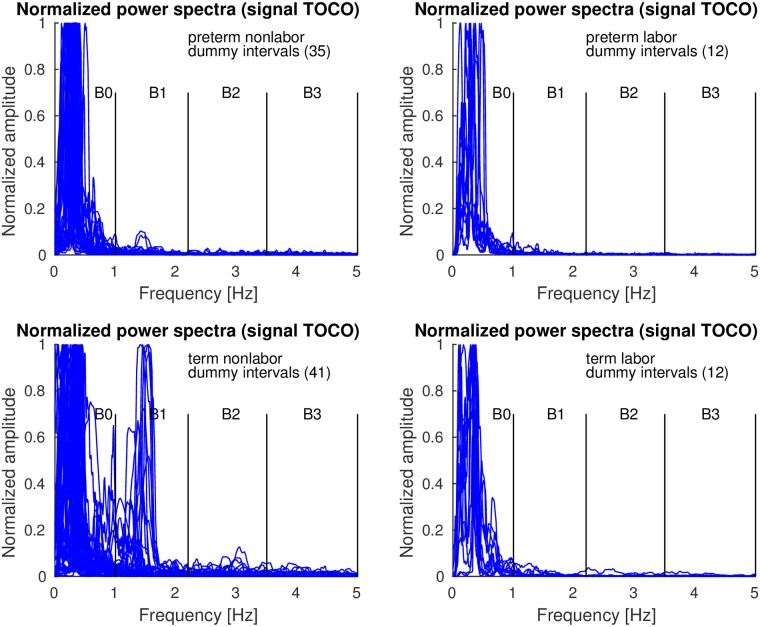
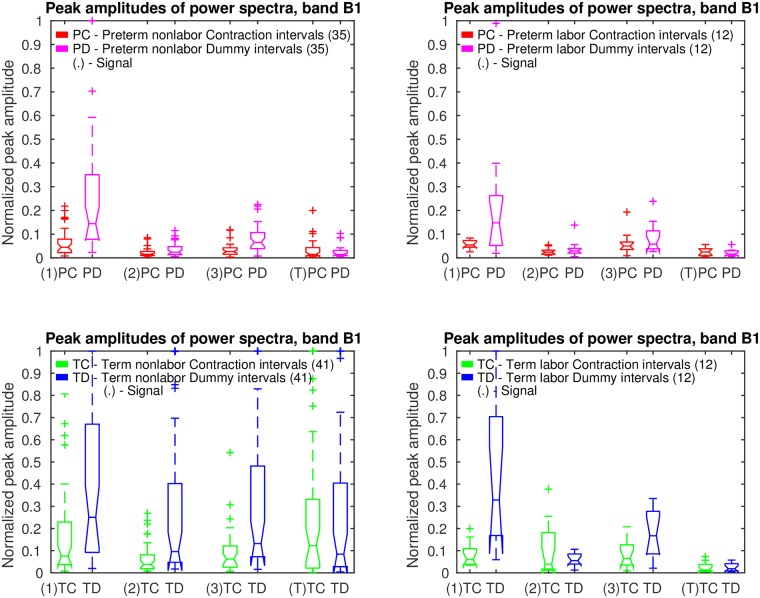
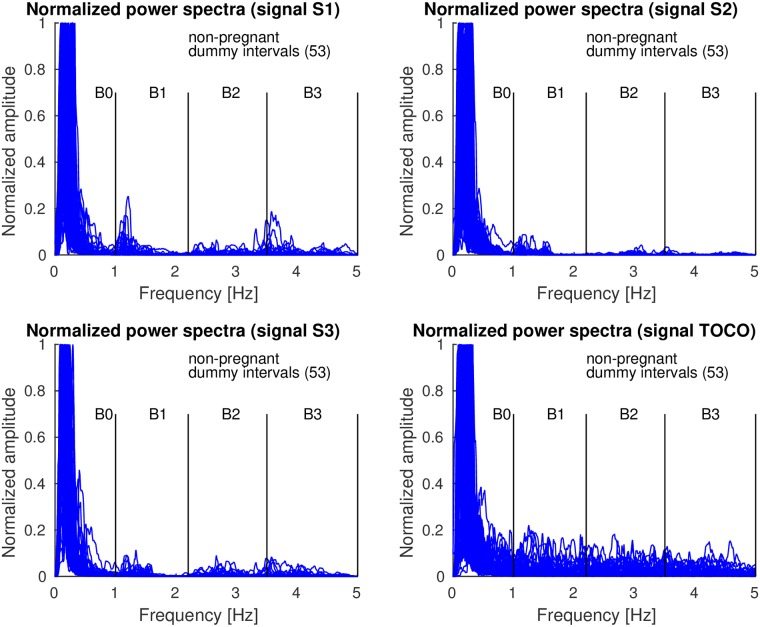
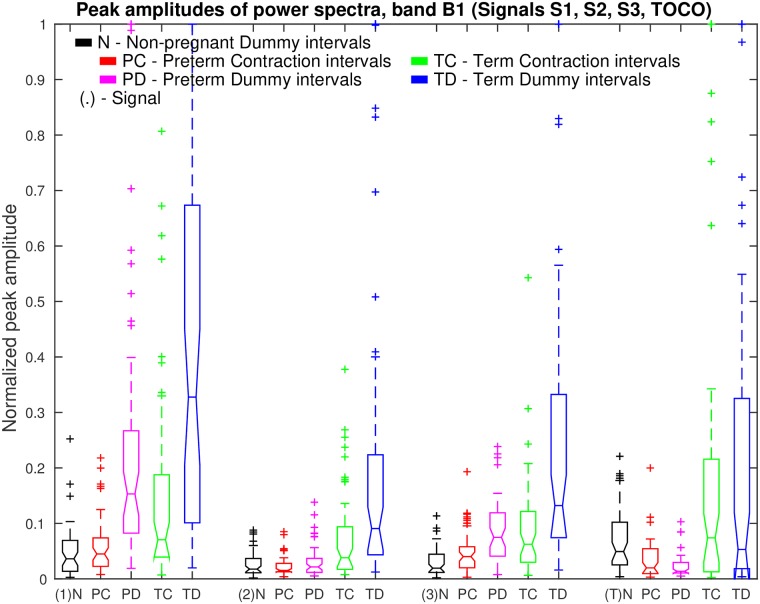
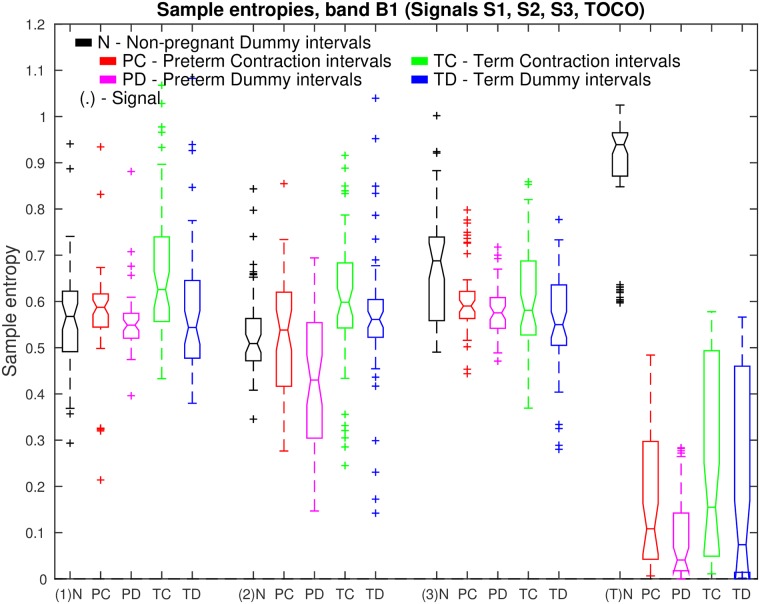
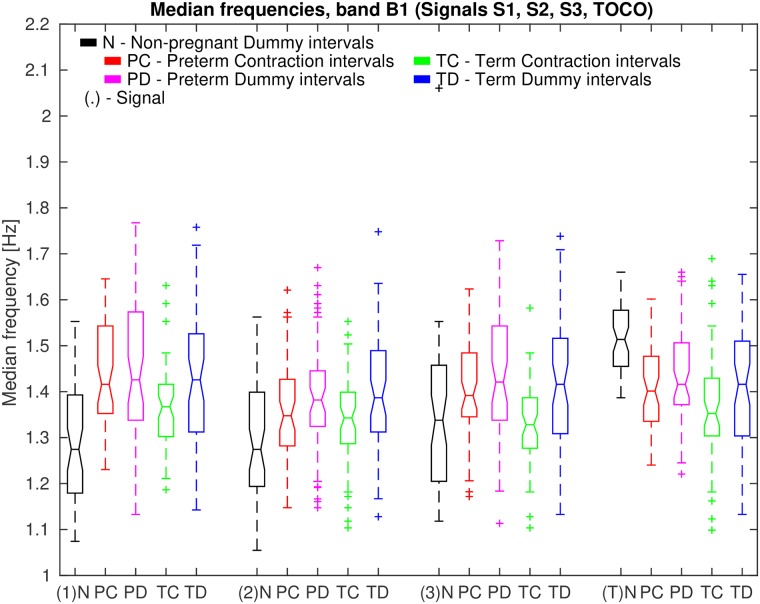
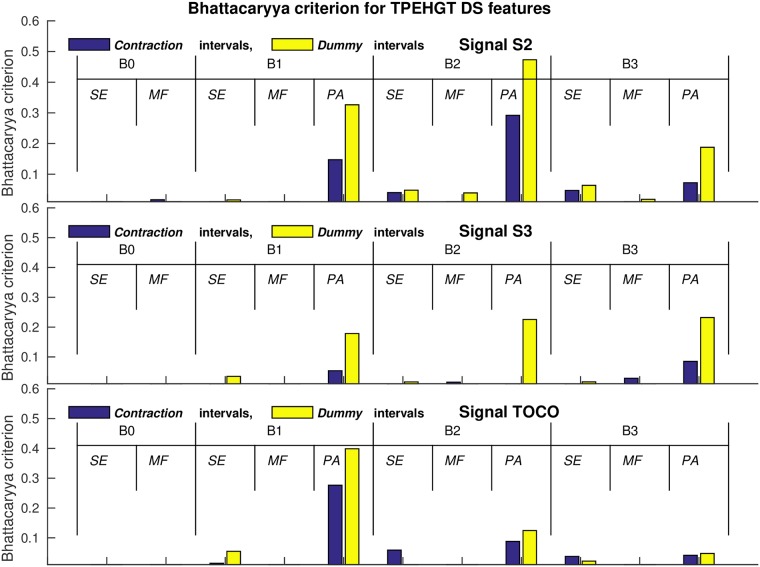
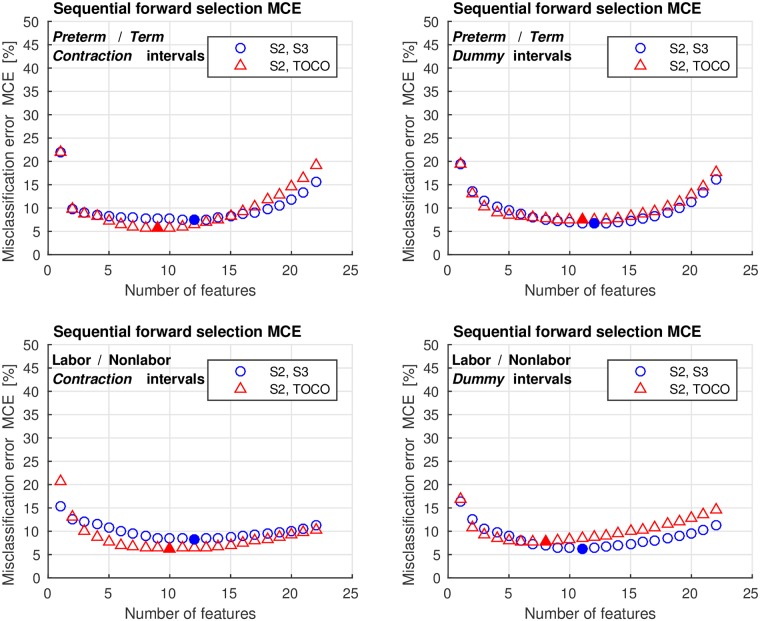
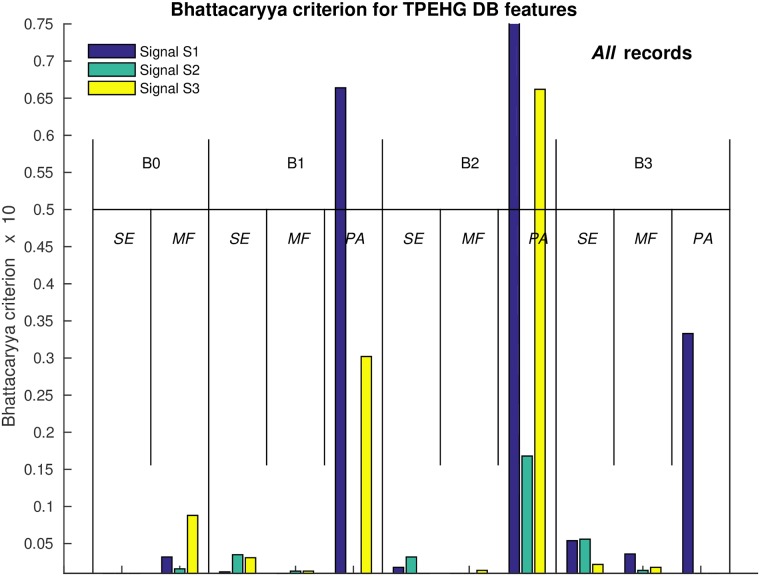
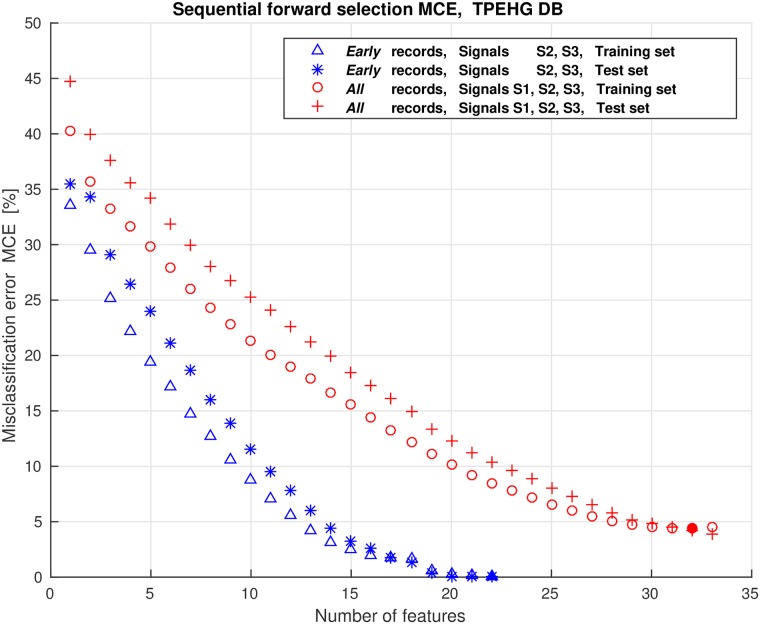
Predicting preterm birth is uncertain, and numerous scientists are searching for non-invasive methods to improve its predictability. Current researches are based on the analysis of ElectroHysteroGram (EHG) records, which contain information about the electrophysiological properties of the uterine muscle and uterine contractions. Since pregnancy is a long process, we decided to also characterize, for the first time, non-contraction intervals (dummy intervals) of the uterine records, i.e., EHG signals accompanied by a simultaneously recorded external tocogram measuring mechanical uterine activity (TOCO signal). For this purpose, we developed a new set of uterine records, TPEHGT DS, containing preterm and term uterine records of pregnant women, and uterine records of non-pregnant women. We quantitatively characterized contraction intervals (contractions) and dummy intervals of the uterine records of the TPEHGT DS in terms of the normalized power spectra of the EHG and TOCO signals, and developed a new method for predicting preterm birth. The results on the characterization revealed that the peak amplitudes of the normalized power spectra of the EHG and TOCO signals of the contraction and dummy intervals in the frequency band 1.0-2.2 Hz, describing the electrical and mechanical activity of the uterus due to the maternal heart (maternal heart rate), are high only during term pregnancies, when the delivery is still far away; and they are low when the delivery is close. However, these peak amplitudes are also low during preterm pregnancies, when the delivery is still supposed to be far away (thus suggesting the danger of preterm birth); and they are also low or barely present for non-pregnant women. We propose the values of the peak amplitudes of the normalized power spectra due to the influence of the maternal heart, in an electro-mechanical sense, in the frequency band 1.0-2.2 Hz as a new biophysical marker for the preliminary, or early, assessment of the danger of preterm birth. The classification of preterm and term, contraction and dummy intervals of the TPEHGT DS, for the task of the automatic prediction of preterm birth, using sample entropy, the median frequency of the power spectra, and the peak amplitude of the normalized power spectra, revealed that the dummy intervals provide quite comparable and slightly higher classification performances than these features obtained from the contraction intervals. This result suggests a novel and simple clinical technique, not necessarily to seek contraction intervals but using the dummy intervals, for the early assessment of the danger of preterm birth. Using the publicly available TPEHG DB database to predict preterm birth in terms of classifying between preterm and term EHG records, the proposed method outperformed all currently existing methods. The achieved classification accuracy was 100% for early records, recorded around the 23rd week of pregnancy; and 96.33%, the area under the curve of 99.44%, for all records of the database. Since the proposed method is capable of using the dummy intervals with high classification accuracy, it is also suitable for clinical use very early during pregnancy, around the 23rd week of pregnancy, when contractions may or may not be present.
预测早产具有不确定性,许多科学家正在寻找非侵入性方法来提高其可预测性。目前的研究基于对 ElectroHysteroGram(EHG)记录的分析,EHG 记录包含有关子宫肌肉电生理特性和子宫收缩的信息。由于妊娠是一个漫长的过程,我们决定首次对子宫记录的非收缩间隔(虚拟间隔)进行特征描述,即同时记录测量机械子宫活动的外部胎儿监护图(TOCO 信号)的子宫记录。为此,我们开发了一组新的子宫记录 TPEHGT DS,其中包含孕妇的早产和足月子宫记录以及非孕妇的子宫记录。我们根据 EHG 和 TOCO 信号的归一化功率谱定量描述了 TPEHGT DS 子宫记录的收缩间隔(收缩)和虚拟间隔,并开发了一种预测早产的新方法。特征描述的结果表明,描述由于母体心率引起的子宫电和机械活动的 1.0-2.2 Hz 频带内的 EHG 和 TOCO 信号的归一化功率谱的峰值幅度仅在足月妊娠时较高,此时分娩还很遥远;并且当分娩临近时,它们很低。然而,这些峰值幅度在早产时也较低,此时分娩仍应较远(因此提示早产的危险);并且对于非孕妇,它们也较低或几乎不存在。我们提出了由于母体心脏的影响而在电机械意义上的归一化功率谱的峰值幅度值在 1.0-2.2 Hz 频带内作为早产危险的初步或早期评估的新生物物理标志物。使用样本熵、功率谱的中值频率和归一化功率谱的峰值幅度对 TPEHGT DS 的早产和足月、收缩和虚拟间隔进行分类,用于自动预测早产的任务,结果表明虚拟间隔提供了相当可比且略高的分类性能,这些性能比从收缩间隔获得的特征更好。这一结果表明了一种新颖而简单的临床技术,不一定需要寻找收缩间隔,而是使用虚拟间隔来早期评估早产的危险。使用公开的 TPEHG DB 数据库在分类早产和足月 EHG 记录方面预测早产,所提出的方法优于所有现有方法。对于记录在怀孕 23 周左右的早期记录,实现的分类准确率为 100%;对于数据库中的所有记录,曲线下面积为 99.44%,准确率为 96.33%。由于所提出的方法能够使用虚拟间隔实现高精度的分类,因此它也非常适合在妊娠早期使用,即怀孕 23 周左右,此时可能存在或不存在收缩。