Dong Liming, Ding Honglin, Li Yanpei, Xue Dongwei, Liu Yili
Department of Urology, The Fourth Affiliated Hospital of China Medical University, Liaoning 110000, Shenyang, China;
Department of Urology, The Affiliated Hospital of Chifeng Medical College, Chifeng 024000, Inner Mongolia, China.
Cancer Manag Res. 2018 Aug 20;10:2799-2807. doi: 10.2147/CMAR.S170526. eCollection 2018.
Terminal differentiation-induced non-coding RNA (TINCR) has been suggested to have aberrant expression in multiple human cancers, and functions as tumor suppressor or promoter in various types of human tumors depending on the specific cancer types. The expression status and biological function of TINCR in prostate cancer is still unknown.
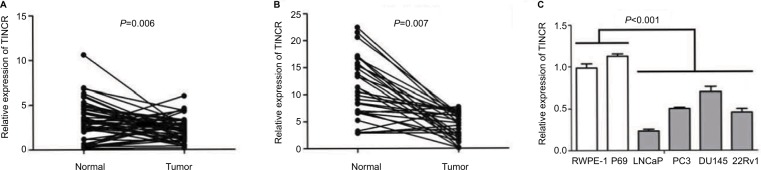
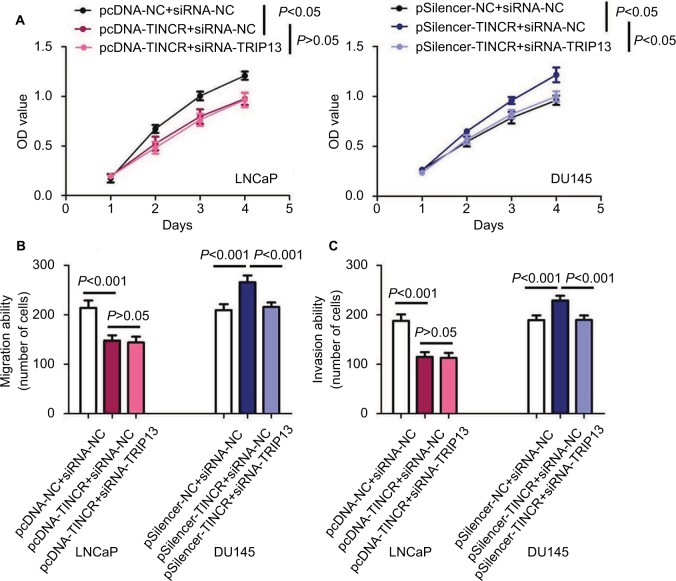
In our study, we detected TINCR expression in prostate cancer tissue samples and cell lines, and analyzed the association between TINCR expression and clinical parameters in 160 prostate cancer patients. Moreover, we conducted gain-of-function and loss-of-function studies in prostate cancer cell to explore the biological function and molecular mechanism of TINCR.
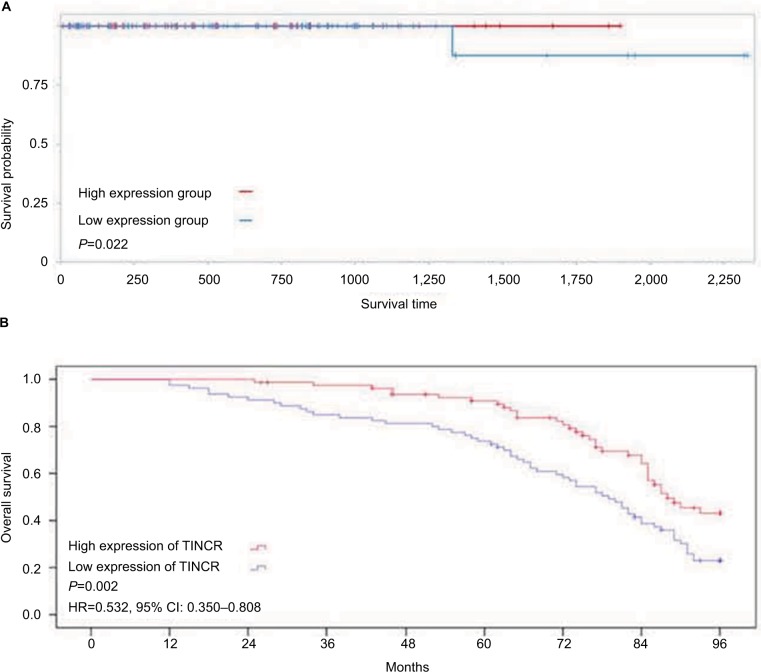
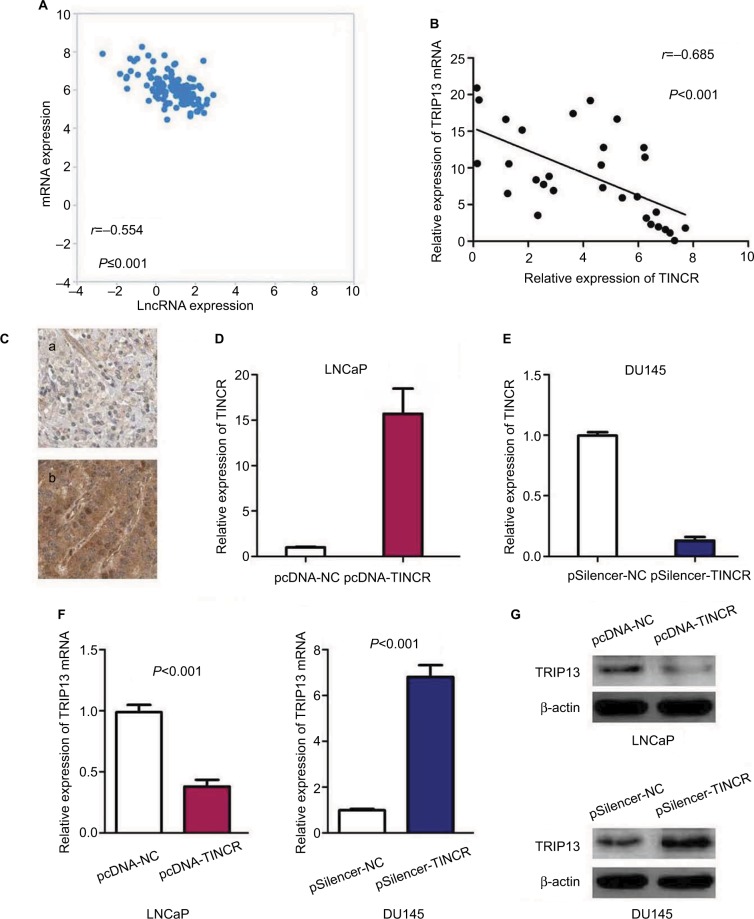
In our results, low-expression TINCR was observed in prostate cancer, and correlated with advanced clinical T stage, lymph node involvement, distant metastasis, high Gleason score and poor prognosis in prostate cancer patients. Moreover, levels of TINCR expression were negatively associated with TRIP13 mRNA and protein expressions in prostate cancer tissues, and negatively regulated the TRIP13 mRNA and protein expressions in prostate cancer cell lines. TINCR inhibits prostate cancer cell proliferation, migration and invasion via suppressing TRIP13 expression.
TINCR plays a tumor suppressive role in regulating prostate cancer cell proliferation, migration and invasion through modulating TRIP13 expression.
终末分化诱导非编码RNA(TINCR)已被证实在多种人类癌症中存在异常表达,并且根据特定癌症类型的不同,在各类人类肿瘤中发挥肿瘤抑制或促进作用。TINCR在前列腺癌中的表达状态及生物学功能仍不清楚。
在我们的研究中,我们检测了前列腺癌组织样本和细胞系中TINCR的表达,并分析了160例前列腺癌患者中TINCR表达与临床参数之间的关联。此外,我们在前列腺癌细胞中进行了功能获得和功能缺失研究,以探索TINCR的生物学功能和分子机制。
在我们的研究结果中,前列腺癌中观察到TINCR低表达,并且与前列腺癌患者的临床T分期晚期、淋巴结受累、远处转移、高Gleason评分及预后不良相关。此外,前列腺癌组织中TINCR表达水平与TRIP13 mRNA和蛋白表达呈负相关,并在前列腺癌细胞系中负向调节TRIP13 mRNA和蛋白表达。TINCR通过抑制TRIP13表达来抑制前列腺癌细胞的增殖、迁移和侵袭。
TINCR通过调节TRIP13表达在调控前列腺癌细胞增殖、迁移和侵袭中发挥肿瘤抑制作用。