Dryl Radoslaw, Szajewska Hanna
Department of Paediatrics, Medical University of Warsaw, Warsaw, Poland.
Arch Med Sci. 2018 Aug;14(5):1137-1143. doi: 10.5114/aoms.2017.66055. Epub 2017 Feb 16.
Infantile colic is a common pediatric problem. The cause of infantile colic remains unclear. Treatment options are limited. Evidence suggests that probiotics might offer some benefit. The aim of the study was to systematically assess the effectiveness of probiotics supplementation in the management of infantile colic.
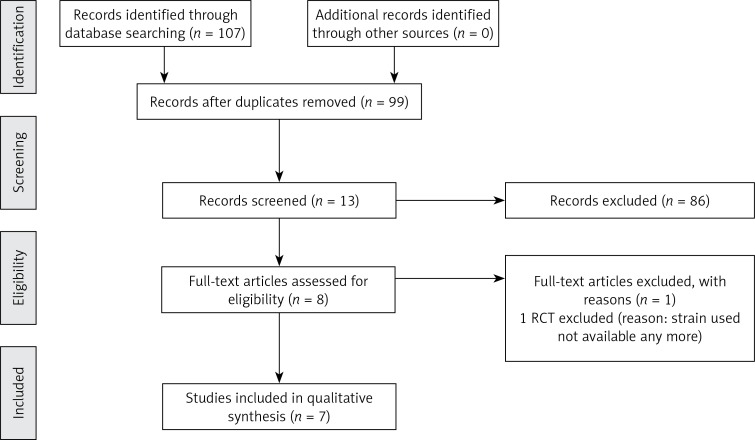
MEDLINE and the Cochrane Library were searched up to April 2016 for randomized controlled trials (RCTs) evaluating the efficacy of probiotics (any well-defined strain) compared with placebo for the management of infantile colic. The outcome measures of interest were treatment success and the duration of crying at the end of the intervention.
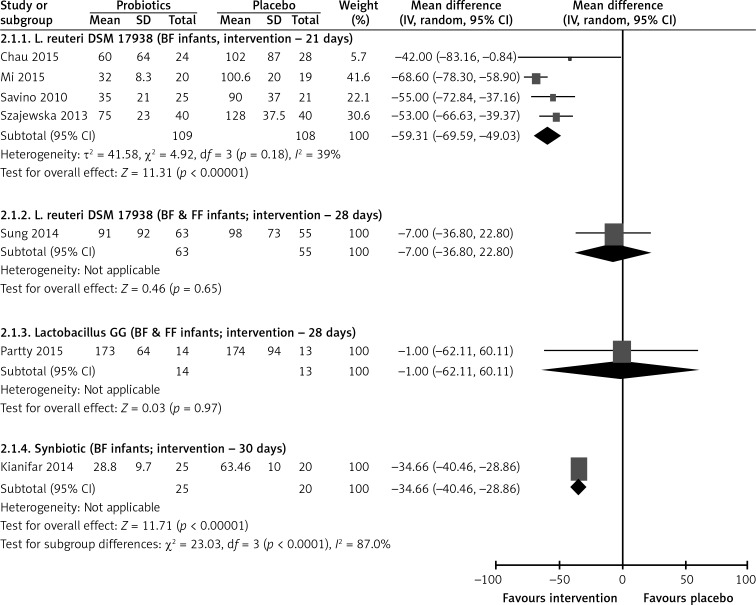
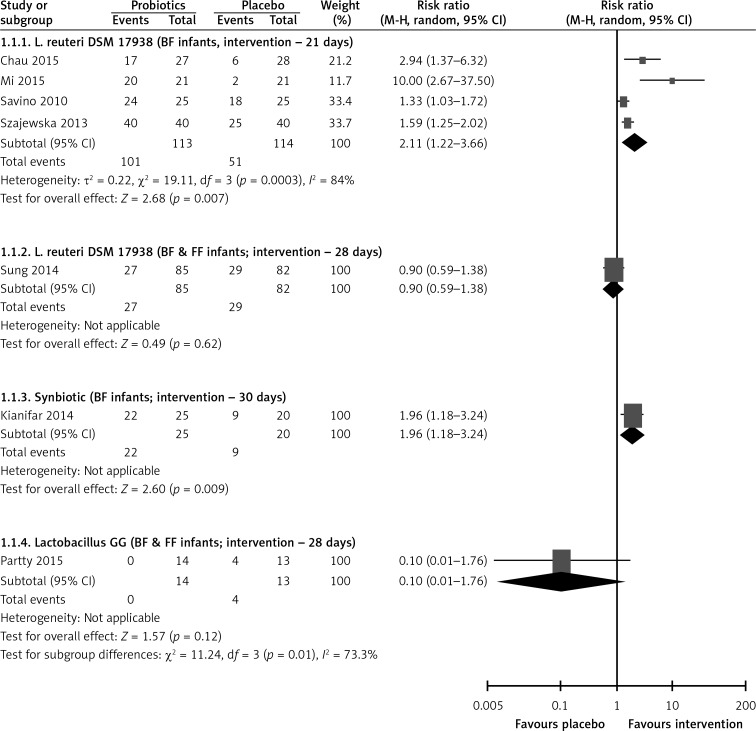
Seven RCTs (471 participants) were included. Compared with placebo the administration of DSM 17938 at a daily dose of 10 CFU was associated with the treatment success (relative risk = 1.67, 95% CI: 1.10-2.81, number needed to treat 5, 95% CI: 4-8) and reduced crying times at the end of the intervention (mean difference: -49 min, 95% CI: -66 to -33); however, the effect was mainly seen in exclusively breastfed infants. Other probiotics (single or in combinations) were studied in single trials only.
Some probiotics, primarily DSM 17938, may be considered for the management of infantile colic. Data on other probiotics are limited.
婴儿腹绞痛是常见的儿科问题。婴儿腹绞痛的病因尚不清楚。治疗选择有限。有证据表明益生菌可能有益处。本研究的目的是系统评估补充益生菌治疗婴儿腹绞痛的有效性。
检索了截至2016年4月的MEDLINE和Cochrane图书馆,以查找评估益生菌(任何明确菌株)与安慰剂相比治疗婴儿腹绞痛疗效的随机对照试验(RCT)。感兴趣的结局指标是治疗成功率和干预结束时的哭闹持续时间。
纳入了7项RCT(471名参与者)。与安慰剂相比,每日剂量为10CFU的DSM 17938给药与治疗成功相关(相对风险=1.67,95%CI:1.10-2.81,需治疗人数5,95%CI:4-8),且干预结束时哭闹时间减少(平均差异:-49分钟,95%CI:-66至-33);然而,这种效果主要见于纯母乳喂养的婴儿。其他益生菌(单一或联合使用)仅在单项试验中进行了研究。
一些益生菌,主要是DSM 17938,可考虑用于婴儿腹绞痛的治疗。关于其他益生菌的数据有限。