Wei Haotang, Li Jilin, Xie Minzhi, Lei Ronger, Hu Bangli
Department of Gastrointestinal Surgery, Third Affiliated Hospital of Guangxi Medical University, Nanning, China.
Department of Research, Affiliated Tumor Hospital of Guangxi Medical University, Nanning, China.
PeerJ. 2018 Aug 21;6:e5433. doi: 10.7717/peerj.5433. eCollection 2018.
The mechanism underlying colon cancer metastasis remain unclear. This study aimed to elucidate the genes alteration during the metastasis of colon cancer and identify genes that crucial to the metastasis and survival of colon cancer patients.
The dataset of primary and metastasis tissue of colon cancer, and dataset of high and low metastasis capability of colon cancer cells were selected as training cohort, and the overlapped differentially expressed genes (DEGs) were screened from the training cohort. The functional enrichment analysis for the overlapped DEGs was performed. The prognostic value of overlapped DEGs were analyzed in The Cancer Genome Atlas dataset, and a gene signature was developed using genes that related to the overall survival (OS). The prognostic value of the gene signature was further confirmed in a validation cohort.
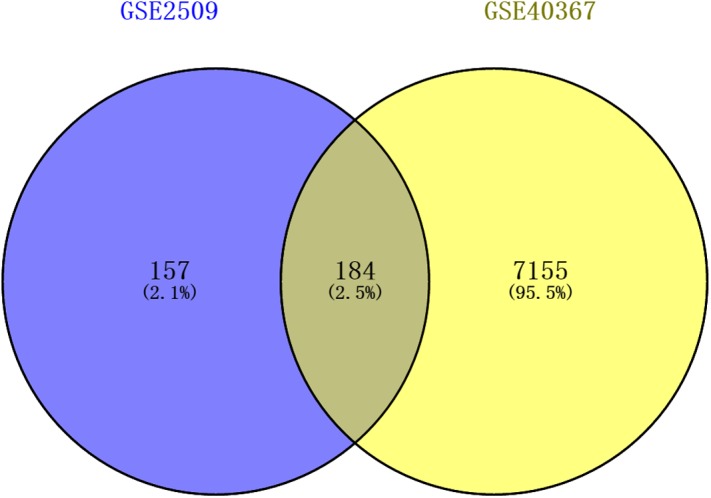
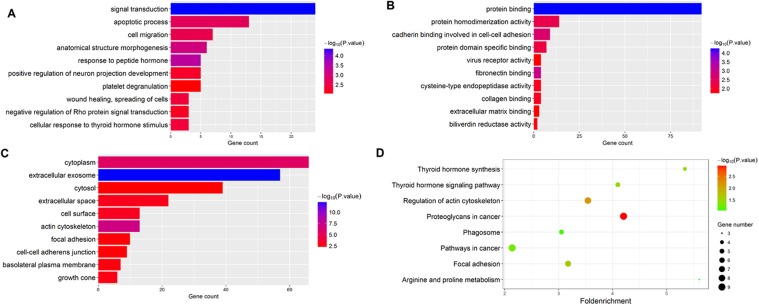
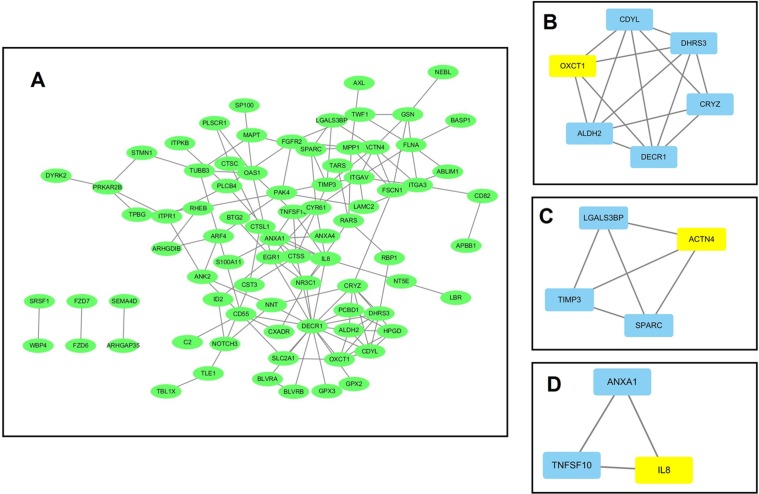
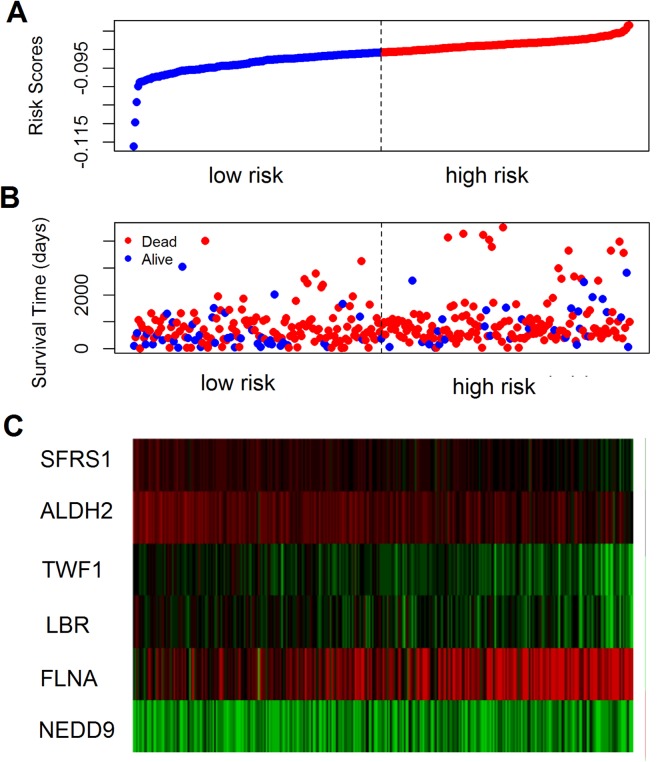
A total of 184 overlapped DEGs were screened from the training cohort. Functional enrichment analysis revealed the significant gene functions and pathways of the overlapped DEGs. Four hub genes (3-oxoacid CoA-transferase 1, actinin alpha 4, interleukin 8, integrin subunit alpha 3) were identified using protein-protein network analysis. Six genes (aldehyde dehydrogenase 2, neural precursor cell expressed, developmentally down-regulated 9, filamin A, lamin B receptor, twinfilin actin binding protein 1, serine and arginine rich splicing factor 1) were closely related to the OS of colon cancer patients. A gene signature was developed using these six genes based on their risk score, and the validation cohort indicated that the prognostic value of this gene signature was high in the prediction of colon cancer patients.
Our study demonstrates a gene profiles related to the metastasis of colon cancer, and identify a six-gene signature that acts as an independent biomarker on the prognosis of colon cancer.
结肠癌转移的潜在机制仍不清楚。本研究旨在阐明结肠癌转移过程中的基因改变,并鉴定对结肠癌患者转移和生存至关重要的基因。
选择结肠癌原发组织和转移组织数据集以及结肠癌细胞高低转移能力数据集作为训练队列,从训练队列中筛选出重叠的差异表达基因(DEG)。对重叠的DEG进行功能富集分析。在癌症基因组图谱数据集中分析重叠DEG的预后价值,并使用与总生存期(OS)相关的基因开发基因特征。在验证队列中进一步确认该基因特征的预后价值。
从训练队列中筛选出总共184个重叠的DEG。功能富集分析揭示了重叠DEG的重要基因功能和途径。使用蛋白质-蛋白质网络分析鉴定了四个枢纽基因(3-氧代酸辅酶A转移酶1、辅肌动蛋白α4、白细胞介素8、整合素亚基α3)。六个基因(醛脱氢酶2、神经前体细胞表达、发育下调9、细丝蛋白A、核纤层蛋白B受体、双丝肌动蛋白结合蛋白1、富含丝氨酸和精氨酸的剪接因子1)与结肠癌患者的OS密切相关。基于这六个基因的风险评分开发了一个基因特征,验证队列表明该基因特征在预测结肠癌患者预后方面具有较高的价值。
我们的研究展示了与结肠癌转移相关的基因谱,并鉴定了一个六基因特征,该特征可作为结肠癌预后的独立生物标志物。