Department of Parasitology and Tropical Medicine, Seoul National University College of Medicine, and Institute of Endemic Diseases, Seoul 03080, Korea.
Department of Neurosurgery, Seoul National University College of Medicine, SMG-SNU Boramae Medical Center, Seoul 07061, Korea.
Int J Mol Sci. 2018 Aug 29;19(9):2563. doi: 10.3390/ijms19092563.
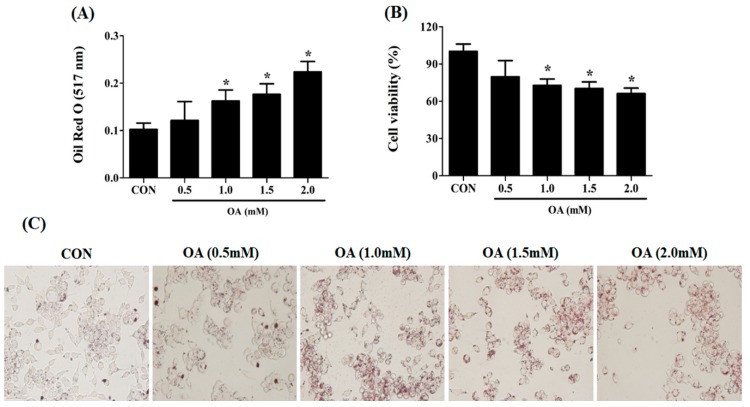
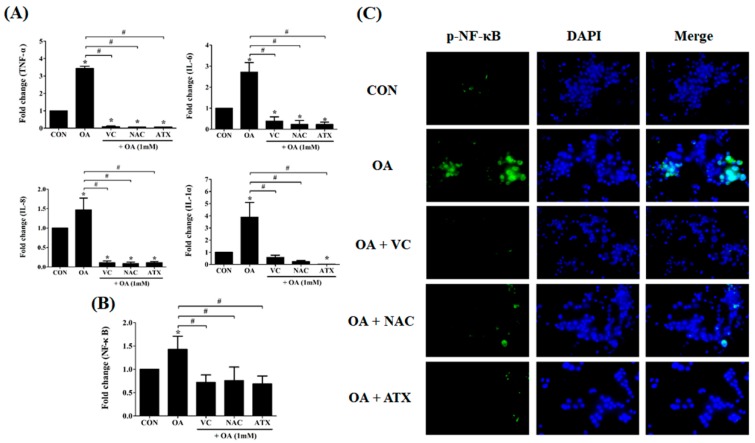
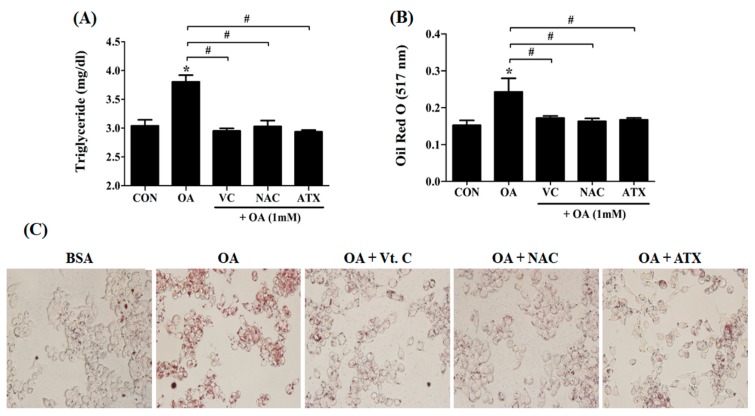
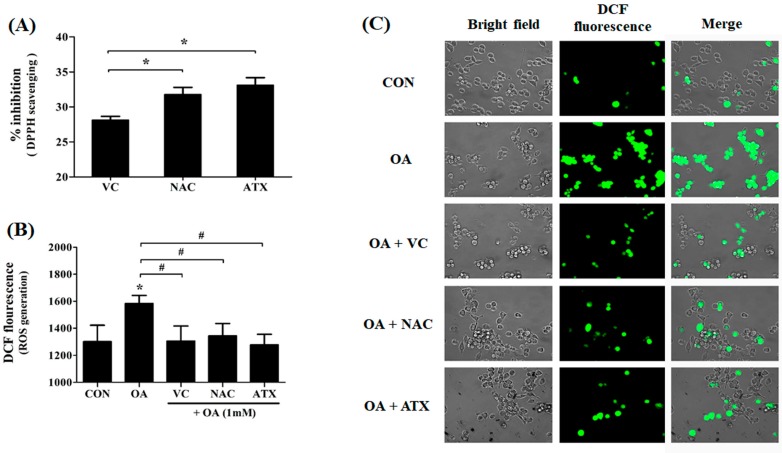
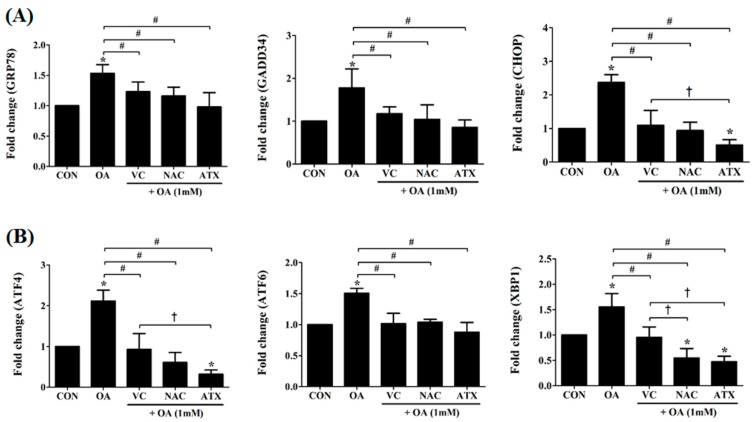
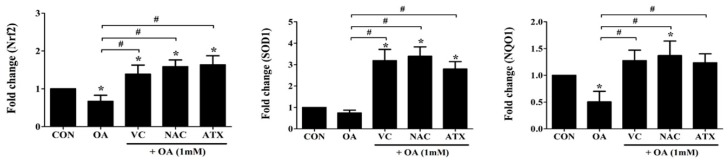
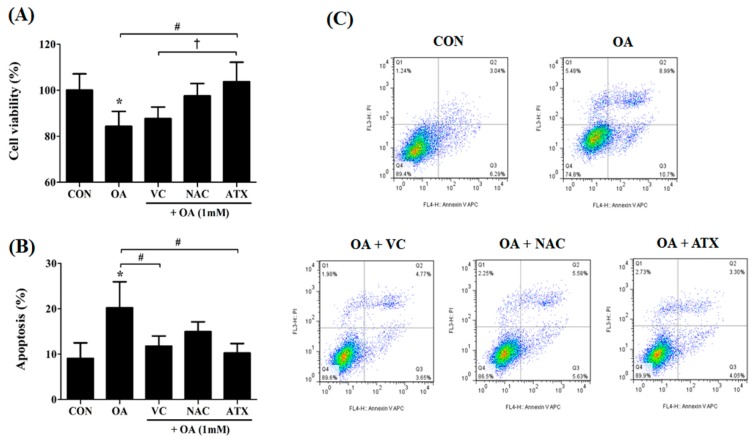
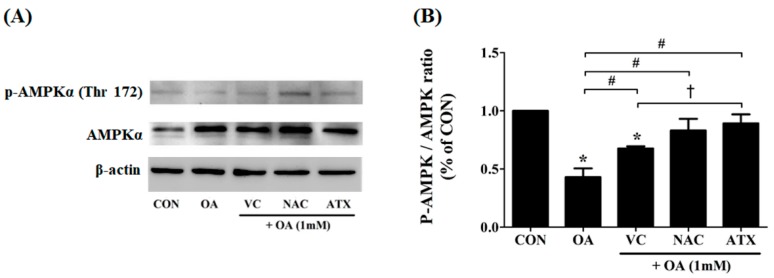
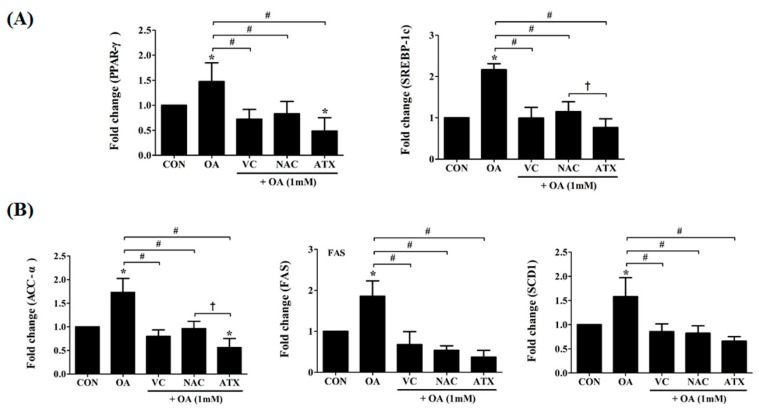
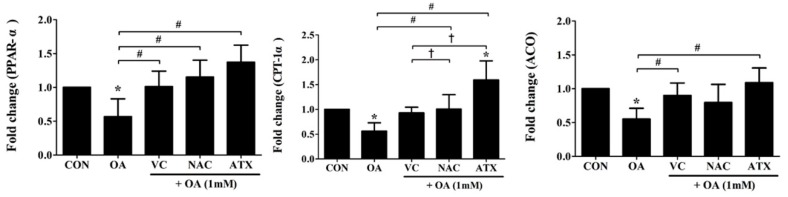
The progress of the hepatic steatosis (HS), a clinicopathological status, is influenced by cellular oxidative stress, lipogenesis, fatty acid (FA) oxidation, and inflammatory responses. Because antioxidants are gaining attention as potent preventive agents for HS, we aimed to investigate anti-lipogenic effects of the antioxidants vitamin C (VC), N-acetylcysteine (NAC), and astaxanthin (ATX) using hepatocytes. For this, we established an in vitro model using 1 mM oleic acid (OA) and human liver hepatocellular carcinoma (HepG2) cells; 10 μM antioxidants were evaluated for their ability to reduce fat accumulation in hepatocytes. Our results showed that all three antioxidants were effective to reduce fat accumulation for the molecular targets such as reduction in lipid droplets, triglyceride (TG) concentration, reactive oxygen species (ROS) production, and cell apoptosis, as well as in gene expressions of endoplasmic reticulum (ER) stress-related effectors, lipogenesis, and inflammatory cytokines. There were simultaneous increases in diphenyl-1-picrylhydrazyl (DPPH) radical scavenging effect, cell survival, AMPK phosphorylation, NRF2-related gene expression for cellular defense, and FA β-oxidation. However, among these, ATX more effectively inhibited ER stress and lipogenesis at the intracellular level than VC or NAC. Consequently, ATX was also more effective in inhibiting cell death, lipotoxicity, and inflammation. Our result emphasizes that ATX achieved greater lipotoxicity reduction than VC and NAC.
肝脂肪变性(HS)的进展是一个临床病理状态,受细胞氧化应激、脂肪生成、脂肪酸(FA)氧化和炎症反应的影响。由于抗氧化剂作为 HS 的有效预防剂越来越受到关注,我们旨在使用肝细胞研究抗氧化剂维生素 C(VC)、N-乙酰半胱氨酸(NAC)和虾青素(ATX)的抗脂肪生成作用。为此,我们使用 1mM 油酸(OA)和人肝癌细胞(HepG2)建立了体外模型;评估了 10μM 抗氧化剂减少肝细胞脂肪积累的能力。我们的结果表明,所有三种抗氧化剂都能有效减少脂肪积累,其分子靶标包括减少脂滴、甘油三酯(TG)浓度、活性氧(ROS)产生和细胞凋亡,以及内质网(ER)应激相关效应物、脂肪生成和炎症细胞因子的基因表达。同时,二苯基-1-苦基肼(DPPH)自由基清除作用、细胞存活、AMPK 磷酸化、细胞防御相关的 NRF2 相关基因表达和 FA β-氧化增加。然而,在这些抗氧化剂中,ATX 比 VC 或 NAC 更有效地抑制细胞内 ER 应激和脂肪生成。因此,ATX 在抑制细胞死亡、脂毒性和炎症方面也更有效。我们的结果强调,ATX 比 VC 和 NAC 更能有效降低脂毒性。