Departments of Biological Chemistry and Medicine, The Johns Hopkins University School of Medicine, 725 N. Wolfe Street, Physiology 615, Baltimore, MD, 21205, USA.
Mol Med. 2018 Aug 30;24(1):46. doi: 10.1186/s10020-018-0047-0.
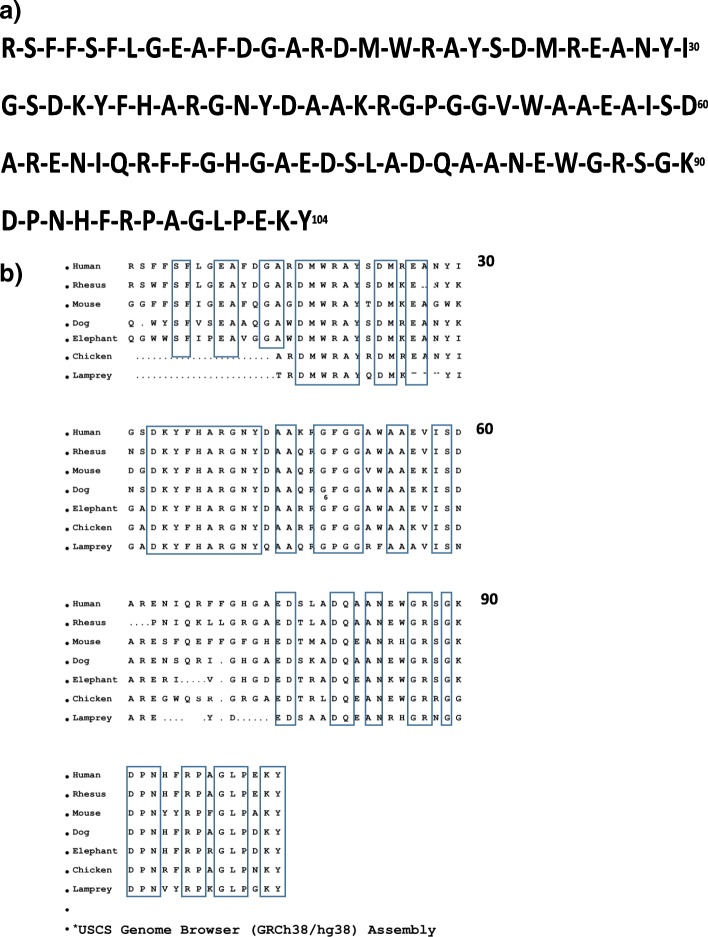
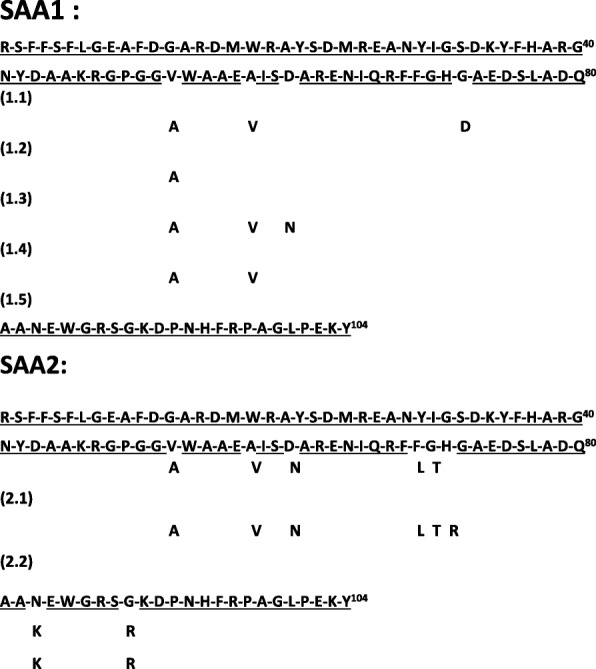
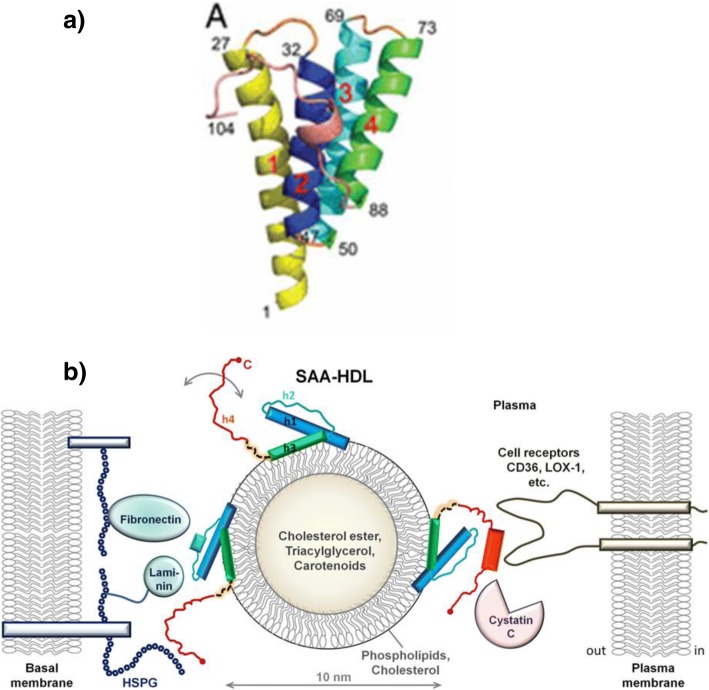
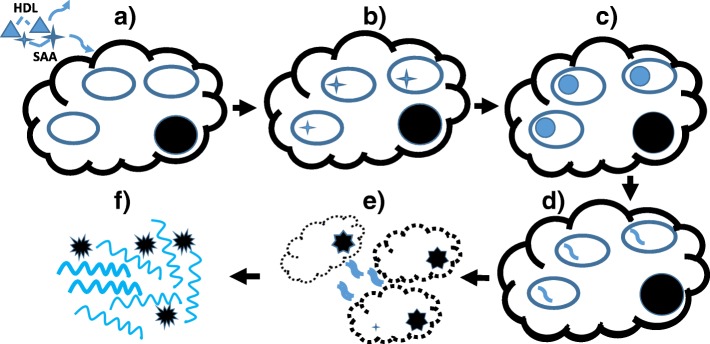
Serum amyloid A (SAA) proteins were isolated and named over 50 years ago. They are small (104 amino acids) and have a striking relationship to the acute phase response with serum levels rising as much as 1000-fold in 24 hours. SAA proteins are encoded in a family of closely-related genes and have been remarkably conserved throughout vertebrate evolution. Amino-terminal fragments of SAA can form highly organized, insoluble fibrils that accumulate in "secondary" amyloid disease. Despite their evolutionary preservation and dynamic synthesis pattern SAA proteins have lacked well-defined physiologic roles. However, considering an array of many, often unrelated, reports now permits a more coordinated perspective. Protein studies have elucidated basic SAA structure and fibril formation. Appreciating SAA's lipophilicity helps relate it to lipid transport and metabolism as well as atherosclerosis. SAA's function as a cytokine-like protein has become recognized in cell-cell communication as well as feedback in inflammatory, immunologic, neoplastic and protective pathways. SAA likely has a critical role in control and possibly propagation of the primordial acute phase response. Appreciating the many cellular and molecular interactions for SAA suggests possibilities for improved understanding of pathophysiology as well as treatment and disease prevention.
血清淀粉样蛋白 A(SAA)蛋白在 50 多年前被分离并命名。它们的分子量较小(104 个氨基酸),与急性期反应有显著的关系,血清水平在 24 小时内可升高 1000 倍。SAA 蛋白由一个密切相关的基因家族编码,在脊椎动物进化过程中得到了很好的保存。SAA 的氨基末端片段可以形成高度有序的不溶性纤维,在“继发性”淀粉样变性疾病中积累。尽管 SAA 蛋白在进化上得到了保存,并且其合成模式具有动态性,但它们缺乏明确的生理作用。然而,考虑到现在有大量的、通常是不相关的报告,现在可以有一个更协调的视角。蛋白质研究阐明了 SAA 的基本结构和纤维形成。了解 SAA 的亲脂性有助于将其与脂质转运和代谢以及动脉粥样硬化联系起来。SAA 作为一种细胞因子样蛋白的功能在细胞间通讯以及炎症、免疫、肿瘤和保护途径中的反馈中得到了认可。SAA 可能在原始急性期反应的控制和可能的传播中发挥关键作用。了解 SAA 的许多细胞和分子相互作用,为更好地理解病理生理学以及治疗和疾病预防提供了可能。