Department of Nuclear Medicine, Shanghai Tenth People's Hospital, Tongji University, Shanghai, 200072, China.
Shanghai Center of Thyroid Diseases, Shanghai, 200072, China.
Oncogene. 2019 Jan;38(5):699-715. doi: 10.1038/s41388-018-0447-1. Epub 2018 Aug 31.
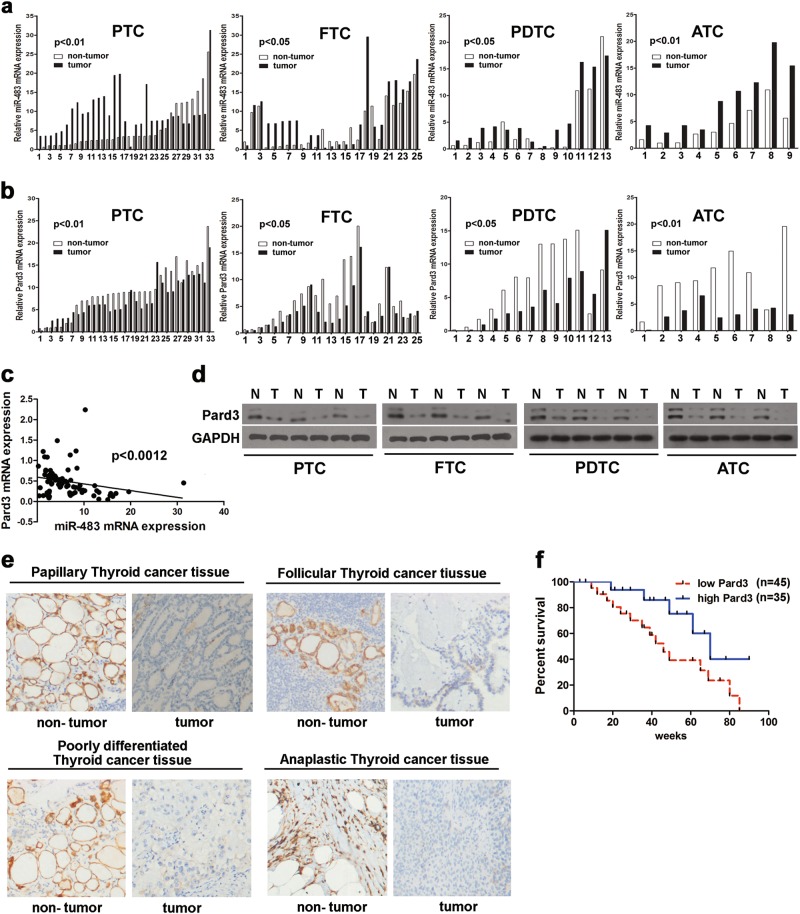
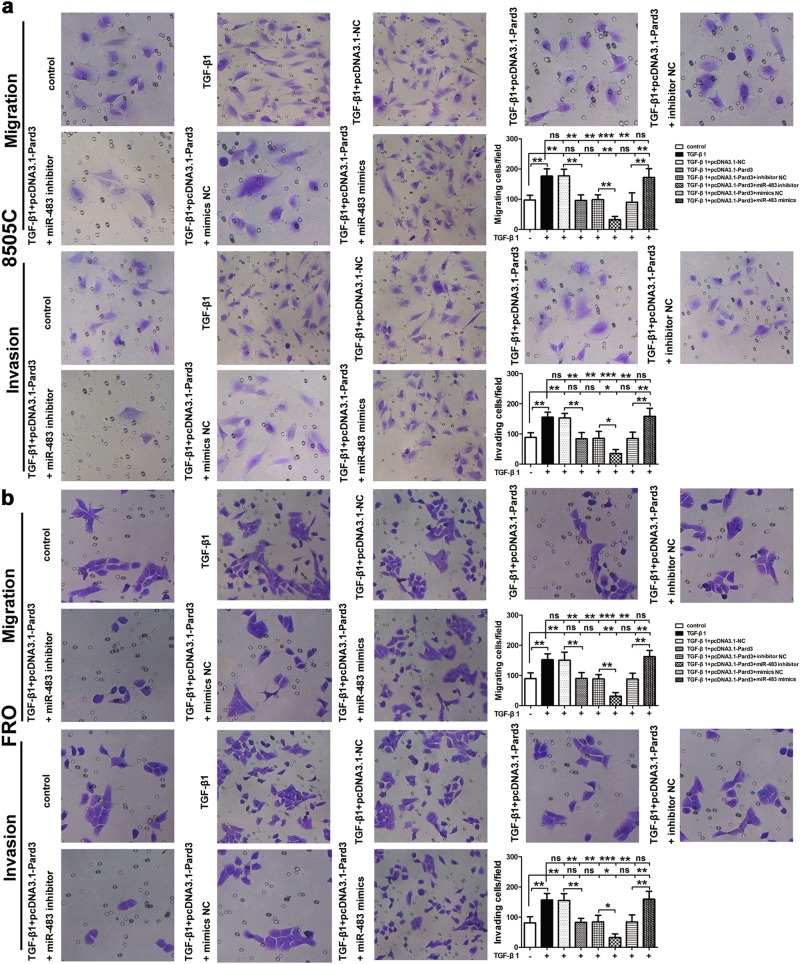
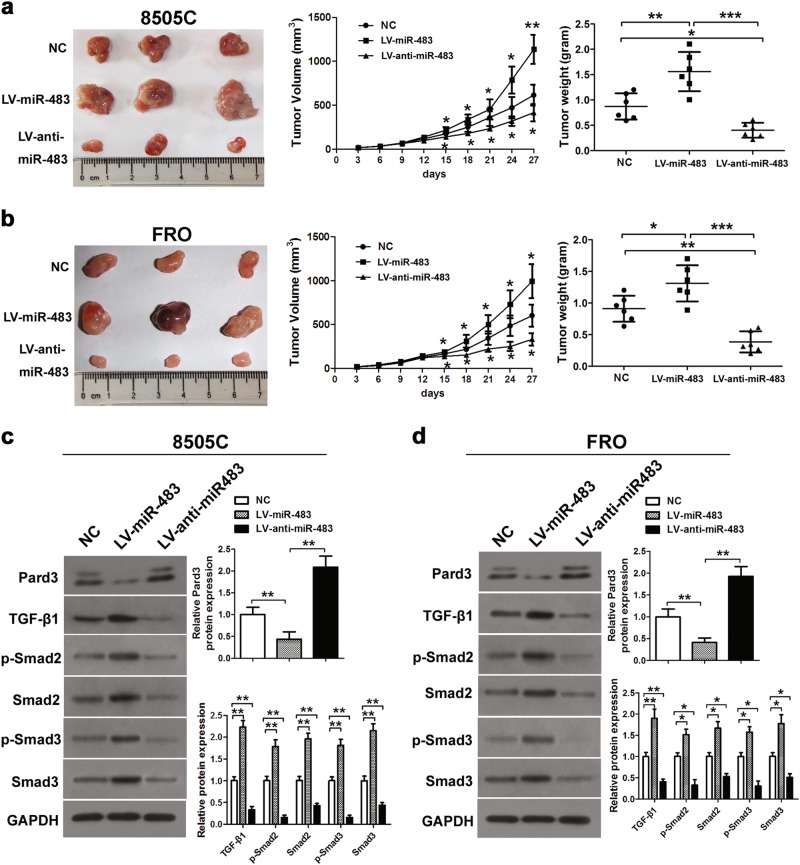
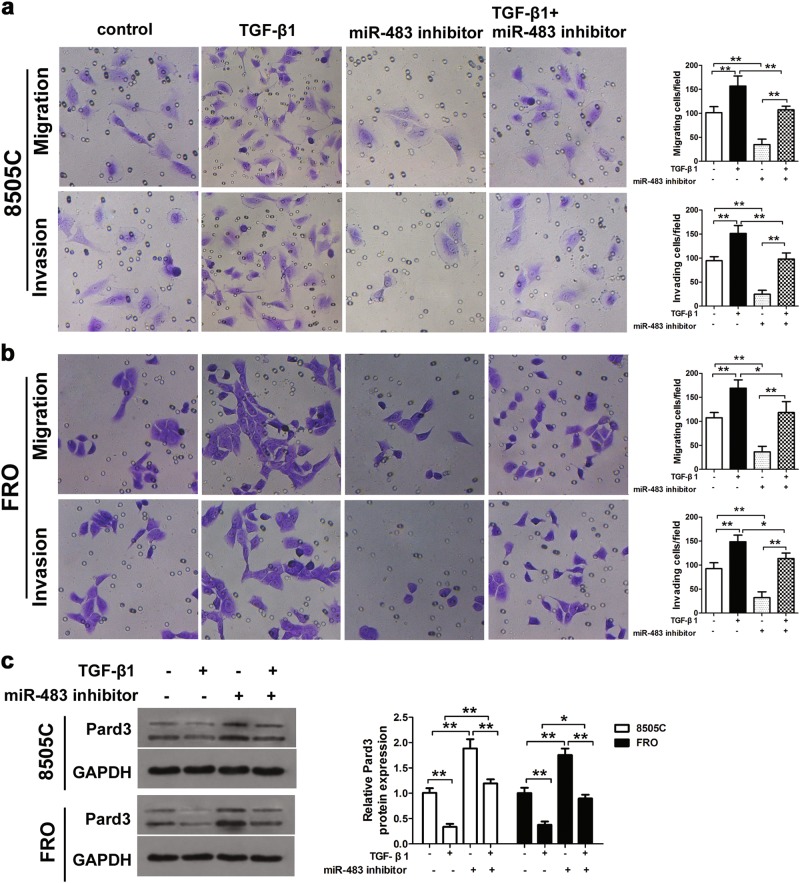
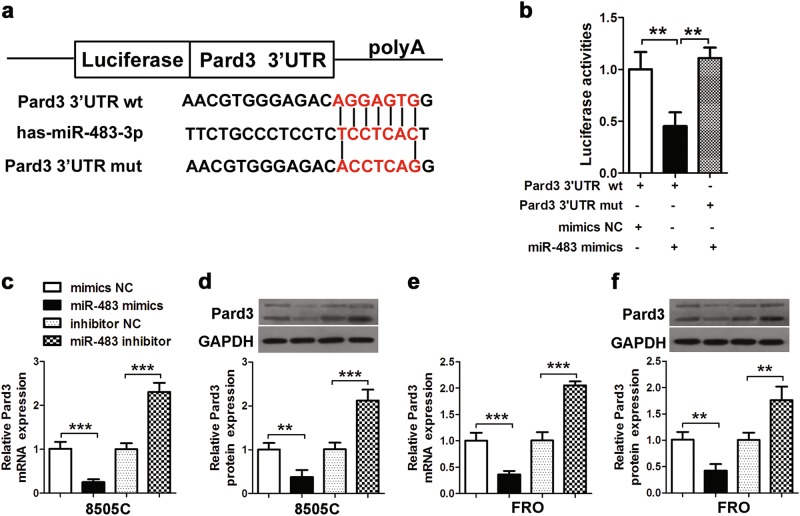
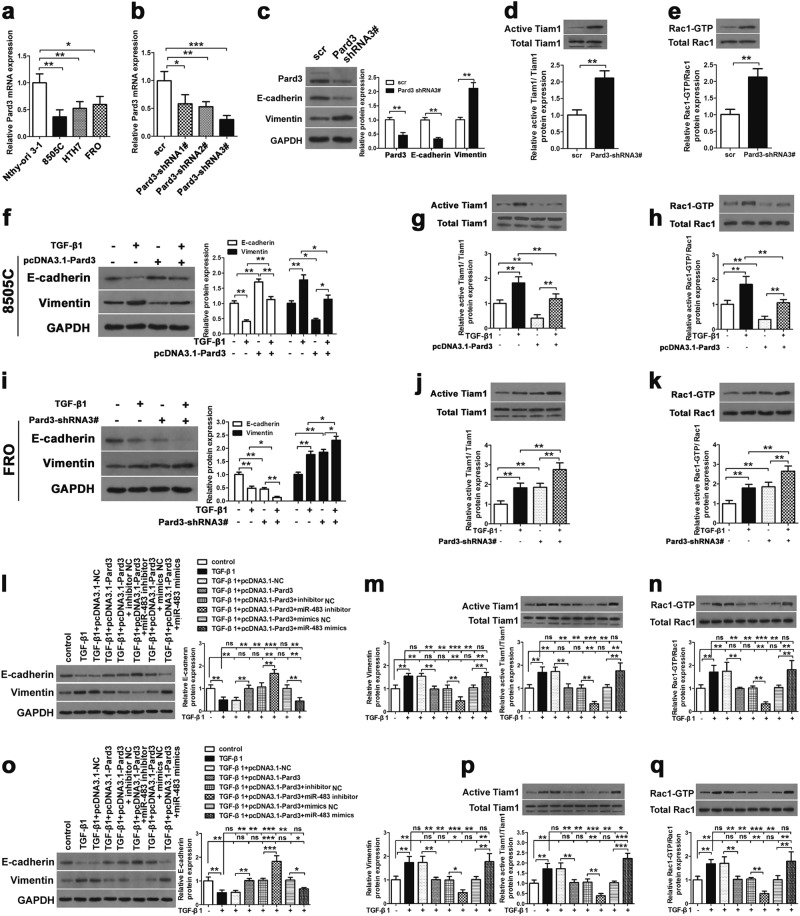
Anaplastic thyroid cancer (ATC) is associated with poor prognosis and is often untreatable. MicroRNA 483-3p (miR-483) and partitioning-defective 3 (Pard3), a member of the Pard family, have functions and regulatory mechanisms in ATC. The abnormal regulation of miR-483 may play an important role in tumorigenesis, and Par3 is known to regulate cell polarity, cell migration, and cell division. Tumor proliferation promoted by the regulation of miRNA expression can be regulated in thyroid cancer by upregulating transforming growth factor-β1 (TGF-β1), which is thought to interact with Pard3. When compared with adjacent non-tumor tissues, we found that miR-483 was upregulated and Pard3 was downregulated in 80 thyroid tumor samples. Disease-free survival was decreased when expression of miR-483 was upregulated and Pard3 expression was downregulated. Cell growth, migration, and invasion were induced by overexpression of miR-483. However, knockdown of miR-483 resulted in a loss of cell invasion and viability, both in vitro and in vivo. The expression of Pard3 was increased by the inhibition of miR-483, but TGF-β1-induced cell migration and invasion were decreased by miR-483 inhibition. A dual-luciferase reporter assay determined that Pard3 expression was downregulated when targeted with miR-483. The epithelial-mesenchymal transition (EMT), as well as Tiam1-Rac signaling, was induced by TGF-β1, which was decreased by the overexpression of Pard3. Pard3 decreased the inhibition of EMT and Tiam-Rac1 signaling, which resulted from transfection of ATC cells with miR-483. Overall, the results showed that downregulation of Pard3 resulted in increased cell invasion and EMT in ATC, which was promoted by treatment with miR-483. These findings suggest novel therapeutic targets and treatment strategies for this disease.
间变性甲状腺癌(ATC)预后不良,且常无法治疗。微小 RNA 483-3p(miR-483)和分割缺陷 3(Pard3)是 Pard 家族的成员,在 ATC 中有功能和调节机制。miR-483 的异常调节可能在肿瘤发生中发挥重要作用,而 Par3 已知可调节细胞极性、细胞迁移和细胞分裂。miRNA 表达的调节促进肿瘤增殖,认为转化生长因子-β1(TGF-β1)可与 Pard3 相互作用,调节甲状腺癌中的增殖。与相邻非肿瘤组织相比,我们在 80 例甲状腺肿瘤样本中发现 miR-483 上调,Pard3 下调。miR-483 表达上调和 Pard3 表达下调时,无病生存期降低。miR-483 的过表达诱导细胞生长、迁移和侵袭,而 miR-483 的敲低则导致体外和体内细胞侵袭和活力丧失。miR-483 的抑制增加 Pard3 的表达,但抑制 miR-483 可降低 TGF-β1 诱导的细胞迁移和侵袭。双荧光素酶报告基因测定表明 Pard3 表达受 miR-483 靶向下调。TGF-β1 诱导上皮-间充质转化(EMT)和 Tiam1-Rac 信号,而 Pard3 的过表达则降低了这一过程。Pard3 降低了 miR-483 转染 ATC 细胞后 EMT 和 Tiam-Rac1 信号的抑制作用。综上所述,这些结果表明 Pard3 的下调导致 ATC 中细胞侵袭和 EMT 的增加,而 miR-483 的治疗则促进了这一过程。这些发现为该疾病提供了新的治疗靶点和治疗策略。