Fan Long, Chen Ruifeng, Li Leng, Liang Ziyao, Yu Xuhua, Huang Kai, Yin Shuomiao, Wu Lei, Chen Yuanbin, Xu Yinji, Wang Qi, Lin Lin
The Second Clinical College of Guangzhou University of Chinese Medicine, Guangdong Provincial Hospital of Chinese Medicine, Guangzhou 510120, China.
Institute of Clinical Pharmacology, Guangzhou University of Chinese Medicine, Guangzhou 510405, China.
Evid Based Complement Alternat Med. 2018 Aug 5;2018:4265790. doi: 10.1155/2018/4265790. eCollection 2018.
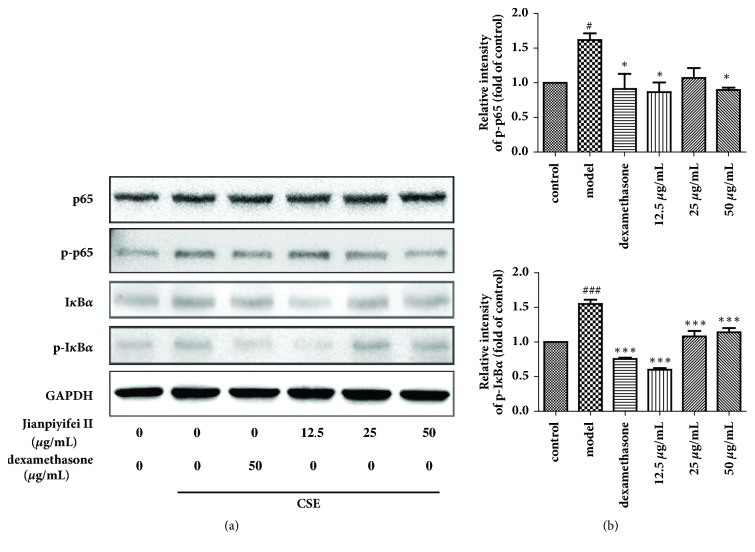
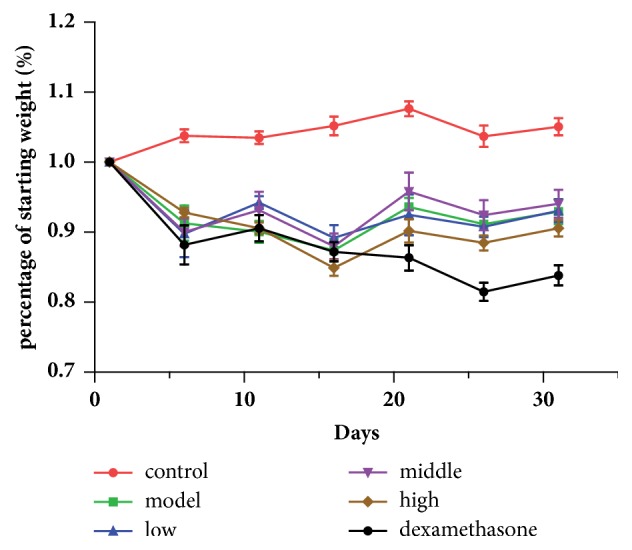
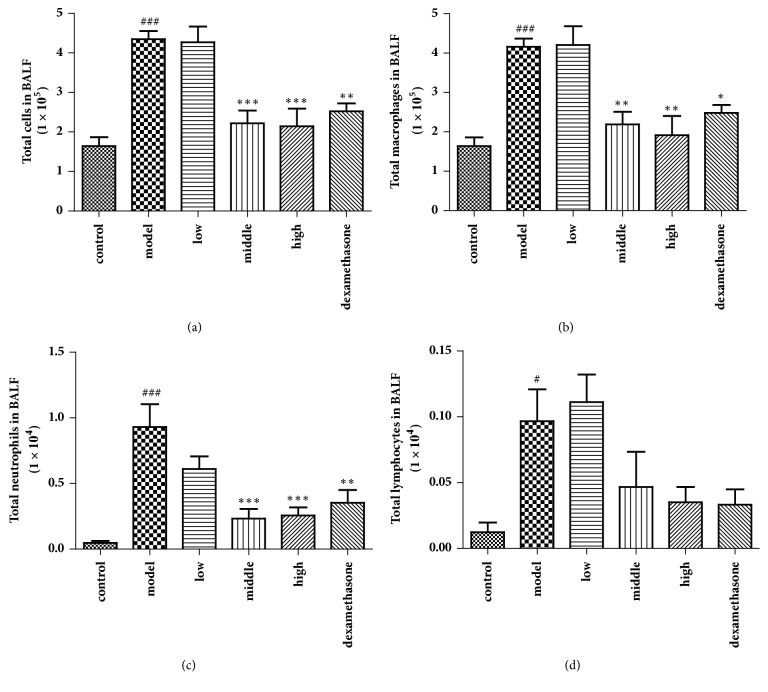
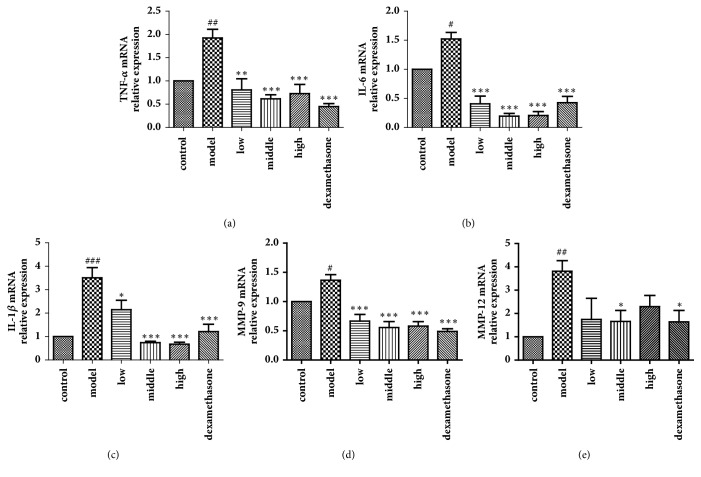
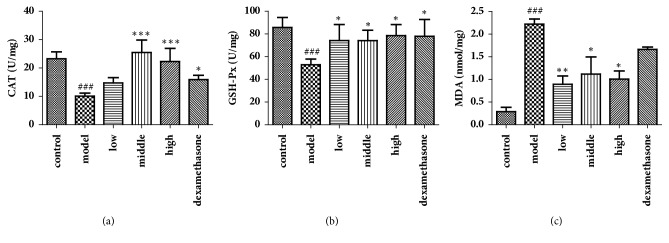
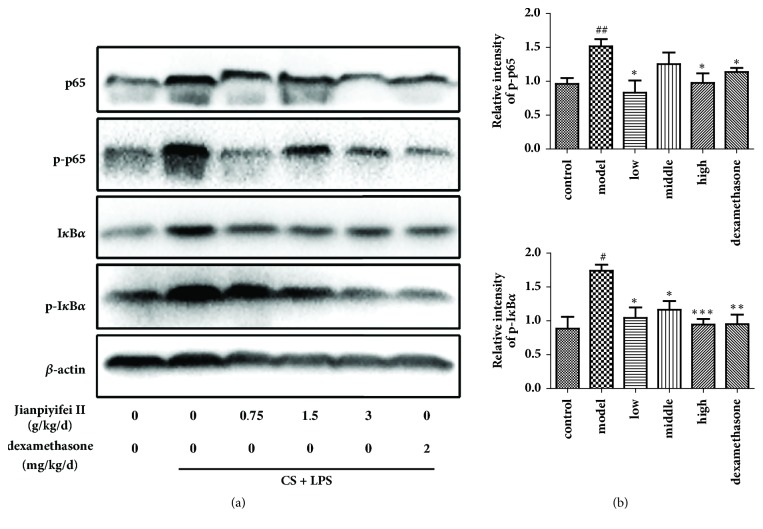
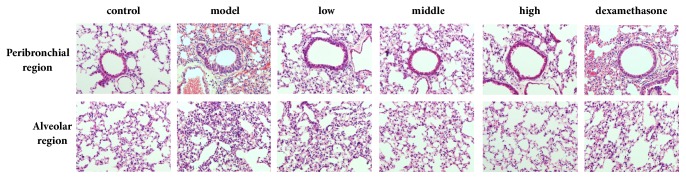
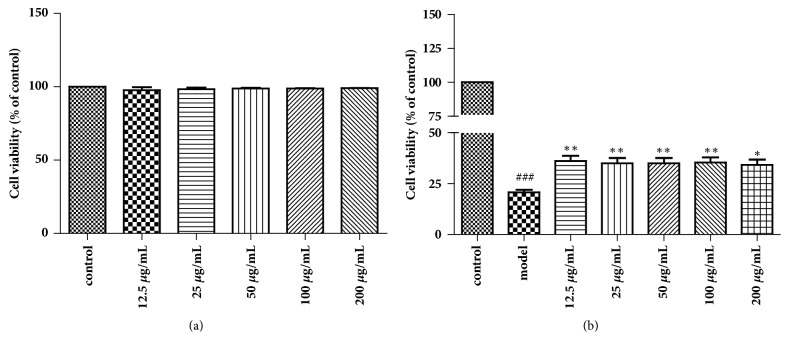
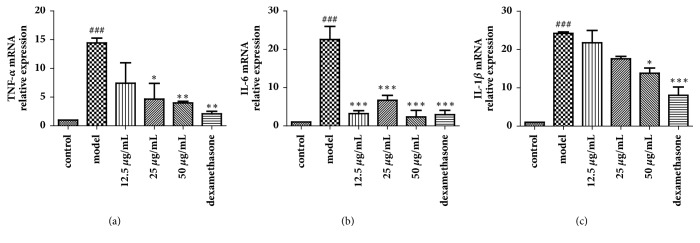
Jianpiyifei II granule (JPYF II) is an oriental herbal formula used clinically in China to treat chronic obstructive pulmonary disease (COPD). The aim of the present study was to investigate the anti-inflammatory and antioxidative activities of JPYF II in a mouse model of COPD induced by lipopolysaccharide (LPS) and cigarette smoke (CS) and in RAW264.7 cells stimulated with cigarette smoke extract (CSE). Mice were given LPS via intratracheal instillation on days 1 and 15 and exposed to CS generated from 4 cigarettes/day for 28 days. The mice were treated with 0.75, 1.5, or 3 g/kg/d JPYF II by intragastric administration in low, middle, and high dose groups, respectively, for two weeks. RAW264.7 cells were stimulated by CSE and treated with JPYF II at doses of 12.5, 25, or 50 g/mL. In the mouse model of LPS and CS-induced COPD, JPYF II decreased inflammatory cell counts in broncho alveolar lavage fluid (BALF), in addition to mRNA expression of proinflammatory cytokines and metalloproteinases (MMPs) in lung tissues. In addition, JPYF II elevated catalase (CAT) and glutathione peroxidase (GSH-Px) activities and reduced the levels of malondialdehyde (MDA) and IB and p65 phosphorylation and inflammatory cell infiltration in the lung tissues. In RAW264.7 cells stimulated with CSE, JPYF II inhibited the mRNA levels of inflammatory mediators and the phosphorylation of IB and p65. Our results suggest that JPYF II enhanced anti-inflammatory and antioxidative activities in a mouse model of COPD induced by LPS and CS and in RAW264.7 cells stimulated with CSE via inhibition of the NF-B pathway.
健脾益肺Ⅱ号颗粒(JPYF II)是中国临床上用于治疗慢性阻塞性肺疾病(COPD)的一种中药复方制剂。本研究旨在探讨JPYF II在脂多糖(LPS)和香烟烟雾(CS)诱导的COPD小鼠模型以及香烟烟雾提取物(CSE)刺激的RAW264.7细胞中的抗炎和抗氧化活性。在第1天和第15天通过气管内滴注给予小鼠LPS,并使其每天暴露于4支香烟产生的CS中,持续28天。分别以低、中、高剂量组0.75、1.5或3 g/kg/d的JPYF II通过灌胃给药治疗小鼠两周。RAW264.7细胞用CSE刺激,并以12.5、25或50 g/mL的剂量用JPYF II处理。在LPS和CS诱导的COPD小鼠模型中,JPYF II除了降低肺组织中促炎细胞因子和金属蛋白酶(MMPs)的mRNA表达外,还减少了支气管肺泡灌洗液(BALF)中的炎性细胞计数。此外,JPYF II提高了过氧化氢酶(CAT)和谷胱甘肽过氧化物酶(GSH-Px)的活性,并降低了肺组织中丙二醛(MDA)的水平以及IκB和p65的磷酸化水平和炎性细胞浸润。在用CSE刺激RAW264.7细胞中,JPYF II抑制了炎性介质的mRNA水平以及IκB和p65的磷酸化。我们的结果表明,JPYF II通过抑制NF-κB途径增强了在LPS和CS诱导的COPD小鼠模型以及CSE刺激的RAW264.7细胞中的抗炎和抗氧化活性。