Birch Colin P D, Goddard Ashley, Tearne Oliver
Animal and Plant Health Agency, New Haw, Addlestone, Surrey, KT15 3NB, UK.
BMC Vet Res. 2018 Sep 4;14(1):273. doi: 10.1186/s12917-018-1595-9.
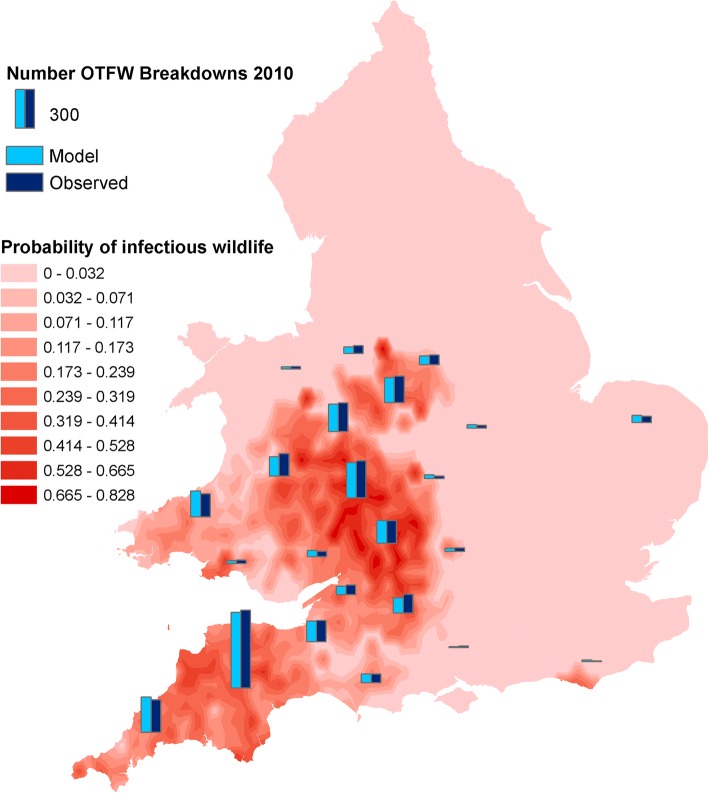
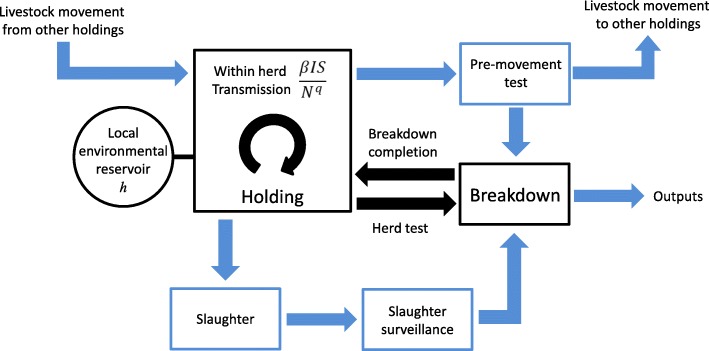
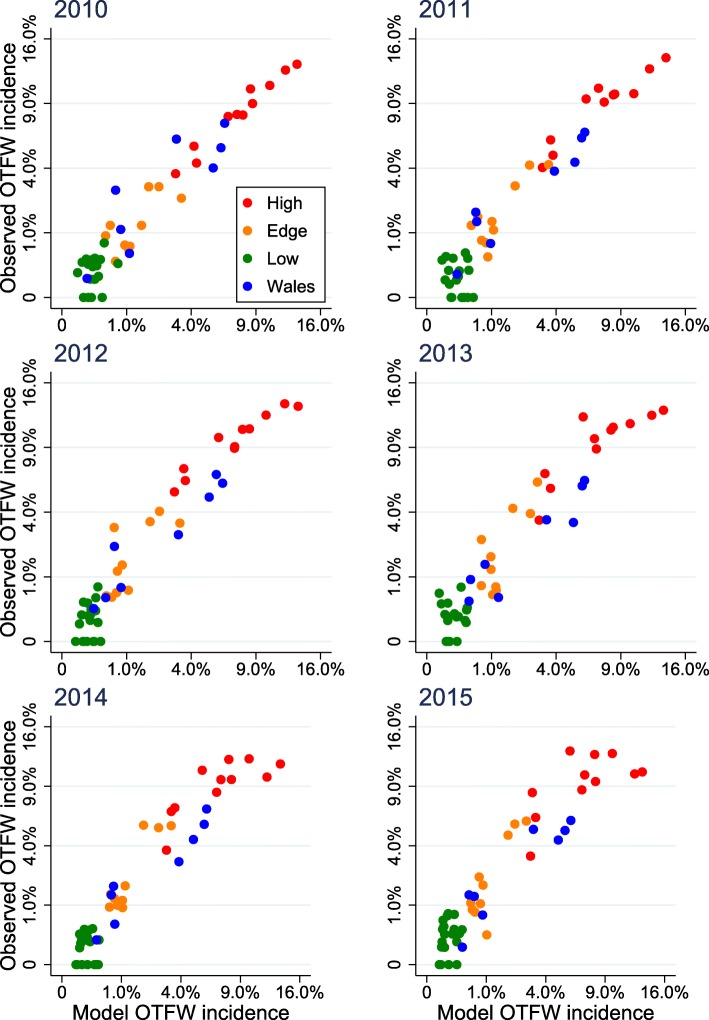
Bovine tuberculosis (bTB) is a zoonotic disease of cattle caused by Mycobacterium bovis, widespread in England and Wales. It has high incidence towards the South West of England and Wales, with much lower incidence to the East and North. A stochastic simulation model was developed to simulate M. bovis transmission among cattle, transfer by cattle movements and transmission from environmental reservoirs (often wildlife and especially badgers). It distinguishes five surveillance streams, including herd tests, pre-movement testing and slaughter surveillance. The model thereby simulates interventions in bTB surveillance and control, and generates outputs directly comparable to detailed disease records. An anonymized version of the executable model with its input data has been released. The model was fitted to cattle bTB records for 2008-2010 in a cross-sectional comparison, and its projection was compared with records from 2010 to 2016 for validation.
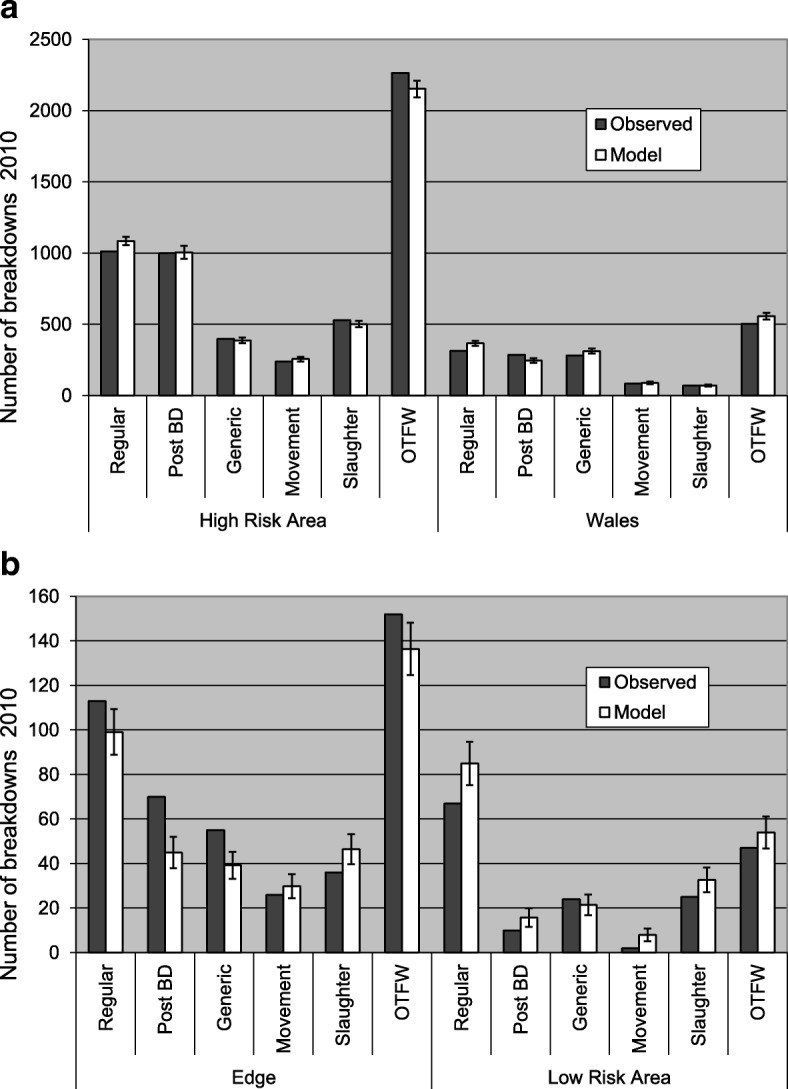
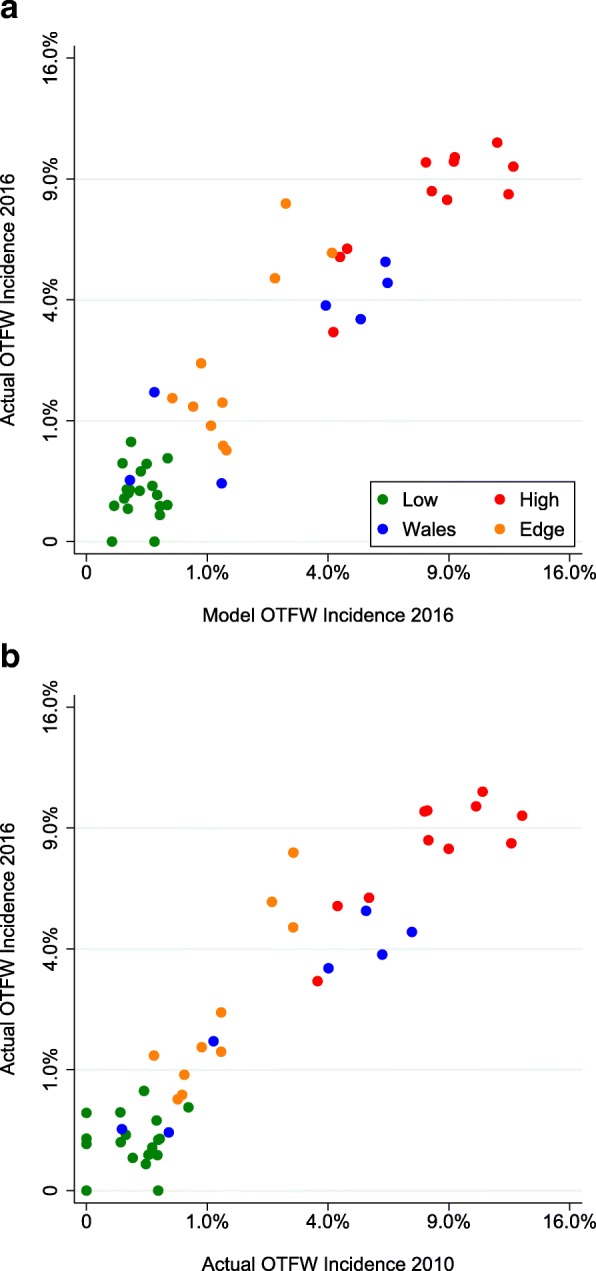
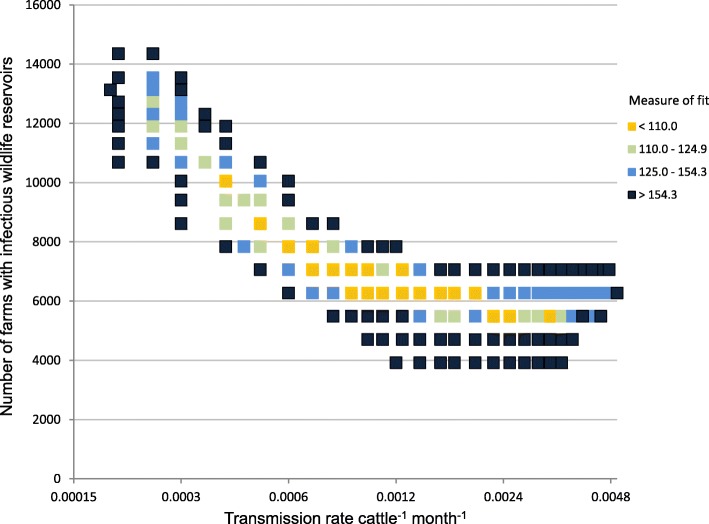
The fitted model explained over 99% of the variation among numbers of breakdowns in four defined regions and surveillance streams in 2010. It classified 7800 (95% confidence interval c. 5500 - 14,000) holdings within high incidence regions as exposed to infectious environmental reservoirs, out of over 31,000 cattle holdings identified as potentially exposed to such sources. The model was consistent with previous estimates of low M. bovis transmission rate among cattle, but cattle to cattle transmission was clearly required to generate the number of cattle cases observed. When projected to 2016, the model as fitted to 2010 continued to match the distribution of bTB among counties, although it was notable that the actual distribution of bTB in 2010 was itself a close match for its distribution in 2016.
The close model fit demonstrated that cattle movements could generate breakdowns as observed in low incidence regions, if persistent environmental reservoirs such as wildlife maintained infection levels in the high incidence regions. The model suggests that environmental reservoirs may be a challenge for control, because, although many holdings are exposed to infection from wildlife or the environment, they are a minority of holdings. Large impacts on disease in wildlife will be required to avoid each individual transmission event to cattle.
牛结核病(bTB)是由牛分枝杆菌引起的一种牛的人畜共患病,在英格兰和威尔士广泛传播。在英格兰西南部和威尔士发病率较高,而东部和北部发病率则低得多。开发了一个随机模拟模型,以模拟牛分枝杆菌在牛群中的传播、通过牛的移动进行的传播以及从环境储库(通常是野生动物,尤其是獾)的传播。该模型区分了五个监测流,包括牛群检测、移动前检测和屠宰监测。该模型由此模拟了牛结核病监测和控制中的干预措施,并生成了可直接与详细疾病记录相比较的输出结果。已发布了带有输入数据的可执行模型的匿名版本。在横断面比较中,该模型被拟合到2008 - 2010年的牛结核病记录,并将其预测结果与2010年至2016年的记录进行比较以进行验证。
拟合后的模型解释了2010年四个定义区域和监测流中疫情爆发数量变化的99%以上。在超过31,000个被确定可能接触此类传染源的牛群中,该模型将高发病率区域内的7800个(95%置信区间约为5500 - 14,000)养殖场归类为接触了传染性环境储库。该模型与先前对牛群中牛分枝杆菌低传播率的估计一致,但显然需要牛与牛之间的传播才能产生观察到的牛病例数量。当预测到2016年时,拟合到2010年的模型继续与各县牛结核病的分布相匹配,尽管值得注意的是,2010年牛结核病的实际分布本身与其2016年的分布非常接近。
模型的紧密拟合表明,如果野生动物等持续存在的环境储库维持高发病率区域的感染水平,牛的移动可能会导致低发病率区域出现疫情爆发。该模型表明,环境储库可能是控制工作的一个挑战,因为尽管许多养殖场接触到了来自野生动物或环境的感染,但它们只是养殖场中的少数。要避免每一次向牛的个体传播事件,就需要对野生动物疾病产生重大影响。