Gal Roxanne, May Anne M, van Overmeeren Elon J, Simons Monique, Monninkhof Evelyn M
Julius Center for Health Sciences and Primary Care, University Medical Center Utrecht, Utrecht University, STR 6.131, Universiteitsweg 100, PO Box 85500, 3508 GA, Utrecht, The Netherlands.
Department of Human Geography and Spatial Planning, Utrecht University, Utrecht, The Netherlands.
Sports Med Open. 2018 Sep 3;4(1):42. doi: 10.1186/s40798-018-0157-9.
Worldwide physical activity levels of adults are declining, which is associated with increased chronic disease risk. Wearables and smartphone applications offer new opportunities to change physical activity behaviour. This systematic review summarizes the evidence regarding the effect of wearables and smartphone applications on promoting physical activity.
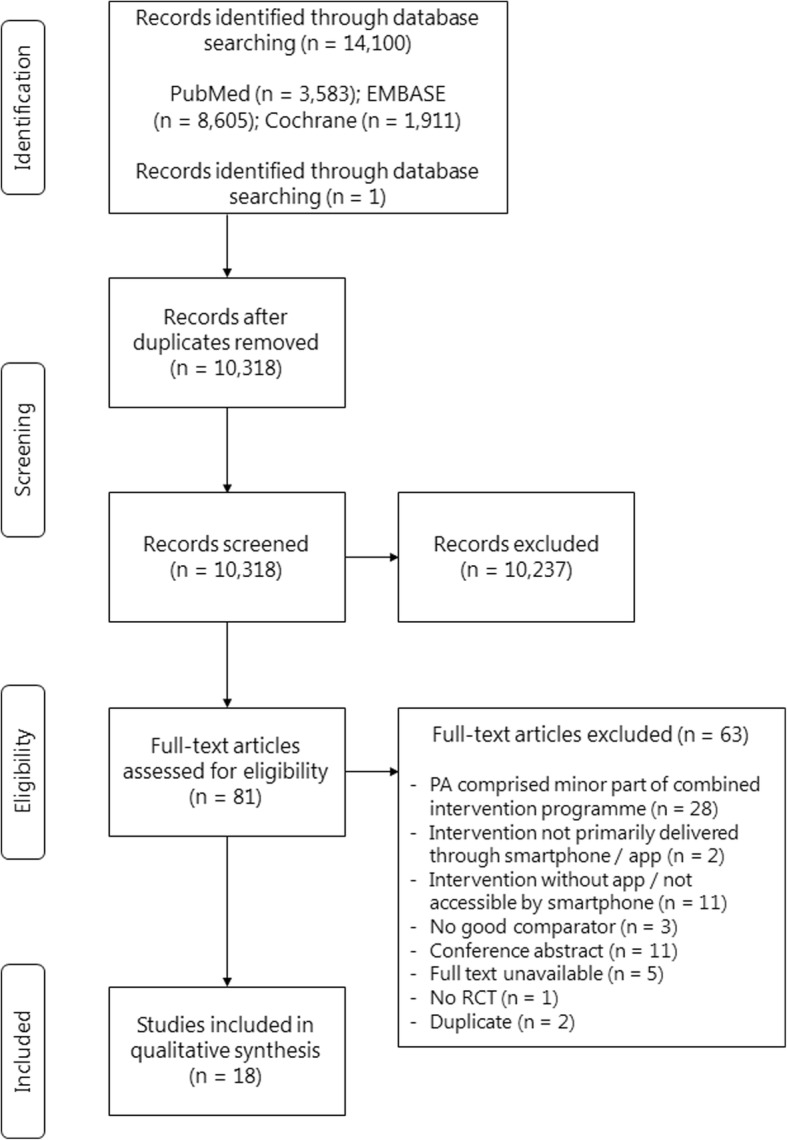
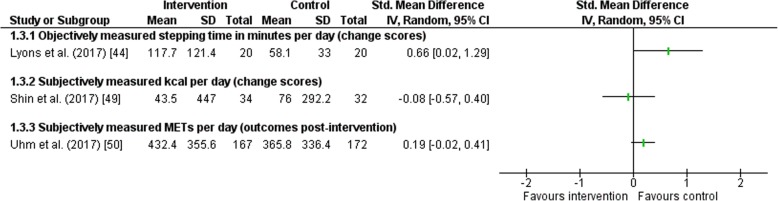
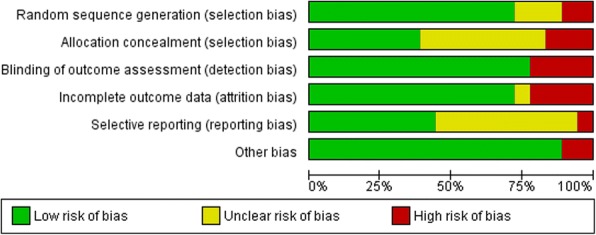
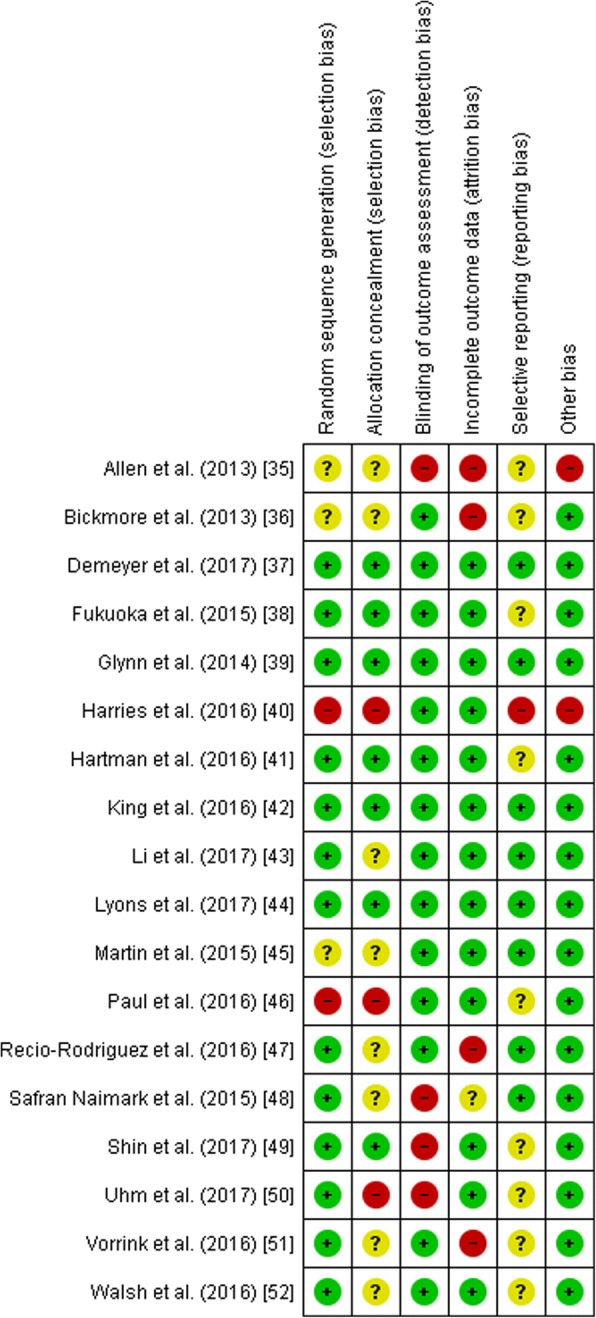
PubMed, EMBASE and Cochrane databases were searched for RCTs, published since January 2008, on wearables and smartphone applications to promote physical activity. Studies were excluded when the study population consisted of children or adolescents, the intervention did not promote physical activity or comprised a minor part of the intervention, or the intervention was Internet-based and not accessible by smartphone. Risk of bias was assessed by the Cochrane collaboration tool. The primary outcome was changed in physical activity level. Meta-analyses were performed to assess the pooled effect on (moderate-to-vigorous) physical activity in minutes per day and daily step count.
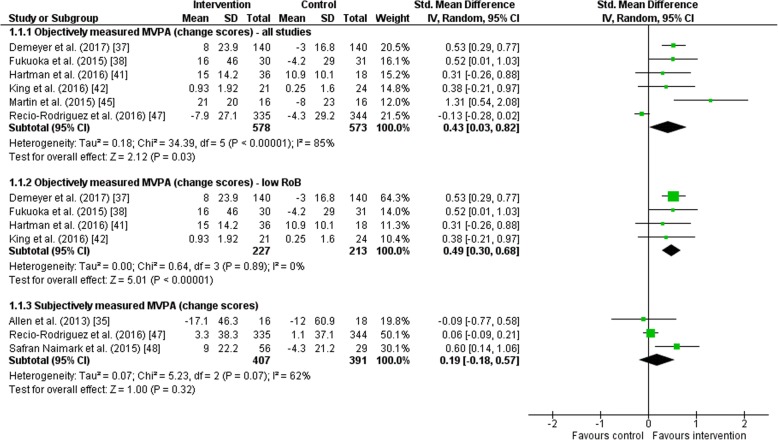
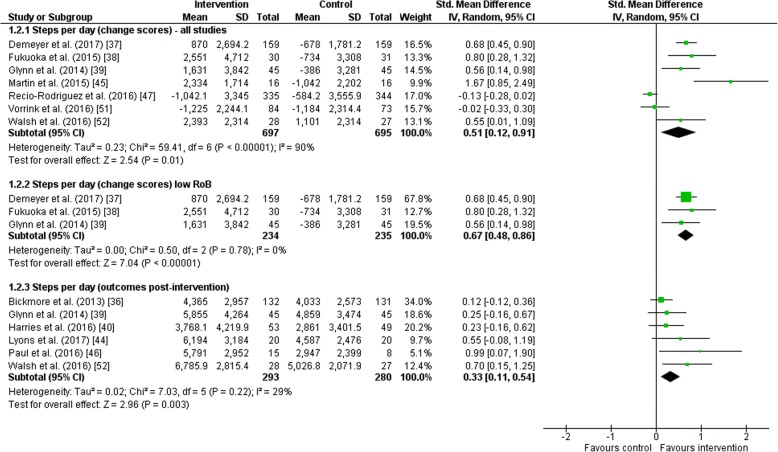
Eighteen RCTs were included. Use of wearables and smartphone applications led to a small to moderate increase in physical activity in minutes per day (SMD = 0.43, 95% CI = 0.03 to 0.82; I = 85%) and a moderate increase in daily step count (SMD = 0.51, 95% CI = 0.12 to 0.91; I = 90%). When removing studies with an unclear or high risk of bias, intervention effects improved and statistical heterogeneity was removed.
This meta-analysis showed a small to moderate effect of physical activity interventions comprising wearables and smartphone applications on physical activity. Hence, wearables and smartphone applications are likely to bring new opportunities in delivering tailored interventions to increase levels of physical activity.
全球范围内成年人的身体活动水平正在下降,这与慢性病风险增加有关。可穿戴设备和智能手机应用程序为改变身体活动行为提供了新机会。本系统评价总结了关于可穿戴设备和智能手机应用程序对促进身体活动效果的证据。
检索PubMed、EMBASE和Cochrane数据库,查找自2008年1月以来发表的关于可穿戴设备和智能手机应用程序促进身体活动的随机对照试验。当研究人群为儿童或青少年、干预措施未促进身体活动或仅占干预措施的一小部分、或干预措施基于互联网且无法通过智能手机访问时,将研究排除。采用Cochrane协作工具评估偏倚风险。主要结局是身体活动水平的变化。进行荟萃分析以评估对每天(中度至剧烈)身体活动分钟数和每日步数的综合影响。
纳入18项随机对照试验。使用可穿戴设备和智能手机应用程序导致每天身体活动分钟数有小到中度增加(标准化均数差=0.43,95%可信区间=0.03至0.82;I²=85%),每日步数有中度增加(标准化均数差=0.51,95%可信区间=0.12至0.91;I²=90%)。去除偏倚风险不明确或高的研究后,干预效果有所改善且统计学异质性消除。
这项荟萃分析表明,包括可穿戴设备和智能手机应用程序在内的身体活动干预措施对身体活动有小到中度的影响。因此,可穿戴设备和智能手机应用程序可能会为提供量身定制的干预措施以提高身体活动水平带来新机会。