Lyons Elizabeth J, Swartz Maria C, Lewis Zakkoyya H, Martinez Eloisa, Jennings Kristofer
Department of Nutrition and Metabolism, The University of Texas Medical Branch, Galveston, TX, United States.
Sealy Center on Aging, The University of Texas Medical Branch, Galveston, TX, United States.
JMIR Mhealth Uhealth. 2017 Mar 6;5(3):e28. doi: 10.2196/mhealth.6967.
As adults age, their physical activity decreases and sedentary behavior increases, leading to increased risk of negative health outcomes. Wearable electronic activity monitors have shown promise for delivering effective behavior change techniques. However, little is known about the feasibility and acceptability of non-Fitbit wearables (Fitbit, Inc, San Francisco, California) combined with telephone counseling among adults aged more than 55 years.
The purpose of our study was to determine the feasibility, acceptability, and effect on physical activity of an intervention combining a wearable physical activity monitor, tablet device, and telephone counseling among adults aged 55-79 years.
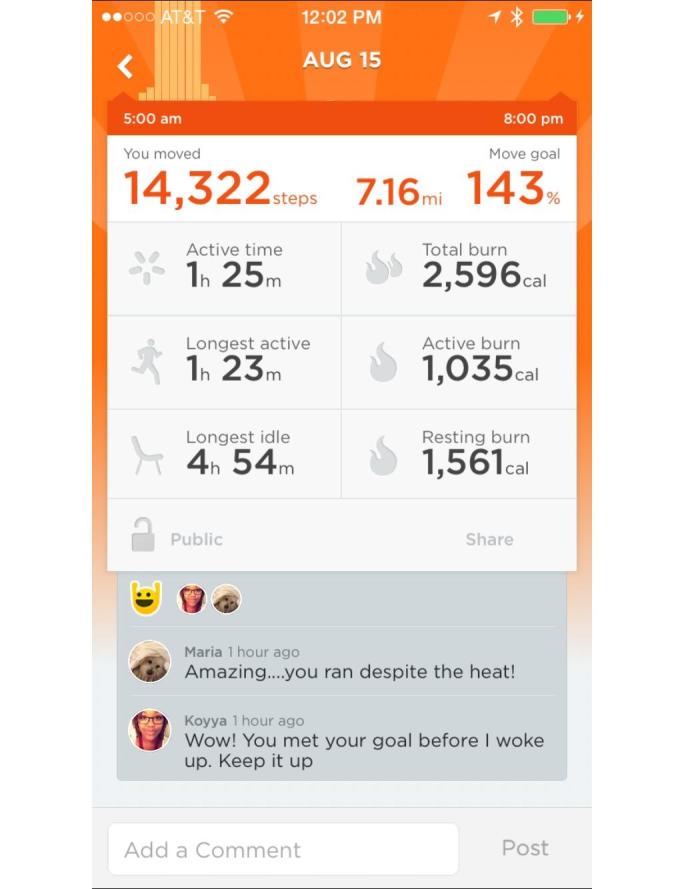
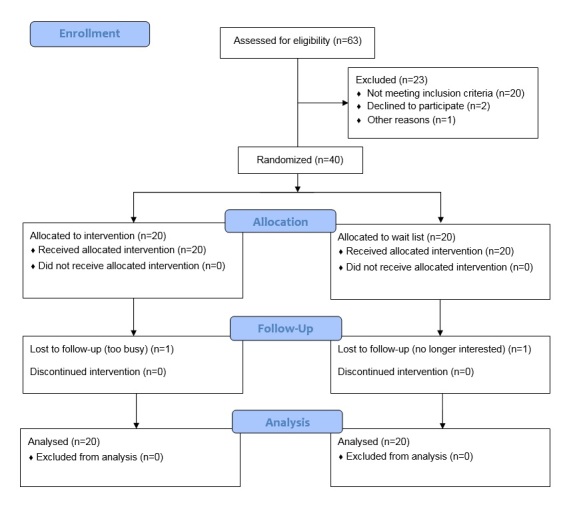
Adults (N=40, aged 55-79 years, body mass index=25-35, <60 min of activity per week) were randomized to receive a 12-week intervention or to a wait list control. Intervention participants received a Jawbone Up24 monitor, a tablet with the Jawbone Up app installed, and brief weekly telephone counseling. Participants set daily and weekly step goals and used the monitor's idle alert to notify them when they were sedentary for more than 1 h. Interventionists provided brief counseling once per week by telephone. Feasibility was measured using observation and study records, and acceptability was measured by self-report using validated items. Physical activity and sedentary time were measured using ActivPAL monitors following standard protocols. Body composition was measured using dual-energy x-ray absorptiometry scans, and fitness was measured using a 6-min walk test.
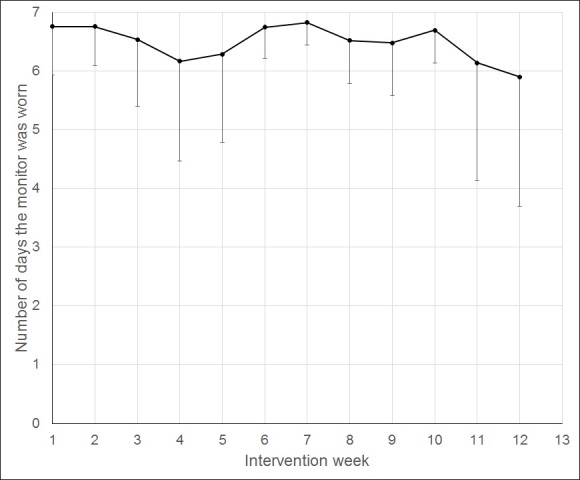
Participants were 61.48 years old (SD 5.60), 85% (34/40) female, 65% (26/40) white. Average activity monitor wear time was 81.85 (SD 3.73) of 90 days. Of the 20 Up24 monitors, 5 were reported broken and 1 lost. No related adverse events were reported. Acceptability items were rated at least 4 on a scale of 1-5. Effect sizes for most outcomes were small, including stepping time per day (d=0.35), steps per day (d=0.26), sitting time per day (d=0.21), body fat (d=0.17), and weight (d=0.33).
The intervention was feasible and acceptable in this population. Effect sizes were similar to the sizes found using other wearable electronic activity monitors, indicating that when combined with telephone counseling, wearable activity monitors are a potentially effective tool for increasing physical activity and decreasing sedentary behavior.
Clinicaltrials.gov NCT01869348; https://clinicaltrials.gov/ct2/show/NCT01869348 (Archived by WebCite at http://www.webcitation.org/6odlIolqy).
随着成年人年龄增长,他们的身体活动减少,久坐行为增加,导致负面健康结果的风险上升。可穿戴电子活动监测器已显示出有望提供有效的行为改变技术。然而,对于55岁以上成年人使用非Fitbit可穿戴设备(Fitbit公司,加利福尼亚州旧金山)并结合电话咨询的可行性和可接受性知之甚少。
我们研究的目的是确定在55 - 79岁成年人中,将可穿戴身体活动监测器、平板电脑设备和电话咨询相结合的干预措施对身体活动的可行性、可接受性及效果。
成年人(N = 40,年龄55 - 79岁,体重指数 = 25 - 35,每周活动时间<60分钟)被随机分为接受为期12周的干预组或等待名单对照组。干预组参与者收到一个Jawbone Up24监测器、一台安装了Jawbone Up应用程序的平板电脑,并接受每周一次的简短电话咨询。参与者设定每日和每周的步数目标,并使用监测器的闲置警报在他们久坐超过1小时时通知他们。干预人员每周通过电话提供一次简短咨询。通过观察和研究记录来衡量可行性,通过使用经过验证的项目进行自我报告来衡量可接受性。按照标准方案使用ActivPAL监测器测量身体活动和久坐时间。使用双能X线吸收法扫描测量身体成分,使用6分钟步行测试测量体能。
参与者年龄为61.48岁(标准差5.60),85%(34/40)为女性,65%(26/40)为白人。平均活动监测器佩戴时间为90天中的81.85天(标准差3.73)。在20个Up24监测器中,有5个报告损坏,1个丢失。未报告相关不良事件。可接受性项目在1 - 5分的量表上评分至少为4分。大多数结果的效应量较小,包括每天的步行时间(d = 0.35)、每天的步数(d = 0.26)、每天的坐姿时间(d = 0.21)、体脂(d = 0.17)和体重(d = 0.33)。
该干预措施在这一人群中是可行且可接受的。效应量与使用其他可穿戴电子活动监测器所发现的相似,表明当与电话咨询相结合时,可穿戴活动监测器是增加身体活动和减少久坐行为的潜在有效工具。
Clinicaltrials.gov NCT01869348;https://clinicaltrials.gov/ct2/show/NCT01869348(由WebCite存档于http://www.webcitation.org/6odlIolqy)。