Technische Universität München, Chair of Nutrition and Immunology, Freising-Weihenstephan, Germany.
Max Planck Institute of Neurobiology, Department of Neuroimmunology, Martinsried, Germany.
Cell Mol Gastroenterol Hepatol. 2018 May 29;6(3):370-388.e3. doi: 10.1016/j.jcmgh.2018.05.008. eCollection 2018.
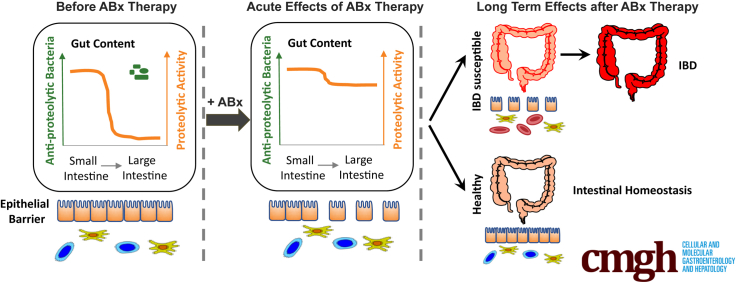
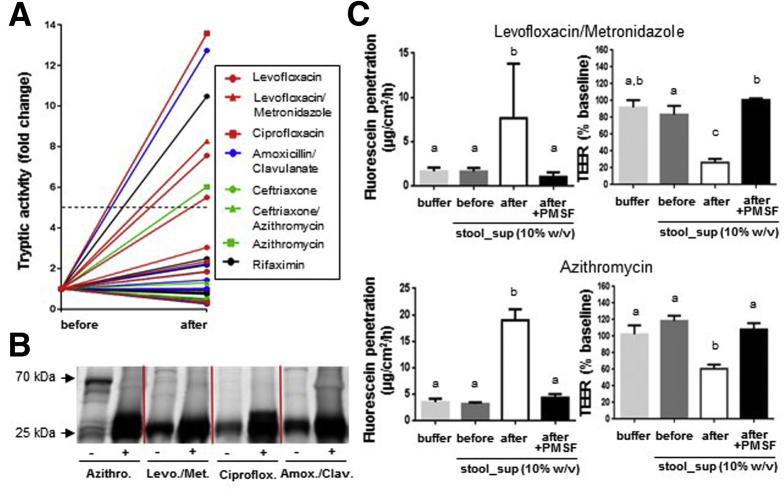
BACKGROUND & AIMS: Antibiotic (ABx) therapy is associated with increased risk for Crohn's disease but underlying mechanisms are unknown. We observed high fecal serine protease activity (PA) to be a frequent side effect of ABx therapy. The aim of the present study was to unravel whether this rise in large intestinal PA may promote colitis development via detrimental effects on the large intestinal barrier.
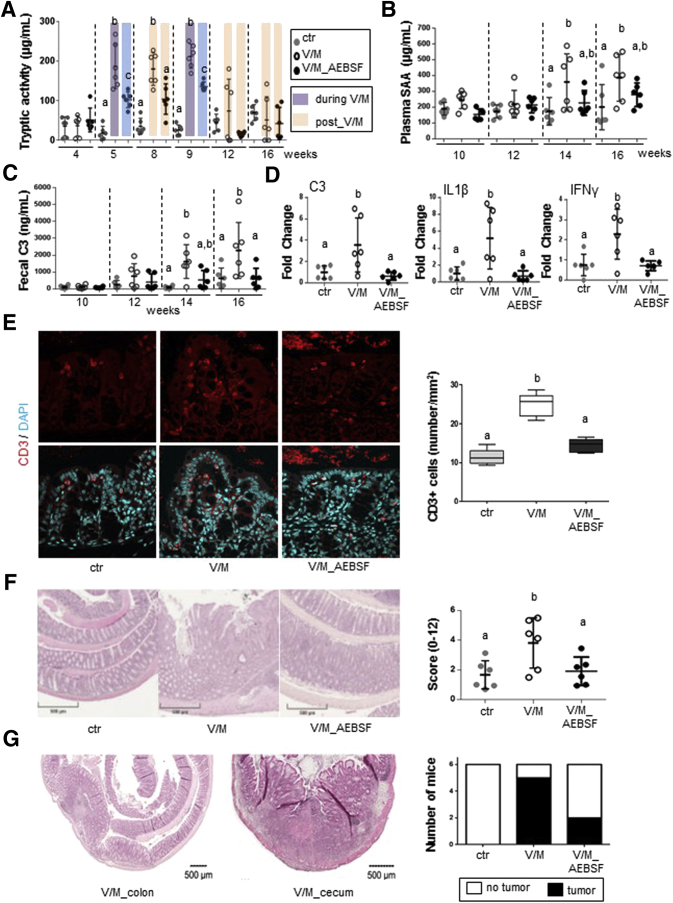
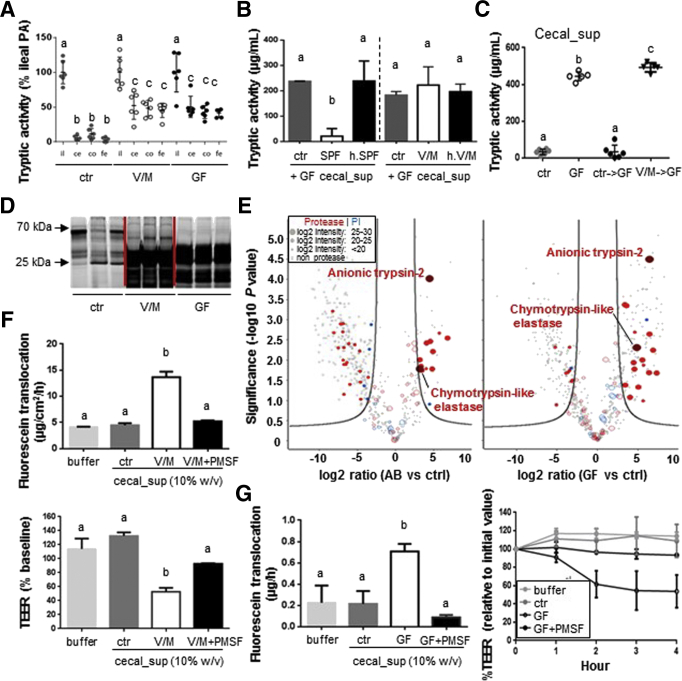
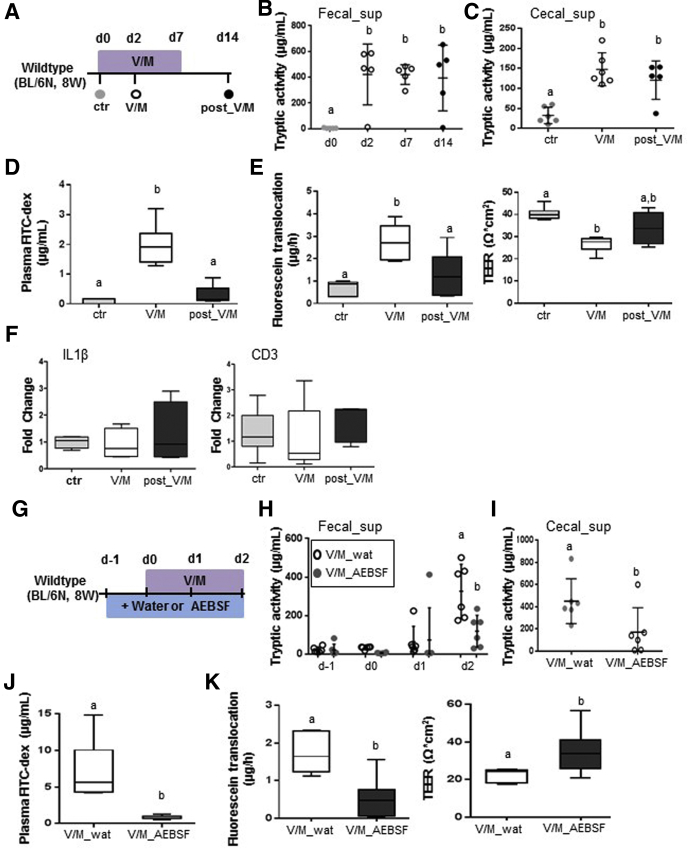
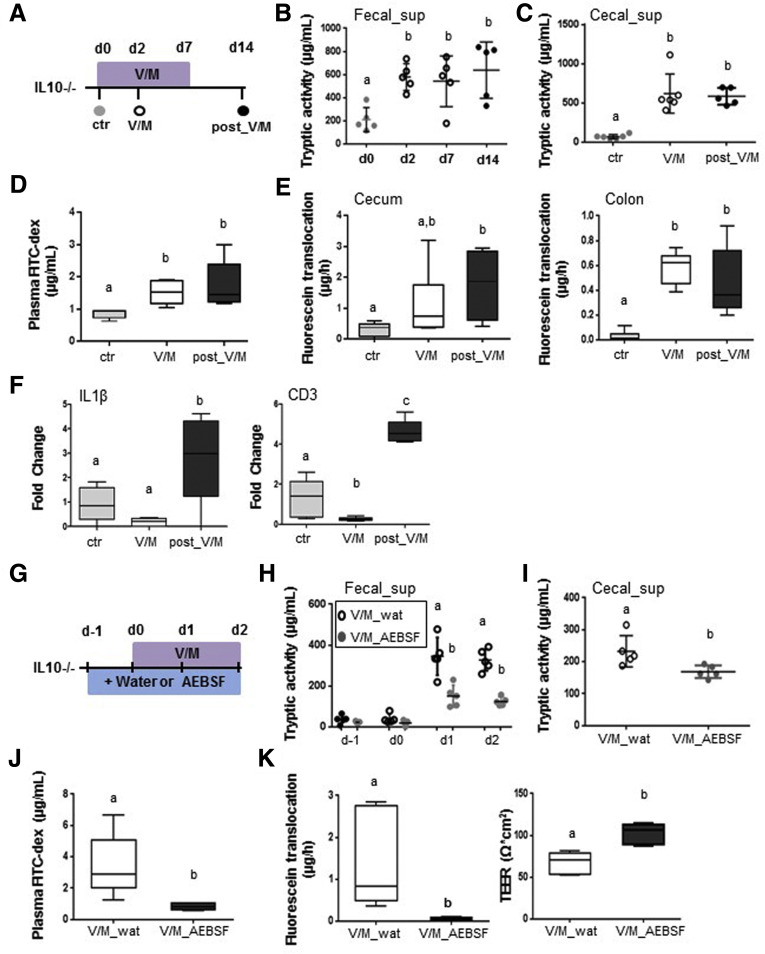
Transwell experiments were used to assess the impact of high PA in ABx-treated patients or vancomycin/metronidazole-treated mice on the epithelial barrier. Serine protease profiling was performed using liquid chromatography-mass spectrometry/mass spectrometry analysis. The impact of high large intestinal PA on the intestinal barrier in wild-type and interleukin (IL)10 mice and on colitis development in IL10 mice was investigated using vancomycin/metronidazole with or without oral serine protease inhibitor (AEBSF) treatment.
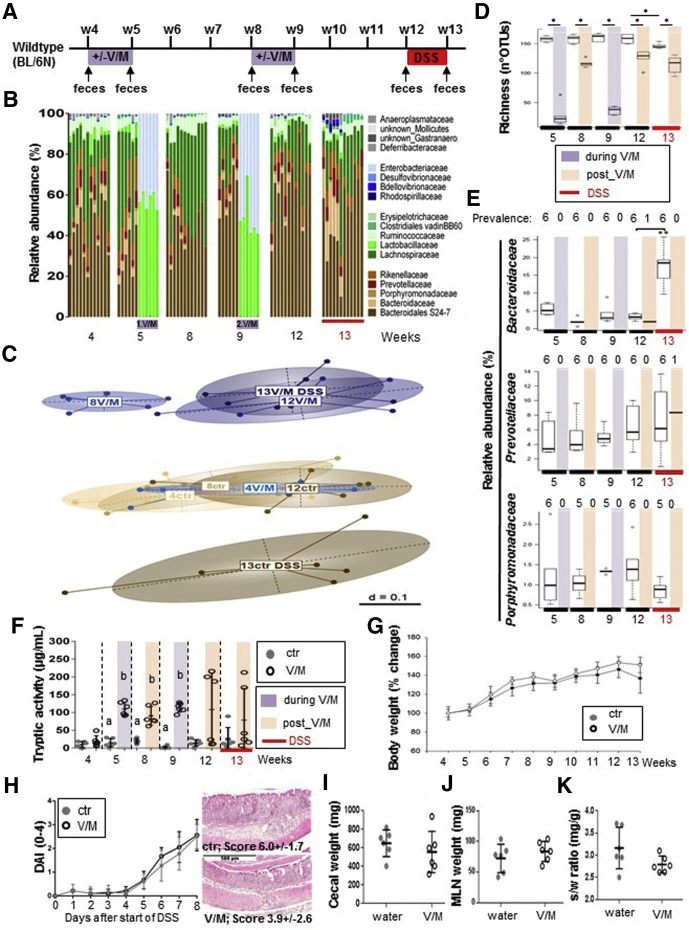
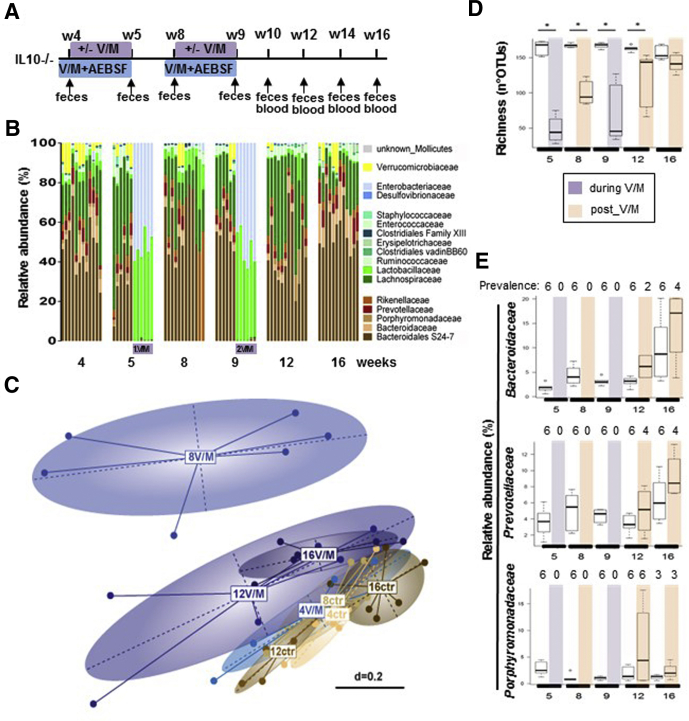
The ABx-induced, high large intestinal PA was caused by significantly increased levels of pancreatic proteases and impaired epithelial barrier integrity. In wild-type mice, the rise in PA caused a transient increase in intestinal permeability but did not affect susceptibility to chemically induced acute colitis. In IL10 mice, increased PA caused a consistent impairment of the intestinal barrier associated with inflammatory activation in the large intestinal tissue. In the long term, the vancomycin/metronidazole-induced lasting increase in PA aggravated colitis development in IL10 mice.
High large intestinal PA is a frequent adverse effect of ABx therapy, which is detrimental to the large intestinal barrier and may contribute to the development of chronic intestinal inflammation in susceptible individuals.
抗生素(ABx)治疗与克罗恩病风险增加相关,但潜在机制尚不清楚。我们观察到,粪便丝氨酸蛋白酶活性(PA)升高是 ABx 治疗的常见副作用。本研究旨在揭示这种大肠 PA 的升高是否通过对大肠屏障的有害影响促进结肠炎的发展。
使用 Transwell 实验评估 ABx 治疗患者或万古霉素/甲硝唑治疗小鼠的高 PA 对上皮屏障的影响。使用液相色谱-质谱/质谱分析进行丝氨酸蛋白酶谱分析。使用万古霉素/甲硝唑和/或口服丝氨酸蛋白酶抑制剂(AEBSF)治疗,研究高大肠 PA 对野生型和白细胞介素(IL)10 小鼠肠道屏障的影响以及对 IL10 小鼠结肠炎发展的影响。
ABx 诱导的、高大肠 PA 是由胰腺蛋白酶水平显著增加和上皮屏障完整性受损引起的。在野生型小鼠中,PA 的升高导致肠道通透性短暂增加,但不影响对化学诱导的急性结肠炎的易感性。在 IL10 小鼠中,PA 的增加导致肠道屏障持续受损,与大肠组织中的炎症激活相关。长期来看,万古霉素/甲硝唑诱导的持续增加的 PA 加重了 IL10 小鼠的结肠炎发展。
高大肠 PA 是 ABx 治疗的常见不良反应,对大肠屏障有害,并可能导致易感个体慢性肠道炎症的发展。