Moodie Crawford S, Hiscock Rosemary, Thrasher Jim, Reid Garth
Institute for Social Marketing, Faculty of Health Sciences and Sport, University of Stirling, Stirling, UK.
Department for Health, University of Bath, Bath, UK.
BMJ Open. 2018 Sep 5;8(9):e019662. doi: 10.1136/bmjopen-2017-019662.
To explore young adult smokers' perceptions of cigarette pack inserts promoting cessation and cigarettes designed to be dissuasive.
Cross-sectional online survey.
UK.
The final sample was 1766 young adult smokers, with 50.3% male and 71.6% white British. To meet the inclusion criteria, participants had to be 16-34 years old and smoke factory-made cigarettes.
Salience of inserts, perceptions of inserts as information provision, perceptions of inserts on quitting, support for inserts and perceived appeal, harm and trial of three cigarettes (a standard cigarette, a standard cigarette displaying the warning 'Smoking kills' and a green cigarette).
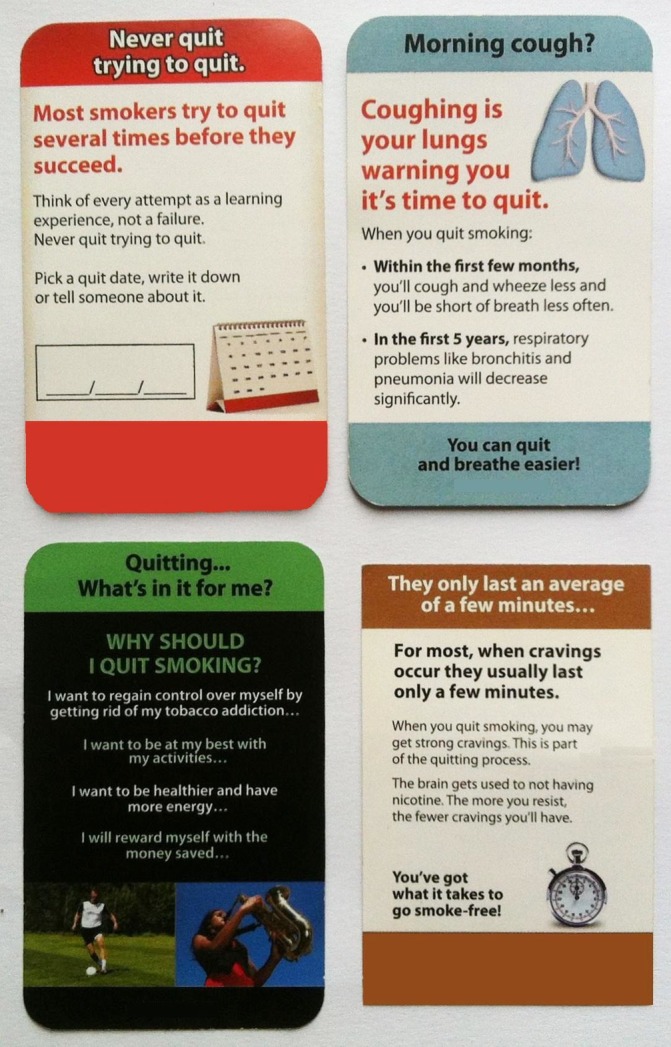
Half the sample indicated that they would read inserts with three-fifths indicating that they are a good way to provide information about quitting (61%). Just over half indicated that inserts would make them think more about quitting (53%), help if they decided to quit (52%), are an effective way of encouraging smokers to quit (53%) and supported having them in all packs (55%). Participants who smoked factory-made cigarettes and other tobacco products (compared with exclusive factory-made cigarette smokers), had made a quit attempt within the last 6 months (compared with those that had never made a quit attempt) or were likely to make a successful quit attempt in the next 6 months (compared with those unlikely to make a quit attempt in the next 6 months) were more likely to indicate that inserts could assist with cessation. Multivariable logistic regression modelling suggested that compared with the standard cigarette, the cigarette with warning (adjusted OR=17.71; 95% CI 13.75 to 22.80) and green cigarette (adjusted OR=30.88; 95% CI 23.98 to 39.76) were much less desirable (less appealing, more harmful and less likely to be tried).
Inserts and dissuasive cigarettes offer policy makers additional ways of using the pack to reduce smoking.
探讨年轻成年吸烟者对促进戒烟的烟盒插页以及旨在起到劝阻作用的香烟的看法。
横断面在线调查。
英国。
最终样本为1766名年轻成年吸烟者,其中50.3%为男性,71.6%为英国白人。为符合纳入标准,参与者年龄必须在16至34岁之间,且吸食工厂生产的香烟。
插页的显著性、对插页作为信息提供方式的看法、对插页在戒烟方面的看法、对插页的支持度以及对三种香烟(标准香烟、显示“吸烟致命”警告的标准香烟和绿色香烟)的感知吸引力、危害及尝试意愿。
一半的样本表示他们会阅读插页,五分之三的人表示插页是提供戒烟信息的好方法(61%)。略超过一半的人表示插页会让他们更多地思考戒烟(53%),如果他们决定戒烟会有帮助(52%),是鼓励吸烟者戒烟的有效方式(53%),并支持在所有烟盒中都有插页(55%)。吸食工厂生产的香烟和其他烟草制品的参与者(与只吸食工厂生产香烟的人相比)、在过去6个月内尝试过戒烟的参与者(与从未尝试过戒烟的人相比)或在未来6个月内可能成功戒烟的参与者(与在未来6个月内不太可能尝试戒烟的人相比)更有可能表示插页有助于戒烟。多变量逻辑回归模型表明,与标准香烟相比,带有警告的香烟(调整后的比值比=17.71;95%置信区间13.75至22.80)和绿色香烟(调整后的比值比=30.88;95%置信区间23.98至39.76)的吸引力要低得多(吸引力更小、危害更大且尝试的可能性更小)。
插页和劝阻性香烟为政策制定者提供了利用烟盒减少吸烟的额外途径。