Navarro Ana, Rioseras Beatriz, Del Valle Eva, Martínez-Pinilla Eva, Astudillo Aurora, Tolivia Jorge
Instituto de Neurociencias del Principado de Asturias (INEUROPA), Asturias, Spain.
Instituto de Investigación Sanitaria del Principado de Asturias (ISPA), Asturias, Spain.
Front Aging Neurosci. 2018 Aug 21;10:254. doi: 10.3389/fnagi.2018.00254. eCollection 2018.
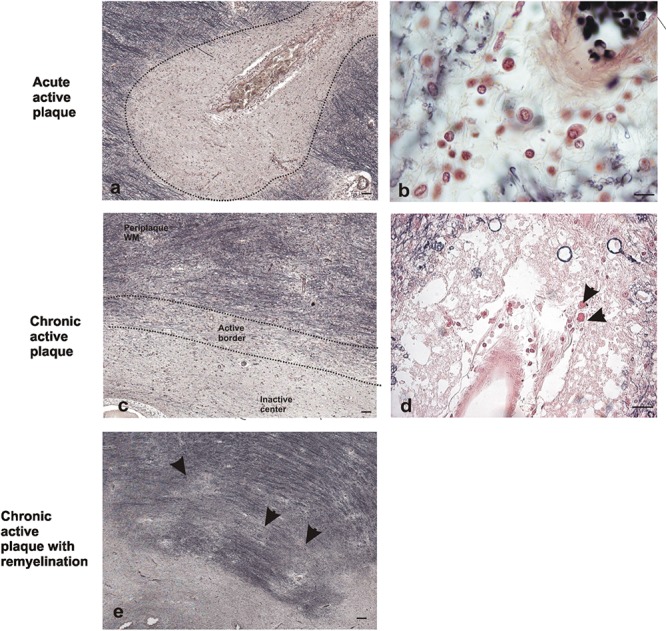
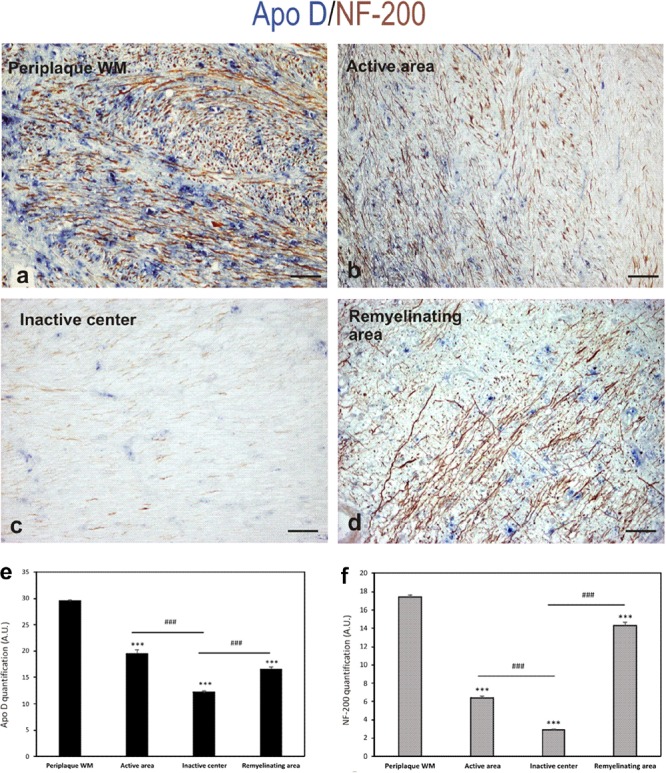
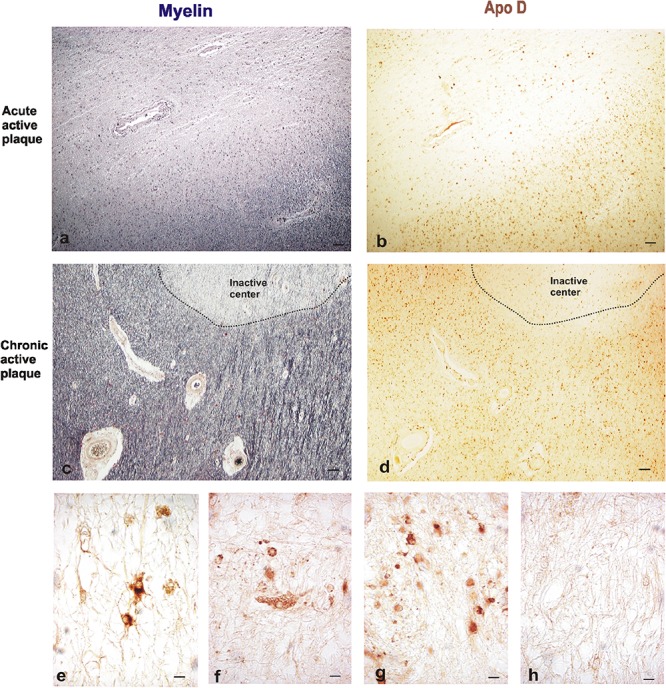
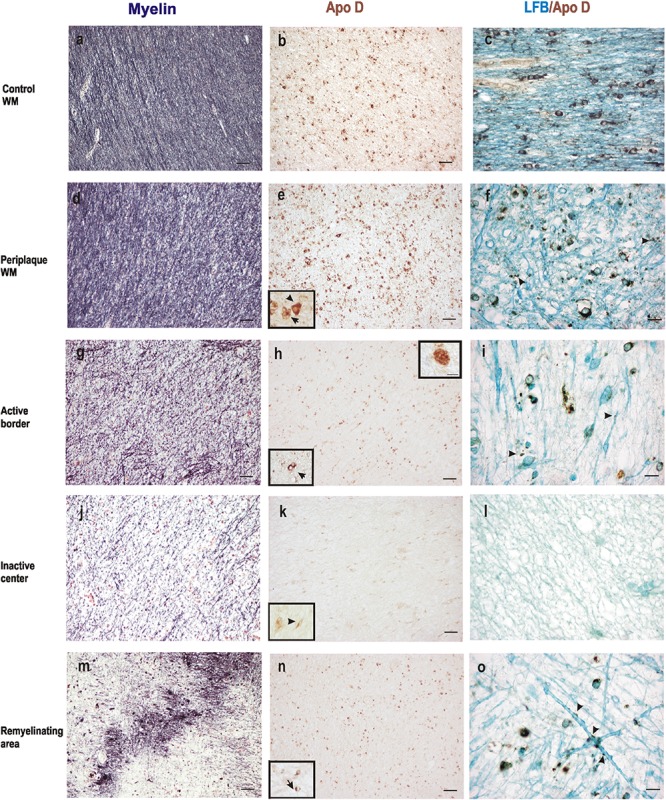
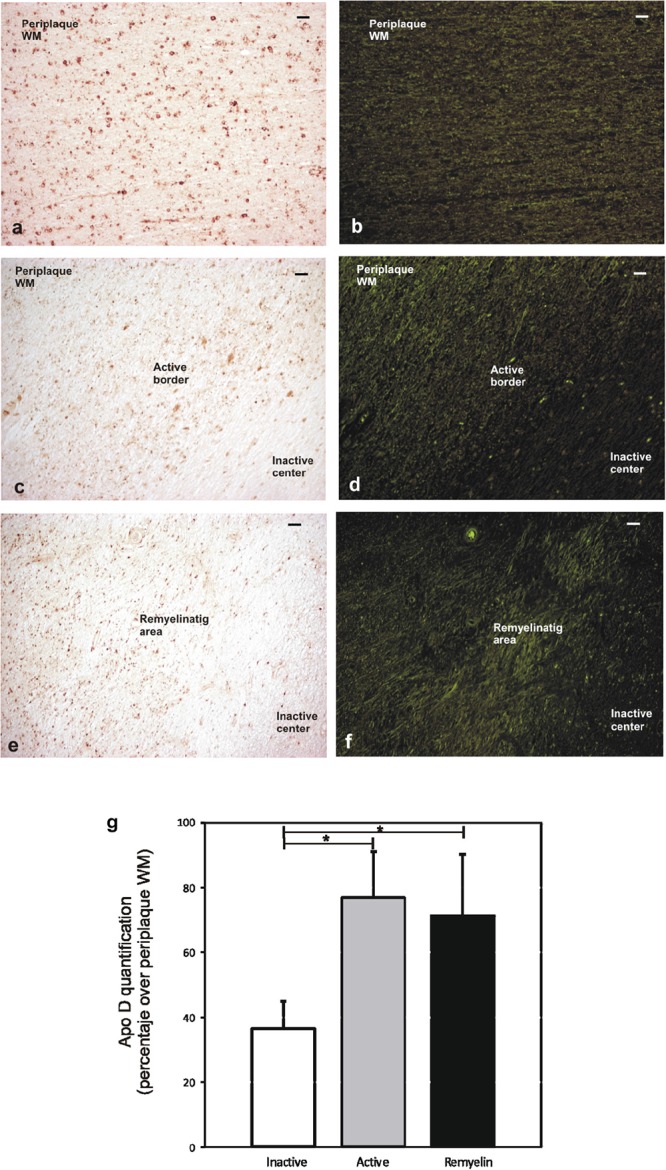
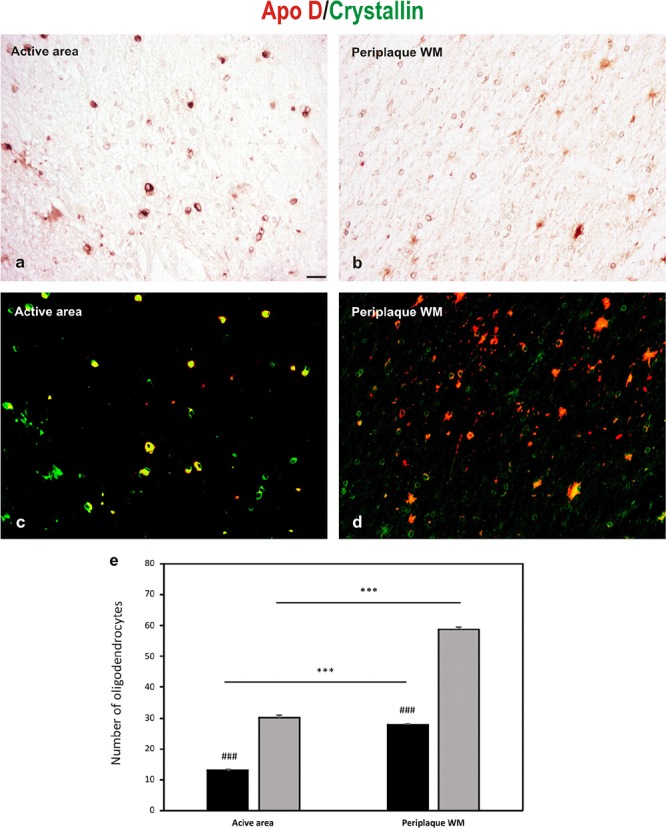
Apolipoprotein D (Apo D) is a key molecule in the lipid transport during homeostasis and repair processes in normal and pathological conditions of the nervous system with a putative neuroprotective effect. In the last decades, huge experimental efforts have been made to know the exact mechanism of action of Apo D, even though, it remains an open question. In this regard, studies in mammals and flies have suggested that Apo D seems to act through a variety of cellular mechanisms related with its ability to selectively bind different lipid ligands. For instance, this apolipoprotein is required to myelin compaction, it participates in axon regeneration/remyelination, and it can control the magnitude and timing of the inflammatory response after injury, promoting myelin clearance, and regulating the number of immune cells recruited to the damaged area. These, among others, are some of the reasons to study Apo D in multiple sclerosis (MS) pathology, where it could be particularly important since the autoimmune reaction against oligodendrocytes (OLGs) and myelin is generally assumed as the most plausible cause of this pathology. The aim of this work was to investigate the Apo D expression pattern in MS lesions, including active and inactive demyelinating plaques, and also remyelinating ones. Human brain tissues with inflammatory demyelination consistent with MS were used to quantify Apo D immunosignal in different lesions. Our results show a clear decrease of Apo D expression in all sclerosis plaques, being lower in the inactive than in active areas but recovers in the remyelination ones. Apo D is mainly produced by the matured OLGs of white matter and is located in cell processes surrounding the myelin sheath. All these data seem to indicate an important role of Apo D in myelination/remyelination processes as a molecule with a neuroprotective potential, and may serve as a good starting point for its study in MS.
载脂蛋白D(Apo D)是神经系统在正常和病理状态下的稳态及修复过程中脂质转运的关键分子,具有潜在的神经保护作用。在过去几十年中,人们进行了大量实验研究以了解Apo D的确切作用机制,尽管这仍是一个悬而未决的问题。在这方面,对哺乳动物和果蝇的研究表明,Apo D似乎通过与其选择性结合不同脂质配体能力相关的多种细胞机制发挥作用。例如,这种载脂蛋白对髓鞘压实是必需的,它参与轴突再生/髓鞘再生,并且可以控制损伤后炎症反应的程度和时间,促进髓鞘清除,并调节募集到受损区域的免疫细胞数量。这些以及其他一些原因促使人们在多发性硬化症(MS)病理中研究Apo D,在这种疾病中它可能特别重要,因为针对少突胶质细胞(OLGs)和髓鞘的自身免疫反应通常被认为是这种病理最合理的原因。这项工作的目的是研究MS病变中Apo D的表达模式,包括活动期和静止期的脱髓鞘斑块以及正在进行髓鞘再生的斑块。使用与MS一致的具有炎性脱髓鞘的人脑组织来量化不同病变中Apo D的免疫信号。我们的结果显示,在所有硬化斑块中Apo D表达明显降低,静止区低于活动区,但在髓鞘再生区有所恢复。Apo D主要由白质成熟的OLGs产生,位于髓鞘周围的细胞突起中。所有这些数据似乎表明Apo D作为一种具有神经保护潜力的分子在髓鞘形成/髓鞘再生过程中起重要作用,并且可能成为其在MS研究中的良好起点。