Ye Jianzhong, Lv Longxian, Wu Wenrui, Li Yating, Shi Ding, Fang Daiqiong, Guo Feifei, Jiang Huiyong, Yan Ren, Ye Wanchun, Li Lanjuan
State Key Laboratory for Diagnosis and Treatment of Infectious Diseases, The First Affiliated Hospital, School of Medicine, Zhejiang University, Hangzhou, China.
Collaborative Innovation Center for Diagnosis and Treatment of Infectious Diseases, Hangzhou, China.
Front Microbiol. 2018 Aug 21;9:1967. doi: 10.3389/fmicb.2018.01967. eCollection 2018.
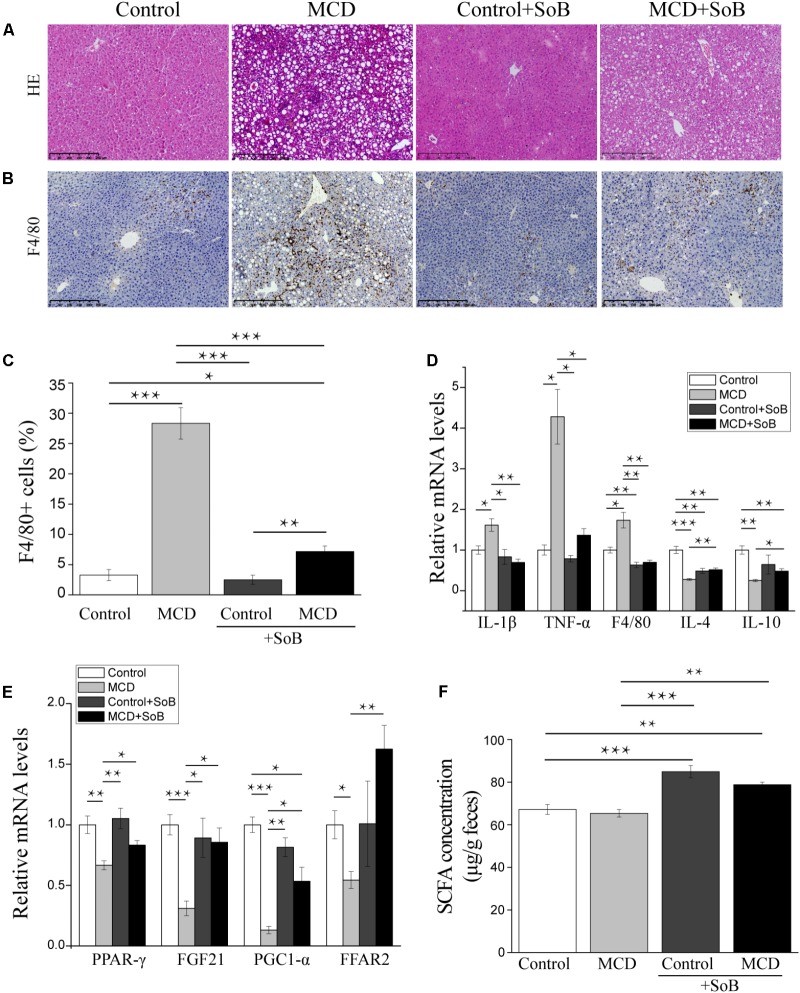
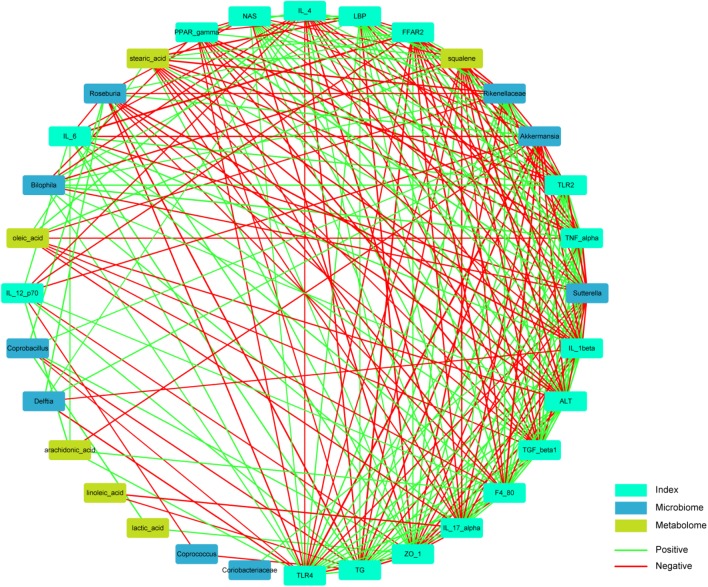
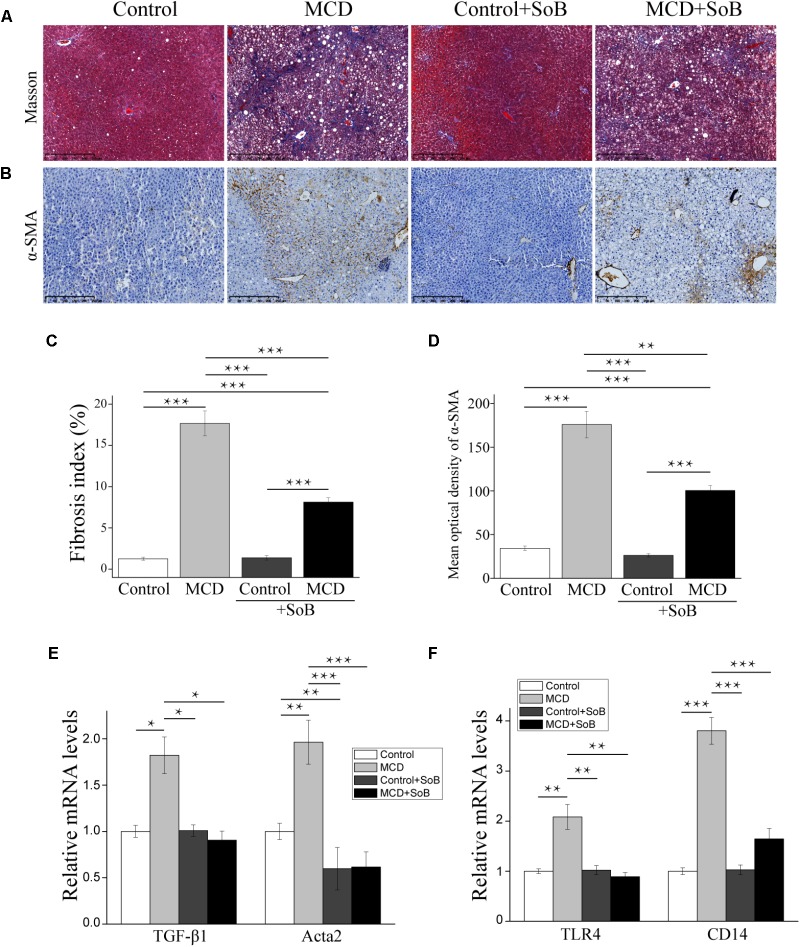
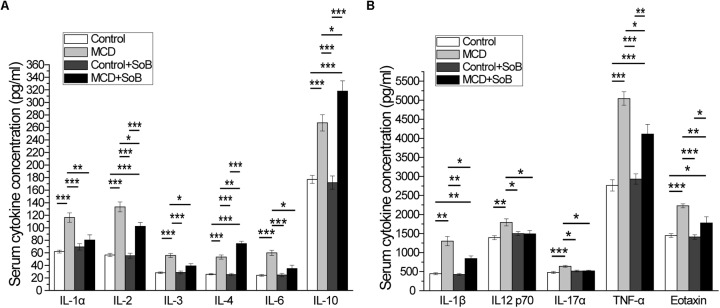
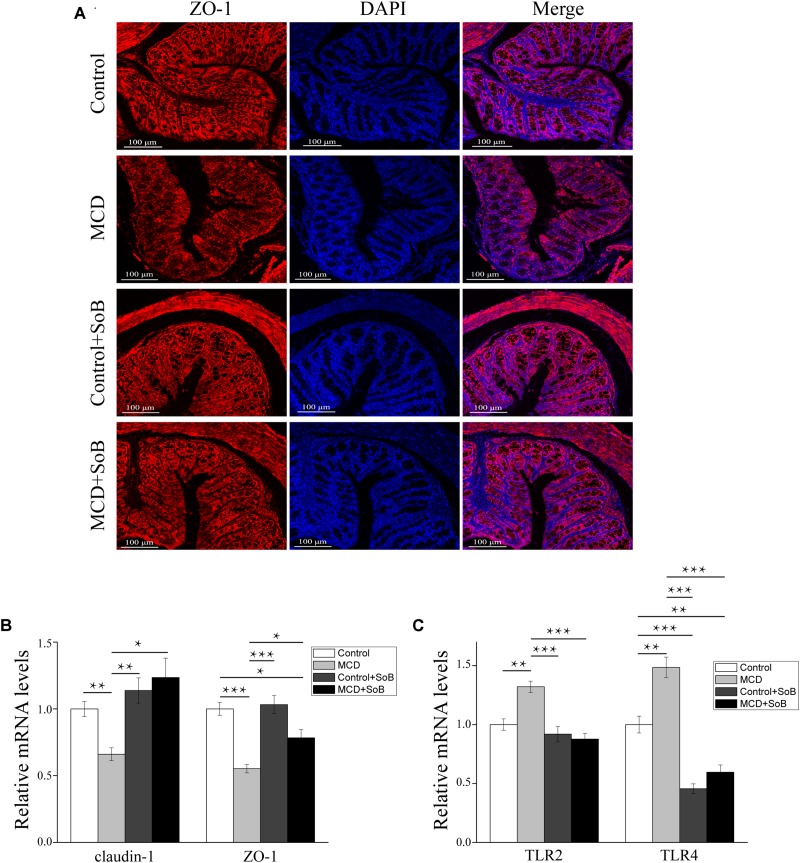
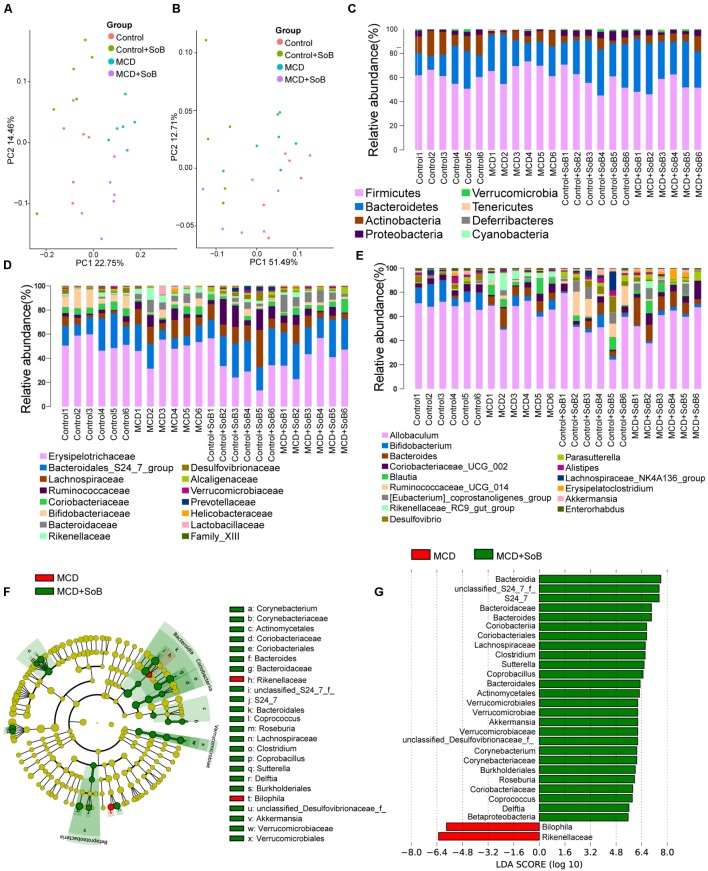
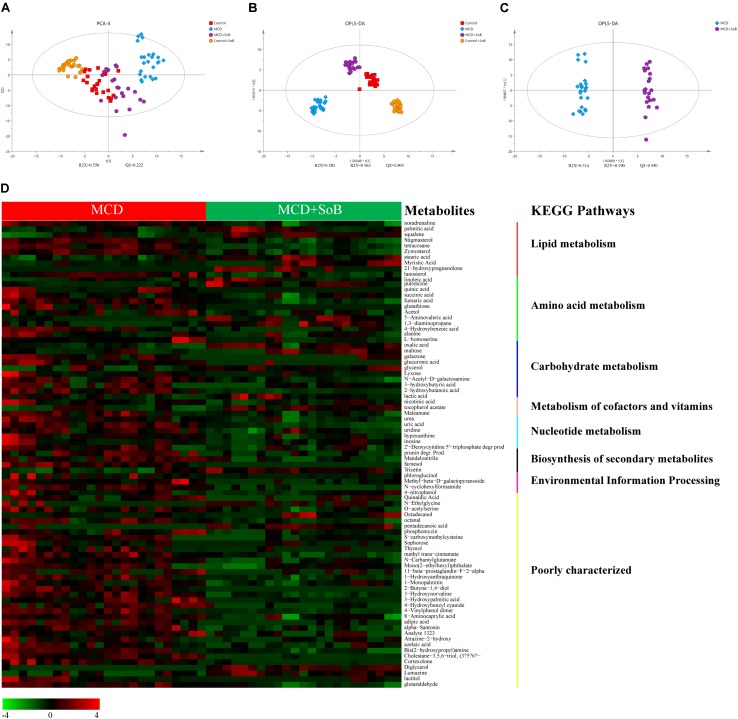
Butyrate exerts protective effects against non-alcoholic steatohepatitis (NASH), but the underlying mechanisms are unclear. We aimed to investigate the role of butyrate-induced gut microbiota and metabolism in NASH development. Sixty-five C57BL/6J mice were divided into four groups ( = 15-17 per group) and were fed either a methionine-choline-sufficient (MCS) diet or methionine-choline-deficient (MCD) diet with or without sodium butyrate (SoB; 0.6 g/kg body weight) supplementation for 6 weeks. Liver injury, systematic inflammation, and gut barrier function were determined. Fecal microbiome and metabolome were analyzed using 16S rRNA deep sequencing and gas chromatography-mass spectrometry (GC-MS). The results showed that butyrate alleviated the MCD diet-induced microbiome dysbiosis, as evidenced by a significantly clustered configuration separate from that of the MCD group and by the depletion of and and enrichment of promising probiotic genera , , , , , , and genera. The fecal metabolomic profile was also substantially improved by butyrate; several butyrate-responsive metabolites involved in lipid metabolism and other pathways, such as stearic acid, behenic acid, oleic acid, linoleic acid, squalene, and arachidonic acid, were identified. Correlation analysis of the interaction matrix indicated that the modified gut microbiota and fecal metabolites induced by butyrate were strongly correlated with the alleviation of hepatic injury, fibrosis progression, inflammation, and lipid metabolism and intestinal barrier dysfunction. In conclusion, our results demonstrated that butyrate exerts protective effects against NASH development, and these effects may be driven by the protective gut microbiome and metabolome induced by butyrate. This study thus provides new insights into NASH prevention.
丁酸盐对非酒精性脂肪性肝炎(NASH)具有保护作用,但其潜在机制尚不清楚。我们旨在研究丁酸盐诱导的肠道微生物群和代谢在NASH发展中的作用。将65只C57BL/6J小鼠分为四组(每组n = 15 - 17),分别给予蛋氨酸 - 胆碱充足(MCS)饮食或蛋氨酸 - 胆碱缺乏(MCD)饮食,并补充或不补充丁酸钠(SoB;0.6 g/kg体重),持续6周。测定肝脏损伤、全身炎症和肠道屏障功能。使用16S rRNA深度测序和气相色谱 - 质谱联用(GC - MS)分析粪便微生物组和代谢组。结果表明,丁酸盐减轻了MCD饮食诱导的微生物组失调,表现为与MCD组明显不同的聚类配置,以及特定菌属的减少和有前景的益生菌属如双歧杆菌属、阿克曼氏菌属、粪杆菌属、罗斯氏菌属、瘤胃球菌属、梭菌属和普氏菌属的富集。丁酸盐还显著改善了粪便代谢组学特征;鉴定出了几种参与脂质代谢和其他途径的丁酸盐反应性代谢物,如硬脂酸、山嵛酸、油酸、亚油酸、角鲨烯和花生四烯酸。相互作用矩阵的相关性分析表明,丁酸盐诱导的肠道微生物群和粪便代谢物的改变与肝损伤、纤维化进展、炎症、脂质代谢和肠道屏障功能障碍的减轻密切相关。总之,我们的结果表明丁酸盐对NASH的发展具有保护作用,这些作用可能由丁酸盐诱导的保护性肠道微生物组和代谢组驱动。因此,本研究为NASH的预防提供了新的见解。