Department of Experimental Psychology, Nuffield Department of Clinical Neurosciences, University of Oxford, Oxford, UK; Oxford Centre of Human Brain Activity, Nuffield Department of Clinical Neurosciences, University of Oxford, Oxford, UK.
Department of Experimental Psychology, Nuffield Department of Clinical Neurosciences, University of Oxford, Oxford, UK.
Neuron. 2018 Sep 5;99(5):1069-1082.e7. doi: 10.1016/j.neuron.2018.08.018.
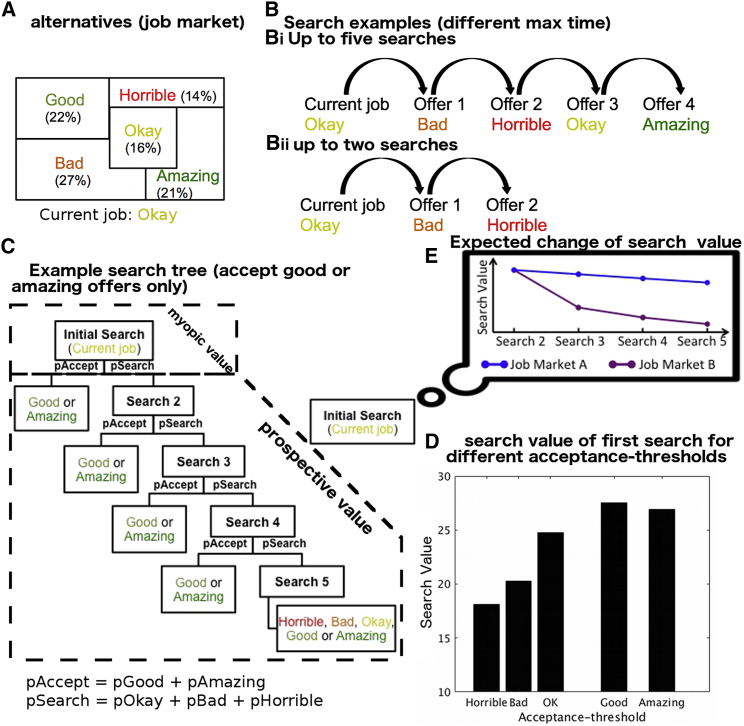
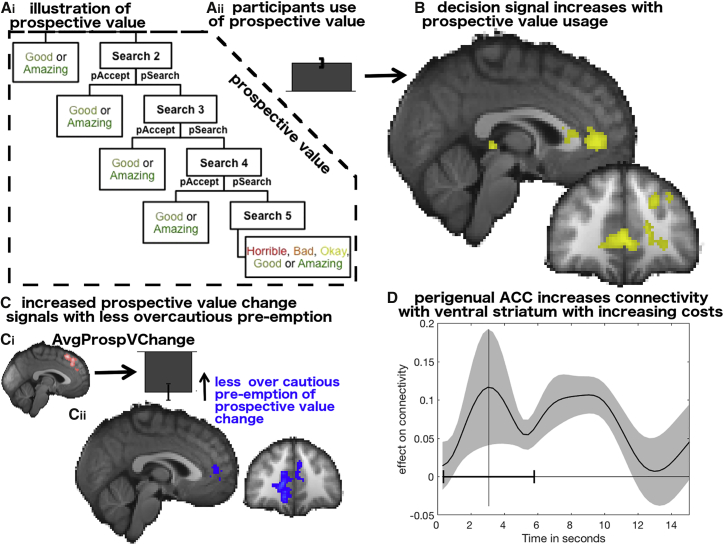
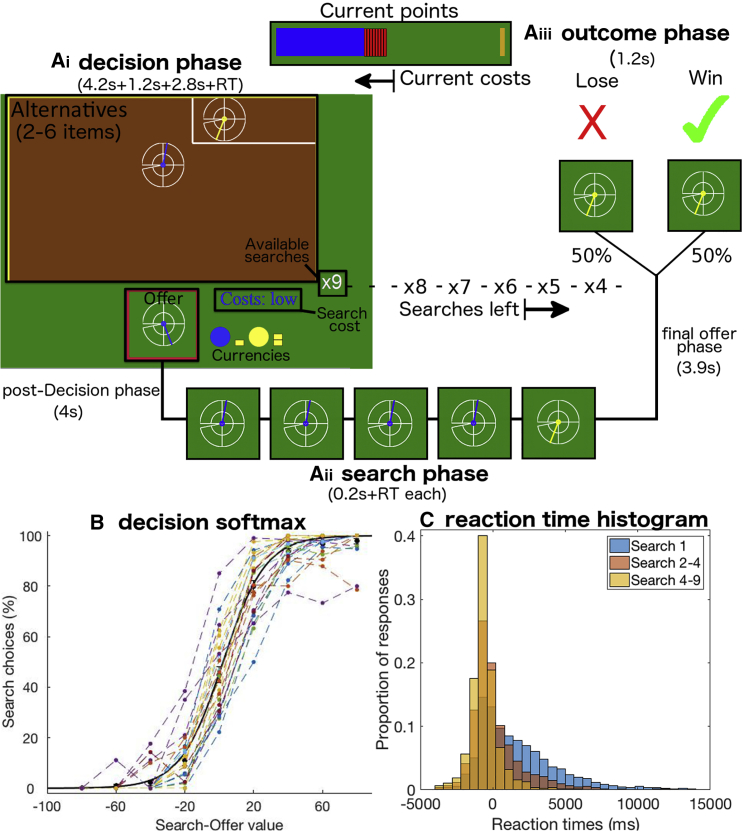
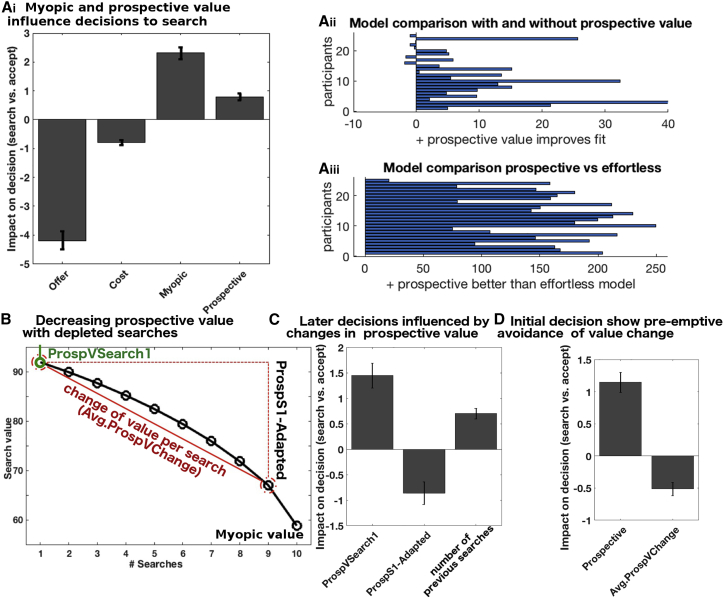
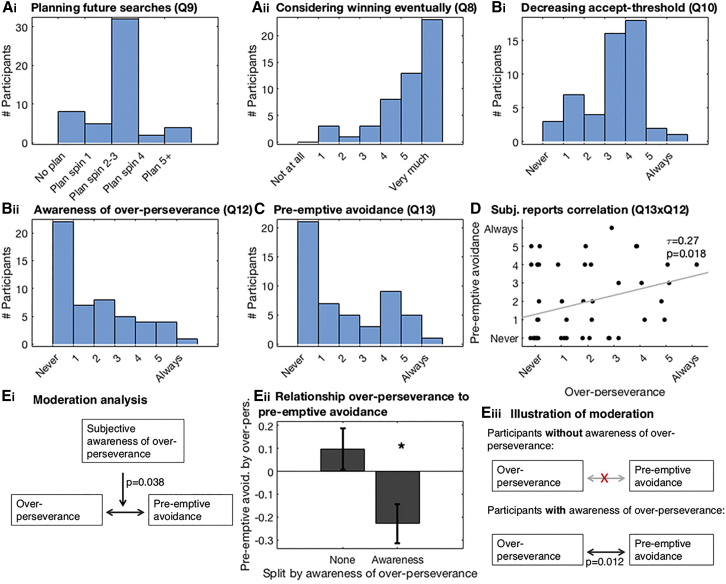
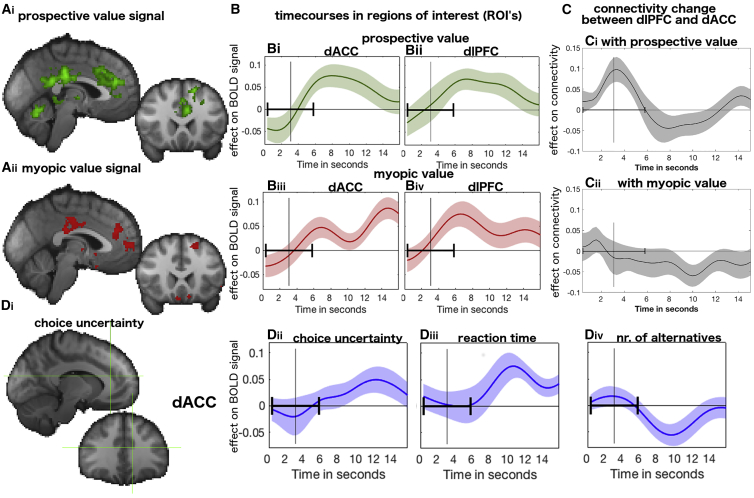
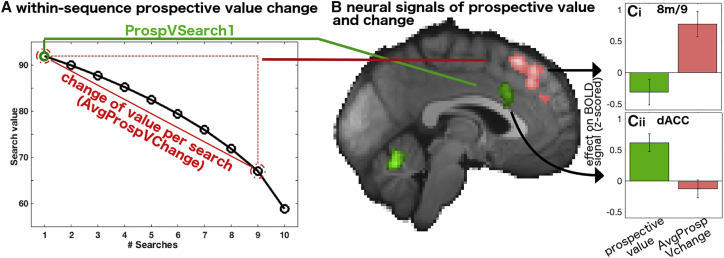
Real-world decisions have benefits occurring only later and dependent on additional decisions taken in the interim. We investigated this in a novel decision-making task in humans (n = 76) while measuring brain activity with fMRI (n = 24). Modeling revealed that participants computed the prospective value of decisions: they planned their future behavior taking into account how their decisions might affect which states they would encounter and how they themselves might respond in these states. They considered their own likely future behavioral biases (e.g., failure to adapt to changes in prospective value) and avoided situations in which they might be prone to such biases. Three neural networks in adjacent medial frontal regions were linked to distinct components of prospective decision making: activity in dorsal anterior cingulate cortex, area 8 m/9, and perigenual anterior cingulate cortex reflected prospective value, anticipated changes in prospective value, and the degree to which prospective value influenced decisions.
真实世界中的决策所带来的益处往往要在之后才能显现,而且取决于其间所做的其他决策。我们通过一项新颖的人类决策任务对此进行了研究(n=76),同时使用 fMRI 对大脑活动进行了测量(n=24)。模型分析揭示,参与者计算了决策的预期价值:他们根据决策可能影响他们将遇到的状态以及他们在这些状态下可能如何反应的方式,来规划自己未来的行为。他们考虑了自己未来可能存在的行为偏见(例如,未能适应预期价值的变化),并避免了可能导致此类偏见的情况。相邻的内侧前额叶区域中的三个神经网络与预期决策的不同成分相关联:背侧前扣带皮层、8m/9 区域和前扣带皮质旁回的活动反映了预期价值、预期的预期价值变化,以及预期价值对决策的影响程度。