1 Department of Anatomy, Mongolian National University of Medical Sciences, Mongolia.
2 Department of Microbiology and Immunology, School of Medicine, Aichi Medical University, Japan.
Innate Immun. 2018 Oct;24(7):430-438. doi: 10.1177/1753425918796619. Epub 2018 Sep 6.
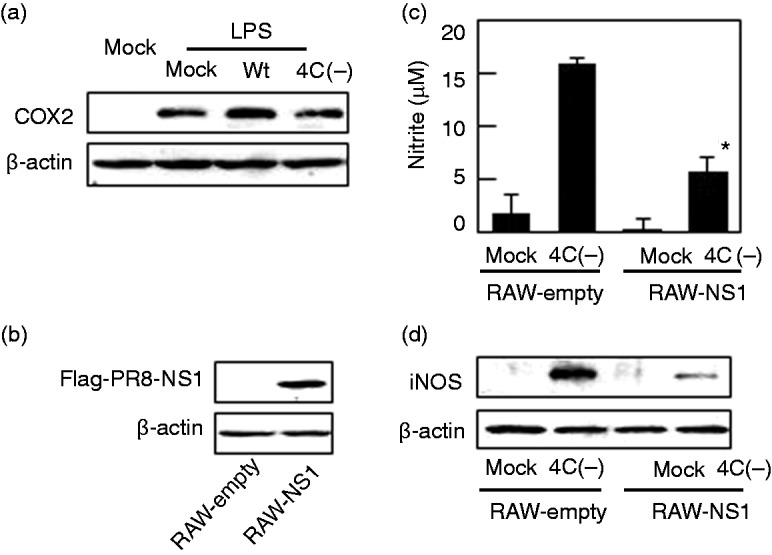
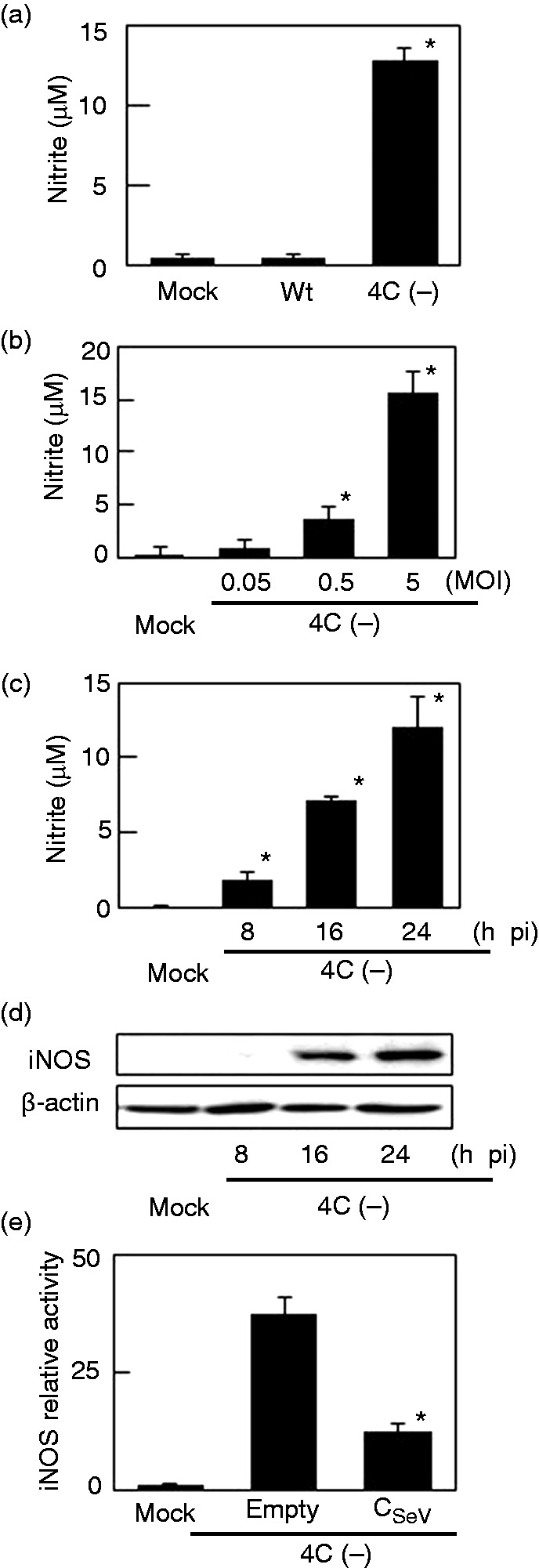
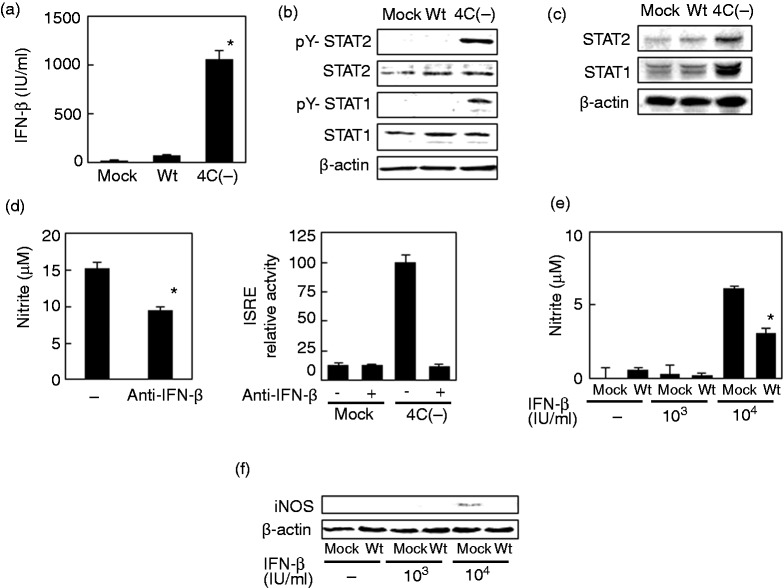
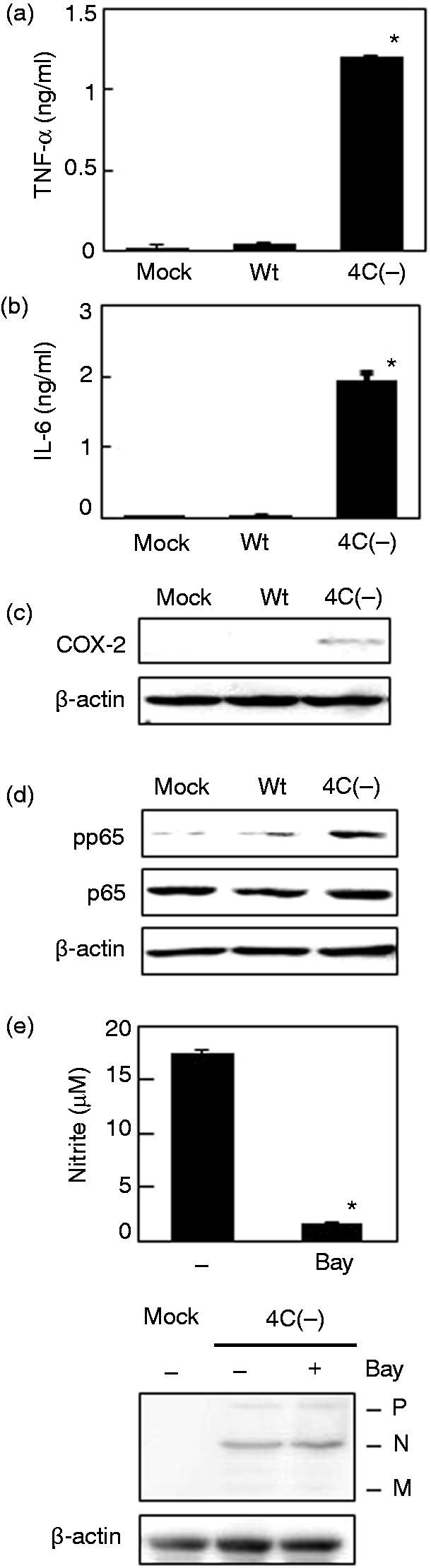
To suppress virus multiplication, infected macrophages produce NO. However, it remains unclear how infecting viruses then overcome NO challenge. In the present study, we report the effects of accessory protein C from Sendai virus (SeV), a prototypical paramyxovirus, on NO output. We found that in RAW264.7 murine macrophages, a mutant SeV without C protein (4C(-)) significantly enhanced inducible NO synthase (iNOS) expression and subsequent NO production compared to wild type SeV (wtSeV). SeV 4C(-) infection caused marked production of IFN-β, which is involved in induction of iNOS expression via the JAK-STAT pathway. Addition of anti-IFN-β Ab, however, resulted in only marginal suppression of NO production. In contrast, NF-κB, a primarily important factor for transcription of the iNOS gene, was also activated by 4C(-) infection but not wtSeV infection. Induction of NO production and iNOS expression by 4C(-) was significantly suppressed in cells constitutively expressing influenza virus NS1 protein that can sequester double-stranded (ds)RNA, which triggers activation of signaling pathways leading to activation of NF-κB and IRF3. Therefore, C protein appears to suppress NF-κB activation to inhibit iNOS expression and subsequent NO production, possibly by limiting dsRNA generation in the context of viral infection.
为了抑制病毒复制,感染的巨噬细胞会产生 NO。然而,目前尚不清楚感染的病毒如何克服 NO 的挑战。在本研究中,我们报告了来自仙台病毒(SeV)的辅助蛋白 C 对 NO 产生的影响,SeV 是一种典型的副粘病毒。我们发现,在 RAW264.7 鼠巨噬细胞中,缺乏 C 蛋白的突变型 SeV(4C(-))与野生型 SeV(wtSeV)相比,显著增强了诱导型一氧化氮合酶(iNOS)的表达和随后的 NO 产生。SeV 4C(-)感染导致 IFN-β的大量产生,IFN-β 通过 JAK-STAT 途径参与 iNOS 表达的诱导。然而,添加抗 IFN-β Ab 仅导致 NO 产生的轻微抑制。相比之下,NF-κB 是 iNOS 基因转录的主要重要因素,也被 4C(-)感染激活,但不受 wtSeV 感染的影响。4C(-)感染诱导的 NO 产生和 iNOS 表达在持续表达流感病毒 NS1 蛋白的细胞中显著受到抑制,NS1 蛋白可以隔离双链(ds)RNA,这触发了导致 NF-κB 和 IRF3 激活的信号通路。因此,C 蛋白似乎通过限制病毒感染中 dsRNA 的产生来抑制 NF-κB 的激活,从而抑制 iNOS 的表达和随后的 NO 产生。